


More news on this day
Rail links between central London and Heathrow Airport were severely disrupted on Saturday after a grass fire near Scrubs Lane in North Kensington triggered a power supply failure on the main line into Paddington, halting trains and stranding passengers at one of the UK’s busiest rail and air hubs.
Get the latest news straight to your inbox!
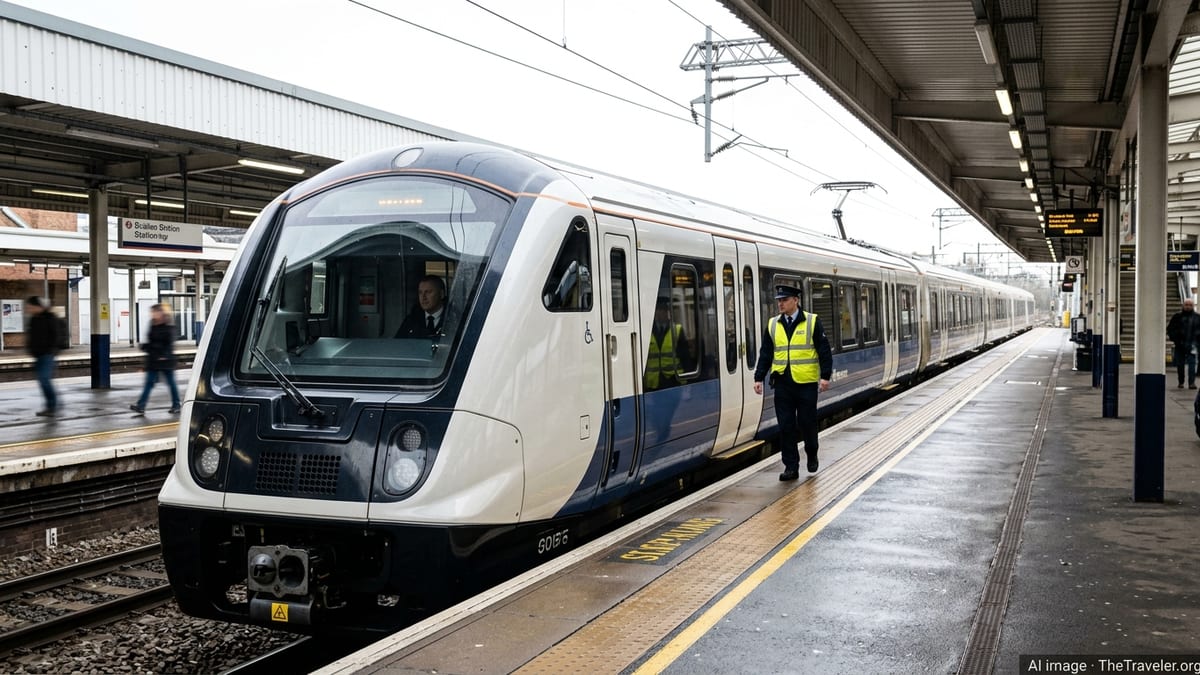
Fire near Scrubs Lane blocks key Heathrow rail corridor
According to publicly available information from London Fire Brigade, the incident began shortly after 16:00 BST on Saturday 5 September, when a grass fire broke out near Scrubs Lane in North Kensington, close to the Great Western Main Line that carries services into London Paddington. Six fire engines and around 40 firefighters were deployed to tackle the blaze in the lineside area.
National Rail’s disruption alerts stated that the fire caused a failure of the electricity supply on the approach to Paddington, forcing all lines between London Paddington and Heathrow Terminals, as well as Reading, to be blocked for several hours. Services on the Elizabeth line, Heathrow Express and Great Western Railway were all affected, with cancellations, significant delays and train alterations reported across the route.
Passenger images shared on social media showed dark smoke in the distance and crowded departure halls at Paddington as departure boards for Heathrow and westbound services temporarily emptied. Rail journey planners advised that major disruption would continue into the evening as emergency services and engineers worked at the scene and rail operators attempted to recover services.
Coverage from national and local outlets described the incident as causing major disruption for those traveling between central London and Heathrow, a corridor that is routinely busy with both air passengers and commuters on weekends.
Elizabeth line and Heathrow Express suspended between Paddington and Heathrow
Network status updates from Transport for London indicated that the Elizabeth line was suspended between Paddington and Heathrow Terminals 4 and 5, and between Paddington and Reading, for much of Saturday. Services on the central and eastern sections of the line continued to run, although with severe delays reported towards Abbey Wood and Shenfield as diagrams were reworked.
Heathrow Airport’s own travel updates page confirmed that both Heathrow Express and Transport for London’s Elizabeth line services to the airport were suspended at the height of the incident, citing a fire alert near Paddington. Airport guidance advised passengers to allow extra time to reach terminals and to check live information before setting out.
National Rail information showed that Great Western Railway services between Paddington, Heathrow Airport and Reading were also curtailed or diverted, with some trains starting or terminating short of London. Timetables were heavily amended across the evening peak, and delays of up to around an hour were reported on affected routes.
As a result, trains between central London and Heathrow were either not running or subject to substantial disruption for several hours, creating difficulties for travelers with flight departures or late evening arrivals at the airport.
Alternative routes and ticket acceptance for stranded passengers
With direct rail services halted, guidance from National Rail and Transport for London directed passengers towards alternative routes. Ticket acceptance was put in place on London Underground, including the Piccadilly line which links central London with Heathrow, though that line also reported delays at times. Travelers were encouraged to use London Buses between key locations such as Paddington, Heathrow Terminals and West Drayton.
Information published during the incident also highlighted acceptance on South Western Railway services between London Waterloo and Reading, Chiltern Railways between London Marylebone and High Wycombe, and other suburban and regional services where appropriate. These measures were intended to provide options for passengers attempting to reach the airport or return from flights while the main line into Paddington was unavailable.
Road access to Heathrow remained open, and airport guidance pointed drivers to live traffic tools to check for congestion. However, the rapid switch from rail to road and Underground options placed additional pressure on parts of the wider transport network serving west London and the Thames Valley corridor.
Travel forums and user reports described lengthy journey times, with some passengers opting to take taxis or rideshare services from central London rather than risk missing check-in or connections while waiting for rail services to resume.
Evacuations and overnight recovery of rail services
London Fire Brigade’s incident summary noted that the grass fire affected rail services on both the Elizabeth line and the Great Western Main Line. Coverage of the event reported that hundreds of passengers on at least one stranded Elizabeth line train near the affected area were evacuated by the fire service in coordination with Transport for London.
Engineering and inspection work continued into the evening on Saturday as teams assessed the trackside infrastructure and overhead power equipment that had been impacted by the fire. National Rail’s alerts indicated that disruption from the incident was expected to last until late on Saturday night, with advice for passengers to check their journeys if traveling after the initial blockage was lifted.
By Sunday morning 6 September, National Rail information and broadcast coverage reported that normal services had broadly resumed between London Paddington, Heathrow Airport and Reading, although some amended timetables and residual alterations remained due to pre-planned engineering works on parts of the route. Great Western Railway stated it was operating a good service across most of its network, following earlier disruption.
Despite the recovery of rail operations, the incident added to a series of recent disruptions on the busy approach to Paddington, highlighting the vulnerability of key airport rail links to both infrastructure faults and external events such as lineside fires.
Impact on Heathrow passengers and wider travel patterns
The temporary loss of both the fast Heathrow Express and the high-frequency Elizabeth line significantly reduced capacity on the principal rail corridor connecting central London with Heathrow. For many air passengers, particularly those with tight schedules or late-night flights, the disruption created uncertainty over arrival times and increased reliance on alternative modes.
Publicly available travel data and operator messaging emphasized the importance of checking live information before setting out for the airport, particularly on weekends when planned engineering works can combine with unplanned incidents. Heathrow Airport’s travel pages directed passengers to National Rail, Heathrow Express and Transport for London for the most up-to-date rail status, while reiterating that travelers should allow additional time for their journeys.
For regular users of the Elizabeth line and Great Western Railway, the fire-related power failure added to a broader pattern of recent service interruptions on the western approach to London. Past incidents linked to power supply problems, signalling faults and separate fire alerts have each prompted large-scale timetable changes and ticket acceptance arrangements for Heathrow-bound passengers in recent months.
Travel industry observers note that such episodes reinforce the need for robust contingency planning for airport access, including clear communication across rail, Underground, bus and road networks when an incident occurs on a critical rail artery.
London Fire Brigade Incident Report: Grass fire - North Kensington
National Rail Service Disruption: London Paddington to Heathrow / Reading
Heathrow Airport Traffic and Travel Updates
ITV News: Trains resume services after disruption from fire near London Paddington
LBC: Major disruption as fire near Paddington station blocks lines to Heathrow