


More news on this day
September travelers are being urged to rethink their journeys as a wave of major city and highway closures, from local streets to critical interstate corridors, is set to disrupt commuter and visitor traffic across North America and beyond.
Get the latest news straight to your inbox!
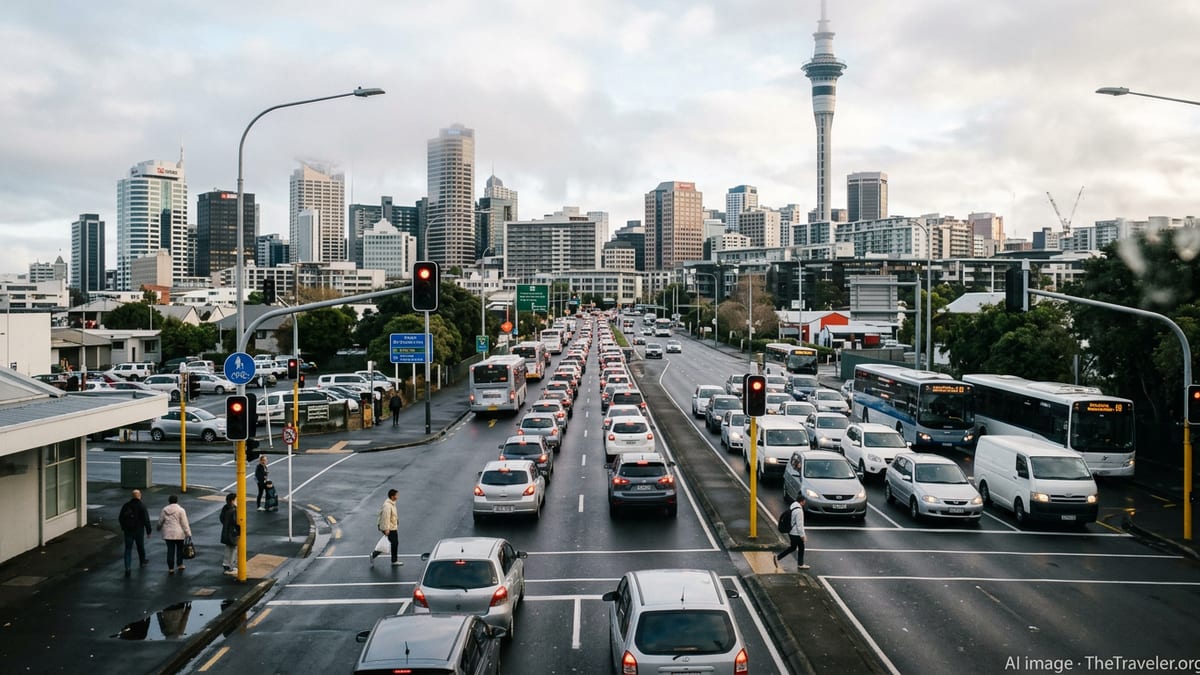
I-5 shutdown in Portland expected to ripple across the region
One of the most significant impacts in September is the extended closure of southbound Interstate 5 through Portland’s Rose Quarter, scheduled to begin at 10 p.m. on September 11, 2026. Publicly available information from the Oregon Department of Transportation describes this section of I-5 as a key north–south freight and travel spine where it intersects with Interstates 84 and 405, meaning disruption is expected to spread well beyond the immediate city center.
The closure, part of long-planned improvement and repair works, is forecast to last for several weeks and to operate on a 24-hour basis. Regional advisories indicate that through traffic will be routed to alternate freeways and that surface streets in Portland’s inner neighborhoods are likely to carry additional congestion as drivers seek shortcuts.
City travel resources also highlight a campaign encouraging residents and visitors to “shift their trip,” focusing on transit, cycling, walking, and carpooling during the closure period. In north and northeast Portland, local transport planners have already advanced maintenance work and refreshed bike routes so that key diversion corridors are ready before the I-5 lanes shut.
Travelers heading along the West Coast this September are being advised to allow extra time if their route passes through the Portland area, to check real-time mapping apps before departure, and to consider non-driving options for trips into the city core.
Local city streets face long-term and overnight closures
Alongside major interstates, city road networks are entering a busy phase of resurfacing and upgrade projects that will affect everyday journeys. In Raleigh, North Carolina, coverage from local media outlines that a section of Lake Wheeler Road near Dix Park will close to through traffic from mid-September as part of a 21.8 million dollar corridor overhaul. The project, expected to last around two years, will funnel drivers on to signed detours around the popular park and the state farmers market.
In Denver, a recent travel advisory from the city’s Department of Transportation and Infrastructure details upcoming downtown lane closures that could affect office commuters and visitors heading for events. The notice points to reduced capacity on central corridors over the coming week, with warnings that journey times during peak periods are likely to lengthen while crews work in the roadway.
Farther north, the City of Brantford in Ontario has signaled continuing closures around its downtown revitalization project. Municipal updates show Icomm Drive remaining shut through at least the end of September, with temporary traffic patterns expected to stay in place for up to a month at a time. Local guidance encourages drivers, cyclists and pedestrians to heed diversion signs and to factor extra minutes into their trips across the core.
In many of these locations, authorities have chosen to keep at least one lane open where possible or to stage work in off-peak windows, but visitors unfamiliar with the streets may still meet unexpected bottlenecks if they rely solely on habitual routes.
Night-time restrictions aim to balance construction with commuter flows
Several projects beginning or intensifying in early September are structured as overnight closures intended to limit the effects on daytime commuting. In the Washington, DC region, DC Water has announced temporary night-time lane closures on Clara Barton Parkway at the Maryland–District line to facilitate emergency repairs to a major sewer interceptor. According to the agency’s traffic advisory, work will continue through the end of September, with one lane closed overnight while other lanes remain open in both directions.
In California’s Silicon Valley, a current notice from the Santa Clara Valley Transportation Authority describes overnight construction and a long-term ramp closure at the I-280 and Wolfe Road interchange between September 7 and 18, 2026. The advisory suggests that most disruptive activities are scheduled at night, but drivers using this busy link between freeways and local tech campuses are urged to allow extra travel time and to follow clearly marked detours.
State highway bulletins in Virginia also flag a mix of suspended and active work zones around the Labor Day period. While many lane closures are lifted over the long weekend, the Virginia Department of Transportation notes ongoing single-lane reductions on sections of Interstate 64 that will persist into September, keeping pressure on a route heavily used by beachgoers and business travelers alike.
These night-focused restrictions may not appear on every printed timetable or static sign, but they can still catch out early-morning and late-evening flights, long-distance bus services, and road trippers targeting off-peak drives into or out of major cities.
Event and championship closures tighten access in some districts
Beyond construction, September’s calendar of major events is another driver of short-term closures within city centers. In Montréal, information provided by The Neuro at McGill University highlights “significant and changing travel disruptions” around the hospital precinct during the 2026 UCI Road World Championships, which run from September 19 to 27. City cycling championship pages outline extensive closures and restrictions on nearby streets on different race days, with knock-on effects for staff, patients, and visitors.
In several U.S. cities, late-September festivals and sporting fixtures will also close downtown streets for limited windows, compressing traffic on remaining routes. Public meeting documents from New Haven describe planned midday closures around the annual New Haven Grand Prix cycling event on September 25, where blocks of College Street and nearby cross streets will be shut for several hours to accommodate the race course and crowd areas.
Other municipalities are using temporary closures to host pedestrian-oriented programming. Council papers and community discussions in cities such as Dublin and Limerick refer to residential “play street” schemes and extended event footprints that restrict vehicles to give space to outdoor activities. While typically short in duration, these initiatives can alter neighborhood access patterns on select September dates.
Travelers heading into affected districts are advised to verify not just construction bulletins but also event calendars, especially when combining road trips with hotel stays or ticketed experiences in dense urban cores.
How September travelers can plan around changing conditions
Across these examples, a common thread is that September combines the tail end of summer construction seasons with the return of schools and workplaces and a busy calendar of festivals and sports. That convergence raises the risk of surprise congestion and missed connections for anyone relying on urban and regional roads.
Transport agencies and city governments are increasingly directing travelers toward real-time digital tools, including live traffic maps, social media feeds, and email advisories, to stay ahead of day-to-day changes in closures and lane configurations. In Portland, for instance, city channels promote sign-ups to traffic alerts so residents receive direct updates as the I-5 Rose Quarter closure progresses. Similar subscription services are noted in several other jurisdictions announcing early-September works.
For visitors, practical steps include checking hotel directions against current advisories, allowing more time when driving to airports or train stations, and considering park-and-ride facilities or transit if entering an area with known restrictions. Where long-term closures such as Raleigh’s Lake Wheeler Road project or Brantford’s downtown works are in place, following posted detours rather than navigation shortcuts can reduce the risk of being routed down residential streets that may also be under temporary controls.
With multiple cities signaling an intensive period of works and events, the overriding message for September is that familiar roads may not behave as usual. Those who build in flexibility and verify their route shortly before setting out are better positioned to keep their journeys on track, even as cones, barriers and barricades temporarily redraw the urban map.
Oregon Department of Transportation I-5 Rose Quarter closure bulletin
DC Water Clara Barton Parkway overnight lane closure advisory
WRAL coverage of Lake Wheeler Road two-year closure in Raleigh
City of Brantford downtown revitalization and road closure update
The Neuro guidance on September road closures during Montréal cycling worlds