

More news on this day
Heightened tensions between Iran, the United States and Israel are rippling through global tourism, with recent threats against “parks, recreational areas and tourist destinations” worldwide prompting Greece to tighten security and leaving many would-be visitors questioning how safe it is to travel this summer.
Get the latest news straight to your inbox!
From Regional Conflict to Global Tourism Jitters
The current anxiety over travel stems from the wider conflict that erupted after joint United States and Israeli strikes on military and energy infrastructure in Iran at the end of February 2026. Subsequent missile and drone activity in the region, along with Iranian-linked threats of retaliation, have raised fears that civilians and symbolic sites abroad could become targets.
In recent days, widely reported comments attributed to a senior Iranian military spokesperson warning that parks, leisure areas and tourist destinations “anywhere in the world” might no longer be safe for Tehran’s enemies have circulated across international and regional media. The language has been interpreted by security analysts as an attempt at strategic deterrence, yet it has also stoked concern about the vulnerability of crowded travel hubs and famous landmarks.
Global risk assessments released in March highlight an elevated terrorism and militancy threat linked to Iran-aligned actors, particularly against locations associated with Western or Israeli interests. These assessments note that while most plots historically focused on diplomatic, religious or commercial targets, soft targets such as shopping districts and tourist zones are often considered attractive because of their visibility and the potential for mass casualties.
Against this backdrop, governments have moved to update guidance. The United States issued a rare worldwide security alert on March 22 advising its citizens to exercise increased caution, specifically flagging the possibility that Iran-linked networks or sympathizers could look to strike U.S.-connected sites and travelers overseas.
Greece Increases Security but Remains Open to Visitors
Greece has not been directly targeted in the current conflict, and there are no public indications of specific, credible plots against its territory. However, the country’s strategic position in the eastern Mediterranean, membership in NATO and close ties with Western partners mean that the fallout of the Iran crisis is being closely watched in Athens.
According to Greek media coverage, security services have placed sensitive locations on heightened alert, particularly facilities with American or Israeli links, including diplomatic premises, cultural centers and certain businesses in Attica and on Crete. Reports indicate an increased visible police and security presence around some key sites, as well as enhanced checks at major transport nodes.
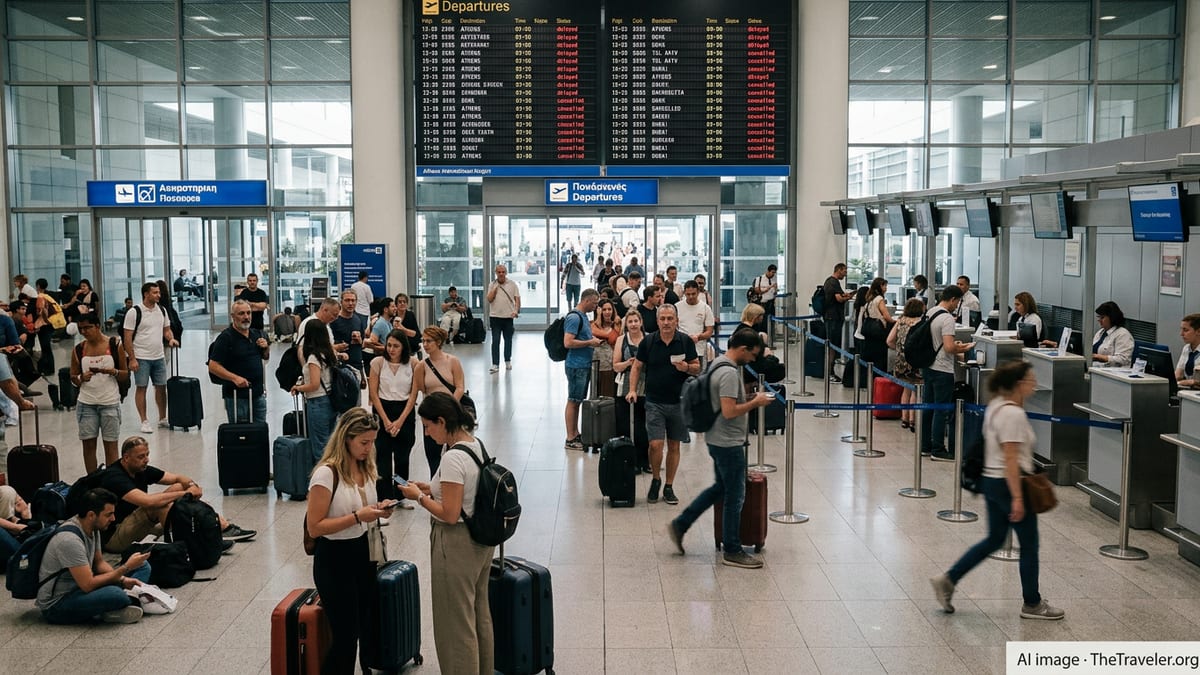
Travel-focused outlets in Greece describe the country as “open but on alert.” Publicly available information points to additional patrols and discreet protective measures at prominent archaeological attractions, ports and airports, especially in and around Athens. While these steps are framed as precautionary, they underscore how seriously officials are taking the possibility that global tensions could spill over into the tourism sphere.
Risk mapping published by international security consultancies in late March continues to place Greece in a relatively low overall threat category compared with conflict-adjacent states. The country has experience managing large inflows of visitors during periods of regional instability and has generally been assessed as capable of responding quickly to emerging security issues.
Tourism Impacts Across the Eastern Mediterranean
The shock of the Iran conflict has already produced measurable effects on travel across the eastern Mediterranean. Neighboring Cyprus has reported a slowdown in bookings and a rise in cancellations following drone strikes on facilities linked to foreign militaries on the island. Travel advisories for Cyprus have been tightened by some governments, citing the threat of armed conflict.
In Greece, early indicators suggest a more modest impact so far. Local travel media report that airlines and ferry operators are monitoring developments but broadly maintaining schedules, with some nervousness around peak-season demand rather than wholesale cancellations. Industry voices quoted in Greek coverage describe a “pause” in new bookings from certain long-haul markets as travelers wait for greater clarity.
Forecasts compiled before the latest escalation had projected a strong 2026 season for Mediterranean tourism, building on record arrivals in 2025. Updated scenario modeling by tourism analysts now warns that a prolonged Iran war could significantly depress visitor numbers across the wider Middle East and eastern Mediterranean, particularly if perceptions of risk rise or if further attacks occur near civilian infrastructure.
For Greece, much depends on whether the conflict remains geographically contained and whether travel disruptions in neighboring airspace intensify. So far, commercial flights to Athens and key islands are operating largely as normal, although minor routing adjustments and higher fuel costs are being reported due to airspace restrictions further east.
How Iran’s Threats Translate Into On-the-Ground Risk
Security assessments released in March emphasize that statements about targeting global leisure sites are designed partly to unsettle public opinion in Western countries and among Israeli travelers. Analysts note that while the absolute likelihood of attacks on heavily policed European heritage sites remains limited, the risk picture has shifted, especially for locations that can be depicted as symbols of Western lifestyles or alliances.
Current threat analyses highlight several patterns that are relevant for travelers to Greece. First, Iran-linked plots and proxy activity abroad have historically prioritized Israeli, Jewish and U.S.-connected targets, including synagogues, community centers, corporate offices and diplomatic premises. Second, attackers often favor crowded, predictable environments such as transport hubs and tourist districts where security screening may be lighter than at official compounds.
International reports on recent incidents in Europe and the Caucasus describe attempted or foiled attacks on synagogues, Jewish community figures and energy infrastructure tied to Western interests. While these cases occurred outside Greece, they illustrate the types of targets that may be prioritized if Iran or aligned groups choose to escalate.
For mainstream visitors planning city breaks in Athens or island holidays, the heightened rhetoric does not automatically translate into a high-probability threat to individual travelers. Nonetheless, the broadened scope of Iranian warnings has prompted governments and security firms to advise travelers to remain situationally aware in busy public spaces, particularly those with clear U.S., Israeli or Jewish associations.
Practical Guidance for Travelers Considering Greece
For travelers weighing trips to Greece in the coming months, experts consistently recommend a layered approach built around preparation, awareness and flexibility. The first step is to check the latest official travel advisories from home governments and to monitor updates regularly, as security assessments can change quickly during fast-moving conflicts.
Travel risk consultancies advise paying close attention to airline communications and booking terms. Flexible tickets and accommodation with generous cancellation policies can offer a buffer if flight routes are altered or if a sudden spike in tensions prompts short-notice changes in advice. Travelers are also encouraged to register their trip details with consular services where such programs exist.
On the ground in Greece, standard precautions take on added importance. Security guidance suggests avoiding demonstrations and large political gatherings, minimizing time spent near foreign embassies or military-related facilities, and maintaining heightened awareness in crowded transport hubs and nightlife districts. Visitors who seek out Jewish heritage sites, Israeli-linked venues or U.S.-branded locations may wish to take additional care, particularly during major religious holidays or high-profile political events.
Experienced observers stress that perception and reality can diverge sharply in times of geopolitical tension. While the rhetoric from Tehran has created understandable anxiety, current open-source assessments still place Greece among Europe’s lower-risk destinations for terrorism compared with major Western capitals. For many travelers, the decision will ultimately hinge on personal risk tolerance, the ability to remain flexible, and a clear-eyed reading of evolving developments in the Iran crisis rather than panic sparked by headlines.