


More news on this day
Greece is accelerating its push in the United Kingdom, teaming up with Jet2, British Airways and BA Holidays to expand air connectivity, promote more sustainable tourism models and lock in fresh growth from one of its most valuable source markets.
Get the latest news straight to your inbox!
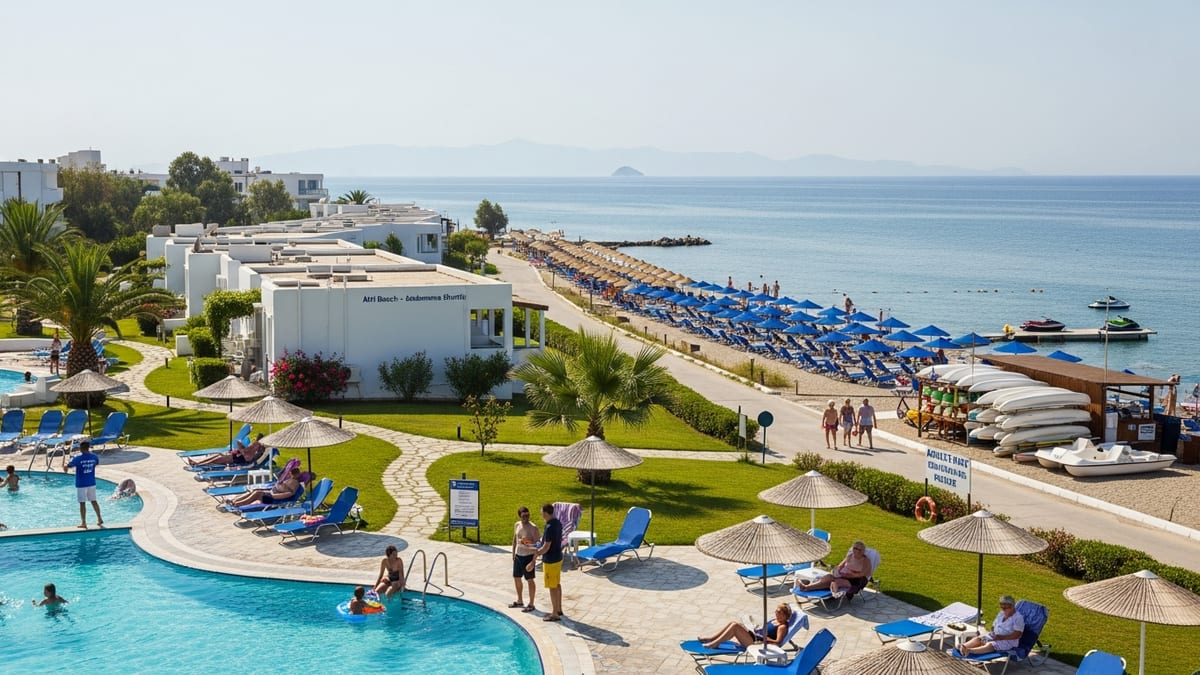
UK Remains a Cornerstone Market for Greek Tourism
The United Kingdom continues to rank among Greece’s top inbound markets, with recent tourism intelligence indicating that British arrivals now exceed 4 million visitors annually and generate close to 3 billion euros in travel receipts. Publicly available data from Greek and international tourism monitors shows that the UK is usually either the first or second foreign market by spending, highlighting its strategic importance for destinations across the Greek islands and mainland resorts.
According to published coverage summarizing Bank of Greece statistics, overall international arrivals to Greece rose to more than 40 million in 2024, with tourism revenue surpassing 21 billion euros. Within that growth, the UK’s share has been notable for both volume and higher average spending per visitor, reinforcing why Greek tourism stakeholders are prioritizing British carriers and tour operators in their expansion plans.
Industry analysts note that British travelers also demonstrate a long season, with strong demand from early spring through late autumn and an increasing appetite for city breaks and off-season cultural trips. This pattern supports Greece’s ambition to spread visitor flows more evenly throughout the year and beyond the most saturated sun-and-sea hotspots.
With tourism now a critical pillar of Greece’s economy, deeper engagement with the UK market is seen as a way to sustain growth while also upgrading the quality of services, infrastructure and experiences offered to British visitors.
Jet2 Scales Up Its Biggest-Ever Greek Programme
Jet2.com and Jet2holidays are playing a central role in Greece’s British tourism strategy. Company announcements show that the leisure airline and tour operator have rolled out what is described as their biggest-ever Greek programme, with more routes, frequencies and hotels on offer for summer 2025 and beyond. The expansion includes new destinations and routes from regional UK bases into popular Greek islands, cementing Jet2’s position as one of the principal carriers linking British holidaymakers with Greece.
Corporate filings and route updates indicate that Jet2 now serves Greece from a network of more than a dozen UK airports, including recent base launches such as Liverpool and London Luton and a planned operation from London Gatwick from March 2026. Aviation trade coverage reports that the Gatwick programme alone will include multiple Greek destinations among 29 summer routes, underlining the scale of capacity being directed into the country’s resorts.
Jet2’s focus on inclusive holiday packages through Jet2holidays is also boosting the Greek market. The operator has added well over one hundred new hotels across Greek destinations for upcoming seasons, according to its own programme announcements, supporting local accommodation providers ranging from large resorts to family-run properties. These additions feed into Greece’s broader strategy to attract higher-value visitors and diversify accommodation offerings.
By concentrating on mid- and upper-mid market British travelers seeking package holidays, Jet2’s growth is expected to lift arrivals particularly in classic leisure destinations such as Crete, Rhodes, Corfu, Kos and Zakynthos, but also to channel more traffic toward emerging island and mainland locations that fit the company’s “authentic but accessible” positioning.
British Airways and BA Holidays Deepen Greek Ties
Alongside Jet2, British Airways and its tour arm BA Holidays are reinforcing links between the UK and Greece. The flag carrier’s published route network shows seasonal and year-round services from London to key Greek destinations, including Athens and a wide range of islands during the summer peak. BA Euroflyer operations out of London Gatwick provide additional short-haul capacity on leisure routes, giving British travelers more choice of departure airport and schedule.
British Airways’ new-route announcements over the past two seasons emphasize a continued focus on European leisure markets, with Greece consistently featured among its core Mediterranean offerings. While new short-haul routes have also been introduced to destinations outside Greece, commentators in the aviation press highlight that robust demand for Greek holidays from UK residents has helped underpin BA’s wider short-haul strategy.
BA Holidays, which packages flights with hotels and local services, is likewise promoting Greek destinations as part of its curated beach and city-break portfolios. Publicly available marketing material showcases a mix of well-known islands and city stays in Athens and Thessaloniki, pointing to a dual objective of supporting both classic resort tourism and growing interest in cultural and gastronomy-focused trips.
The combined effect of network airlines such as British Airways and leisure specialists such as Jet2 is a denser web of connections between UK cities and Greek regions. Industry observers suggest that this layered capacity gives Greece greater resilience against shocks in any single segment, while giving British travelers more flexibility on price, timing and airport choice.
Connectivity Expansion Supports Sustainable Tourism Goals
Stronger air links with the UK are coinciding with Greece’s efforts to reposition itself as a leader in sustainable Mediterranean tourism. International organizations and development banks have documented collaborative projects on islands such as Rhodes and Santorini, where local authorities and partners are working on long-term strategies to balance economic benefits with environmental protection and community well-being.
In parallel, airlines serving Greece from the UK are publicizing investments in more fuel-efficient aircraft and voluntary carbon and sustainability initiatives. Jet2’s fleet renewal, which includes new-generation Airbus A321neo aircraft at some UK bases, is cited in company reports as a key lever for reducing emissions per passenger. British Airways has similarly outlined fleet and operational efficiency programmes designed to lower the environmental impact of its European network.
Greece is also using visitor-management tools to channel demand toward less crowded periods and lesser-known destinations. Tourism research published in 2024 and 2025 points to a policy emphasis on extending the season, encouraging visits to mainland regions and secondary islands, and promoting cultural, nature-based and wellness tourism. British travelers, who increasingly seek authentic experiences and are willing to travel in shoulder months, are a central audience for these initiatives.
Analysts argue that, taken together, enhanced air connectivity, diversified product offerings and sustainability-focused local planning can help Greece avoid the worst effects of overtourism. The UK market is viewed as particularly receptive to messaging on responsible travel and greener options, making British partnerships a testing ground for new approaches.
Sector Growth Prospects Remain Robust
Recent tourism and economic data indicate that Greece’s visitor economy is still on an upward trajectory, with solid year-on-year increases in both arrivals and revenue. Reports based on Bank of Greece figures show that travel receipts have continued to climb even faster than visitor numbers in some periods, suggesting a shift toward higher-value tourism.
With the UK delivering millions of visitors and several billion euros in spending each year, the continued expansion of Jet2, British Airways and BA Holidays into Greek destinations points to confidence in this growth story. Capacity additions from regional UK airports, combined with the presence of a full-service flag carrier at London hubs, position Greece to capture demand from both price-sensitive families and more affluent segments.
Sector analysts caution that challenges remain, including infrastructure pressures in peak season, climate-related risks and the need to ensure that tourism benefits are widely shared among local communities. However, the combination of strong British demand, expanding air and package capacity, and policy commitments to sustainable development gives Greece a solid platform to manage these issues while maintaining momentum.
As airlines finalize their summer 2026 schedules and tour operators put more Greek product on sale, indications are that the UK will continue to be one of the primary engines of growth for Greek tourism. The evolving partnership between Greece, Jet2, British Airways and BA Holidays is set to shape not only travel volumes, but also the quality and sustainability of the tourism experience in the years ahead.