


More news on this day
The United Kingdom has tightened its travel advisory for Turkey, placing the country alongside a growing list of higher-risk destinations such as Russia, Iran, Saudi Arabia, the United Arab Emirates, Iraq and Syria, as regional conflict, airspace closures and fast-changing border rules complicate journeys across Europe, the Caucasus and the Middle East.
Get the latest news straight to your inbox!
Turkey Joins Expanding List of High-Risk Destinations
Fresh guidance from the UK Foreign, Commonwealth and Development Office (FCDO) in early May 2026 shows Turkey now more firmly embedded in a band of countries where British travellers are urged to reconsider or avoid trips due to security threats and instability. Updated government advice highlights a heightened risk environment, reflecting spillover from the ongoing Iran-centred conflict and associated missile activity across the region.
According to publicly available FCDO information, the advice now includes explicit warnings against travel to certain areas within Turkey, particularly near the borders with Syria and Iraq, where security operations, cross-border tensions and the threat of terrorism are elevated. This aligns Turkey more closely with long-standing “avoid all travel” or “avoid all but essential travel” designations already applied to Syria, Iraq and Iran, and with stricter guidance recently extended to Russia due to its own security posture and geopolitical tensions.
Travel industry analysis and recent commentary note that Turkey remains open to tourism in core coastal and city destinations, but is no longer treated as a routine low-risk holiday choice for UK travellers. Prospective visitors are being urged to monitor updates frequently, as the official status of specific provinces and transport corridors is being revised at short notice.
Regional Conflict Drives Airspace Closures and Route Disruptions
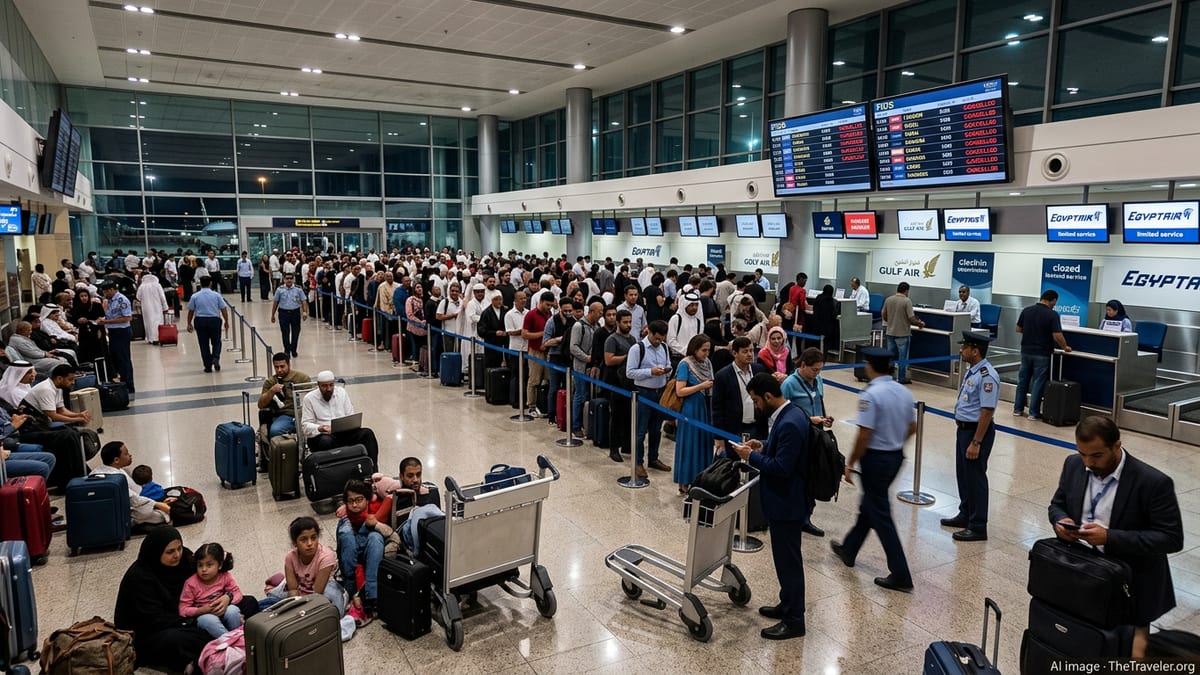
The hardening of the advisory for Turkey coincides with an unprecedented patchwork of airspace closures and flight restrictions across the Middle East and adjacent regions, affecting Russia, Iran, Iraq, Syria, the Gulf states and key transit hubs. Over recent months, large sections of airspace over Iran, Iraq, Israel, Qatar, Kuwait and Syria have been shut or heavily constrained in response to missile exchanges and drone attacks, disrupting long-haul routes between Europe, Asia and Australasia.
Airlines serving the UK market have adjusted by diverting flights south over Egypt, Saudi Arabia and Oman or north via the Caucasus and Central Asia, lengthening journey times and raising costs. Industry briefings highlight ongoing concerns about GPS interference and electronic jamming in parts of the region, which add a further operational challenge even where routes technically remain open.
As a result, Turkey’s position as a major aviation crossroads between Europe and Asia is under renewed scrutiny. While its airports continue to handle substantial international traffic, the proximity of Turkish airspace to conflict zones and missile trajectories has led to a more cautious stance from some carriers and insurers. Passengers are being advised to expect late-notice rerouting, extended flight times and, in some cases, cancellations if regional tensions spike.
Border Controls and Overland Routes Under Strain
Beyond aviation, cross-border travel by land between Turkey and its neighbours is becoming more complex. Publicly accessible advisories from several governments describe tightened controls, temporary closures and enhanced screening at crossings with Syria and Iraq, and intermittent movement restrictions along the Iran–Turkey frontier linked to evacuation efforts and military deployments.
Travellers who previously relied on overland itineraries through Turkey to reach the Caucasus, northern Iraq or onward to the Gulf are encountering heavier documentation checks, more frequent curfews and sporadic closures. Guidance from international travel-security providers suggests that bus and car routes that were once popular with backpackers and regional workers are now vulnerable to abrupt disruption, with little advance notice.
Within Turkey itself, regional security zoning has reportedly been refined, with particular attention to southeastern provinces close to conflict-affected borders. While domestic transport networks remain largely operational, localised checkpoints, military convoys and restricted areas are more common in these districts, prompting foreign visitors to reassess road trips and independent travel outside established tourism corridors.
Insurance, Transit Hubs and the Changing Risk Map
The UK’s updated stance on Turkey feeds into a wider recalibration of risk ratings across Russia, Iran, Saudi Arabia, the UAE, Iraq, Syria and other states touched by the current crisis. Travel insurers and corporate risk consultancies have progressively expanded exclusion zones and raised premiums for itineraries that include transits or stopovers in high-alert countries, even where short airport transfers were once considered routine.
Reports from the insurance sector indicate that some policies now exclude cover for trips that transit via airports in states listed under “do not travel” or equivalent warnings, including Iran, Iraq, Syria and parts of the Gulf. Where Turkey appears in policy documentation, it is increasingly flagged as a location where cover may be conditional on avoiding specified border regions or complying with strict routing rules.
Major hubs in the UAE and Saudi Arabia, previously marketed as seamless gateways between continents, have also seen their risk profiles revised. Following missile interceptions and airspace disruptions, some governments advise against non-essential travel to or through particular Gulf states, with implications for passengers who might once have regarded a connection in Dubai, Abu Dhabi, Doha or Riyadh as a neutral choice. The cumulative effect is a regional network where seemingly small changes in advisory language can have significant consequences for ticket validity and insurance protection.
Practical Considerations for UK Travellers Planning Trips
For UK residents considering travel to Turkey or onward to Russia, Iran, Saudi Arabia, the UAE, Iraq, Syria and neighbouring states, experts recommend treating official advisories as a live, trip-critical resource rather than a static reference. The FCDO’s Turkey page has seen multiple updates in recent weeks, and similar adjustments are being recorded for other destinations as the conflict and its knock-on effects evolve.
Travel specialists suggest that anyone with bookings involving Turkish, Russian or Middle Eastern airspace should check airline communications and government advice repeatedly in the days and hours before departure. Route changes outside Europe can trigger missed connections, altered arrival times and, in some cases, forced overnight stays in cities that may themselves be under higher-risk advisories.
Prospective travellers are also being urged to scrutinise their insurance documents for clauses relating to war, terrorism and government warnings, and to consider flexible tickets or alternative routings via less affected regions where possible. While many parts of Turkey remain open and operational for tourism, its inclusion in a tightening ring of higher-risk destinations underscores how quickly the practical realities of regional travel can change in the current environment.