

More news on this day
Grounded and heavily delayed flights at Nashville International Airport in early April 2026 are sending fresh shockwaves through already strained North American air travel networks, compounding a broader pattern of springtime disruption for airlines and passengers.
Get the latest news straight to your inbox!
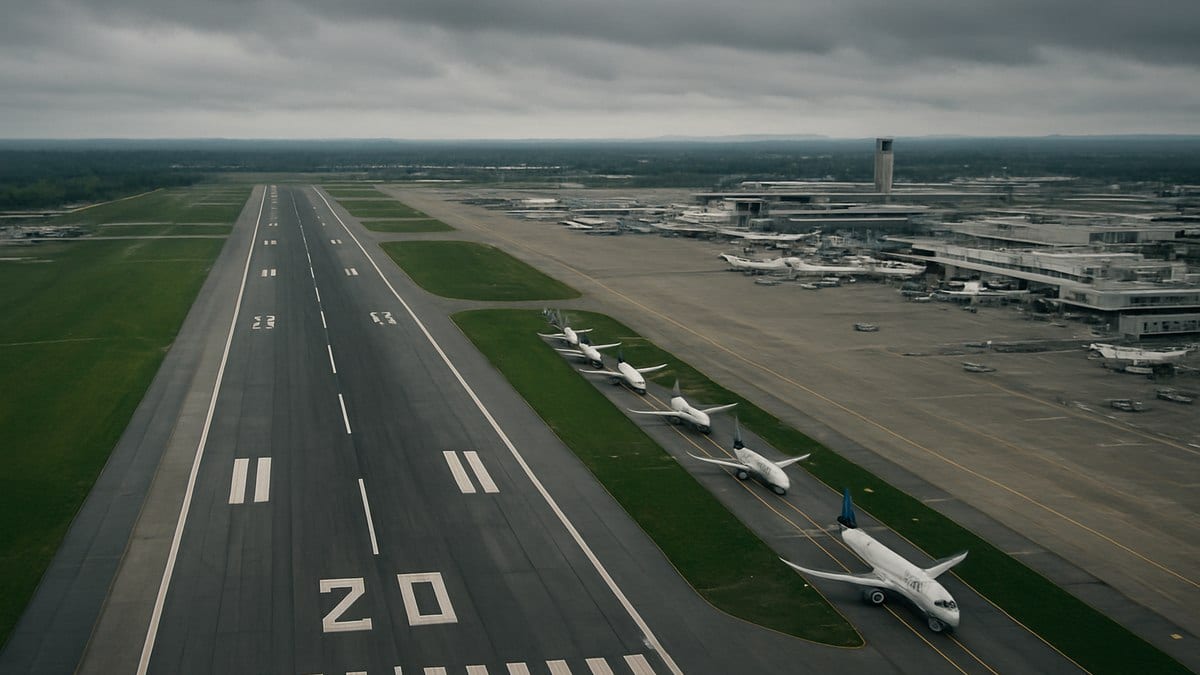
Nashville Disruptions Hit During a Fragile Week for U.S. Aviation
Publicly available flight-tracking data and recent industry coverage indicate that Nashville International Airport has endured multiple days of elevated disruption in the first full week of April 2026, with clusters of grounded and delayed departures affecting links to major hubs such as Atlanta, Chicago, Dallas and New York. The latest wave follows a March period marked by severe weather across key U.S. corridors, which left airlines with little margin to absorb new operational shocks.
Reports compiled from national delay and cancellation tallies show that Nashville’s difficulties are unfolding at the same time as broader U.S. and Canadian networks grapple with lingering spring storm impacts, airport flow-control measures and airline-specific operational strains. With many carriers still working through backlogs from late March and the busy Easter travel period, even a localized spike in grounded flights at a mid-sized hub can quickly translate into missed connections and rolling delays across the continent.
Recent data snapshots for April 5 through April 8 highlight Nashville as one of several regional airports where delays have outpaced normal seasonal patterns. On some days more than 100 flights touching the Tennessee hub were reported delayed or cancelled, underscoring how secondary airports can become pressure points when the wider system is already stretched.
Travel-industry analyses note that Nashville’s role as both an origin-and-destination market and a connecting node for certain domestic itineraries amplifies the impact. When departures are grounded or pushed back in large numbers, inbound and onward flows to and from cities such as Toronto, Montreal, Vancouver and key U.S. gateways can be thrown off balance for much of the day.
Ground Stops and Weather Controls Feed a Chain Reaction
While precise, real-time causes vary by flight and carrier, publicly accessible aviation data and regulatory filings indicate that a mix of weather-related traffic management initiatives, ground delay programs and thunderstorm activity across the central and southeastern United States have all played a role in the early-April snarls. These measures, often introduced by air-traffic managers when storms or low visibility reduce airport capacity, compel airlines to hold aircraft at the gate or on the ground at origin airports such as Nashville.
In practice, such ground stops can leave aircraft and crews out of position for the rest of the day, especially when they affect busy morning or early afternoon departure banks. Travel advisories and service notes issued by carriers for cities including Houston and Chicago in late March and early April show that even short-lived storms can translate into hours of downstream disruption as missed connections and crew rest requirements force schedule reshuffles.
For Nashville, this backdrop has meant that flights grounded for operational or weather-control reasons do not exist in isolation. Aircraft that fail to depart on time for Chicago O’Hare, Dallas Fort Worth, Denver or Atlanta may be scheduled to operate subsequent legs into Western Canada, the Northeast corridor, or cross-border routes linking U.S. gateways with Mexico and the Caribbean. A cancellation or extended ground hold at Nashville can therefore remove a critical aircraft from later rotations, complicating recovery efforts throughout the day.
Analysts tracking recent U.S. disruption waves point to a pattern where once the national system tips into sustained delay mode, individual airports like Nashville can experience prolonged knock-on effects. Even after local weather clears, residual ground holds imposed at distant hubs, together with limited spare aircraft and crews, can extend the impact well into following days.
Network Effects Reach Across North American Hubs
Recent summaries of North American flight performance for late March and early April 2026 show that the latest Nashville problems are landing in an environment already burdened by high nationwide disruption totals. Data compiled from multiple tracking platforms indicates that in recent days single-day counts of more than 4,000 delayed flights and several hundred cancellations have not been unusual across the United States, impacting major hubs from Atlanta and Chicago to New York, Houston, Dallas and Las Vegas.
When Nashville departures are grounded or significantly delayed on top of this elevated baseline, the effects ripple outward along key corridor routes. Travelers relying on Nashville as a first leg toward transcontinental or transborder journeys have reported tighter connection windows at downstream hubs, raising the risk of misconnected flights to Canada, Mexico and coastal U.S. destinations. Industry commentary notes that this pattern is particularly visible on complex itineraries involving multiple short-haul segments feeding a single long-haul departure.
These network effects have also been evident in airline-specific statistics published in recent days, with some carriers logging hundreds of delayed flights across their systems on top of smaller numbers of outright cancellations. Because many airlines run tight schedules that rely on rapid aircraft turnarounds, a grounded departure out of Nashville can force a cascade of rebookings, aircraft swaps and crew reassignments by mid-afternoon.
Observers of the current disruption wave argue that mid-tier nodes such as Nashville, Kansas City and Raleigh-Durham play an outsized role in determining whether national operations stabilize after a weather system or deteriorate further. When multiple such airports simultaneously report grounded or heavily delayed departures, the combined effect can be nearly as destabilizing as a single major hub meltdown.
Travelers Confront Rolling Delays and Shorter Connection Windows
For passengers, the practical impact of grounded flights at Nashville has been most visible in the form of rolling delays, sudden gate changes and shrinking connection times. Publicly available accounts from recent travel days describe itineraries in which an initial short delay departing Nashville quickly eroded what had appeared to be a comfortable layover at a larger hub, leaving travelers rushing between concourses or seeking same-day alternatives after missed connections.
Travel guides and consumer-advocacy resources monitoring the spring 2026 disruptions suggest that this year’s pattern is particularly challenging for passengers with tightly timed domestic-to-international connections. When the first leg out of Nashville is held on the ground, either by local weather or traffic management restrictions further along the route, the margin for error on transborder or long-haul departures can vanish within minutes.
Advisories published in recent days encourage travelers starting their journeys in cities such as Nashville to build in additional connection time where possible, especially when routing through hubs prone to thunderstorms or congestion during the spring months. With airlines operating close to capacity on many popular routes, last-minute rebooking options may be limited, and same-day alternatives can involve overnight stays or complex detours through secondary airports.
Industry analyses further note that passengers affected by grounded flights at Nashville and other U.S. airports are navigating a patchwork of compensation and rebooking rules. While many disruptions in the current wave are tied to weather and air-traffic decisions that typically fall outside formal compensation frameworks, carriers are still expected to provide updated information, basic customer support and re-accommodation where seats are available.
Outlook for the Remainder of April 2026
Looking ahead to the rest of April, meteorological forecasts and aviation-planning documents point to a continued risk of weather-related disruption across central and eastern North America, including regions that feed traffic through Nashville. Spring storm systems and shifting jet stream patterns can trigger renewed rounds of flow-control measures at large hubs, which in turn may prompt additional ground holds for departures from cities like Nashville, St. Louis and Cincinnati.
Airport planning materials and recent board presentations for the Nashville airport authority highlight ongoing investment in terminal, ramp and airfield infrastructure intended to enhance resilience as passenger volumes grow. However, analysts caution that infrastructure alone cannot eliminate the vulnerability of interconnected airline networks to sudden weather events, technical issues or staffing constraints in distant parts of the system.
For now, publicly available operational data suggests that the North American network remains in a recovery cycle following the intense late-March and early-April disruption phase. If weather conditions moderate and carriers succeed in rebuilding schedule reliability through mid-month, the cascading impact of localized issues such as grounded flights at Nashville may ease.
Until that reset fully takes hold, travel experts advise that passengers using Nashville International Airport build flexibility into their plans, monitor flight status closely on day of travel and prepare for the possibility that even short ground delays can have outsized consequences across a fragile North American aviation grid.