

More news on this day
Grounded departures and rolling delays at Nashville International Airport in early April 2026 triggered fresh disruption across North America’s already strained air travel network, according to aviation data and travel industry reports.
Get the latest news straight to your inbox!
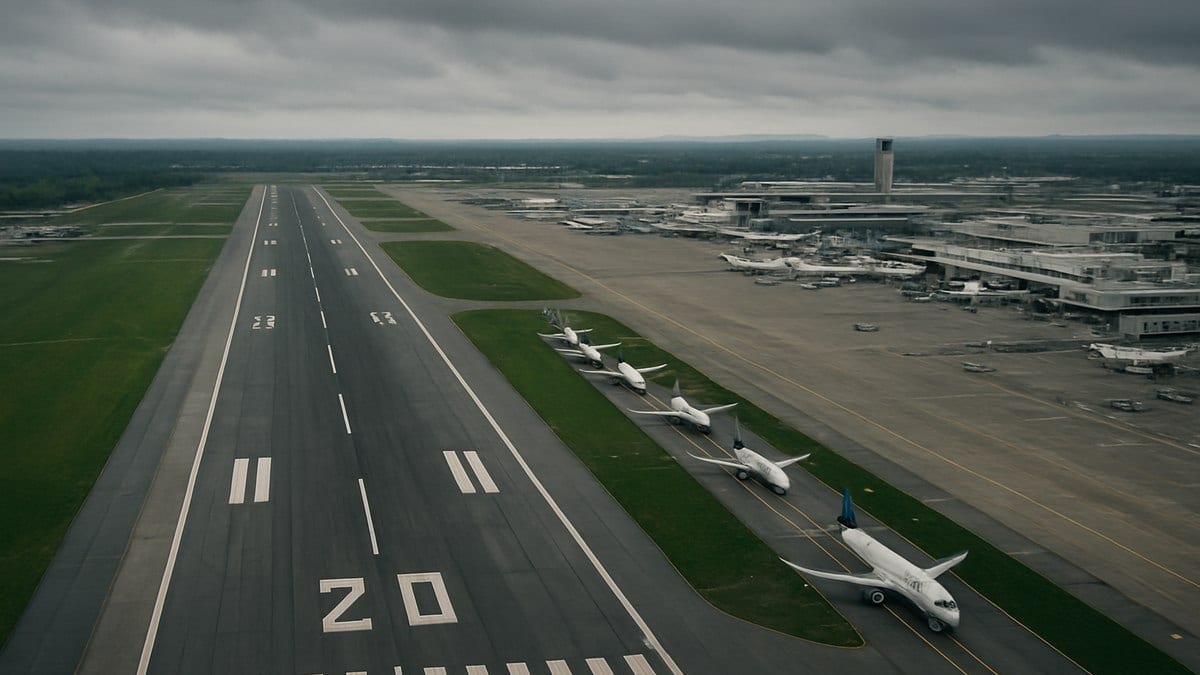
Ground Stops at BNA Collide With a Fragile Spring Network
Early April is traditionally one of the busiest periods for North American airlines, with spring break traffic pushing airports close to capacity. This year, publicly available flight tracking data and travel industry coverage point to Nashville International Airport as a flashpoint, as ground delays and intermittent ground stops compounded wider system pressures.
On and around April 5, published coverage focused on elevated disruption levels at Nashville, with more than 100 delayed flights and a cluster of cancellations recorded in a single day. The pattern carried into the following week, when additional reporting highlighted dozens of fresh delays tied to major domestic carriers serving the airport, including large numbers of late departures on routes to Atlanta, New York and Dallas.
These interruptions did not occur in isolation. Data snapshots from the same period show major hubs such as Dallas Fort Worth, Chicago and Atlanta grappling with heavy delay volumes, creating a backdrop in which any localized problem, including a ground stop or prolonged ground delay program at Nashville, could quickly affect travel options far beyond Tennessee.
Travel analysts note that carriers entered April with limited spare aircraft and crew capacity after a winter of weather disruptions and high demand. In that context, a single day of grounded or heavily delayed flights at a midsize node like Nashville can set off a chain of missed connections, out of position aircraft and rolling schedule adjustments across multiple days.
Ripple Effects Across Key North American Hubs
Because Nashville sits on dense domestic corridors linking the Southeast and Midwest to coastal gateways, grounded flights there tend to have immediate consequences at larger hubs. Passenger itineraries commonly route through Nashville on the way to or from cities such as New York, Chicago, Dallas, Denver and Los Angeles, meaning that any prolonged departures halt can reverberate widely.
Reports from flight data aggregators during the first week of April indicate that hubs including Dallas Fort Worth and Atlanta were already experiencing triple digit daily delay counts. When aircraft scheduled to feed those hubs from Nashville were held on the ground or arrived late, it contributed to tighter turnaround times and increased risk of missed connection windows for onward flights.
Travel coverage from the period describes travelers arriving at downstream hubs with less than an hour to change terminals or clear security rechecks after late arrivals from Nashville. Even when airlines managed to complete the connection, the strain on boarding processes, baggage transfers and crew duty time limits built additional friction into a network that was already close to saturation.
The cascading effect extended beyond the United States. International departures from major Canadian and Mexican gateways that rely on feeder traffic from U.S. hubs also experienced knock on disruption, as late arriving passengers from Nashville and other secondary cities pushed boarding and departure times closer to curfew limits.
Construction, Capacity and Operational Headwinds at Nashville
The timing of the April disruptions coincided with significant infrastructure work at Nashville International. Airport materials describe an eighteen month program focused on the terminal’s central core, including changes to the main circulation area that links ticketing, baggage claim and ground transportation. While airlines and the airport continued regular operations, the construction program reduced some flexibility in how passengers and staff move through the building.
Separate airport updates detail temporary changes to pedestrian access between the terminal and parking structures during early April, requiring some travelers to use alternate routes during overnight periods. Although these adjustments were planned and communicated in advance, they added a layer of logistical complexity at a time when the airfield and terminal were already coping with high passenger volumes.
Industry commentators have also pointed to longer running structural challenges. Air traffic control staffing levels at facilities serving Nashville and other regional hubs have periodically prompted use of ground delay programs and short ground stops in recent years during peak periods or adverse weather. When combined with construction constraints inside the terminal, these operational headwinds can lower the margin for error on days with strong demand.
The result in early April was a convergence of factors: heavy seasonal traffic, infrastructure work that reshaped passenger flows, and a national environment in which many carriers were recovering from earlier waves of disruption. Grounded flights at Nashville were a visible symptom of that broader strain rather than an isolated event.
Travelers Face Longer Journeys and Changing Advice
For travelers, the most immediate impact of the grounded flights and associated delays at Nashville was time. Reports from the period describe passengers enduring extended waits on the ground before takeoff, last minute gate changes and missed connections at larger hubs, sometimes resulting in unexpected overnight stays or rerouted itineraries through distant cities.
Travel news outlets covering the episode note a shift in practical advice emerging from consumer advocates and frequent traveler communities. Traditional guidance to allow at least an hour for domestic connections at a hub is increasingly being replaced by calls for far longer buffers when itineraries involve multiple busy airports or tight evening connections during high demand seasons.
Publicly available guidance also emphasizes active monitoring of flight status via airline apps and airport displays on the day of travel, as delay programs and ground stops can be imposed or lifted with relatively little advance notice. In the April disruptions, passengers who adapted quickly to schedule changes, including volunteers for rebooking before flights became oversold, often secured more favorable alternatives.
At the same time, the experience at Nashville in April has reinforced the importance of flexible planning for travelers headed to time sensitive events, from business meetings to concerts and sporting fixtures. Travel planners increasingly recommend arriving a day early when itineraries pass through nodes that have recently experienced elevated disruption, even when published schedules appear normal.
What the Nashville Disruptions Reveal About Systemic Fragility
Beyond individual delays, the grounded flights at Nashville in April 2026 have added to a growing body of evidence that the North American air travel network is vulnerable to cascading failures. In the week surrounding the Nashville events, multiple reports documented more than ten thousand daily delays across the continent on peak days, along with several thousand cancellations.
Policy researchers and transport analysts argue that this pattern reflects structural issues rather than isolated storms or staffing shortfalls. Airlines are operating tightly optimized schedules with limited slack, while several major airports are approaching or exceeding design capacity during peak hours. Under these conditions, a relatively modest local disruption can grow into a regional or national event within hours.
According to recent commentary, the concentration of traffic at a small number of dominant hubs increases the risk that issues at secondary connectors like Nashville will have outsize consequences. When those connectors experience ground stops or large numbers of late departures, the impact is multiplied through missed inbound and outbound waves at the big hubs they feed.
For now, travelers remain the most visible victims of this fragility, experiencing longer journeys, higher stress and greater uncertainty. The April disruptions at Nashville highlight how quickly everyday operations can become unstable when the wider system is already under strain, and they renew questions about how carriers, airports and regulators will build resilience into an increasingly busy sky.