

More news on this day
Ground stops and rolling delays at Nashville International Airport in early April 2026 are sending shockwaves through already strained North American air travel networks, complicating spring break trips and business travel across the continent.
Get the latest news straight to your inbox!
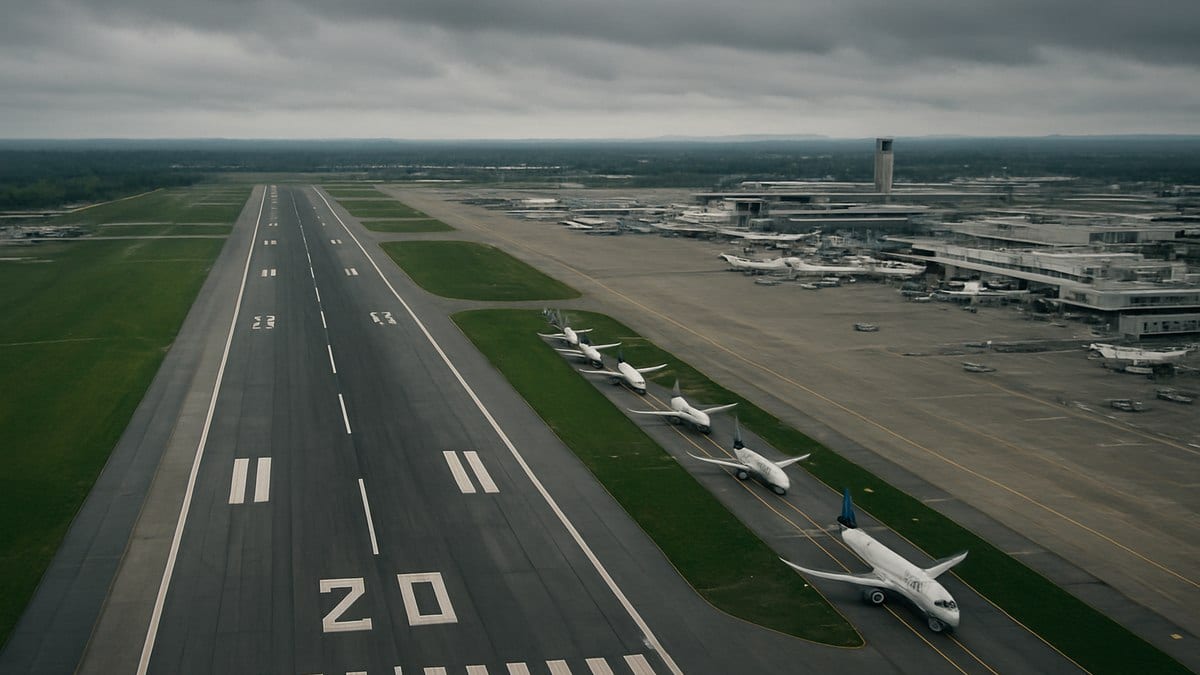
Ground Stops at BNA Converge With a Busy Spring Travel Season
Publicly available flight-tracking data and airline status boards show that a series of ground stops and flow-control measures at Nashville International Airport in April 2026 have slowed departures and arrivals, particularly during peak morning and late-afternoon banks. While not on the scale of the largest coastal hubs, Nashville’s role as a fast-growing connecting point means even short suspensions of takeoffs can quickly translate into missed connections and rolling delays across multiple carriers’ networks.
These constraints are arriving at a moment when U.S. carriers are forecasting record-breaking spring passenger volumes. Industry groups have projected that airlines will handle millions of travelers per day through March and April, with leisure demand, conference travel, and sports-related trips all converging. In that environment, any airport that briefly halts or sharply curtails movements, even for safety or weather reasons, can become a pressure point for the wider system.
Reports from consumer travel platforms indicate that on several April days, Nashville’s departure board showed clusters of flights pushed back by 60 minutes or more, alongside targeted cancellations on routes feeding into already congested hubs. For travelers ticketed through major connection points such as Dallas, Atlanta, Chicago, and New York, those delays in Tennessee often translated into missed onward segments and unexpected overnight stays.
While airlines have emphasized operational safety and compliance with traffic management directives, publicly available information suggests that carriers serving Nashville have been using a mix of tactics to cope with the disruption. These include holding departures on the ground until downstream constraints ease, rerouting flights around chokepoints, and selectively canceling lower-volume services to protect core trunk routes.
Staffing Limits and Weather Amplify Operational Strain
Operational advisories and previous coverage of the region’s aviation infrastructure show that staffing challenges at air traffic control facilities in and around Nashville have been a recurring concern heading into 2026. Earlier FAA communications highlighted that some facilities serving the area were already operating with thin margins, increasing the likelihood that surges in traffic or adverse weather could trigger ground delay programs or temporary ground stops.
April’s pattern of disruptions has coincided with unsettled spring weather across the eastern half of the United States. Severe thunderstorms, low cloud ceilings, and high winds have affected multiple major hubs within a short timeframe, forcing air traffic managers to meter arrivals into constrained airspace. When upstream airports implement arrival holds or slow down departure rates, midsize connection points such as Nashville can quickly become saturated with aircraft waiting for release times.
Travel-industry analyses describe a cascading effect: a line of storms in one region prompts holding patterns and reduced arrival rates; as those delays propagate, aircraft and crews arriving late into Nashville cannot turn quickly enough to operate onward flights on schedule. The result is an expanding ring of disruption radiating outward from a relatively small number of weather-impacted airports, magnified by pre-existing staffing and infrastructure limits.
Observers note that Nashville has faced similar pressure during recent winter storms, when icing conditions and runway treatments reduced airport capacity even as airlines attempted to preserve as much of the schedule as possible. Taken together with April’s ground stops, the latest issues underscore how seasonal weather, staffing constraints, and surging demand can converge to challenge a regional hub’s resilience.
Knock-On Effects Across North American Hubs
By early April, delay statistics compiled by flight-data services and passenger-rights organizations show elevated disruption levels not only in Nashville but across a constellation of North American airports. Major hubs including Dallas/Fort Worth, Atlanta, Miami, and New York have all recorded days with hundreds of delayed flights as storms, air traffic control programs, and congestion converged. When Nashville-originating flights feed into those already stressed hubs, the combined effect can be severe.
Travel coverage indicates that some itineraries involving connections from Nashville to transcontinental or transatlantic routes have been particularly vulnerable. Travelers reported missed evening departures to West Coast cities and onward long-haul flights after relatively modest delays on their initial segments from Tennessee. Because many of those long-haul flights operate only once per day, a single missed connection often forces a full rebooking and a one-day or longer delay in reaching the final destination.
Industry-focused reporting also highlights how disruptions at midsize hubs like Nashville interact with separate problem clusters overseas. In early April, Asia-Pacific hubs experienced their own wave of delays and cancellations, leaving some aircraft and crews out of position for North America-bound routes. When those long-haul flights arrive late and attempt to funnel passengers through already congested U.S. connection points, the margin for absorbing additional ground stops or holding patterns at airports such as Nashville shrinks dramatically.
Airline timetable adjustments in recent months have tried to rebuild some resilience by lengthening scheduled connection times on certain routes and adding slack to overnight aircraft rotations. However, analysts note that tight aircraft utilization and high demand limit how much buffer carriers can realistically add. In practice, that means that a ground stop of even 45 minutes at a busy time of day in Nashville can still ripple across the system for hours.
What Travelers Through Nashville Are Experiencing
Travel diaries, social media posts, and user reports to delay-compensation services paint a picture of long but generally orderly lines at Nashville’s check-in counters and security checkpoints during the most affected days. Many passengers describe being held on board aircraft parked at gates or remote stands while waiting for release slots, with departure times shifting repeatedly as air traffic managers adjusted flow rates into downstream airspace.
Some travelers connecting through Nashville have reported particularly tight margins when their inbound flights arrived late from other constrained hubs. Shortened layovers, sometimes reduced to under an hour, left little time to navigate terminal changes or re-clear security where required. When large numbers of passengers misconnected at once, rebooking desks and customer-service lines quickly grew, even as airlines encouraged travelers to use mobile apps and digital tools for self-service changes.
Consumer advocates note that while many disruptions this April appear tied to weather patterns and system-level traffic management, carriers still retain obligations to provide basic care and assistance. Published guidance from passenger-rights organizations emphasizes that airlines operating from U.S. airports are expected to offer rebooking options, refunds when flights are canceled, and in some circumstances meal vouchers or hotel accommodation, depending on the cause and anticipated length of the disruption.
For travelers, publicly available advisories continue to stress familiar but increasingly critical practices: allow generous connection times when routing through multiple hubs, especially during the spring storm season; monitor flight status closely on the day of travel; and consider early-morning departures, which often face fewer knock-on delays from earlier disruptions in the network. For those departing Nashville specifically, checking both airport and airline communications before leaving for the terminal can provide an early warning of emerging ground stops or capacity reductions.
Prospects for Relief as April Progresses
Looking ahead to the remainder of April 2026, aviation planners and industry observers are watching several factors that could determine whether disruptions linked to Nashville ease or intensify. On the positive side, extended forecasts suggest that some of the strongest storm systems may move out of the central and eastern United States by mid-month, potentially reducing the frequency of severe weather days that necessitate aggressive ground delay programs.
At the same time, operational bulletins and trade coverage highlight ongoing efforts to refine traffic management procedures and transition to updated information systems during 2026. Improvements to how notices to air missions and flow-control directives are disseminated are intended to give airlines and dispatchers clearer, faster insights into capacity constraints, allowing more precise scheduling and rerouting decisions that could reduce last-minute ground stops.
However, structural challenges remain. Reports on controller staffing and airport infrastructure investment indicate that facilities serving rapidly growing markets, including Nashville, will likely face continued strain until recruitment, training, and modernization initiatives fully take hold. Given that those timelines often stretch over several years, travelers can expect that any future spikes in demand or bouts of severe weather may again test the resilience of the system.
For now, April 2026 is shaping up as another stress test for North American aviation. Grounded flights and rolling delays in Nashville have become one visible manifestation of broader pressures across the continent’s air travel network, illustrating how a single airport’s constraints can reverberate through a complex web of routes, hubs, and passenger itineraries.