

More news on this day
Widespread airspace closures in Bahrain, the United Arab Emirates, Qatar and Kuwait following a sharp escalation in the Iran war have thrown global flight networks into disarray, shuttering key Gulf hubs, grounding thousands of services and leaving travelers from Asia to Europe scrambling for alternative routes.
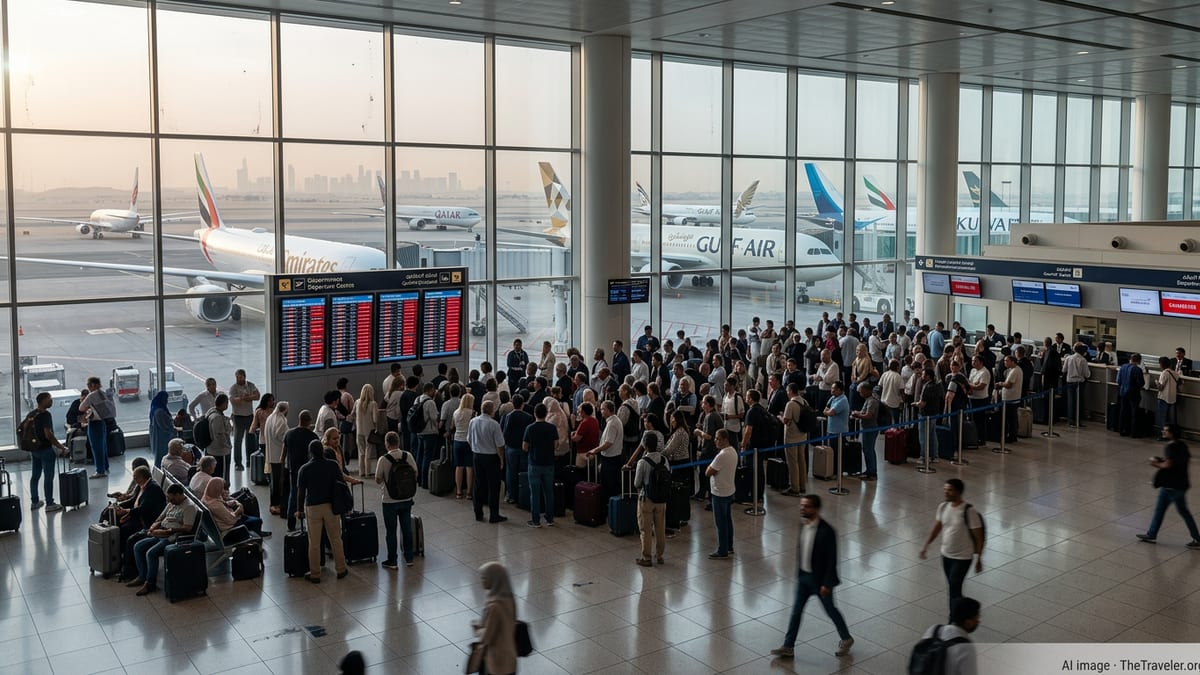
How the Gulf Airspace Closures Unfolded
The shutdown of Gulf skies began on February 28, 2026, when Bahrain, Kuwait, Qatar and the United Arab Emirates moved almost in tandem to close their airspace after United States and Israeli strikes on Iran triggered retaliatory missile and drone attacks across the region. Aviation authorities framed the steps as emergency safety measures as military activity intensified around key civilian corridors.
In Bahrain, civil aviation officials warned that air traffic at Bahrain International Airport would be “affected” after the kingdom closed its airspace, effectively curtailing its role as a regional connector. Kuwait followed with a full airport shutdown and airspace closure, halting Kuwait Airways and low-cost carrier Jazeera Airways operations and cutting another important Gulf link out of global schedules.
Qatar, home to Doha’s Hamad International Airport and Qatar Airways’ vast transfer network, confirmed that Qatari airspace was closed and that the national carrier’s scheduled passenger operations were temporarily suspended. The airline has since extended the halt several times, while preparing limited repatriation and relief flights when safe corridors are approved.
In the UAE, one of the world’s most critical aviation gateways, authorities initially announced a “temporary and partial” airspace closure. In practice, commercial traffic at Dubai International, Dubai World Central and Abu Dhabi International dropped sharply, with most scheduled flights cancelled or suspended as missile and drone interceptions were reported over Emirati territory.
Impact on Global and Regional Flight Networks
The combined effect of airspace closures in Bahrain, Qatar, Kuwait and the UAE has been dramatic. Major Gulf hubs that normally handle tens of thousands of passengers each day have seen regular schedules wiped from departure boards, with only a trickle of emergency, cargo, repatriation or specially approved services operating along tightly controlled corridors.
Airlines based in the region, including Emirates, Etihad Airways, Qatar Airways and Kuwait Airways, have cancelled or paused large portions of their networks. International carriers that relied on overflying Gulf states or routing passengers through Dubai, Abu Dhabi or Doha have been forced to scrap services entirely or design longer, fuel-intensive detours that skirt closed airspace.
This has reshaped routings between Europe, Africa and the Indian subcontinent, as well as between Asia and North America. With Gulf transfer hubs constrained, some carriers have shifted passengers to alternative waypoints such as Muscat, Jeddah or European and Central Asian hubs, while others have chosen to suspend Middle East operations altogether until conditions stabilize.
The strain is not limited to passenger flights. Cargo operators are grappling with diverted routings, higher fuel burn and tight slot availability at alternative airports, issues that are beginning to ripple into global supply chains. Freight movements for pharmaceuticals, perishables and time-sensitive goods are being prioritized on the limited capacity that remains.
What Travelers Are Experiencing on the Ground
For travelers, the closures have translated into sudden cancellations, long-haul diversions and significant uncertainty. Hundreds of thousands have been left in limbo at airports from South Asia to Europe after aircraft bound for Gulf hubs were ordered to turn back, land at secondary airports or remain grounded until further notice.
In Dubai and Abu Dhabi, passengers have faced days-long waits as airlines rebook itineraries or arrange special evacuation flights once regulators clear narrow operating windows. Many have found themselves unexpectedly routed through alternative cities, sometimes with overnight hotel stays and visa complications, particularly for those on tight work or residency timelines.
Doha’s closure to regular traffic has been especially disruptive for transit passengers, as Qatar Airways’ network normally offers one-stop links between dozens of cities. With commercial operations suspended, travelers with tickets through March have had to navigate changing policies on refunds, date changes and rerouting via completely different regions.
In Kuwait and Bahrain, where full-scale international transit is smaller but still significant, outbound residents and inbound visitors have reported difficulty getting timely information. Reduced staffing at airports and call centers, together with overloaded airline websites and apps, has made it harder for passengers to confirm whether newly announced relief services include their routes.
Rerouted Flights, Longer Journeys and Rising Costs
Even when flights do operate, the closure of key Gulf airspace means many routes now take significantly longer. Aircraft that once flew efficient great-circle tracks across the Gulf must instead loop south over the Arabian Sea, detour via open Saudi or Omani corridors, or in some cases route far north through Turkey or Central Asia, adding hours to flight times.
These extended routings are increasing fuel consumption and crew duty times, both of which carry cost implications. Airlines are warning that sustained disruption could filter through to higher fares, surcharges or tighter seat availability, particularly on popular Asia–Europe and Asia–North America corridors that traditionally rely on Gulf transit capacity.
Schedule reliability has also deteriorated. Where carriers can operate, departure times remain subject to last-minute changes as new airspace notices are issued and military activity fluctuates. A flight that appears on time in the morning can be delayed or pulled from the schedule by afternoon if a corridor is closed or a missile interception is reported along its path.
For some travelers, especially those on complex itineraries involving multiple connections, the safest option in the short term may be to postpone non-essential travel through the region altogether, or to seek routings that avoid the Gulf even if that means additional stops and higher prices.
Key Advice for Travelers With Upcoming Gulf Itineraries
Authorities and airlines across Bahrain, the UAE, Qatar and Kuwait are urging passengers not to proceed to the airport unless they have received direct confirmation that their flight is operating. Many services remain cancelled even when booking engines or third-party sites have not yet been fully updated to reflect the continuing airspace restrictions.
Travelers with upcoming tickets that involve transits through Dubai, Abu Dhabi, Doha, Kuwait City or Bahrain are being offered a mix of options, including free date changes within specified windows, rerouting via alternative hubs where space is available, or full refunds. Policies vary by airline and are being updated frequently as the situation evolves, so passengers should check official carrier channels regularly.
Those already stranded in the region or at outstation airports should expect that relief and repatriation flights will be prioritized for residents, citizens and travelers whose original routes have no viable alternatives. Hotel accommodation, meal vouchers and ground transport are being provided unevenly, depending on the airline, ticket type and local regulations.
With the regional security situation fluid and no firm timetable for a full reopening of airspace, anyone planning future travel through the Gulf is advised to build in longer connection times, keep itineraries flexible and consider travel insurance that clearly covers war-related disruptions. Until Bahrain, the UAE, Qatar and Kuwait fully reopen their skies, flying across the Middle East will remain unpredictable.