

More news on this day
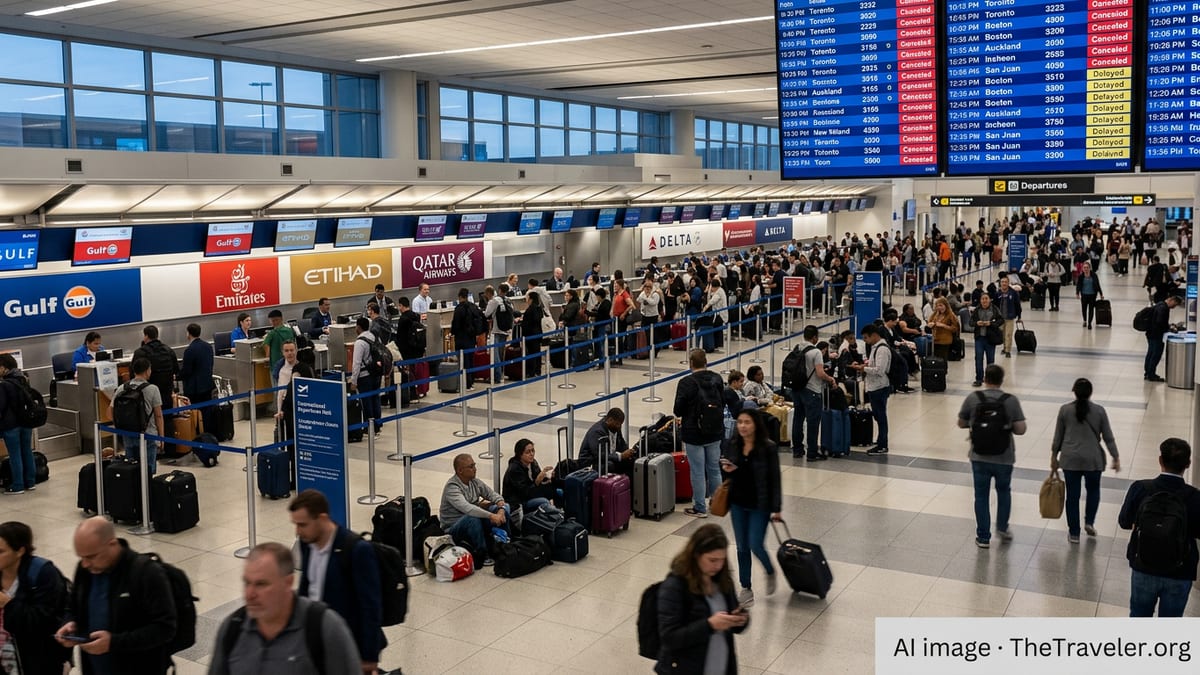
Travelers at New York’s John F. Kennedy International Airport faced another day of chaos on March 4, as at least 16 long haul flights operated by carriers including Etihad, Qatar Airways, Emirates, Delta and Gulf Air were canceled, with many more delayed, disrupting major routes to Toronto, Boston, Auckland, Incheon, San Juan and other global hubs.
Middle East Airspace Closures Hit New York Hard
The disruption at JFK is the latest visible sign of a global aviation shock triggered by widespread airspace closures across the Middle East in the wake of escalating conflict. Gulf superconnectors Emirates, Etihad Airways and Qatar Airways have been forced to sharply curtail operations as key corridors over Iran, Iraq, Israel and parts of the Gulf remain restricted, starving their hubs of traffic and leaving long haul networks in disarray.
While the bulk of cancellations has been concentrated at airports in the region, the knock on effects are now spilling into North America’s busiest international gateways. At JFK, airlines that typically funnel passengers via Abu Dhabi, Doha and Dubai to Asia, Africa and the Pacific are scrambling to rework schedules, re time departures or cancel outright when safe and commercially viable routings cannot be found.
Airport departure boards on Tuesday night and into Wednesday morning showed a patchwork of status updates for Gulf operated and codeshare flights, with some services marked canceled well in advance and others downgraded to severe delays of three hours or more as dispatchers sought longer, more circuitous routings that avoid closed skies.
For many passengers, the result has been long queues at airline counters and customer service desks, as travelers attempt to salvage itineraries that rely on once straightforward one stop connections through the Gulf to destinations as far flung as Australia, South Korea and the Caribbean.
Gulf Carriers Slash JFK Links as Delta Adjusts Long Haul Network
Etihad Airways and Qatar Airways, both of which have built up non stop services between JFK and their respective hubs, have significantly scaled back departures in recent days, with multiple Abu Dhabi and Doha bound flights from New York scrubbed from the schedule. Some of the canceled services were due to carry onward passengers to Boston and Toronto on connecting sectors, compounding the disruption for travelers from the US Northeast and Canada.
Emirates, which normally operates several daily flights between JFK and Dubai, has also been operating an irregular schedule as its Dubai hub grapples with slot constraints, crew positioning issues and the extra flight time required by detours that keep aircraft out of closed airspace. While a handful of repatriation and limited commercial services are beginning to reappear, a number of New York Dubai rotations remain canceled or heavily delayed, according to airport screens and passenger accounts.
US carrier Delta Air Lines, which has close codeshare ties with several affected operators, has been forced to make its own adjustments. The airline previously announced a pause of its JFK Tel Aviv service, and now faces additional operational complexity as partners in the Gulf reduce flying. Some travelers booked on Delta marketed itineraries that include segments on Emirates, Etihad or Qatar Airways have seen their journeys unravel as the Gulf legs are axed, leaving them stranded mid itinerary or forced to rebook via Europe or other Asian hubs.
Gulf Air, which feeds regional traffic into the broader Middle East network, has also reported spikes in cancellations, and JFK bound passengers with tickets involving Bahrain and beyond are among those caught by last minute changes. Industry analysts warn that while some limited services are resuming, further short notice cancellations remain likely as the situation in regional airspace evolves day by day.
Global Routes From Toronto to Auckland Feel the Strain
The impact of the disruption is spreading well beyond direct Gulf destinations. With many eastbound and westbound long haul routes designed around one stop Gulf connections, passengers traveling between North America and cities such as Auckland, Incheon and San Juan are discovering that itineraries no longer line up, or have disappeared altogether from booking systems.
Travelers bound for New Zealand who would typically fly JFK to Dubai or Doha and then connect to an onward Emirates or Qatar Airways service to Auckland are being re routed through alternative hubs such as Singapore, Hong Kong or European gateways, often at the cost of significantly longer travel times and limited seat availability. Some report being pushed back several days before space can be found on already busy transpacific or transatlantic services.
Similar problems are emerging on routes linking North America with Northeast Asia. Incheon, the main international gateway for Seoul, is a key destination for passengers who normally use Gulf hubs as a bridge between the US East Coast and South Korea. With those options constrained, demand is being funneled onto nonstop and transpacific services that were already running near capacity, driving up fares and reducing flexibility for business and leisure travelers alike.
Even shorter haul leisure routes are suffering. Connections between JFK and San Juan that rely on through tickets involving Gulf carriers, particularly for travelers combining Caribbean holidays with longer trips to Asia or the Middle East, are being disrupted as upstream long haul legs vanish from the schedule. In Canada, Toronto bound itineraries that once used Gulf carriers as part of round the world style trips are also facing a wave of cancellations and rebookings.
Passengers Face Long Queues, Uncertain Timelines and Limited Support
Inside JFK’s international terminals, the human cost of the disruption is increasingly visible. Families with children, students and business travelers alike have been camped out near departure gates and check in areas, surrounded by suitcases and carry on bags, as they wait for clarity on whether flights will operate or when replacement options might become available.
Some passengers say they received only limited advance warning before their flights were canceled, with notifications arriving via airline apps or email late in the evening or just hours before scheduled departure. Others arrived at the airport to find their flights still showing as on time on digital boards, only to see the status flip to canceled or heavily delayed after they had already cleared security.
Airline staff and contracted ground handlers are working under intense pressure to rebook affected travelers, prioritize those with urgent needs and manage expectations as the situation in Middle East airspace remains fluid. Waiver policies have been expanded by several carriers, allowing date changes or refunds, but call centers and online chat services are reporting heavy backlogs, leaving many customers to seek help in person at the airport.
Travel advocates note that compensation rules vary widely depending on the airline, the origin and destination of the journey, and whether the cause of cancellation is deemed outside the carrier’s control. For now, most advice to stranded travelers emphasizes documenting expenses, keeping all boarding passes and booking confirmations, and staying closely tuned to official airline channels for updated guidance.
What Travelers Through JFK Should Expect in the Coming Days
Aviation experts caution that while some Gulf carriers have begun to schedule limited departures as airspace restrictions are adjusted, the network effects of the crisis will take days, if not weeks, to fully unwind. Aircraft and crew are out of position, and complex global schedules will need to be rebuilt in stages, meaning further rolling cancellations and last minute time changes at JFK and other major hubs are likely.
Passengers booked to travel through JFK in the next week on Etihad, Qatar Airways, Emirates, Delta or Gulf Air, especially on itineraries involving onward travel to or via the Middle East, are being urged to check flight status repeatedly rather than relying on a single confirmation. Same day changes remain a possibility, and some flights may operate with significant time shifts to accommodate new routings.
Travel planners suggest that, where possible, passengers consider alternative routings that avoid the most heavily affected corridors, even if that means extra connections or longer transit times. European and East Asian hubs are absorbing some of the displaced demand, though these options are already becoming constrained as the disruption stretches into its fifth day.
At JFK, airport authorities say they are working with airlines to manage gate allocations, crowding in check in halls and security queues, and to ensure that basic services such as food, seating and rest areas remain available for those forced into extended waits. For now, however, the mood in terminals remains tense and uncertain, with thousands of travelers caught in a crisis rooted thousands of miles from New York, but felt acutely in its busiest international airport.