

More news on this day
Hapag-Lloyd Cruises is extending its expedition program on the Amazon in 2026, offering travelers rare small-ship journeys between Brazil and Peru that navigate far upriver into the heart of the rainforest.
Get the latest news straight to your inbox!
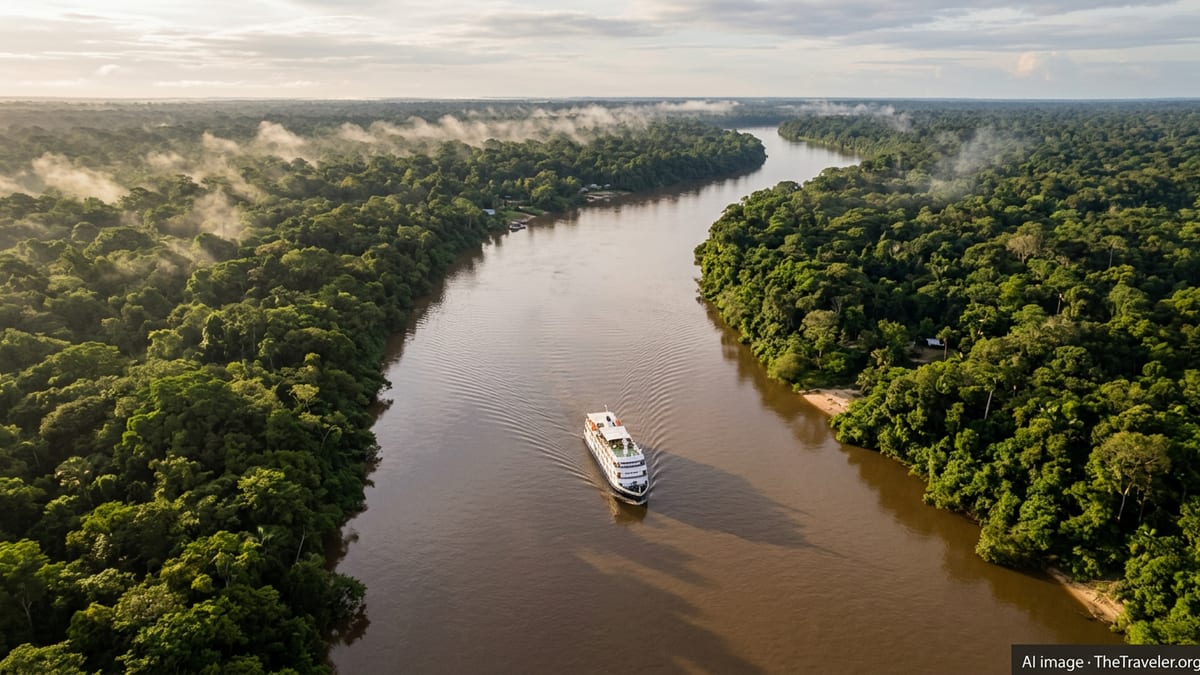
New 2026 Routes Into the Upper Amazon
Publicly available itineraries and trade brochures show that Hapag-Lloyd will operate Amazon expedition cruises in 2026 linking Belém, at the mouth of the Amazon in Brazil, with Iquitos in Peru, one of the furthest upriver points accessible to sea-going expedition ships. The sailings are scheduled during the first half of the year, aligning with higher water levels that typically allow deeper penetration into the river system and its tributaries.
Specialist cruise distributors list an 18 to 19 day itinerary in March 2026 aboard the HANSEATIC spirit from Belém to Iquitos, marketed under the “Expedition Amazon” concept. The route traces the river upstream through remote stretches of the Brazilian Amazon before crossing into Peru. Promotional materials highlight that Hapag-Lloyd positions itself among the few international lines to take an oceangoing expedition ship as far as Iquitos, emphasizing the sense of a once-rare, almost overland-style journey completed entirely by river.
Travel trade documents and sales flyers for the 2026 to 2027 expedition program indicate that this Belém to Iquitos route forms part of a wider Amazon focus for the HANSEATIC-class vessels, with reverse itineraries operating in later years and similar expedition concepts repeated in 2027 and 2028. For 2026, however, the Brazil to Peru upriver sailing is presented as one of the headline South American expeditions in the company’s calendar.
What Travelers Can Expect On Board
The HANSEATIC spirit, one of Hapag-Lloyd’s modern expedition ships built for remote cruising, is positioned as a small, high-comfort vessel carrying significantly fewer guests than a conventional ocean liner. Cruise descriptions emphasize extensive open-deck space, observation lounges, and a high passenger-to-crew ratio designed to support a more in-depth expedition experience on long river transits. The ship’s technical profile, including its shallow draft and ice-class background, is marketed as well suited to navigating complex waterways such as the Amazon.
Onboard programming on these Amazon sailings is promoted as a central part of the experience. According to cruise brochures and independent retailer summaries, travelers can expect a team of expedition staff, lecturers, and naturalists leading daily briefings on rainforest ecosystems, river hydrology, local cultures, and wildlife. The atmosphere is described as informal and discovery-focused, with flexible scheduling that adapts to wildlife sightings and changing river conditions rather than a rigid entertainment timetable.
Dining and accommodation are framed in premium terms, with all-outside cabins and suites, contemporary design, and international cuisine that often incorporates regional specialties along the route. Operators that feature the product in the German-speaking and European markets note that Hapag-Lloyd’s expedition ships have built a reputation for pairing upscale onboard standards with a strong educational component, appealing to travelers who prioritize learning and nature observation over traditional cruise nightlife.
Key Highlights of the Brazil to Peru Route
Itinerary descriptions compiled by cruise agencies outline a route that begins near the Atlantic, typically in Belém, and then follows the Amazon and its tributaries upstream. Early days of the voyage focus on wide, open stretches of the lower river, with chances to observe river traffic, broad sandbanks, and the gradual shift from coastal settlements to increasingly remote communities. Marketing copy often calls attention to Zodiac excursions into flooded forests and side channels, giving guests closer views of vegetation, birdlife, and river dolphins.
Further upriver, summaries of the 2026 itinerary indicate stops at locations in the Brazilian state of Amazonas and the tri-border region close to Colombia and Peru, with landings that may include rainforest walks, village visits, and birdwatching tours. These activities are typically conducted in small groups using the ship’s fleet of Zodiacs, which allow landings on unprepared riverbanks where no port infrastructure exists. Cruise descriptions note that every landing is subject to water levels, permits, and weather, and that flexibility is built into the schedule.
As the ship approaches Iquitos, travel trade information highlights the sense of isolation that characterizes this Peruvian river city, which is not connected to the rest of the country by road and is accessible primarily by air or river. The arrival is marketed as the culmination of a full-length Amazon transit from the Atlantic deep into the interior of South America. Some packages reference charter or scheduled flights bundled with cruise fares to link Iquitos with major South American gateways, simplifying logistics for international guests.
Practical Details: Timing, Pricing, and Inclusions
Based on recent brochures and partner listings, the core 2026 expedition from Brazil to Peru runs for roughly 18 to 19 days and is scheduled in March, which is within a period often considered favorable for water levels along the main Amazon navigation channel. This timing can increase access to side rivers and floodplain areas while still offering workable weather windows for Zodiac outings and land activities. However, all materials stress that river conditions remain variable and can influence day-by-day execution.
Pricing published by European cruise retailers for the 2026 Amazon expeditions with Hapag-Lloyd indicates starting fares in the premium segment, often listed in euros and varying according to cabin category and booking conditions. Some offers distinguish between early-booking or promotional rates and higher, more flexible fares. Typical inclusions on these expedition sailings, as reflected in marketing copy, cover full-board dining, most soft drinks, Zodiac landings, and the full program of onboard lectures and guided excursions, though details may differ by agency and fare type.
Air arrangements are frequently shown as part of bundled packages, particularly charter or scheduled flights connecting guests to or from Iquitos and major cities such as Lima or São Paulo. Prospective travelers are advised, in publicly available booking notes, to pay attention to whether flights, transfers, and pre- or post-cruise hotel nights are included or offered as optional extensions, as this can significantly affect total trip cost and logistics.
Booking Considerations and Responsible Travel
For travelers considering a 2026 Hapag-Lloyd Amazon expedition from Brazil to Peru, availability and lead times are key factors. Trade sources describe these long expedition itineraries as capacity-limited, with smaller ships and high demand among seasoned cruisers seeking remote routes. Booking windows often open several years in advance, and some 2026 departures have already been circulating in travel agency networks and online cruise databases.
Public booking information urges guests to factor in health, mobility, and climate considerations. The Amazon environment can involve heat, humidity, uneven terrain on landings, and transfers in small Zodiacs. Expedition materials recommend that travelers be comfortable with steps, moving between ship and small boats, and walking on natural surfaces. Travel specialists also highlight the importance of comprehensive travel insurance, including medical evacuation coverage, due to the remoteness of many locations along the route.
Environmental sensitivity is another recurring theme in descriptions of Hapag-Lloyd’s Amazon program. Promotional texts for the wider expedition fleet emphasize small-group operations, waste management on board, and adherence to local guidelines in protected areas. While specific measures vary by cruise and jurisdiction, information provided to the trade underscores that wildlife viewing is conducted at respectful distances and that guest briefings often include guidance on minimizing disturbance to flora, fauna, and local communities.
As with many expedition products, details for the 2026 season remain subject to change as operators refine schedules, secure permits, and respond to river conditions. Travelers reviewing Hapag-Lloyd’s Amazon offerings between Brazil and Peru are encouraged by travel advisors and online resources to monitor updated brochures and booking platforms for the latest information on exact dates, fares, and routing before committing to a specific departure.