

More news on this day
Spring break and business travelers are confronting mounting flight disruptions as a Washington budget standoff over air traffic controller furloughs intensifies, with Senate Majority Leader Harry Reid’s push to reshape the cuts coinciding with a sharp slide in airline stocks.
Get the latest news straight to your inbox!
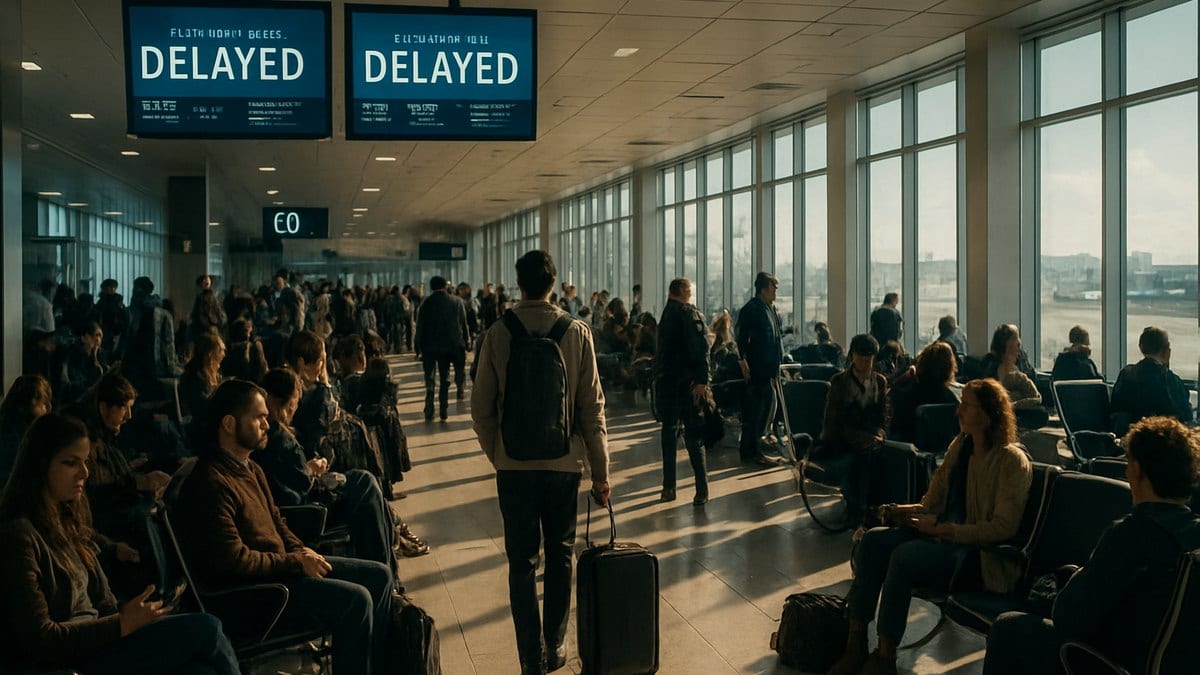
Political Standoff Spills Onto the Runway
The latest turbulence for U.S. air travel traces back to automatic federal spending cuts that began earlier in the year, triggering furloughs at the Federal Aviation Administration. As the cuts started to bite, reports indicate that thousands of flights experienced delays in a single week, particularly at high-traffic hubs such as New York, Los Angeles and Dallas.
In response, Harry Reid has advanced a proposal to rework the way those reductions fall on aviation operations, seeking to ease pressure on air traffic control staffing during the peak spring travel period. Publicly available information shows that the plan centers on shifting funds within the transportation budget to keep more controllers on duty while broader negotiations over the federal deficit continue.
The maneuver has become a flashpoint in the broader debate over how to implement sequestration. Supporters frame the strategy as a targeted fix to protect critical infrastructure, while critics argue it merely postpones tougher choices and leaves underlying budget disputes unresolved. For travelers, the immediate consequence is uncertainty about how long disruption will last and whether additional waves of delays will follow as the political struggle unfolds.
Reports from major airports suggest that even the perception of looming schedule problems is influencing traveler behavior, with some passengers rebooking to earlier flights or avoiding tight connections in anticipation of longer waits on the tarmac.
Controllers Furloughed as Delays Mount Nationwide
According to aviation data cited in recent coverage, the FAA furloughs have forced facilities to staff fewer controllers per shift, requiring wider spacing between aircraft and slower traffic flows into already congested hubs. That operational throttling has translated into rising delay counts, with several days showing delays that are significantly above normal levels for the same period a year earlier.
Published accounts from industry and government reviews indicate that during one spring week alone, sequester-related controller furloughs were linked to thousands of additional delays across the national airspace system. At some of the busiest airports, average on-time performance dropped noticeably as arrivals were held on the ground at origin airports to prevent gridlock in overloaded approach corridors.
Analysts note that the system’s architecture offers little resilience when staff levels fall quickly. Even modest weather disturbances or minor technical hiccups can cascade into widespread disruption when fewer controllers are available to reroute or resequence traffic efficiently. For carriers, that dynamic creates schedule instability that can ripple through their networks for days.
Travel organizations say that spring break demand, already high at many leisure destinations, has amplified the impact of the slowdowns. Flights into popular hubs are running near capacity, leaving limited room to re-accommodate passengers when cancellations or extended ground holds occur.
Wall Street Reacts as Airline Shares Lose Altitude
As travelers queue at departure boards, investors are repricing airline risk. Market reports show that major U.S. carriers have seen their share prices slip as the prospect of protracted operational disruption collides with what is normally a lucrative spring season. Delays increase crew and fuel costs, complicate fleet utilization and raise the likelihood of compensation and accommodation expenses when passengers are stranded overnight.
Equity analysts following the sector have flagged the dual threat of higher near-term costs and potential revenue softness if travelers begin to defer or cancel trips in response to the uncertainty. Some research notes circulating on Wall Street point to the experience of earlier policy-driven air traffic disruptions, where even brief periods of heavy delays left a measurable dent in quarterly results for several large airlines.
Investor sentiment is also being influenced by the broader macroeconomic signal embedded in the dispute. Aviation is widely viewed as a bellwether for consumer and business confidence, and prolonged operational stress in the system can be interpreted as a sign of policy gridlock with wider economic implications. That perception has encouraged some portfolio managers to trim holdings in the sector until there is clearer evidence that staffing and schedule reliability are stabilizing.
At the same time, a few market commentators suggest that any eventual budget compromise that restores full controller staffing could set the stage for a rebound in airline shares later in the year, particularly if pent-up travel demand remains robust.
Spring Travelers Face Tough Choices
For passengers with imminent trips, the policy debate in Washington is translating into practical questions at the check-in counter. Travel advisers and consumer advocates, citing recent performance data, are encouraging passengers with flexible plans to build in longer connection times, favor early-morning departures that are less exposed to rolling delays, and monitor flight status frequently on the day of travel.
Publicly available information from airport operations centers indicates that delays have not been uniform across the country. Some smaller and mid-sized airports have experienced relatively modest disruption, while others that feed into overstretched coastal hubs have been hit hard when traffic management initiatives limit arrivals. As a result, passengers transiting certain connection points may bear a disproportionate share of the inconvenience.
Families traveling for spring holidays are particularly vulnerable, as school schedules and nonrefundable bookings leave little flexibility. Reports from travel forums and airline message boards describe missed cruises, disrupted weddings and vacation days lost in terminal waiting areas as cascading delays strand travelers far from their destinations.
Business travelers, meanwhile, are re-evaluating same-day turnarounds and tight itineraries. Some companies are shifting short-haul trips to rail or videoconferencing when possible, aiming to avoid the productivity hit that comes with unpredictable return times.
Industry Pressure Builds for a Durable Fix
Within the aviation sector, airlines, airport operators and labor groups are pressing for a more sustainable resolution than temporary reallocations of funds. Trade associations representing carriers have argued in public statements and court filings that the FAA could manage spending reductions in ways that minimize operational disruption, though legal challenges to the current furlough plan have so far yielded limited relief.
Recent government analyses of the 2013 sequestration experience, released in updated oversight reports, underscore the economic cost of using across-the-board furloughs to manage aviation budgets. Those reviews estimate that a single week of heavy controller furloughs can impose billions of dollars in lost productivity and foregone economic activity, once missed connections, cargo delays and broader knock-on effects are taken into account.
Policy specialists following the issue say the present confrontation may influence how future transportation cuts are structured. If Reid’s effort to redirect funds gains traction, it could set a precedent for shielding core operational staff from abrupt reductions, even when automatic budget mechanisms take effect. Conversely, if the proposal stalls and delays continue, pressure could mount for a more fundamental restructuring of how air traffic control is financed and managed.
For now, travelers heading into the heart of the spring season remain caught between competing budget priorities and political strategies, watching departure boards and market tickers alike for signs that the turbulence triggered by the latest round of Washington brinkmanship is finally starting to subside.