

More news on this day
Norwegian coastal cruise line Havila Voyages has launched a new Lofoten Coastal Stopover, a product that combines its classic Bergen to Kirkenes sailing with a multi-day land stay in Svolvær, aiming to meet rising demand for longer, more flexible experiences on Norway’s dramatic northern coast.
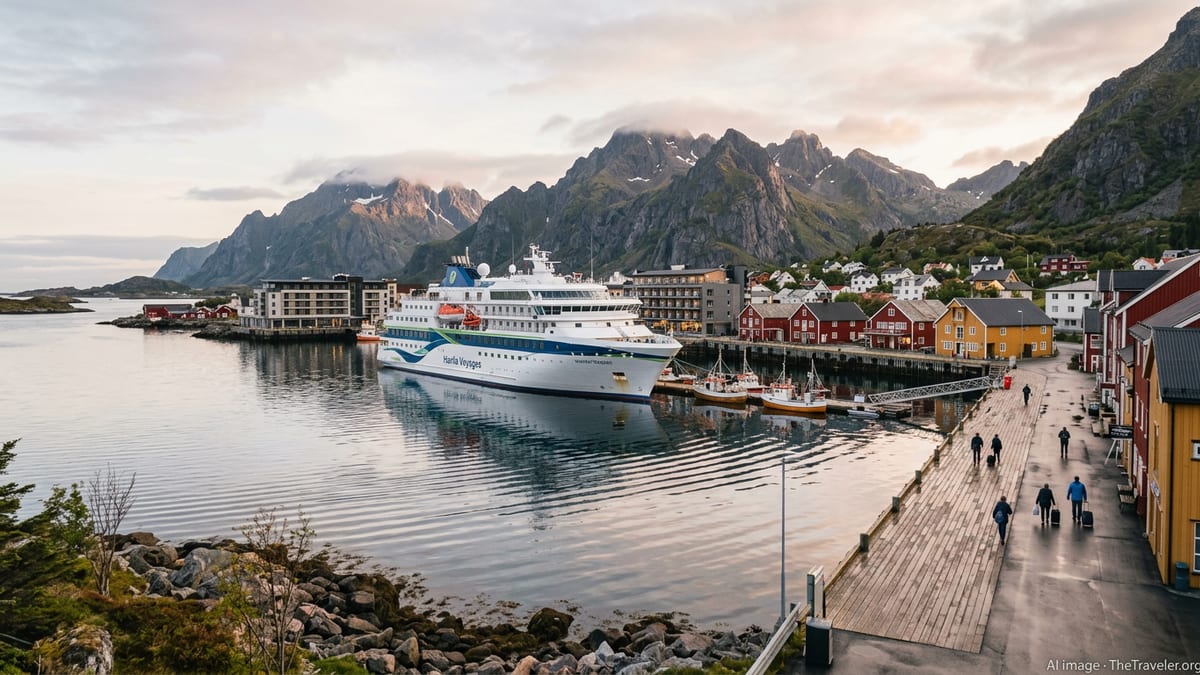
Integrated Stopover Reshapes Traditional Coastal Cruise Model
Announced on March 7, 2026, the Lofoten Coastal Stopover weaves a two or three-night stay in Svolvær directly into Havila Voyages’ scheduled coastal route, rather than treating it as a pre- or post-cruise extra. Guests sailing southbound from Kirkenes disembark in Svolvær for their land stay, then rejoin the next Havila ship heading south in the same cabin category, preserving continuity while changing vessels.
The new concept is positioned as a break from the traditional linear cruise format, where passengers typically experience ports through short calls and optional excursions before returning to life at sea. By allowing a pause of several days mid-itinerary, Havila is turning one of its most scenic stretches, the Lofoten archipelago, into a focal point rather than a brief stop.
Havila Voyages’ chief executive Bent Martini said the company is responding to a clear trend among coastal travelers who are seeking more time on land, deeper engagement with local communities and greater flexibility around how they structure their journeys. The Lofoten Coastal Stopover has been framed as the first step in a broader “Coastal Stopover” initiative that could introduce similar extended stays at other points along the route.
The Lofoten Coastal Stopover will be open for bookings from week 12 of this year, with first departures scheduled for May 2026, placing the launch squarely in the high-demand late spring and summer season when the archipelago’s long days and milder weather enhance its appeal.
Svolvær Partnership Anchors Multi-Day Land Experience
At the core of the new product is a partnership with Thon Hotel Svolvær, which will host guests during their two or three-night stay between cruise segments. The property, located close to Svolvær harbor, provides a base that keeps travelers within easy reach of both the quayside and the town’s growing selection of activities and services.
Havila Voyages and Thon Hotels have emphasized that the stopover is designed as a flexible, largely unstructured land stay. Rather than prescribing a rigid sightseeing program, the package gives guests time and freedom to explore Lofoten on their own terms, supported by a digital activity platform that aggregates bookable experiences such as sea-eagle safaris, fishing trips, hiking excursions and cultural visits.
Thon Hotel Svolvær’s general manager, Erik Taraldsen, has described the collaboration as an opportunity to showcase Lofoten to coastal cruise passengers in a way that reflects how Norwegians themselves travel in the region, with longer stays and slower pacing. The emphasis on an integrated, seamless itinerary is intended to remove the logistical complexity that can come with arranging separate hotel nights between cruise legs.
By keeping accommodation, transfers and onward sailing tied together through a single product, Havila is targeting travelers who may be reluctant to break up their voyage independently but are increasingly keen to linger in standout destinations like Lofoten rather than simply passing through.
Responding to Market Demand for Deeper, Slower Travel
The Lofoten Coastal Stopover reflects broader shifts in cruise and adventure travel, where guests are prioritizing immersion and authenticity over maximizing the number of ports visited. Industry observers note that on Norway’s coastal route in particular, many travelers already use the ships as point-to-point transport combined with independent land stays, a pattern Havila is now formalizing into a packaged product.
Havila has reported strong interest in seasonal coastal itineraries, especially from markets such as the United Kingdom, where winter voyages focused on the Northern Lights remain popular while demand for spring and summer sailings has grown. The new stopover is expected to appeal to both first-time visitors seeking an in-depth Lofoten experience and repeat guests looking to tailor the classic route with more time off the ship.
The company is also positioning the Coastal Stopover concept as a way to smooth capacity and diversify revenue, offering more combinations of shorter and modular itineraries that can be marketed as five or six-day adventures rather than just the full 11 or 12-day round trip. By adding an extended land element mid-route, Havila can appeal to travelers with limited vacation time who still want a sense of the full coastal journey.
Executives have suggested that if the Lofoten pilot proves successful, similar models could be developed for other high-interest destinations along the Norwegian coast, potentially enabling multiple stopover variations that agents and travelers can mix and match according to season and interest.
Boost for Lofoten’s Tourism Economy and Sustainable Positioning
For Lofoten and the town of Svolvær, the stopover program is expected to bring visitors who spend more nights and engage more deeply with local businesses than traditional short port calls typically allow. Longer stays generally translate into higher per-guest spending on dining, guided experiences and cultural attractions, offering a more substantial contribution to the regional economy.
Local tourism stakeholders have long advocated for models that encourage slower, more responsible travel in the island chain, which has faced pressure from fast-growing visitor numbers during peak summer months. By integrating overnight stays into existing coastal traffic rather than adding more ship calls, the Havila initiative aligns with efforts to disperse activity and focus on higher-value, lower-impact tourism.
Havila Voyages has previously highlighted its investment in newer, more energy-efficient ships that operate on liquefied natural gas and battery power, seeking to position the line as a lower-emission alternative on the coastal route. Extending time on land without increasing the number of large-vessel arrivals supports a narrative of more sustainable growth, where economic benefits and guest satisfaction rise without a proportional increase in environmental strain.
As Lofoten continues to balance its international allure with the need to protect fragile landscapes and fishing communities, products that encourage longer, more thoughtful engagement rather than quick sightseeing stops are likely to play an increasingly central role in regional tourism planning.
Strategic Step in Havila Voyages’ Growth Ambitions
The Lofoten Coastal Stopover also marks a strategic move in Havila Voyages’ broader growth trajectory as a relatively new operator on the historic Norwegian coastal route. Since entering the market with a small, modern fleet, the company has sought to differentiate itself through design, sustainability features and flexible product offerings.
By packaging a premium destination-focused experience within the existing scheduled route, Havila is strengthening its appeal in key international markets where travelers often look for curated combinations of cruise and land. Trade partners will be able to sell the stopover as a ready-made product with clear pricing and inclusions, simplifying the work of building custom itineraries around Norway’s coastal highlights.
The introduction of the Lofoten Stopover ahead of the 2026 summer season gives Havila a timely sales story to present to travel agents, tour operators and direct customers who are planning holidays around the midnight sun period. The company is expected to leverage the new product in marketing campaigns that spotlight the visual drama of Lofoten’s peaks, fishing villages and sheltered bays, now accessible as more than a brief port call.
As bookings open and the first guests begin to combine sea days with multi-night stays in Svolvær from May, the performance of the Lofoten Coastal Stopover will likely shape how quickly Havila expands the Coastal Stopover concept to other locations along Norway’s famed coastal highway of the sea.