

Hawaii’s postcard-perfect beaches and volcanic landscapes are often associated with rental cars and traffic-clogged highways, but a quieter, more affordable way to explore is hiding in plain sight: the islands’ bus systems. While services are not as frequent or extensive as big-city networks, visitors who understand how the buses work can connect airports, resort areas, local towns and major sights without ever slipping behind the wheel. This guide walks you through public bus travel on Oahu, Maui, Kauai and Hawaii Island so you can plan a smoother, more sustainable island journey.
Understanding Hawaii’s Island-by-Island Transit Landscape
Hawaii is a state of four main visitor islands, and each one runs its own public bus system. There is no single statewide transit authority or through-ticketing, so you will plan and pay for bus travel separately on Oahu, Maui, Kauai and Hawaii Island. The systems vary considerably in coverage and frequency, from Oahu’s busy, urban-style network to more limited rural routes on the Neighbor Islands. For travelers, that means expectations should shift as you hop between islands.
On Oahu, the backbone is TheBus, a large fleet serving Honolulu, Waikiki and communities all the way around the island, supplemented by Skyline, a new elevated rail line linking suburban West Oahu with the stadium area. Maui is served by Maui Bus, which focuses on key resort corridors and towns. Kauai’s network is branded The Kauai Bus and connects Lihue with major communities around the island. Hawaii Island, also called the Big Island, is covered by Hele-On, a mix of long-distance and local routes where schedules can be sparse compared with Oahu.
Because services are county-run, schedules, fares and technology differ from place to place. For example, Oahu has a smart card and mobile fare system that also works on the rail, while Kauai has recently introduced a tap-and-ride app of its own. Hawaii Island, by contrast, has emphasized free fares rather than advanced ticketing tools. As you plan, it is important to research each island separately and confirm current details close to your travel dates, especially if you are visiting smaller towns or traveling outside peak visitor seasons.
Another key difference from mainland systems is that late-night buses are limited or nonexistent on many routes, and holiday service can be significantly reduced. When you are staying in areas outside the main resort districts, it is wise to think of the bus as a backbone for daytime travel and pair it with walking, taxis or rideshares for early-morning or late-evening needs. With realistic expectations, however, Hawaii’s bus networks can cover much of what casual visitors want to see.
Oahu’s TheBus and Skyline: The Most Robust Network
Oahu offers the most comprehensive public transit in Hawaii, and it is the only island where an enthusiastic, car-free trip is practical for many visitors. TheBus operates hundreds of buses on dozens of routes, linking Honolulu and Waikiki with the North Shore, Windward Coast and West Oahu. For most travelers, the central transit experience will be riding between Waikiki, downtown Honolulu, Ala Moana Center and the University of Hawaii area, where routes are frequent and stops are closely spaced.
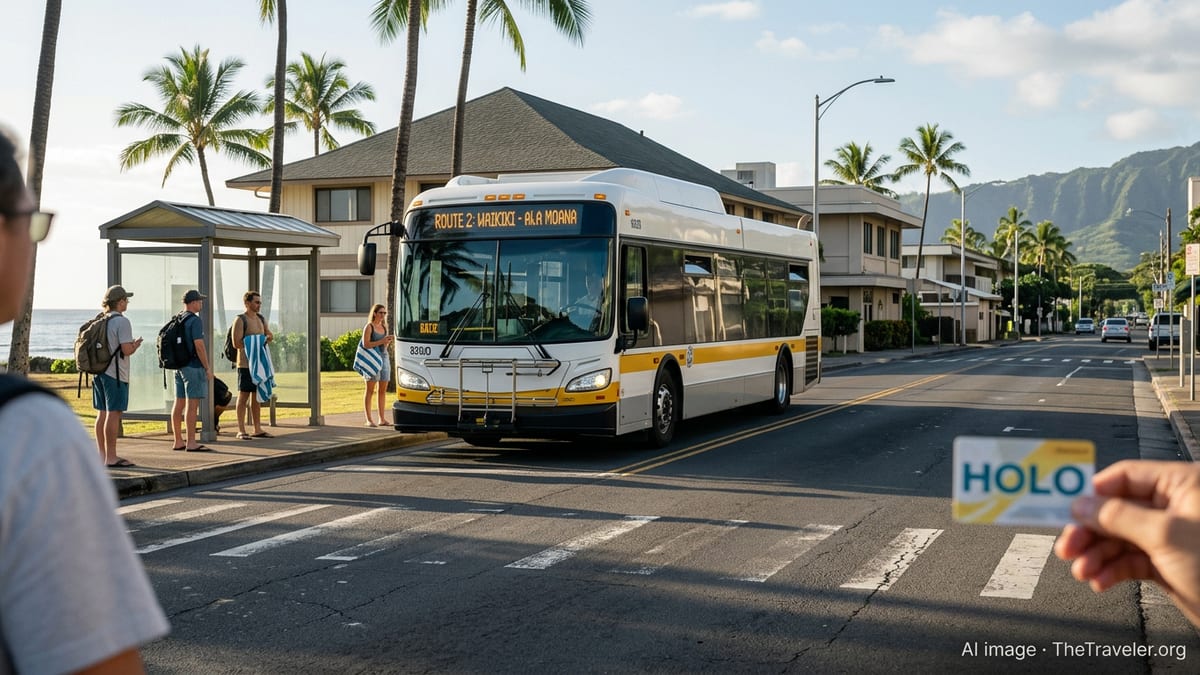
Oahu’s fares use the HOLO card, a reloadable smart card and contactless payment system that also works on Skyline rail and paratransit services. The card allows for capped fares over a set time window, so riders are charged up to a maximum daily amount rather than paying full price for each transfer. Visitors can typically buy cards at vending machines in major transit centers, at retailers and sometimes at airport locations, then tap on as they board. Cash fares remain an option on buses, but exact change is usually required and transfers are handled less seamlessly than with HOLO.
Skyline, Honolulu’s new rail system, currently connects growing suburban neighborhoods in West Oahu with the stadium and park-and-ride hubs, and will extend closer to central Honolulu as construction continues. While the present segment may not serve every visitor’s top sights, it can be useful if you are staying in West Oahu resorts or heading to park-and-ride lots to connect with buses. Skyline uses the same HOLO payment as TheBus and can significantly cut travel time compared with sitting in freeway traffic at rush hours.
To use Oahu’s network effectively, build in extra time for transfers and traffic. Morning and afternoon peaks can be slow along major corridors like the H-1 freeway and King Street. Many visitors rely on trip-planning apps or mapping services that integrate TheBus and Skyline schedules, which can be a helpful starting point, but real-world conditions still matter. When catching early flights or tours, plan to take a bus earlier than the last theoretically possible departure, and carry water and sun protection for exposed stops.
Maui Bus: Linking Resort Corridors and Local Towns
Maui’s public transit system, known as Maui Bus, offers a combination of local circulators and longer routes that connect major resort areas with towns such as Kahului, Wailuku, Lahaina and Kihei. Compared with Oahu, the system is smaller and primarily oriented to essential trips for residents, but it can still help visitors reduce car use, especially if you are staying along the main coastal corridors.
Most routes pass through or originate near Kahului, home to the island’s main airport and harbor. Buses generally operate on fixed schedules that repeat throughout the day, with more frequent service on busy lines and limited runs to more remote communities. Several routes link popular resort areas such as Kaanapali and Wailea with larger towns where visitors shop, eat and change buses. However, service to trailheads, scenic drives and rural beaches is limited, so a bus-only visit to Maui will require more careful planning than on Oahu.
Fares on Maui Bus are typically paid in cash on board or through passes sold by the county and authorized vendors. The county has been studying microtransit options for low-ridership zones, which may eventually mean on-demand shuttles in some upcountry or outlying areas instead of infrequent fixed routes. The focus of these experiments is to improve service for residents, but visitors who understand where microtransit operates may find new options in the coming years for reaching smaller communities without driving.
After recent wildfires and other disruptions, some West Maui routes and stop locations have been adjusted, and service patterns may continue to evolve as rebuilding progresses. Before relying on a particular line, check the county transportation website or recent news releases for any detours, temporary suspensions or new timetables. Because frequencies are often hourly or less on Maui, missing a bus can significantly delay your plans, so arrive at stops early and have a backup plan if you are catching a last bus of the day.
The Kauai Bus: Slower Travel on the Garden Island
Kauai’s charm lies in its rural pace and dramatic scenery, and its transit network, The Kauai Bus, reflects that slower rhythm. Buses generally radiate from Lihue, the island’s main town and airport hub, with routes that circle parts of the island to reach communities such as Hanalei, Kapaa, Poipu and Waimea. For visitors staying in or near these established centers, the bus can provide a simple alternative to driving for local errands and some sightseeing.
Schedules on Kauai are more limited than on Oahu, particularly early in the morning, late in the evening and on Sundays or holidays. Many routes run every hour or two, and some rural segments may see only a handful of trips per day. That means the system works best if you are comfortable planning your day around bus times, perhaps combining a beach or hiking day in one area before returning on an afternoon bus rather than bouncing around the island spontaneously.
In recent years Kauai has taken steps to modernize its fare system, introducing tap-and-ride mobile ticketing and an app-based account where riders can load value and manage passes. Cash fares are still accepted for single trips, but mobile payment and passes can be more convenient for multi-day stays. As with other islands, exact fare amounts and pass prices can change, so confirm current details and be ready with small bills if you plan to pay cash on board.
For key visitor hotspots like Hanalei and Poipu, the bus can also play a role in easing parking pressure in small towns and sensitive coastal areas. At times, the county has run special shuttle services for weekend or event crowds, and similar offerings may appear around holidays or during construction periods. If you are staying in Lihue or Kapaa, keep an eye out for temporary shuttle routes that could give you car-free access to congested destinations that would otherwise require a long walk from overflow parking.
Hele-On on Hawaii Island: Long Distances and Free Fares
Hawaii Island, often called the Big Island, is by far the largest geographically, which shapes how its Hele-On bus system operates. Instead of dense urban lines, Hele-On runs a mix of long-distance routes connecting Hilo, Kona and key communities, along with local circulators and rural services. Travel times can be long due to sheer distance and the island’s two-lane highways, and service frequency is generally low compared with Oahu or even Maui.
One of the most notable features of Hele-On in recent years has been its approach to fares. The county has suspended fare collection on fixed routes under an ordinance that extends free rides for several years, with the goal of improving access and encouraging transit use. For budget-conscious visitors staying in Hilo or Kona, that can make bus travel a particularly attractive way to connect between major towns, though availability may be limited at very early or late hours.
Hele-On also operates some specialized services, including paratransit for riders with disabilities and certain rural door-to-door options in outlying communities. These programs are generally designed for local residents and may require advance reservations or eligibility verification, so they should not be assumed to work like on-demand ride-hailing. Still, understanding that such services exist can help travelers set realistic expectations about what is and is not reachable by fixed-route buses.
Service reliability and temporary shutdowns can be issues on the Big Island, especially when staffing or maintenance challenges affect the fleet. Riders are often encouraged to check for rider alerts about one-day service suspensions or reduced schedules, and to have a fallback plan when making time-sensitive trips. Because some cross-island routes run only a few times per day, missing a departure may mean adjusting your itinerary or arranging a taxi or rideshare at short notice.
Planning, Tickets and Tools: Practical Advice for Riders
Across the islands, successful bus travel starts with careful planning. Unlike dense urban networks where you can simply walk to a stop and expect a bus every few minutes, Hawaii’s systems often have hourly or longer gaps between trips, and some routes run only on weekdays or during school terms. When mapping out your days, begin by checking bus schedules and building activities around departure and arrival times, rather than the other way around.
On Oahu, the HOLO system simplifies fares by allowing transfers and daily caps, making it ideal for visitors who will be hopping between buses and Skyline multiple times in a day. On Kauai, the mobile ticketing app can serve a similar function, letting you purchase passes and show your phone to the driver without worrying about exact change. Maui and Hawaii Island may still rely heavily on cash fares for walk-up riders, so bring small bills and coins and expect to pay per boarding unless you have purchased passes in advance.
Digital tools can be a major help, but they are not infallible. Many travelers use trip-planning apps or mapping services that integrate schedules for TheBus and, increasingly, other island systems. These can provide approximate travel times and transfer options, yet they sometimes lag when routes are detoured for construction, festivals or weather-related events. Whenever possible, cross-check route numbers and timetables against the most recent information published by the local county transportation agency, and look for “rider alert” sections that flag temporary changes.
Finally, keep local culture and etiquette in mind. Hawaiian bus drivers often go by a first-name, friendly style, but they are also balancing tight schedules and safety obligations. Have your fare or card ready before you board, step back from the curb as the bus approaches, and move quickly to an open seat or a standing spot behind the driver. Offer seats to kupuna (elders), riders with disabilities and pregnant passengers, and keep surfboards, luggage and beach gear clear of aisles so everyone can board and alight safely.
When Buses Work Best, and When You May Need a Car
For many visitors, the ideal use of Hawaii’s buses is to handle predictable, repeatable trips, while accepting that some remote sights are better reached by car or organized tour. In urban and resort areas on Oahu, particularly around Waikiki and central Honolulu, TheBus can serve as your primary mode of transportation to beaches, shopping centers, cultural institutions and local neighborhoods. With frequent routes and extended operating hours, it is realistic to plan several days entirely by bus.
On Maui, Kauai and Hawaii Island, the bus is best thought of as a spine that links towns and resort clusters. For example, you might ride Maui Bus between the airport and a coastal resort, then rely on it again for trips into Kahului or Wailuku for shopping and dining. On Kauai, you could use the bus for day trips between Lihue, Kapaa and Hanalei, spending long blocks of time in each place rather than moving around hour by hour. On the Big Island, Hele-On can make intercity travel between Hilo and Kona more affordable, even if you ultimately rent a car for a couple of days to tackle remote national park sites and high-elevation drives.
There are also hybrid strategies that blend transit with occasional car use. Some visitors rent cars only for specific days that involve long, scenic drives, then return them and rely on buses, walking and rideshares for the rest of their stay. Others choose accommodations near major bus corridors, reducing the need for parking and allowing some members of a group to explore independently by transit while another uses a rental car. In high-demand seasons when rental prices surge, this kind of mixed approach can save substantial money and stress.
Travelers with mobility challenges should investigate each island’s paratransit or accessible services in advance. TheBus on Oahu has a well-established complementary service called TheHandi-Van for riders who cannot use regular fixed routes, while other islands offer dial-a-ride or door-to-door services targeted at eligible residents. Visitor access may be limited, but mainstream buses generally have lifts or ramps and designated spaces for wheelchairs, along with audible stop announcements on newer vehicles. Giving yourself extra time and confirming details with local transit agencies before arrival will help avoid unpleasant surprises.
The Takeaway
Hawaii’s bus networks are not a perfect replacement for a private car, but they are far more capable than many visitors assume, particularly on Oahu. With a HOLO card in hand, you can ride from Waikiki’s beaches to downtown Honolulu, student neighborhoods and shopping districts without worrying about parking, while Skyline increasingly adds a rail option for cross-island trips. On the Neighbor Islands, buses are more limited but still valuable for linking airports, resort clusters and key towns in a cost-effective and environmentally friendlier way.
Approaching these systems with realistic expectations is essential. Service is thinner in the evenings, on weekends and in rural stretches, and schedules can change due to funding, staffing and weather. Yet travelers who are willing to plan their days around departure times, carry cash or mobile tickets, and accept a slower, more local rhythm of movement often find that bus travel becomes a memorable part of the trip. Conversations with drivers and fellow riders can offer insights into island life that you simply do not get from behind a steering wheel.
For many itineraries, the smartest approach is a flexible mix: rely on buses for everyday trips where they are strong, then selectively rent a car or book tours for out-of-the-way adventures that buses do not serve well. As counties roll out cleaner fleets, new ticketing apps and experiments with microtransit, island transit is gradually becoming more accessible and user-friendly for both residents and guests. If you are curious, patient and prepared, Hawaii’s buses can take you a surprisingly long way.
FAQ
Q1. Can I visit Hawaii without renting a car if I use the buses?
For Oahu, a car-free trip is very realistic if you stay along major routes in Honolulu or Waikiki. On Maui, Kauai and Hawaii Island, you can cover core town-to-town travel by bus, but may still want a car or tours for remote beaches, hikes and high-elevation drives.
Q2. How reliable are bus schedules on the Hawaiian islands?
Schedules on main urban routes, especially on Oahu, are fairly reliable but can be slowed by traffic at peak times. On rural routes and the Neighbor Islands, service is often infrequent and more vulnerable to delays or occasional cancellations, so it is wise to build in extra time and check for rider alerts.
Q3. Do the buses run late at night?
Late-night service is limited. Some Oahu routes operate into the late evening, but true overnight buses are rare, and on Maui, Kauai and Hawaii Island most routes wind down by early evening. Always confirm the last departure times for your route before heading out.
Q4. Are bus passes or smart cards available for visitors?
Yes. On Oahu, the HOLO card is widely used and accessible to visitors, allowing capped fares and easy transfers on TheBus and Skyline. Kauai has app-based mobile ticketing that supports passes and stored value. Maui and Hawaii Island lean more on cash fares and traditional passes that may need to be bought from specific vendors.
Q5. Is public transport in Hawaii accessible for wheelchair users?
Most fixed-route buses across the islands are equipped with ramps or lifts and designated wheelchair spaces. There are also specialized paratransit services, such as TheHandi-Van on Oahu, for riders who cannot use regular buses, though access for short-term visitors may require advance coordination with local agencies.
Q6. How safe is it to ride the bus in Hawaii as a solo traveler?
Bus travel in Hawaii is generally considered safe, especially during the day on busy routes. As in any destination, it is sensible to stay aware of your surroundings, avoid displaying valuables, sit near the driver at night and know your stop in advance so you are not lingering at unfamiliar locations after dark.
Q7. Can I bring luggage, surfboards or beach gear on the bus?
Small to medium luggage pieces and beach bags are usually fine if they do not block aisles or doors. Policies for larger items like surfboards vary by system and bus size, and very long boards may be restricted entirely. When in doubt, check the local rules and be prepared to wait for a less crowded bus.
Q8. Do buses go directly from the airports to popular resorts?
On Oahu, several bus routes link Honolulu’s airport with downtown and transfer points for Waikiki, though you may need to change buses. Maui, Kauai and Hawaii Island also have routes that serve or pass near their main airports, but direct, frequent links to every resort area are not guaranteed, so you may need to connect or use a taxi for the final leg.
Q9. How far in advance should I check for schedule changes?
It is best to review schedules a few weeks before your trip to plan broadly, then check again a few days before each travel day for any rider alerts, detours or timetable updates. Weather events, construction and staffing issues can all trigger short-notice changes.
Q10. Are Hawaii’s buses a good option for environmentally conscious travelers?
Yes. Taking the bus instead of driving helps reduce congestion and emissions, and counties are gradually adding zero-emission vehicles to their fleets. While the systems are not perfect, choosing transit where it fits your itinerary is one of the most straightforward ways to lessen your trip’s environmental footprint.