

Warm turquoise water, swaying palms and pastel sunsets are the easy part. The harder choice for many travelers in 2026 is whether those dream scenes should play out in Hawaii or somewhere in the Caribbean. Both regions promise beaches and sunshine, but they differ in cost, culture, seasons and the kind of trip you will actually have once you land. Understanding those differences is the key to choosing a destination that matches your budget, travel style and expectations.
Big Picture: How Hawaii and the Caribbean Feel Different
At first glance, Hawaii and the Caribbean appear similar: archipelagos of volcanic islands in warm oceans, with year-round beach weather and highly developed tourism industries. Yet the overall feel is quite different once you are on the ground. Hawaii is part of the United States, with familiar infrastructure, regulations and currency, while the Caribbean is a patchwork of more than two dozen countries and territories, each with its own identity, language and pace.
Hawaii offers a cohesive, relatively standardized experience: roads and signage resemble the mainland United States, health care facilities are modern, and consumer protections and safety regulations are broadly consistent across the islands. That sense of familiarity can feel reassuring for first-time international travelers, families with young children or those who prefer minimal logistical surprises.
The Caribbean, by contrast, is defined by variety. A trip to Barbados feels very different from one to the Dominican Republic, Aruba or Jamaica. Some islands are former British territories with a distinctly Anglo-Caribbean flair, others lean Latin and Spanish-speaking, and still others emphasize Dutch or French heritage. This diversity allows travelers to tailor their experience, from ultra-polished resort corridors to quieter, more rustic islands that see far fewer visitors.
Both regions continue to rely heavily on tourism, but recent data suggests they are moving in slightly different directions. In Hawaii, visitor arrivals have flattened and even declined in some months while daily spending has climbed, reflecting a shift toward fewer but higher-spending guests. In the Caribbean, many destinations are seeing visitor numbers exceeding pre-pandemic levels as they draw travelers from a wider range of markets and promote flexible accommodations such as vacation rentals and small guesthouses.
Weather, Seasons and When to Go
Weather is one of the most important differences between Hawaii and the Caribbean. Hawaii enjoys relatively stable, trade wind tempered conditions, with average coastal temperatures that hover around the upper 70s to mid 80s Fahrenheit for much of the year. There is a drier summer half of the year and a wetter winter half, but there is no true off season for sunshine. Short showers blow through quickly, especially on windward coasts, and prolonged multi-day storms are less common in the main resort areas.
The Caribbean is reliably warm as well, but its climate is shaped much more strongly by the Atlantic hurricane season. In most of the region, the official season runs from June through November, with the highest risk of tropical storms and hurricanes generally concentrated between August and October. Many travelers still visit during these months, and most trips proceed without significant disruption, but there is an added weather risk and a greater chance of heavy rain and humidity.
This pattern creates a classic split in ideal timing. For the Caribbean, the dry season from roughly December through April is widely considered the safest and most comfortable window, with lower humidity, more consistent sunshine and a reduced chance of major storms. That is also peak tourism season, which pushes prices up and brings cruise crowds to the most popular ports.
In Hawaii, you can choose timing based more on crowd levels and personal interests. Winter brings bigger surf on north and west shores, along with humpback whale season around islands such as Maui and Hawaii Island. Summer and early fall tend to be dry and reliably beach-friendly on leeward coasts, while shoulder seasons in April, May, September and October often balance pleasant weather with somewhat lower prices and fewer visitors. While the Central Pacific can experience tropical systems, direct hits on the main Hawaiian Islands are relatively rare compared with the most hurricane-exposed parts of the Caribbean.
Costs, Value and Where Your Money Goes
For most travelers in 2026, budget is where Hawaii and the Caribbean diverge most sharply. Multiple recent forecasts and tourism reports indicate that the cost of a Hawaii vacation has climbed to record highs, with per-person daily spending now well above pre-pandemic levels. Visitor numbers have softened in some months, yet spending remains elevated as the destination openly courts higher-spending guests and grapples with structural issues such as high housing, labor and utility costs.
That reality shows up in airfare, accommodation and everyday expenses. Flights from North America to Hawaii are often competitively priced from West Coast hubs, but travelers from the East Coast or Europe face long journeys and higher fares. Once on the ground, hotels, resort fees, restaurant meals, rental cars and activities can add up quickly. Travelers frequently describe Hawaii as a splurge destination, better suited to those with flexible budgets or those planning a once-in-a-decade trip.
The Caribbean, taken as a whole, still offers a broader spectrum of price points. Luxury all inclusive resorts in Barbados, the Cayman Islands or Saint Lucia can rival or exceed Hawaii in nightly cost, but there are also many islands and coastal areas where midrange and budget options remain accessible, especially outside the winter peak. Tourism growth in recent years has been supported by a large inventory of short term rentals and small guesthouses, which can deliver good value for families and longer stays.
Airfare patterns also favor the Caribbean for much of the eastern half of North America and for European travelers. Nonstop flights from major cities to popular islands help keep prices competitive, and shorter flight times mean less of the trip budget is consumed by transit. That said, the Caribbean is not uniformly cheap. Imported goods, limited local production and high utility costs can push restaurant and grocery prices up, particularly on smaller or more remote islands.
Cultural Experiences and Sense of Place
Beyond beaches and pools, many travelers choose between Hawaii and the Caribbean based on the kind of cultural experience they are seeking. Hawaii offers a distinctive blend of Native Hawaiian traditions, broader Polynesian heritage, Asian influences and mainland American culture. Even in heavily touristed areas, you will encounter the Hawaiian language in signage, place names and greetings, and you will see ongoing efforts to center Indigenous history and stewardship in how tourism is presented.
Cultural activities in Hawaii often include hula performances, lei making, outrigger canoe outings, visits to heiau sites and participation in community festivals tied to local holidays or harvest seasons. On islands such as Oahu and Hawaii Island, museums and interpretive centers provide more structured introductions to history, from pre-contact settlement to the overthrow of the Hawaiian Kingdom and statehood. For travelers interested in understanding that complex story, guided tours led by local historians or cultural practitioners can be especially valuable.
The Caribbean offers a different kind of richness, shaped by Indigenous roots, centuries of colonial rule, the transatlantic slave trade and waves of migration from Asia and Europe. English, Spanish, French and Dutch colonial legacies are evident in architecture, music, legal systems and languages. On one trip you might hear reggae and dancehall in Jamaica, soca and calypso in Trinidad, salsa and merengue in the Spanish-speaking islands, and zouk or compas in the French Caribbean.
Daily life in many Caribbean communities spills easily into the visitor experience. Open air markets, roadside food stalls, rum shops and neighborhood festivals offer informal ways to engage. Depending on the island, travelers can explore UNESCO listed historic districts, former plantation estates, fortifications and vibrant urban waterfronts. Those drawn to history, postcolonial politics and contemporary Caribbean identity may find a multi-island itinerary particularly rewarding, as contrasts between destinations can be as instructive as their similarities.
Beaches, Landscapes and Outdoor Adventures
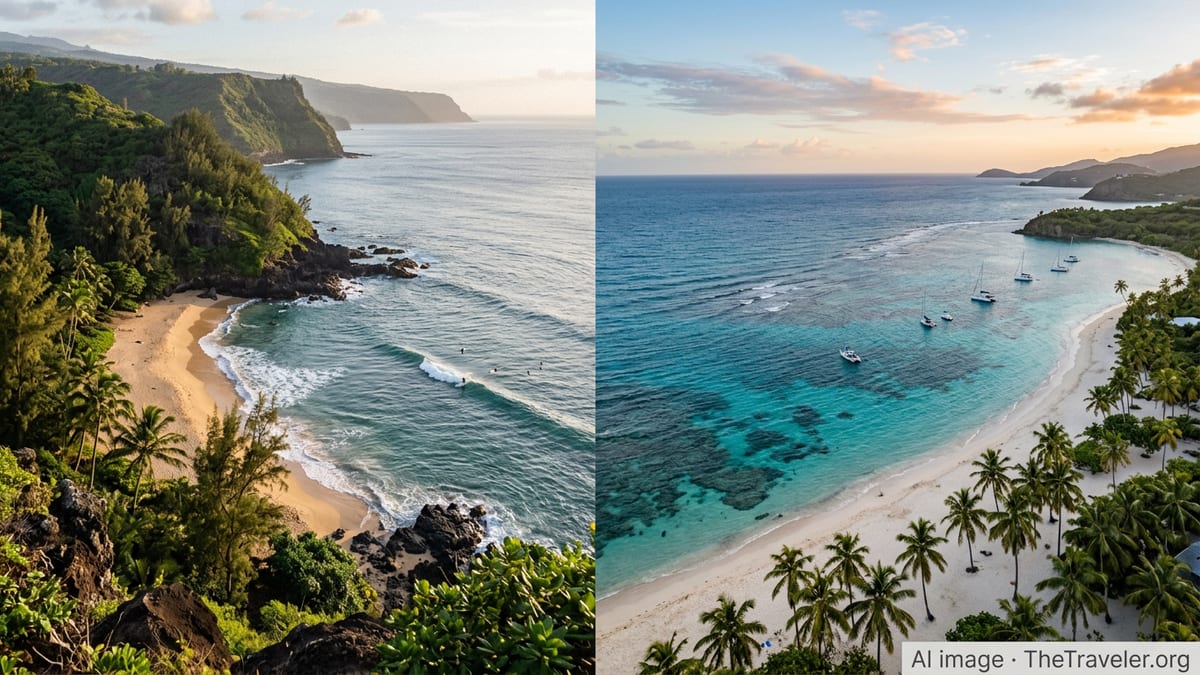
Both Hawaii and the Caribbean deliver on the postcard promise of palm lined beaches, but their landscapes diverge in significant ways. Hawaii’s islands are geologically young and rugged, with soaring volcanic peaks, deeply incised valleys and dramatic coastal cliffs. That topography creates striking backdrops for beaches on Kauai’s north shore, Oahu’s windward coast and the Road to Hana on Maui. Black, green and red sand beaches on certain islands reflect an active volcanic past.
These volcanic landscapes also support exceptionally varied hiking, from short waterfall walks to full day summit treks on peaks that tower thousands of feet above sea level. Snorkeling and diving are possible in many locations, though surf and swell can limit visibility or access on exposed coasts in winter. Surfing culture is deeply rooted in Hawaii, and experienced surfers flock to the North Shore of Oahu for winter swells that can produce some of the largest rideable waves on the planet.
The Caribbean’s beauty is more often defined by low lying coral islands, limestone hills and reef protected bays. Many of the region’s most famous beaches feature powder soft white sand and broad, shallow shelves of turquoise water that stay calm most days of the year. Snorkeling can often be done directly from shore, and coral reefs, seagrass beds and shipwrecks support accessible diving for all levels.
Outdoor adventures in the Caribbean vary by island but can include sailing charters through archipelagos such as the Grenadines or the British Virgin Islands, rainforest hikes on mountainous islands like Dominica or Saint Lucia, and kiteboarding or windsurfing in consistently breezy channels. Because wave energy tends to be lower on many Caribbean beaches compared with Hawaii’s surf-focused shores, the region often suits younger children, tentative swimmers and those who prefer languid, pool like seas to pounding shorebreak.
Logistics, Safety and Ease of Travel
Practical considerations can quietly shape which destination works best for a particular trip. For United States citizens, Hawaii offers frictionless domestic travel: no passport required, familiar mobile coverage, and consumer protections identical to those at home. Medical insurance usually functions as it would on the mainland, and there are no currency exchange issues. For travelers with limited international experience, or those who value simplicity over novelty, these factors can carry significant weight.
The Caribbean is more varied on the logistical front. Many islands welcome United States and European visitors without a visa for typical vacation stays, but passport requirements, entry forms and airport procedures can differ between territories. Currency can change from island to island, though the United States dollar is widely accepted in many resort corridors. Travelers planning to visit multiple islands on one trip need to build in extra time and budget for inter-island flights or ferries, each with its own rules and reliability.
Safety perceptions in both regions are evolving. Certain Caribbean islands have invested heavily in promoting safety, resilience and health care readiness to reassure visitors, and some have seen measurable tourism growth as a result. At the same time, crime levels and social conditions can change rapidly from one neighborhood or island to the next, so travelers are wise to consult current government advisories and local news when choosing where to stay and how to move around.
In Hawaii, crime rates in major visitor zones are generally moderate, but travelers do need to be mindful of environmental risks such as strong surf, flash floods in narrow valleys and the potential for wildfires in drier regions. Both Hawaii and the Caribbean sit on the front lines of climate change, facing sea level rise, coral reef stress and shifting storm patterns. For visitors, this underscores the importance of buying travel insurance that covers weather related disruptions and of respecting local safety warnings, even on seemingly calm days.
Who Each Destination Suits Best
Because both Hawaii and the Caribbean offer excellent vacations, the more useful question is often not which is better overall, but which is better for you. Hawaii tends to suit travelers who want a dramatic volcanic landscape, strong hiking and surfing, a deep dive into Indigenous Pacific culture and the reassurance of being in a United States state with corresponding legal protections. It can be an ideal choice for honeymoons and milestone trips where travelers are prepared to spend more in exchange for marquee scenery and a sense of specialness.
Hawaii also works well for West Coast travelers who can take advantage of relatively short nonstop flights, families who value reliable health care access, and visitors who want to combine urban amenities with nature. Honolulu, for example, offers museums, high end shopping and dining within an easy drive of surfing beaches and rainforest trails.
The Caribbean, meanwhile, is often the better fit for value seekers, cold climate escapees in winter and those who enjoy mixing cultures across multiple islands. All inclusive packages can simplify budgeting for families and groups, and shorter flight times from the eastern United States, Canada and Europe reduce jet lag. The region is particularly strong for travelers whose ideal vacation involves calm water beaches, sailing, snorkeling and long, lazy days rather than demanding hikes or big wave surf.
Because the Caribbean is not a single destination but a region, it is also easier to return repeatedly and have very different experiences each time. One year you might choose a low key, nature oriented island with few large resorts, and the next you might opt for a livelier island known for nightlife and festivals. For many repeat visitors, this variety is part of the appeal.
The Takeaway
Choosing between Hawaii and the Caribbean is less about ranking them and more about aligning their strengths with your priorities. Hawaii stands out for its dramatic volcanic landscapes, integrated United States infrastructure and a cultural context rooted in Native Hawaiian and broader Pacific traditions. It often feels like a major, carefully considered trip, and current cost patterns reinforce its status as a premium destination.
The Caribbean shines for its breadth of choice, more flexible price range and comparatively gentle, reef protected beaches. Its climate is more influenced by the rhythms of the Atlantic hurricane season, but its dry winter months deliver exactly the kind of blue-sky escape many northern travelers crave. It is also a region where you can explore different national cultures and languages within relatively short distances.
For travelers in 2026, the decision may come down to a few practical questions. If you hold a United States passport and want a trip that feels adventurous but administratively simple, Hawaii may edge ahead. If you are traveling from the East Coast or Europe, prioritizing lower flight times and a wide range of budgets, the Caribbean likely makes more sense. Either way, planning with current seasonal weather patterns, local regulations and sustainability concerns in mind will help ensure that your tropical escape matches the dream you had when you first pictured that palm framed shore.
FAQ
Q1. Is Hawaii or the Caribbean cheaper overall in 2026?
In general, the Caribbean offers more budget and midrange options, while Hawaii has become a higher-cost destination, particularly once local accommodation, meals and activities are factored in.
Q2. Which has better weather for a winter beach escape?
Both regions are appealing in winter, but the Caribbean’s December to April dry season is especially popular for sunshine escapes, and Hawaii remains reliably warm with smaller seasonal swings.
Q3. How does hurricane risk compare between Hawaii and the Caribbean?
The Caribbean has a defined hurricane season from roughly June to November with a higher frequency of storms, while significant tropical systems affecting Hawaii are less common but still possible.
Q4. Do I need a passport to visit Hawaii or the Caribbean?
United States citizens do not need a passport for Hawaii, but they generally do need one for most Caribbean destinations, even if flights depart from the mainland United States.
Q5. Which destination is better for families with young children?
Both can work well, but many families favor calm, shallow Caribbean beaches, while others prefer Hawaii’s United States infrastructure and health care access, especially for very young children.
Q6. Where will I find better snorkeling and diving, Hawaii or the Caribbean?
Both regions offer excellent underwater experiences, but the Caribbean’s numerous reef protected bays and accessible shore entries often make snorkeling and beginner diving especially convenient.
Q7. Is Hawaii or the Caribbean better for hiking and land-based adventure?
Hawaii generally has the edge for hiking, with dramatic volcanic peaks, ridgelines and waterfalls, while Caribbean hiking opportunities vary more widely from island to island.
Q8. How should I decide if I only have one week of vacation?
If you have one week, choose the region that minimizes travel time from your home; West Coast travelers often favor Hawaii, while East Coast and European travelers tend to lean toward the Caribbean.
Q9. Which destination offers more distinct cultural variety?
The Caribbean, as a region of many countries and territories, offers wider variety across languages, music and history, while Hawaii provides a deeper dive into a single, specific cultural context.
Q10. Is either destination significantly safer than the other?
Both Hawaii and the Caribbean have areas that are very comfortable for tourists and places where caution is warranted, so checking recent advisories and following local guidance is important in both.