


More news on this day
Passengers at London Heathrow and Gatwick are facing continuing disruption after intense thunderstorms over southeast England forced air-traffic restrictions, triggering hundreds of delays and cancellations that are now spilling into Sunday’s schedules.
Get the latest news straight to your inbox!
Thunderstorms Trigger Large-Scale Disruption
Severe thunderstorms that swept across southeast England on Saturday 27 June led to significant disruption at Heathrow and Gatwick, the country’s two busiest airports. Publicly available flight-tracking data and media coverage indicate that hundreds of flights were delayed or cancelled as storm cells moved across London’s air corridors, forcing controllers to slow the rate of landings and take-offs.
Figures compiled from flight-tracking services show that Heathrow recorded delays on well over 400 movements on Saturday, with more than 100 cancellations, while Gatwick saw delays and cancellations affecting several hundred additional flights. In some cases, departures that were initially showing modest schedule changes later slipped by five or six hours as the storm system lingered and airspace capacity remained constrained.
Reports from aviation outlets note that the London disruption formed part of a wider pattern of weather-related delays across parts of northwest Europe, with thunderstorms, lightning and localized hail prompting tighter spacing between aircraft. That combination sharply reduced available slots into and out of Heathrow and Gatwick at the very time many aircraft and crews were needed to operate tightly timed weekend rotations.
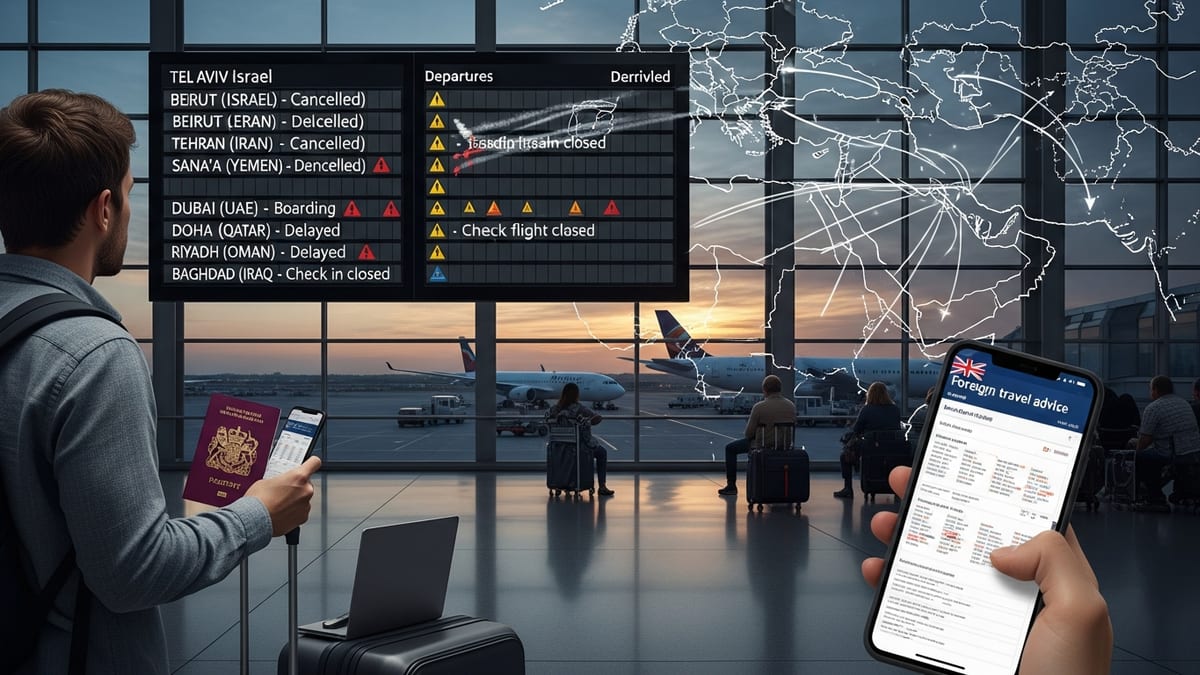
Images and social media posts from passengers described long queues, crowded departure halls and aircraft held on stands or taxiways while controllers managed the flow of traffic through storm-affected routes. In some instances, travellers reported remaining on parked aircraft for several hours as airlines waited for clearance to depart or for arriving flights to free up stands.
Capacity Cuts Lead to Cancellations and Long Waits
According to published coverage drawing on services such as FlightAware and Flightradar24, Heathrow and Gatwick both experienced a sharp reduction in usable capacity as thunderstorms intensified. When heavy rain and lightning move across approach paths, arrivals must be spaced further apart, and ground operations such as fuelling and ramp work can be paused for safety, slowing the turnaround of aircraft.
At Gatwick, live departure boards on Saturday showed a series of services pushed back by several hours, with some short-haul flights delayed into the evening after originally being scheduled around midday. Heathrow saw similar patterns, with busy afternoon departure banks stretching well beyond their planned windows as earlier storms forced aircraft to hold, divert or return to stands.
The disruption quickly cascaded across airline networks. Aircraft that arrived late into London often left late again, if at all, creating a ripple effect on subsequent sectors. Publicly available information from aviation analysts indicates that once a weather system cuts through a major hub’s schedule, it can take many hours to recover because stand space, rested crews and available aircraft are all in shorter supply.
Some carriers opted to cancel services outright rather than operate them with extreme delays, particularly where crew duty-time limits would have been exceeded or where overnight positioning of aircraft would no longer have matched Sunday’s planned flying programme. This strategy can help limit further knock-on disruption but leaves passengers seeking alternative arrangements at short notice.
Knock-On Delays Extend into Sunday
Although the most intense thunderstorms passed by late Saturday, disruption has continued into Sunday 28 June as airlines and airports work through the backlog. Early-morning schedules at both Heathrow and Gatwick showed residual delays on flights operated by carriers that experienced the worst of Saturday’s weather impacts, particularly on European short-haul routes.
Aviation-focused publications report that air-traffic managers expected some weather-related flow restrictions to persist into Sunday where storm cells remained active over nearby parts of the continent. Even when skies above London improve, constraints on key routes over France, the Low Countries or the North Sea can still force departures to operate with added spacing or modified routings, extending block times and complicating recovery plans.
Travel industry analysis suggests that Sunday is often a challenging day on which to absorb a major weekend disruption, as aircraft are typically scheduled tightly to meet leisure demand and to position fleets for the working week. With many flights already heavily booked at the start of the summer travel season, options for rebooking displaced passengers can be limited, particularly on popular Mediterranean services.
Some long-haul operations into Heathrow and Gatwick are also experiencing residual effects where aircraft and crews ended Saturday out of position. Publicly available flight information boards indicated that a number of inbound services were operating late into London, compressing turnaround times and adding further pressure to Sunday’s departure programme.
Advice for Affected Travellers
Consumer travel outlets and passenger-rights organisations are advising anyone due to fly through Heathrow or Gatwick to monitor flight status closely and to leave extra time to reach the airport. While some services are operating close to schedule, others continue to face shorter delays as airspace and ground operations gradually return to normal.
Airlines are generally encouraging customers to make use of mobile apps or online tools to track real-time updates and, where necessary, to change bookings without visiting airport desks. In previous episodes of weather-related disruption, carriers at UK airports have sometimes allowed free rebooking to later dates or to alternative flights on the same day where seats are available, though policies vary by airline and fare type.
Travel commentators note that passengers affected by long delays or cancellations in the United Kingdom and European Union may have specific rights to assistance under existing air passenger regulations, depending on the cause of disruption and whether re-routing is offered. However, severe weather is often treated differently from technical issues when it comes to compensation, so travellers are being urged to check current guidance from regulators and carriers.
With forecasts indicating the potential for further unsettled weather in parts of the region, travel experts suggest that flexibility remains important over the coming days. Those with tight connections, separate onward tickets or same-day airport transfers between Heathrow and Gatwick are being advised to build in additional buffers and to have contingency plans in case of renewed disruption.
Storms Underscore Vulnerability of Busy Hubs
The latest episode of disruption highlights how dependent major hubs such as Heathrow and Gatwick are on stable weather patterns, particularly during peak travel periods. Both airports regularly operate close to their maximum declared capacity, leaving limited margin when thunderstorms or other severe conditions affect airspace or ground operations.
Industry reports have repeatedly noted that convective weather systems are among the most challenging scenarios for air-traffic managers, as storm cells can develop quickly and force rapid changes to routing and runway use. Unlike more predictable winter weather, thunderstorms often arrive in bursts, requiring controllers to temporarily pause or slow arrivals and departures for safety, then manage a surge of traffic once conditions improve.
Analysts observing Saturday’s disruption point out that such events are likely to recur, particularly as hotter summer periods can increase the risk of intense storm activity over densely trafficked regions. The combination of high passenger numbers, limited runway capacity and complex airspace makes London’s main airports especially exposed when those systems coincide with busy travel weekends.
For travellers, the storms serve as a reminder that even short-haul flights can face substantial delays when severe weather strikes key hubs. Travel specialists suggest that where possible, passengers consider longer connection times, early-morning departures that may be less affected by later developing storms, and comprehensive travel insurance to help handle unforeseen changes.