


More news on this day
Venezuela is reeling after a pair of powerful earthquakes and subsequent strong aftershocks shattered Caracas, La Guaira and parts of Aragua, shutting airports, severing transport links and triggering a wave of international rescue and evacuation flights involving the United States and a growing coalition of countries.
Get the latest news straight to your inbox!
Airports Shut and Flights Scrapped Across Northern Venezuela
The double earthquake on June 24, followed by fresh offshore shocks near Aragua, inflicted heavy damage across the densely populated corridor running from Caracas to the Caribbean coast. In La Guaira state, where the country’s main international gateway sits hard against the shoreline, images show collapsed buildings, buckled roads and debris spilling toward airport access routes as emergency crews battle to keep basic operations running.
Publicly available aviation and media reports indicate that commercial passenger operations at Caracas’s principal international airport have been largely suspended, with only limited military, government and relief flights moving through tightly controlled slots. Airlines serving Venezuela from North America, Europe and neighboring Latin American hubs have announced extensive cancellations and diversions, citing damage inspections, power cuts and stressed air traffic capacity.
Travel industry bulletins describe a cascading effect across regional networks as carriers reroute aircraft to alternative gateways in the Caribbean and northern South America. Passengers bound for Venezuela are being rebooked via cities such as Bogotá, Miami, Panama City and São Paulo or advised to postpone trips altogether while assessments continue on runways, terminals and navigation systems.
Domestic connectivity inside Venezuela has also been hit. Flights linking Caracas and coastal La Guaira with interior cities rely on infrastructure in the affected states of Aragua and Carabobo, where aftershocks and reports of structural damage have prompted precautionary checks. This has left many communities reachable only by road at a time when key highways have been partially blocked by landslides, fallen structures and fuel shortages.
United States Leads Emergency Airbridge With Global Partners
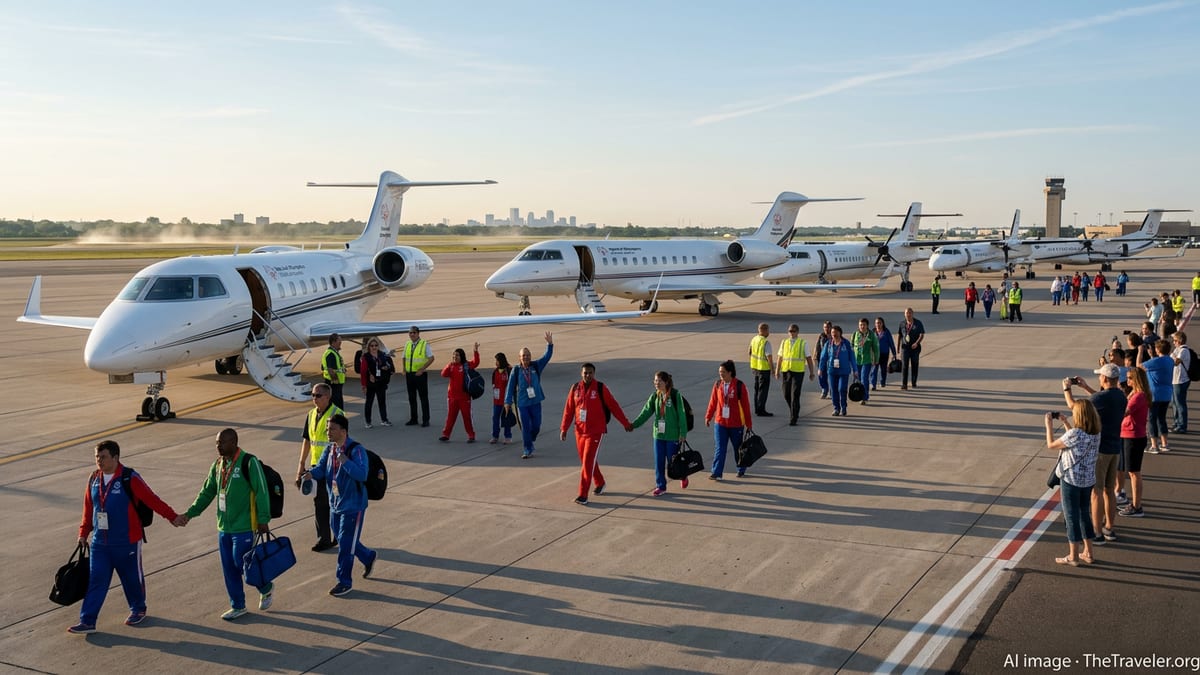
According to published coverage from major international outlets, the United States has rapidly positioned itself at the center of a widening airbridge into northern Venezuela. Military cargo planes and chartered civilian freighters are being used to ferry in urban search and rescue teams, medical staff, field hospitals and heavy engineering equipment, often staging through bases in the Caribbean and allied airports in Colombia.
Publicly available information shows that Switzerland, Colombia, Mexico and several European and Latin American governments are contributing aircraft, technical specialists and relief cargo under various bilateral and multilateral arrangements. Many of these flights are converging on less damaged airfields or improvised hubs outside the worst hit zones, with onward movement by helicopter and overland convoy into La Guaira, Caracas neighborhoods and Aragua’s coastal communities.
Logistical planners are treating the devastated coastal strip as a constrained disaster corridor where each landing slot is reserved for life saving missions. Medical evacuation flights are prioritizing the most critical patients for transfer to hospitals in other parts of Venezuela and to partner countries that have offered intensive care beds. For stranded foreign travelers, consular advisories from North and South American nations recommend registering with embassies and remaining prepared for short notice evacuations as windows of safe access open and close.
Observers note that the scale of the airlift is reminiscent of previous large scale humanitarian air operations after catastrophic earthquakes in Haiti and Türkiye. However, Venezuela’s combination of steep terrain, densely packed informal settlements and an already fragile infrastructure is adding layers of complexity that are especially visible at airports and heliports forced to operate at the edge of their capacity.
Disrupted Travel Corridors From Caracas to the Coast
For travelers and residents alike, movement between the capital and the Caribbean coast has become one of the most acute challenges. The vital highway linking Caracas with La Guaira and the port zone has long been considered vulnerable to seismic events, and early visual assessments shared in regional media highlight cracked pavement, fallen overpasses and improvised detours through hillside neighborhoods.
Bus and private vehicle traffic has been intermittently halted to allow heavy machinery and fuel trucks to pass, while spontaneous volunteer convoys carrying food, water and medicine have further clogged the limited open lanes. Travel advisories from neighboring countries and airline partners are warning that overland transfers between the airport area and Caracas can take many hours, if they are possible at all, and may be cancelled without notice as new aftershocks trigger rockfalls.
Within Caracas itself, reports indicate that several districts experienced building collapses and severe structural damage, forcing the closure of hotels, hostels and short term rentals. Visitors who were in the city at the time of the quakes have been moved into temporary shelters or relocated to less affected neighborhoods, often with the assistance of local volunteers and faith based networks that have stepped into gaps left by strained official services.
In Aragua state, strong aftershocks recorded offshore have heightened concern among residents of coastal resorts and inland towns that serve as weekend escapes for people from the capital. Tourism operators along this corridor are advising clients to postpone nonessential travel, and images circulating across newsrooms show shuttered beachfront promenades, closed guesthouses and marinas repurposed as staging points for rescue boats and supply barges.
Global Solidarity and Shifting Tourism Patterns
Switzerland, Colombia, Mexico and other nations with strong humanitarian and technical capacities have emerged as prominent contributors to the relief effort. According to publicly available information, their assistance ranges from highly trained search and rescue units capable of operating in collapsed high rises to portable water purification systems and satellite communications equipment that can restore minimal connectivity around damaged airports and port facilities.
This wave of solidarity is already reshaping travel patterns in the wider region. Humanitarian workers, journalists and family members of Venezuelan residents are filling flights into neighboring countries that act as staging points, even as leisure demand into Venezuela itself collapses. Regional tourism boards in Colombia, the Dominican Republic and other nearby destinations are updating messaging to highlight their role as safe hubs for those rerouting away from the disaster zone.
Airlines that once marketed Caracas and the nearby Caribbean coast as key business and leisure gateways are temporarily recasting schedules to strengthen links between North America, Europe and secondary Latin American cities. Analysts following the aviation sector suggest that if damage assessments confirm long term structural problems at coastal infrastructure, some of these network changes could become semi permanent, with implications for how travelers access northern South America for years to come.
At the same time, diaspora communities in the United States, Mexico, Colombia and Europe are driving a surge in demand for one way tickets toward the region, as relatives seek to get as close as possible to affected loved ones. Travel agencies and online booking platforms are reporting rapidly shifting search trends, with Caracas appearing less as a destination and more as an origin for prospective evacuation once routes can be safely reopened.
What Travelers Need to Know Right Now
For anyone with imminent plans involving Caracas, La Guaira or Aragua, the immediate guidance from airlines and travel organizations is consistent: defer all nonessential trips. Flight schedules into Venezuela remain highly unstable, with rolling cancellations, last minute aircraft changes and diversion of services to alternative airports outside the most damaged areas.
Passengers already en route to the region are being encouraged, where possible, to remain in international transit zones until they can confirm that a connecting flight will operate as planned. Those who have arrived in neighboring countries such as Colombia or Panama are finding that on the ground travel options into Venezuela are either suspended or restricted to tightly controlled humanitarian corridors.
Travel insurers are beginning to classify the event as a major natural disaster, and policyholders may find that coverage for cancellation, interruption and medical evacuation depends on the timing and wording of their contracts. Industry specialists recommend that travelers retain all documentation related to disrupted flights and accommodation, and maintain close contact with insurers, booking agents and consular services as the situation evolves.
For now, the focus across the global travel and aviation community remains on supporting life saving operations and stabilizing core infrastructure in and around Caracas, La Guaira and the affected zones of Aragua. Only once runways, control towers, fuel farms and access roads are fully assessed will planners be able to chart a realistic path toward the resumption of regular commercial travel into a region that has suffered one of the most severe seismic shocks in its modern history.