

More news on this day
London Heathrow is again grappling with widespread disruption, with dozens of flight cancellations and hundreds of delays leaving passengers stranded and sparking renewed concern over the resilience of one of Europe’s busiest hubs.
Get the latest news straight to your inbox!
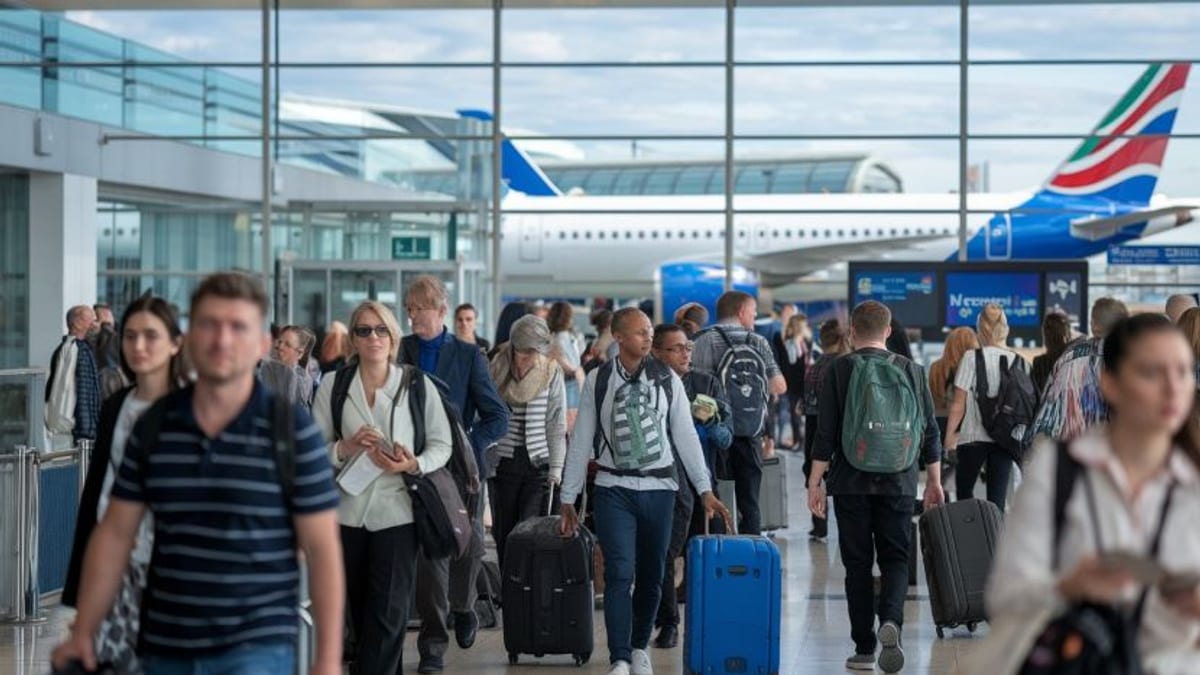
Image by Global Travel Alerts, Advisories, International Travel Alerts
Fresh Wave of Disruption Hits Europe’s Busiest Hub
Recent operational data and industry coverage indicate that London Heathrow has become a focal point of a wider European air travel crisis, with delays and cancellations spiking across major carriers. Over the past week, Heathrow has recorded a notably high number of affected services, with some reports highlighting nearly 200 delays and close to 20 cancellations in a single day as airlines struggled to keep to schedule.
Travel-focused outlets describe a scene of long queues, last-minute gate changes and missed connections as passengers attempted to navigate the knock-on effects of disruption elsewhere in Europe. Carriers including major flag airlines and low-cost operators have been forced to trim or retime services when aircraft and crews failed to be in the right place at the right moment.
The strains at Heathrow are part of a pattern playing out across the continent, as hubs from Frankfurt to Paris also grapple with elevated cancellation levels. Industry analysis suggests that, because Heathrow already operates near capacity in normal conditions, any disturbance in the network tends to be felt there particularly quickly and intensely.
For travelers, that has translated into abrupt overnight cancellations, extended waits in terminal seating areas and, in some cases, unplanned hotel stays while they await rebooking. Social media posts and passenger accounts detail families sleeping in departure halls and business travelers racing to secure scarce alternative flights out of the capital.
Multiple Triggers: Weather, Congested Skies and Staffing Pressures
The latest disruption at Heathrow is being attributed to a blend of factors rather than a single dramatic incident. Publicly available information points to unsettled weather systems across parts of Europe, including strong winds and heavy rain associated with recent Atlantic storms, which have periodically reduced runway capacity and forced air traffic managers to slow the rate of arrivals and departures.
At the same time, airspace congestion has intensified, particularly on heavily used corridors linking the United Kingdom with mainland Europe and transatlantic destinations. When storms or military airspace restrictions push more aircraft into narrower routes, flight plans can become crowded, increasing the likelihood of holding patterns, missed slots and, ultimately, cancellations when delays grow too long.
Operational reports also emphasize persistent staffing and resource challenges in parts of the aviation system. Ground handling teams, security staff and customer-service agents are all under pressure as travel demand remains strong. Even moderate sickness spikes or schedule mismatches can leave airports struggling to turn aircraft around quickly enough, especially at an infrastructure-constrained gateway such as Heathrow.
Industry commentary notes that airlines sometimes opt to cancel rotations pre-emptively to prevent further knock-on disruption later in the day. While such decisions can stabilize networks in the medium term, they leave passengers on affected flights facing immediate uncertainty and the need to reorganize their plans at short notice.
Stranded Passengers Confront Limited Rebooking Options
For passengers caught up in the recent Heathrow disruption, the most pressing problem has often been the scarcity of alternative seats. With many services already heavily booked at the start of the spring travel period, rebooking can involve long waits at service desks and the prospect of travelling days later than planned.
Reports from travel media describe some travelers being routed via secondary hubs or even alternative countries in order to reach their destinations. Those attempting to return to the United Kingdom have sometimes found that onward domestic or rail connections were no longer viable by the time they landed, compounding the disruption.
Accommodation has become another flashpoint. When large numbers of passengers are stranded at once, nearby hotels fill quickly, particularly around the Heathrow corridor. Travelers have reported needing to look further afield, sometimes into central London or neighboring towns, to find available rooms at short notice and often at elevated prices.
For those already abroad and due to connect through Heathrow, the uncertainty can be even more unsettling. Industry coverage highlights cases where travelers have opted to remain at their origin city for an extra night rather than risk being stranded in transit, illustrating how the perception of Heathrow as a potential bottleneck is influencing travel decisions well beyond the airport perimeter.
What Passengers Need to Know About Rights and Next Steps
Under the United Kingdom’s retained version of European air passenger protection rules, travelers whose flights are cancelled or severely delayed from Heathrow may be entitled to assistance, rerouting and, in some circumstances, financial compensation. These rights generally apply when the operating carrier is a UK or European airline and the disruption is not caused by extraordinary events such as severe weather or widespread airspace closures.
Consumer guidance available from official channels recommends that affected passengers keep all travel documentation, boarding passes and receipts for essential expenses incurred during delays. When a cancellation occurs, the airline is typically required to offer a choice between a refund and alternative transport at the earliest opportunity, though the availability of seats can limit practical options during peak disruption.
Advisers also stress the importance of confirming the cause of a delay or cancellation. If an issue is linked to crew scheduling, maintenance or other operational matters within the airline’s control, the chances of compensation are higher. When weather systems or third-party industrial action are involved, entitlement may be reduced, although passengers should still be provided with care such as meals and, where necessary, accommodation.
Travel insurance can provide an additional safeguard, particularly policies that cover missed connections, additional accommodation costs or, in some cases, the option to cancel or curtail a trip. Insurance providers, however, typically require detailed evidence of disruption and will assess claims against their own terms and conditions.
Practical Advice for Upcoming Heathrow Departures
With further disruption possible in the coming days as airlines and airports work through backlogs and adjust schedules, travelers using Heathrow are being urged by travel industry commentators to add more contingency into their plans. Checking flight status repeatedly in the 24 hours before departure, rather than assuming confirmation at booking is sufficient, has become a crucial step.
Arriving at the airport earlier than usual may also help, especially for long-haul or connecting itineraries. While arriving excessively early can create its own challenges, building in extra time for security queues, check-in issues and terminal transfers can reduce stress if problems arise. Passengers with tight self-booked connections on separate tickets are particularly vulnerable when schedules slip.
Experts in the sector recommend having a fallback strategy in mind, such as knowledge of alternative routes, nearby airports or rail options in the event of an outright cancellation. Keeping essential items, medication and a change of clothes in hand luggage can also make unexpected overnight stays at or near the airport more manageable.
As Heathrow navigates another period of intense pressure, the latest wave of cancellations highlights once more how fragile modern air travel networks can be when confronted with overlapping strains. For passengers, staying informed, flexible and prepared is increasingly becoming an essential part of flying through one of the world’s most important aviation hubs.