


More news on this day
London Heathrow has reported a five percent fall in passenger numbers in April, highlighting how a surge in jet fuel prices and the deepening Middle East crisis is starting to erode demand for travel between the United Kingdom and key markets such as Qatar, the United Arab Emirates, Saudi Arabia, Bahrain, Israel and Iraq.
Get the latest news straight to your inbox!
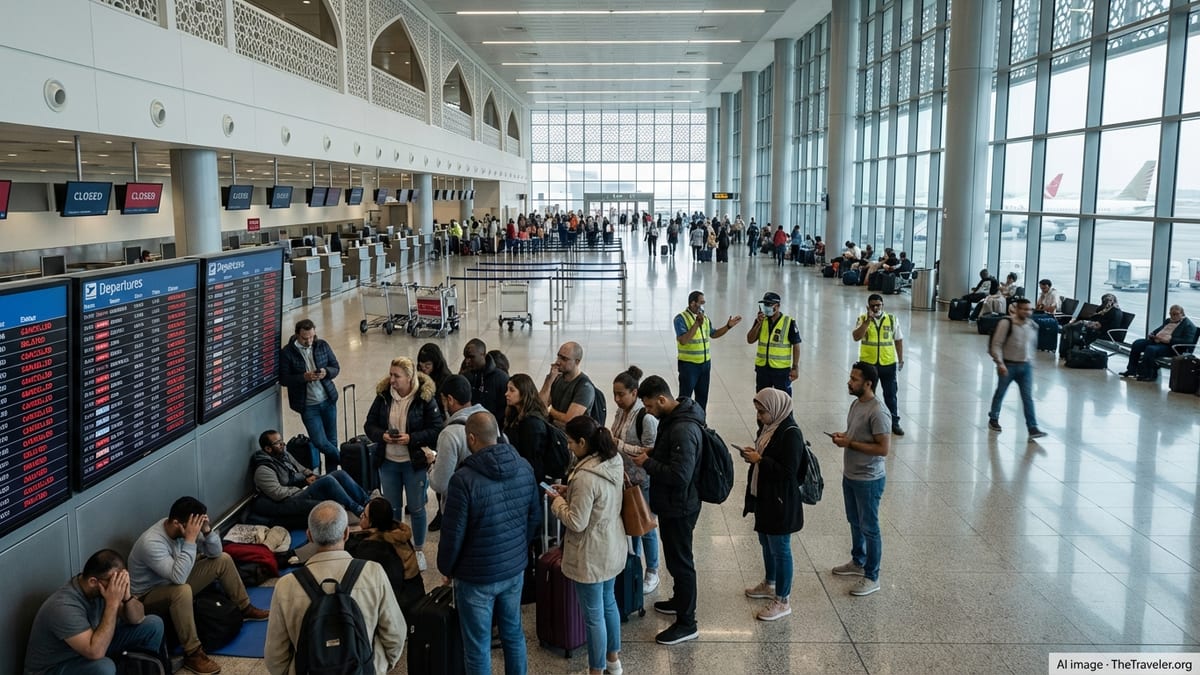
Heathrow Traffic Slips as Middle East Routes Weaken
Published traffic data for April shows Heathrow handled about 6.7 million passengers, around five percent fewer than in the same month a year earlier. Reports indicate that this is the sharpest reversal since the post‑pandemic recovery took hold, interrupting a long stretch of year‑on‑year growth at the UK’s busiest hub.
Coverage in UK media attributes much of the slowdown to faltering demand on routes connected, directly or indirectly, to the Middle East. Services linking the UK with Gulf hubs in Qatar, the UAE, Saudi Arabia and Bahrain, as well as routes touching Israel and Iraq, are described as particularly exposed to the combination of conflict‑related disruption, heightened security concerns and sharply higher operating costs.
Airport industry reports note that Heathrow continues to see relatively solid demand on short‑haul European and transatlantic services, suggesting the overall decline is being driven disproportionately by long‑haul and connecting flows that rely on Middle Eastern transfer points. This has raised concern that the UK could lose market share on key Europe‑Asia and Africa‑Asia corridors if the disruption persists into the peak summer season.
Analysts following the sector suggest that the five percent drop at Heathrow may be an early signal of broader pressure on UK aviation, as airlines reassess capacity on routes threaded through or near conflict‑affected airspace and as travellers opt to postpone or reroute trips that previously relied on Gulf or Levantine connections.
Fuel Price Surge Squeezes Airlines and Pushes Up Fares
The traffic slowdown is unfolding against a backdrop of rapidly rising fuel costs. International aviation data indicates global jet fuel prices have roughly doubled since late February after the closure of the Strait of Hormuz and attacks on regional energy infrastructure disrupted a key artery for world oil trade. Sector research suggests fuel now accounts for close to one third of airline operating costs, up from around a quarter before the current crisis.
Economic analysis published in recent weeks describes the current spike as the most severe oil shock since the early 2020s, with crude benchmarks jumping by more than 60 percent in March alone. Industry studies from aviation consultancies and financial institutions indicate that this has translated into double‑digit percentage increases in average airfares worldwide, as carriers seek to recoup higher costs through ticket prices and fuel surcharges.
For UK‑based airlines flying from Heathrow and other major airports, the impact is particularly acute on long‑haul routes to and via the Middle East, where detours around closed or restricted airspace increase fuel burn even further. Publicly available analysis from European aviation bodies points to longer flight times, higher insurance premiums and more complex routings as additional factors compounding fuel‑driven cost pressures.
Trade associations representing UK carriers have already warned that the combination of fuel price volatility and geopolitical risk is undermining financial forecasts for 2026. Briefings submitted to policymakers highlight the risk of reduced capacity, selective route suspensions and further fare increases if the fuel market fails to stabilise before the main summer holiday period.
Middle East Crisis Rewrites Global Travel Flows
The fall in Heathrow’s passenger numbers comes as the Middle East conflict reshapes aviation patterns far beyond the immediate region. Research by economic consultancies and international agencies notes that airspace closures and security restrictions across parts of Iran, Iraq and neighbouring states have disrupted a critical corridor linking Europe with Asia and Africa.
Industry outlook reports suggest that some Gulf and Levantine hubs, including airports in Qatar, the UAE, Saudi Arabia, Bahrain, Israel and Iraq, are seeing a pronounced slowdown in transfer traffic, even where local point‑to‑point demand remains resilient. Forecasts indicate that overall arrivals to the wider region could fall by as much as a quarter this year if tensions remain elevated and fuel prices stay high.
As a result, airlines and passengers are redistributing flows through alternative gateways in Europe and Asia. Travel trade coverage describes rising interest in routings via Istanbul, central European airports and North Asian hubs, as travellers look to avoid conflict‑proximate skies while still accessing long‑haul networks. However, analysts caution that the cost benefits of such switches are limited while jet fuel remains expensive worldwide.
For the UK, this shift poses strategic questions about connectivity. Heathrow’s role as a global super‑hub has long depended on dense links to Gulf carriers and Middle Eastern markets. Any prolonged weakening of those flows could erode the airport’s competitive position relative to rival European hubs that may be better placed to capture rerouted traffic or adapt capacity more quickly.
Domestic Economic Ripples and Consumer Response
The pressure on Heathrow and UK‑Middle East travel is feeding into broader concerns about the domestic economic impact of the crisis. Economic commentary on the Strait of Hormuz disruption highlights the vulnerability of the UK’s energy and transport sectors to external supply shocks, with higher wholesale fuel prices expected to feed through to household budgets via more expensive travel and freight.
Consumer‑facing analysis already points to higher average ticket prices on many long‑haul routes from the UK, with advance fares for summer departures reflecting both elevated fuel costs and a risk premium associated with itinerary instability. Travel agents report increased interest in alternative destinations reachable on shorter flights that avoid the most affected corridors, such as closer European beach markets and North African resorts accessed via western Mediterranean airspace.
At the same time, tourism boards and business groups have raised concerns that elevated travel costs and heightened uncertainty could deter inbound visitors and corporate travel to the UK. Economic impact modelling by international institutions suggests that even modest declines in long‑haul arrivals can have outsized effects on hotel occupancy, retail spending and conference activity in major cities such as London and Manchester.
The combination of softer demand on certain routes and higher operating costs is also influencing airline scheduling decisions at Heathrow. Publicly available industry updates show that some carriers are consolidating frequencies, upgauging aircraft on core services while trimming marginal flights, and seeking flexibility around airport slot rules to manage capacity more dynamically through the crisis period.
Outlook: Fragile Recovery Faces a New Test
Before the latest escalation in the Middle East, the global aviation sector was on track to consolidate its recovery from the pandemic era, with passenger volumes in many regions approaching or surpassing 2019 levels. The sudden five percent dip at Heathrow underscores how quickly that trajectory can be shaken by external shocks, particularly in a market so reliant on long‑haul connectivity and premium travel demand.
Forward‑looking analysis from aviation consultancies suggests that the near‑term outlook hinges on three variables: the duration of the conflict, the stability of energy supply routes and the behaviour of leisure and corporate travellers facing sustained higher prices. Scenarios in which fuel prices retreat and airspace restrictions ease later in 2026 envisage a gradual rebound in traffic through Gulf hubs and associated routes, including those serving the UK.
More pessimistic projections, based on a prolonged closure of key shipping and flight corridors, point to an extended period of elevated fares, constrained capacity and rerouted traffic flows. In this case, Heathrow and other major European airports could see persistent volatility in monthly passenger figures as airlines continually adjust schedules to protect margins.
For now, the five percent decline in passengers at Heathrow stands as a visible indicator of the pressure bearing down on UK air travel as the country finds itself increasingly entangled in the global consequences of the fuel price surge and the Middle East crisis.