


More news on this day
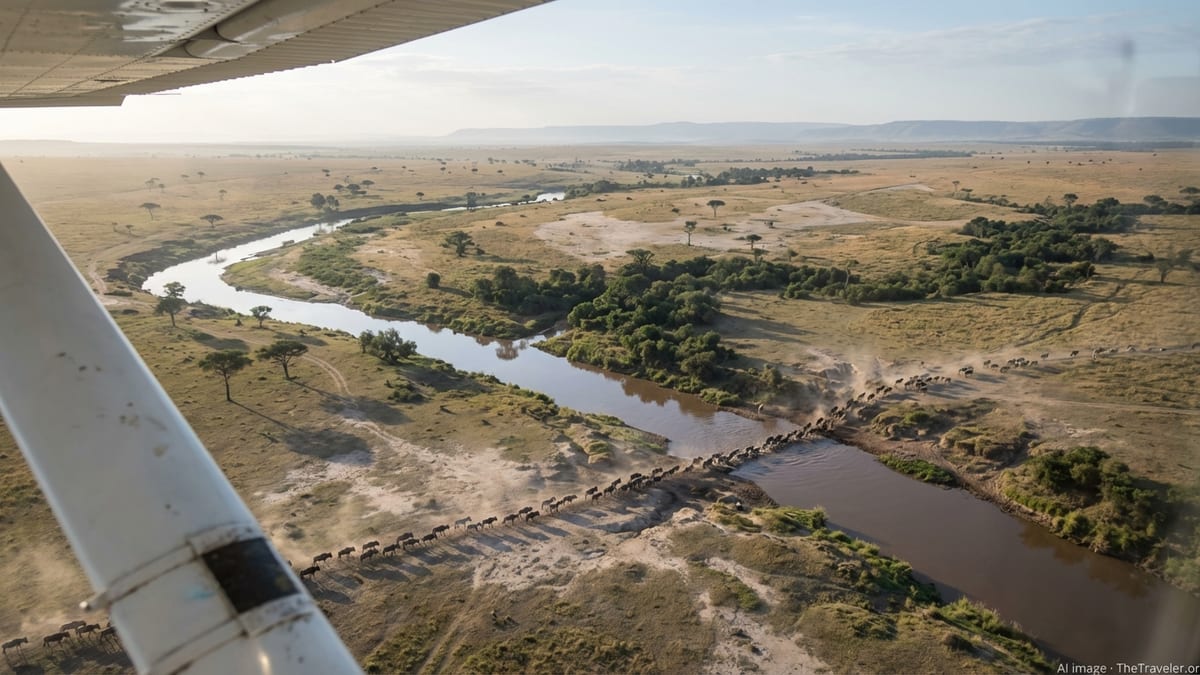
Across northern Tanzania’s savannahs, the seasonal surge of wildebeest is increasingly mirrored by an influx of capital, as investors, brands and policymakers converge to secure the country’s position at the top end of East African luxury travel.
Get the latest news straight to your inbox!
A Record Tourism Boom Reshapes East African Luxury Demand
Publicly available data indicate that Tanzania is entering a new tourism supercycle, with visitor numbers and earnings reaching record levels and reshaping the dynamics of luxury travel across East Africa. National statistics compiled for 2024 show international arrivals climbing to more than 2.1 million visitors, while broader counts that include domestic travel suggest a total tourism volume above 5 million. Earnings from tourism have been reported at close to 4 billion US dollars, underscoring the sector’s central role in foreign exchange generation and growth.
These headline figures are especially significant for the luxury segment. Industry reports highlight that North American and European markets, including the United States, Italy and France, remain among the strongest source regions for Tanzania’s high-spend visitors. The demand profile is increasingly weighted toward longer itineraries that combine flagship wildlife areas such as the Serengeti and Ngorongoro Crater with beach extensions in Zanzibar or along the mainland coast. This pattern is encouraging investors to prioritize integrated, multi-stop product offerings that serve the upper end of the market.
Regional analysts point out that Tanzania’s positioning has been enhanced by a string of international accolades. Recent World Travel Awards cycles have repeatedly named the country Africa’s leading safari destination and recognized Serengeti National Park as the continent’s leading national park. These distinctions strengthen the country’s brand at a time when neighbouring Kenya and Rwanda are also courting high-yield visitors, and they are reinforcing perceptions of Tanzania as the anchor destination for the classic Great Migration safari.
The tourism boom is also dovetailing with a broader macroeconomic strategy. Economic surveys show that tourism continues to sit alongside mining, energy and agriculture as a priority pillar for growth, with the government articulating targets to raise international arrivals and foreign earnings further over the medium term. Within that framework, the luxury safari segment is seen by many analysts as a relatively low-volume, high-value avenue that can support conservation funding without relying on mass tourism.
Following the Herds: New Capital Flows into the Northern Circuit
As the Great Migration drives global awareness of Tanzania’s northern parks, new capital is flowing into high-end properties designed to keep pace with the herds. Specialist travel publications have reported a wave of investment into luxury safari lodges and mobile camps positioned along key wildlife corridors in and around the Serengeti. These developments include contemporary tented camps, elevated hillside lodges and exclusive-use villas that offer front-row viewing of the annual wildlife movement.
Among the most closely watched projects are new private villas and ultra-luxury retreats in the Singita Grumeti area, on the western edge of the Serengeti ecosystem. Announcements from the operator indicate that exclusive-use properties opening from 2024 onward are aimed squarely at high-net-worth families and groups, combining panoramic views over migration routes with personalized service, wellness facilities and extensive conservation programming. The expansion is widely interpreted as a sign of confidence in long-term demand for top-tier Serengeti experiences.
Other brands are choosing a mobile strategy that follows the herds more literally. Trade coverage describes new migration camps designed to relocate seasonally to track wildebeest movements between the southern short-grass plains and the western and northern corridors. These concepts promise guests a higher probability of dramatic crossings while maintaining a luxury standard of service and amenities, from solar-powered suites to private plunge pools. The approach marries the spontaneity of traditional camping with the expectations of today’s high-end traveler.
Closer to the gateway city of Arusha, investment is converging on properties that serve as staging posts for multi-park itineraries. Plans announced by regional and international developers include a luxury tented camp near Mount Kilimanjaro, scheduled to open in the coming years, which is intended to complement climbs of Africa’s highest peak with high-end pre- and post-expedition stays. These projects are designed to capture a share of the premium segment that sees Tanzania not as a single park destination, but as a complete, multi-day circuit.
Infrastructure Upgrades Tie Safari Circuits to Global Luxury Markets
The Great Migration of capital into Tanzania’s luxury tourism is not limited to lodges and camps. Large-scale public investment in transport infrastructure is quietly redrawing the map of accessibility for high-end visitors across East Africa. A national drive to complete and operationalize sections of the Standard Gauge Railway between Dar es Salaam and the inland capital of Dodoma is central to this strategy, improving long-distance connectivity and supporting broader economic integration.
At the same time, airport modernisation is being positioned as a direct catalyst for tourism growth. Data on Julius Nyerere International Airport in Dar es Salaam show plans for major upgrades to transform the facility into a modern hub for the national carrier, with capacity targets in the millions of passengers per year. Separate planning documents detail proposals for a four-star airport hotel and commercial complex at the site, part of a push to boost non-aviation revenues and improve the experience for transit and long-haul passengers entering the country’s tourism circuits.
Further north, Kilimanjaro International Airport continues to serve as the primary gateway to the Serengeti, Ngorongoro, Tarangire and Manyara. Recent statistics indicate that the airport handled more than one million passengers in 2024, placing it among the busiest in the country. Industry observers note that improvements in airport management, including the transfer of operations to the national airports authority, are intended to streamline investment, expand route networks and accommodate a growing volume of charter and scheduled services catering to safari travelers.
These infrastructure moves have regional implications. By consolidating Dar es Salaam and Kilimanjaro as international entry points, and by upgrading road and rail links to interior hubs such as Dodoma and Arusha, Tanzania is positioning itself as a primary arrival and distribution hub for East African itineraries. For the luxury market, this translates into easier multi-country safaris that link Tanzania with Kenya, Rwanda or the wider Indian Ocean, while retaining Tanzania as the central anchor of the journey.
Balancing Conservation, Communities and High-End Growth
The surge in luxury investment is unfolding in landscapes that are also conservation priorities. Reports from conservation-minded operators in the Serengeti and surrounding reserves emphasize that high-end properties are increasingly intertwined with habitat protection, anti-poaching initiatives and community development programs. In some concessions, tourism revenues are channeled into managing hundreds of thousands of acres of critical wildlife habitat, as well as supporting local employment and education projects.
Analysts note that this alignment between luxury travel and conservation is becoming a key differentiator for Tanzania in the East African market. While high-end visitors expect privacy, design and personalized service, they are also demonstrating a growing preference for properties that can document their environmental and social impact. In response, lodge portfolios are foregrounding their support for wildlife corridors, carbon-reduction measures such as solar power and low-impact construction, and collaborations with communities around park borders.
However, the rapid pace of development also raises questions about carrying capacity and sustainability in iconic areas such as the central Serengeti and the Ngorongoro highlands. Commentators in regional media have highlighted concerns about congestion, pressure on infrastructure and the delicate balance between access and preservation. These debates are prompting calls for more rigorous zoning, better enforcement of environmental regulations and a stronger emphasis on spreading investment into lesser-known parks and community conservancies.
For investors, this evolving landscape presents both opportunity and responsibility. Projects that can demonstrate long-term ecological stewardship and tangible benefits for local residents are increasingly seen as better positioned to withstand shifts in regulation, climate risks and changes in consumer attitudes. In this sense, the Great Migration of capital is not only about chasing wildlife spectacles, but also about underwriting the natural and cultural assets that make Tanzania’s luxury offering viable.
Securing the Future of East African Luxury Travel
With visitor numbers at historic highs, a pipeline of new high-end properties and ambitious infrastructure plans, Tanzania is emerging as a central force in the future of East African luxury travel. The country’s combination of globally recognized wildlife experiences, expanding air connectivity and a growing portfolio of conservation-focused lodges has created a platform that few regional rivals can easily replicate.
Looking ahead, analysts expect that the most resilient segment of Tanzania’s luxury offering will be itineraries that integrate multiple landscapes and experiences, from the Great Migration in the Serengeti to crater rim views, cultural encounters and coastal escapes. The capital investment now underway, both public and private, is oriented toward making these complex journeys logistically easier and more comfortable for affluent travelers arriving from long-haul markets.
At the same time, the choices made today about where and how to develop will shape not only Tanzania’s competitive position, but also the health of its ecosystems. If managed carefully, the current wave of investment can help fund conservation at scale and reinforce Tanzania’s standing as a steward of some of the world’s most important wildlife landscapes. In that scenario, the Great Migration of capital could ultimately prove as transformative for East African luxury travel as the seasonal passage of animals across the Serengeti plains.