


More news on this day
Passengers using South Western Railway are being warned to expect serious disruption as an intense UK heatwave forces reduced speeds and a slimmed-down timetable across key parts of the network.
Get the latest news straight to your inbox!
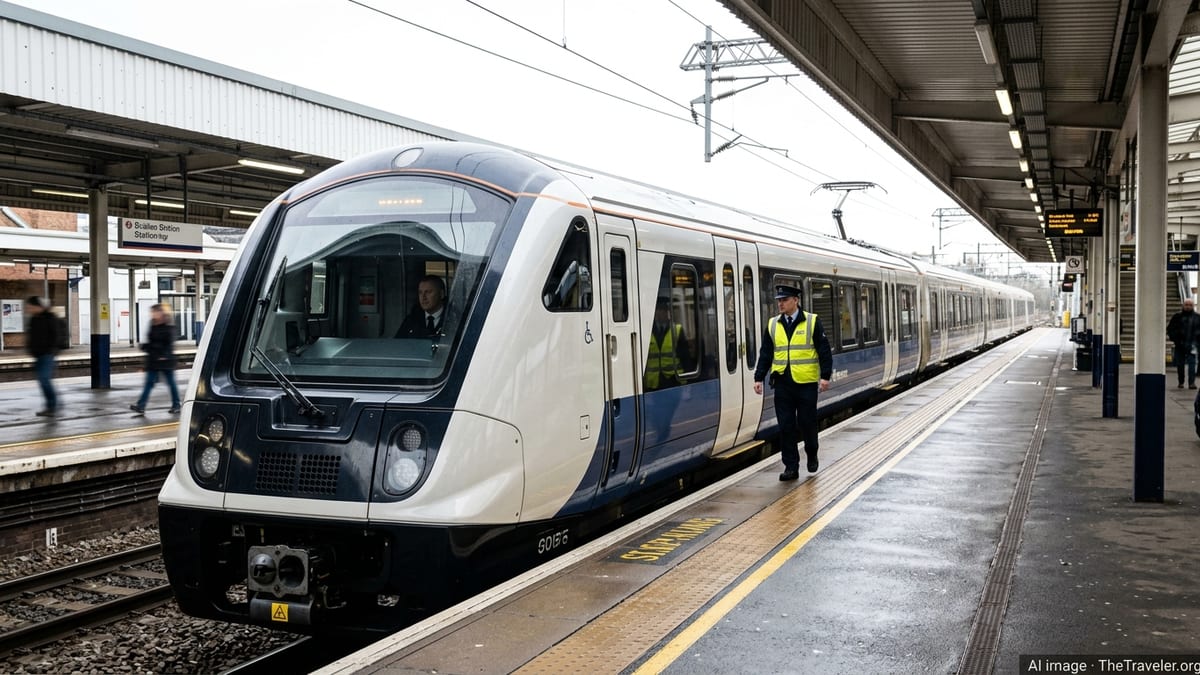
Extreme temperatures put strain on tracks and timetables
The latest spell of extreme heat across England is coinciding with a sharp reduction in South Western Railway services, with publicly available information indicating that trains are being thinned out or retimed to cope with infrastructure limits. Network operators routinely apply heat-related speed restrictions when rail temperatures climb well above the air temperature, and current forecasts suggest prolonged periods of very high heat across southern England.
When rails expand in extreme heat, they are more prone to buckling. Industry guidance shows that to reduce the risk, trains must run at lower speeds, which in turn reduces the number of services that can safely operate on busy main lines. Recent commentary from rail planners and passenger groups indicates that South Western Railway is prioritising a core service on main routes while accepting gaps and cancellations on some suburban and regional lines.
Published coverage of previous UK heatwaves shows that rail operators have increasingly moved towards planned service reductions during extreme weather, rather than allowing ad hoc delays and last-minute cancellations to build up. This approach is now being reflected on the South Western Railway network as timetables are trimmed back ahead of the hottest periods.
Disruption expected from London to the West of England
The South Western Railway network links London Waterloo with Surrey, Hampshire, Dorset, Wiltshire and Devon, meaning that any heat-related timetable cutbacks are likely to affect a broad mix of commuter, regional and leisure travel. Main lines from Waterloo towards Woking, Basingstoke and Southampton are particularly sensitive to speed restrictions because they already carry dense flows of peak-time services.
Reports indicate that services on long-distance West of England routes towards Exeter and beyond are being closely managed as infrastructure managers balance journey times with safety margins on stretches of exposed track. In earlier periods of disruption, temporary speed limits on these routes have led to extended journey times and tighter capacity, and similar patterns are now emerging during the present heatwave.
Closer to London, passengers on suburban branches into Surrey and south-west London have already experienced periods of reduced frequency over recent months for a range of reasons including staffing, engineering and past weather events. Travel commentators suggest that the additional impact of heat-related speed restrictions may compound existing frustrations for regular users on routes serving towns such as Kingston, Guildford and Hampton Court.
Warnings for commuters, leisure travellers and airport users
As temperatures rise, journey planners and operator updates are advising passengers to check train times on the day of travel and to allow additional time for connections. Experience from previous UK heatwaves shows that conditions can deteriorate quickly once rail temperatures peak in the afternoon, with disruption often spilling into the evening peak period and sometimes persisting into the following morning while checks and repairs are completed.
Travel media reports highlight particular concerns for commuters travelling to and from central London, where any reduction in peak services can lead to crowding on platforms and trains. Observers are also drawing attention to the potential impact on leisure travellers heading to coastal destinations in Dorset and Hampshire during the school holidays, where reduced services may lead to full trains and longer waits.
There is also likely to be an impact on rail links that connect with major airports in the region. South Western Railway provides access to Southampton Airport Parkway, while other operators in the wider area interface with key hubs such as Gatwick and Heathrow. Published information from recent disruption near Luton Airport shows how quickly airport rail connections can be affected by infrastructure problems, and similar vulnerabilities are now being watched for as high temperatures test rail assets across the south of England.
Heatwave adds pressure to an already fragile network
The current heatwave arrives at a time when South Western Railway’s performance and reliability have been under sustained scrutiny from passengers, politicians and regulators. Public discussion in recent months has focused on cancellations, short-notice timetable changes and crowding, particularly since changes to the operator’s contractual arrangements and wider funding constraints on the rail system.
Recent analysis of performance on parts of the wider western rail network has highlighted gradual improvements in punctuality where targeted investment and operational changes have taken effect. However, travel commentators note that South Western Railway continues to face challenges linked to infrastructure bottlenecks, complex junctions and aging assets, leaving it exposed when extreme weather occurs.
The combination of structural pressures and the immediate heatwave response is expected to create a difficult operating environment over the coming days. Industry observers suggest that even small incidents, such as signalling faults or minor track defects, could trigger disproportionate disruption while services are already running at reduced speeds across the South Western Railway network.
How passengers can navigate the disruption
Passenger groups and consumer travel outlets are encouraging rail users to plan carefully before setting out, to stay alert to live updates, and to consider alternative routes where reasonable. In previous heatwaves, those who adjusted their journeys outside of the hottest and busiest parts of the day were often better able to avoid the worst of the disruption.
Guidance from rail safety campaigns stresses that travellers should carry water, be prepared for longer journey times and potential on-board delays, and take particular care when using crowded platforms and trains. With fewer services running, the likelihood of standing for part or all of a journey increases, especially on corridors into London and towards major coastal destinations.
Travel analysts note that while the current measures are disruptive, they are designed to prevent more serious failures of the rail infrastructure that could lead to longer shutdowns. As temperatures fluctuate and engineering teams assess the condition of the track, passengers can expect rolling adjustments to South Western Railway timetables, meaning that conditions may change from one day to the next throughout the heatwave period.