


More news on this day
The July 2024 edition of Railway Gazette International highlights how railways are being reshaped by high-speed megaprojects, digitally enabled freight operations and renewed investment in urban networks, reflecting a sector that is adjusting to post-pandemic travel patterns while competing with road and air transport.
Get the latest news straight to your inbox!
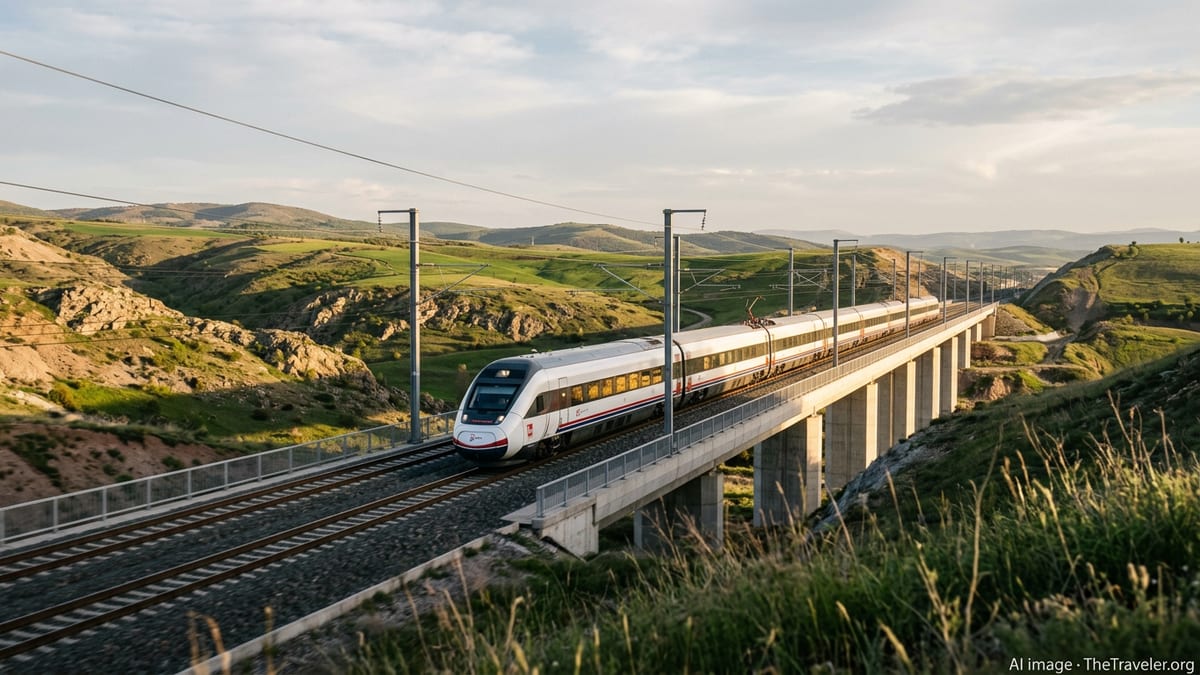
High-speed megaprojects move from concept to construction
Coverage in the July 2024 issue places particular emphasis on high-speed rail schemes that are shifting from planning into visible construction activity. Reports point to landmark milestones on the Mumbai to Ahmedabad high-speed corridor in India, where work on a 7 km undersea tunnel across Thane Creek has begun and more than 190 km of viaduct structures are in place. Publicly available project updates suggest that this scheme is emerging as a reference point for large-scale rail engineering in South Asia, combining complex marine works with extensive elevated alignments.
The magazine’s international round-up also notes how progress on high-speed and higher-speed services is increasingly tied to national climate and economic strategies. Governments in Asia and Europe are using new lines and upgraded routes to relieve pressure on congested mixed-traffic corridors and to create faster intercity links that can compete with domestic air. This includes renewed attention to corridor electrification, modern signalling standards and procurement of trainsets capable of operating efficiently on both legacy and new infrastructure.
Commentary in the July coverage indicates that these flagship projects are shaping supply chains across rolling stock, power systems and civil engineering. Contract awards for electrification works, traction equipment and maintenance depots are spreading the economic impact well beyond the core construction zones. At the same time, industry observers highlighted in the issue caution that cost escalation, land acquisition and environmental approvals remain significant challenges to delivering high-speed lines on schedule.
Digital freight and smart wagons gain commercial traction
Another theme running through the July 2024 Railway Gazette International content is the rapid emergence of digital freight solutions. Supplier case studies referenced in the issue describe how instrumented wagons and continuous condition monitoring are being deployed to improve reliability and asset utilisation. Systems that gather real-time data on loads, wheelset performance and brake condition are moving from pilot projects to larger commercial fleets, particularly on European corridors.
Industry features in the issue suggest that these developments are changing how freight operators think about maintenance and train handling. Instead of relying on fixed-interval workshop visits, operators are beginning to use predictive analytics based on onboard sensor data to schedule interventions only when required. This shift is presented as a way to reduce downtime, cut life-cycle costs and increase the availability of wagon fleets for time-sensitive cargo.
Reports also underline that digitalisation is reshaping the interface between freight customers and railways. Integrated platforms for wagon tracking and estimated time of arrival are helping rail compete more effectively with long-distance trucking by offering greater visibility of consignments. The July coverage notes that some operators are pairing these tools with customer-facing portals that allow shippers to book capacity, monitor progress and receive alerts, narrowing the service gap with road logistics providers.
Urban rail expansion responds to growing metropolitan demand
Railway Gazette International’s July 2024 reporting highlights a series of urban rail openings and extensions that illustrate how cities are turning to metros, light rail and commuter services to accommodate growth. Public information cited in the issue includes the opening of a short first phase of Belo Horizonte metro Line 2 in Brazil, providing a 1.6 km extension from Amazonas to Nova Suíça and creating an additional interchange with Line 1. While modest in length, this project is portrayed as strategically important in signalling renewed investment in an underdeveloped network.
The magazine’s broader urban rail survey for July points to rapid activity across Latin America, Asia and the Middle East, where city authorities are pursuing new lines and network extensions to cut congestion and support denser, transit-oriented development. These schemes frequently combine elevated, at-grade and underground sections to manage construction costs while still serving key demand corridors. The pattern described suggests that even small incremental projects can unlock network effects when they add new interchanges or close gaps between existing lines.
According to the July issue, urban rail investment is increasingly aligned with national funding programs and international development finance. Multilateral lenders and export credit agencies are playing a growing role in underwriting large packages that cover rolling stock, signalling and depots alongside civil works. This blended funding approach is framed as essential to progressing capital-intensive projects in markets where fare revenues alone cannot cover up-front costs.
Policy shifts and public-sector roles reshape national networks
The July 2024 edition also draws attention to evolving policy debates over how national railways should be structured and funded. Coverage of the United Kingdom highlights legislative proposals to bring more passenger operations into the public sector and to consolidate responsibilities under a new guiding body for infrastructure and services. Articles note that these moves follow years of discussion about fragmented accountability, rising subsidy requirements and the need for a more coordinated long-term investment plan.
Elsewhere, reports featured in the issue indicate that governments are reassessing how rail fits within wider transport and climate policies. In several European countries, rising concerns about emissions and road congestion are prompting fresh commitments to increase rail’s share of passenger and freight traffic. This includes support for overnight services, incentives for modal shift from trucks to wagons, and frameworks for private participation in infrastructure upgrades.
Commentary in the July coverage suggests that the balance between public control and private involvement remains fluid. Models range from fully state-run networks to concession-based systems and public-private partnerships for specific corridors. The common thread is a search for structures that can secure stable funding, maintain safety and performance standards, and deliver capacity expansions that match long-term demand.
Technology, standards and skills shape the next phase of rail growth
Across its July 2024 pages, Railway Gazette International places growing emphasis on the enabling technologies and skills required to sustain rail’s expansion. Articles discuss how advanced signalling, including modern train control and automatic train protection systems, is being rolled out to increase capacity on busy main lines and metros. The magazine notes that these tools are essential not only for high-speed routes but also for dense suburban networks where frequency rather than top speed is the main driver of competitiveness.
The issue also examines the gradual adoption of new communications platforms for rail operations, including migration away from legacy voice-centric networks toward broadband systems capable of supporting data-rich applications. These developments are presented as critical to delivering intelligent railways, where real-time information can optimise traffic management, energy use and passenger information.
Finally, the July coverage underscores the importance of workforce development in translating technology and policy ambitions into reliable service. Reports reference initiatives to attract new engineering talent, upskill existing staff and strengthen partnerships between operators, universities and suppliers. As high-speed lines advance, freight becomes more digital and urban networks expand, Railway Gazette International’s July 2024 issue portrays a global rail industry that is grappling with growing complexity while positioning itself as a central pillar of sustainable mobility.