

More news on this day
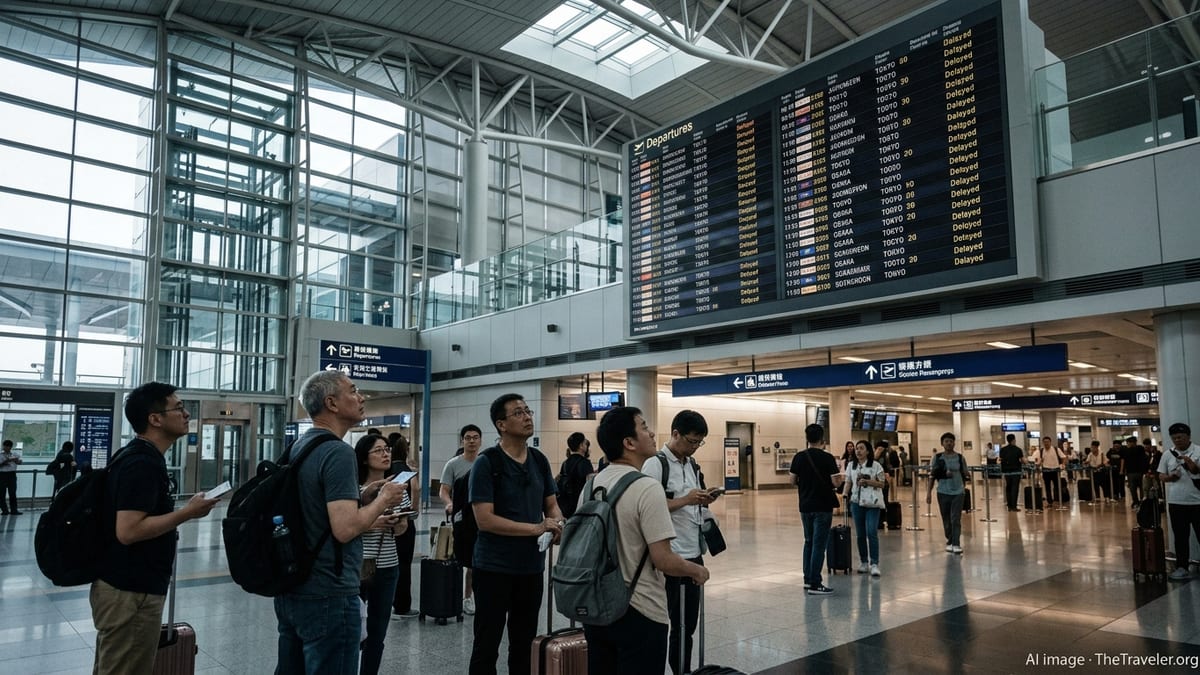
Travelers heading to Japan from Southeast Asia and Korea are increasingly finding their flights on unfamiliar paths, as a patchwork of Russian and Middle Eastern airspace restrictions pushes airlines onto longer, more complex routes.
Get the latest news straight to your inbox!
Why Airspace Closures Are Reshaping Routes to Japan
A series of overlapping airspace closures and risk advisories since the Russia Ukraine conflict and renewed instability in parts of the Middle East have redrawn many of the great circle paths that previously linked Europe, the Middle East, and Asia. Publicly available data shows that airlines began avoiding large portions of Russian airspace in 2022, adding hours to some Europe Japan services and forcing carriers to reconfigure schedules, crew planning, and fuel strategies.
More recently, temporary shutdowns and risk zones declared over parts of West Asia, including airspace above Iran, Iraq, Syria, and Israel, have further squeezed the available corridors between Europe and East Asia. Reporting by international outlets indicates that thousands of flights were cancelled or rerouted in early March 2026 alone as carriers replanned paths to skirt these regions, effectively creating what some analysts describe as a new "hole in the sky" between continents.
For passengers flying to Japan from Thailand, South Korea, and Malaysia, these closures matter even if their specific flights never overfly Russia or the Middle East. As long haul aircraft from Europe and North America are pushed onto alternative tracks, congestion, crew duty limits, and aircraft availability can cascade through the wider network, affecting departure times and connections across Asian hubs that feed traffic into Tokyo, Osaka, and other Japanese cities.
How Flights from Thailand, South Korea, and Malaysia Are Being Rerouted
Schedules from major airports in Bangkok, Seoul, and Kuala Lumpur show that nonstop services to Tokyo, Osaka, and other Japanese gateways are still operating, but the routings are more fluid than before. Carriers that once planned regular overflights of parts of Russia now favor southern or polar alternatives on connecting segments, while Japan bound services are increasingly timed to match new arrival and departure waves at partner hubs.
Industry analyses of flight tracking data indicate that some Japan flights linked to European and North American networks are now being routed north over Alaska and the Arctic or south via Turkey, Central Asia, and China, depending on the day and operational assessment. This is especially apparent on itineraries where the leg between Japan and a Gulf or European hub previously relied on Russian or Middle Eastern airspace. Travelers originating in Thailand, South Korea, or Malaysia may therefore see their onward connections retimed or restructured to align with these revised corridors.
Within Asia, additional tactical rerouting occurs around military exercises and short term airspace restrictions, particularly in parts of the South China Sea and the Singapore and Kuala Lumpur flight information regions. Notices to airmen and supplemental aeronautical publications require airlines to avoid certain corridors during defined periods, prompting detours that can add modest track miles and require adjustments to departure slots on flights linking Southeast Asia and Japan.
What Travelers Will Notice in Flight Times, Prices, and Connections
For most passengers, the first visible change is longer elapsed travel time, especially on itineraries that combine a regional leg from Thailand, South Korea, or Malaysia with a long haul connection to or from Japan. Studies on post 2022 rerouting show that some Europe Japan flights have gained up to two to four additional hours in the air when forced to avoid Russian airspace, and similar magnitudes are now being reported when Middle Eastern airspace is heavily constrained.
These extra hours translate directly into higher fuel burn and more complex crew rostering. Public analyses by aviation consultancies note that added fuel, crew positioning, and schedule padding drive operating costs higher, which can in turn show up in airfares. Travelers may therefore find that prices on routes linking Japan with Southeast Asia or Korea are firmer than before, especially during peak seasons, as airlines try to recover the expense of longer routings on their global networks.
Connections are also becoming more sensitive to disruption. When airspace closures are announced with little warning, airlines sometimes retime or cancel flights at short notice to keep aircraft and crews within legal duty limits. Passengers connecting through hubs such as Bangkok, Seoul Incheon, Kuala Lumpur, or Japanese airports like Haneda and Narita may face tighter connection windows, rebookings, or unexpected overnight stays when knock on delays occur.
Even travelers on simple nonstop routes between Japan and cities in Thailand, South Korea, or Malaysia can be affected indirectly. Aircraft and crews assigned to these flights may be shared with long haul rotations, so significant rerouting on one sector can ripple into subsequent departures within Asia, occasionally leading to schedule changes or equipment swaps announced close to departure.
Practical Steps for Planning Japan Trips Amid Rerouting
Given the evolving airspace environment, travelers planning trips to Japan from Bangkok, Seoul, Kuala Lumpur, and other regional gateways are being advised by travel agencies and airline notices to build in extra flexibility. Longer minimum connection times, especially when transiting through European or Gulf hubs en route to Japan, can provide a buffer against delays caused by detours around closed airspace.
Many carriers now push real time updates through their mobile apps and direct messaging channels, reflecting rapid adjustments to routings and departure times. Travelers who monitor their bookings in the 24 to 48 hours before departure are more likely to spot schedule shifts early and can rebook or adjust plans before arriving at the airport. This is particularly important for those connecting from short regional hops in Thailand, South Korea, or Malaysia into Japan bound long haul services.
Travel insurance policies that specifically cover missed connections, extended delays, or necessary hotel stays due to airspace closures and rerouting can also provide an added layer of protection. Policy wording varies widely, so travelers are encouraged to review coverage details related to airspace shutdowns and geopolitical events before purchase, especially for complex multi stop itineraries involving Japan.
Finally, travelers may wish to consider more direct routings where possible, such as nonstop flights between their departure city and Japan or single stop options that avoid vulnerable corridors. While these tickets can be more expensive, publicly available pricing comparisons suggest that they may reduce the likelihood of major disruption when airspace conditions change suddenly.
Outlook for Flights to Japan as Global Airspace Stays Volatile
Aviation analysts generally expect airspace around Russia and parts of the Middle East to remain constrained in the near term, meaning that the rerouting patterns now affecting travel to Japan are unlikely to vanish quickly. Historical parallels from earlier crises, including large scale volcanic ash events and previous regional conflicts, indicate that once airlines have invested in alternative routings and schedule designs, they are often cautious about returning to previous paths.
For Japan, which relies heavily on inbound tourism from across Asia, Europe, and North America, the persistence of longer and more complex flight paths may influence how airlines deploy capacity from nearby countries such as Thailand, South Korea, and Malaysia. Network planners are already shifting aircraft between routes, adjusting frequencies, and refining departure times to make the most of viable corridors while keeping connections into Japanese gateways workable.
Travelers, meanwhile, can expect ongoing adjustments as airlines respond to changing airspace notices, regulatory guidance, and operational experience on new routes. While the majority of flights continue to operate safely, the era of straightforward great circle paths between continents has given way to a more dynamic map, where the journey to Japan can vary significantly from one week to the next depending on the state of the skies in regions thousands of kilometers away.