

More news on this day
European policymakers are betting that a new Single Digital Booking and Ticketing Regulation, known as SDBTR, could finally unlock truly seamless rail booking and access across the continent, reshaping how millions plan and experience cross-border journeys.
A Long-Promised Vision of One-Stop Rail Booking
For more than a decade, Europe’s rail passengers have been promised frictionless travel across borders, with one search, one ticket and one app covering an entire journey from Lisbon to Leipzig or Copenhagen to Rome. The reality has fallen short, as travelers juggle multiple national websites, closed ticketing systems and opaque fares. The European Commission’s proposed Single Digital Booking and Ticketing Regulation is designed to change that, by obliging rail operators and ticket vendors to open up fare and timetable data and allow end-to-end digital ticketing.
The measure would create a common framework for digital access to rail products, forcing dominant incumbents to share essential ticketing interfaces with competing platforms while preserving commercial freedom over pricing. Officials in Brussels argue that this will unlock innovation from online retailers, mobility apps and new market entrants, while making it easier for passengers to compare options and complete a trip in a single transaction.
Advocacy groups say the regulation, if adopted, would finally give legal backbone to the political goal of simple pan-European rail booking, an ambition linked closely to the bloc’s climate targets and its push to shift travelers from air to rail on short and medium-haul routes.
From Policy Paper to Passenger Experience
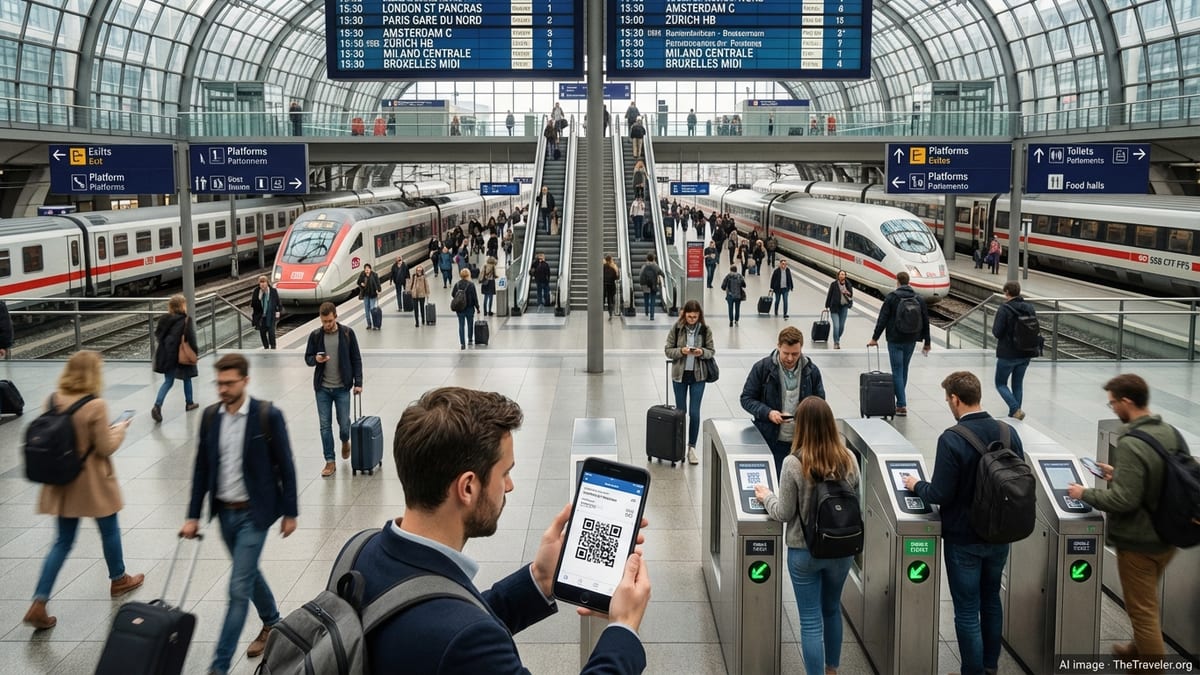
Supporters of SDBTR stress that its impact will be judged not in regulations drafted in Brussels but on concrete improvements for passengers standing at departure boards in Paris, Vienna or Budapest. Under the proposal, travelers should be able to plan complex cross-border journeys in seconds, see through-tickets that include guaranteed connections, and receive clear information on passenger rights if a missed train disrupts the chain of travel.
In practice, that means integrating existing digital breakthroughs into a coherent system. National apps such as Germany’s DB Navigator already combine real-time information, seat reservations and door-to-door routing in one interface, and platforms like Rail Europe, Trainline and various national booking portals demonstrate that customers will embrace user-friendly, multilingual tools. SDBTR seeks to extend this level of service across borders by making the underlying data and digital interfaces universally available to certified intermediary platforms.
Industry insiders say one of the most significant changes would be greater transparency in fares and conditions. Today, a Paris to Warsaw trip may appear drastically different depending on whether a passenger searches on a French, German or pan-European site. A harmonised framework for access to fare data could allow passengers to see and purchase the same products wherever they look, reducing confusion and helping smaller vendors enter the market.
A Regulatory Push Amid Industry Resistance
The journey toward SDBTR has been politically fraught. Advocacy networks campaigning for better night trains and cross-border services have repeatedly criticised delays, calling the absence of the regulation from early work programmes a broken promise. In correspondence shared by campaigners in early 2025, the European Commission reiterated that SDBTR remains on the agenda and that services are working toward adoption, highlighting the measure’s importance in promoting sustainable, multimodal mobility.
Rail operators and some national authorities have voiced concerns over the scope of mandatory data sharing and the potential impact on existing commercial agreements. Incumbent carriers worry that being required to open interfaces to competitors could erode their control over distribution and customer relationships. Some ticket vendors, meanwhile, fear that compliance costs could be significant, especially for smaller companies that rely on bespoke connections to multiple railways.
Brussels officials have signalled they are aware of these tensions and are seeking a balance that protects incentives to invest while still imposing clear obligations on access to ticketing systems. The regulation is expected to define what counts as essential data and functionality, what timelines apply for opening them, and which safeguards will protect commercially sensitive information.
What Seamless Access Could Look Like for Travellers
If the measure is approved in 2025 as the Commission intends, passengers could begin to see the first tangible effects toward the end of the decade, as national systems are upgraded and intermediaries adapt. Analysts suggest a future in which a traveler in New York or Tokyo can plan a multi-country European rail journey in seconds on a trusted platform, pay in their local currency, and receive a single digital ticket wallet covering everything from airport rail links to overnight sleepers.
In such a scenario, missed connections would trigger automatic rebooking on the next available train, regardless of operator, and real-time notifications would guide passengers through alternative routes. Digital tools would integrate local public transport, on-demand shuttles and even bike sharing in one itinerary, allowing tourists and business travellers to treat Europe’s fragmented rail networks as one coherent system.
For Europe’s cities and regions, easier access could translate into more evenly distributed tourism and economic activity. Smaller destinations off the beaten track, currently hard to book from abroad, might suddenly appear alongside major capitals in algorithmically generated route suggestions, helping to ease pressure on saturated hubs while spreading the benefits of visitor spending.
Next Steps and the Race Against Time
The timing of SDBTR is closely watched. Europe is facing mounting pressure to cut emissions from transport, and modal shift from air and car travel to rail is one of the flagship strategies highlighted by climate campaigners and industry planners alike. At the same time, passengers are increasingly accustomed to digital, on-demand mobility services and expect the kind of seamless booking experience they already enjoy in aviation and urban transport.
Regulators are working against a political clock. Any delay risks pushing implementation into the next institutional cycle in Brussels, which could prolong uncertainty for operators and technology providers preparing investments. Some national railways are already modernising their distribution systems and testing deeper partnerships with third-party platforms, anticipating that stronger interoperability rules are inevitable.
Whether SDBTR becomes the long-awaited catalyst for truly borderless rail booking in Europe will depend on the final shape of the law and how firmly it is enforced. But even ahead of adoption, the debate has already shifted expectations. For millions of future passengers, the idea of piecing together a journey via half a dozen clashing websites may soon feel as outdated as paper timetables pinned to a station wall.