


More news on this day
Travellers heading to Europe this summer will encounter the European Union’s biggest shake-up of passport control in decades, as new biometric border checks bed in across the Schengen Area and early reports point to both teething troubles and lasting changes to how non-EU visitors enter the bloc.
Get the latest news straight to your inbox!
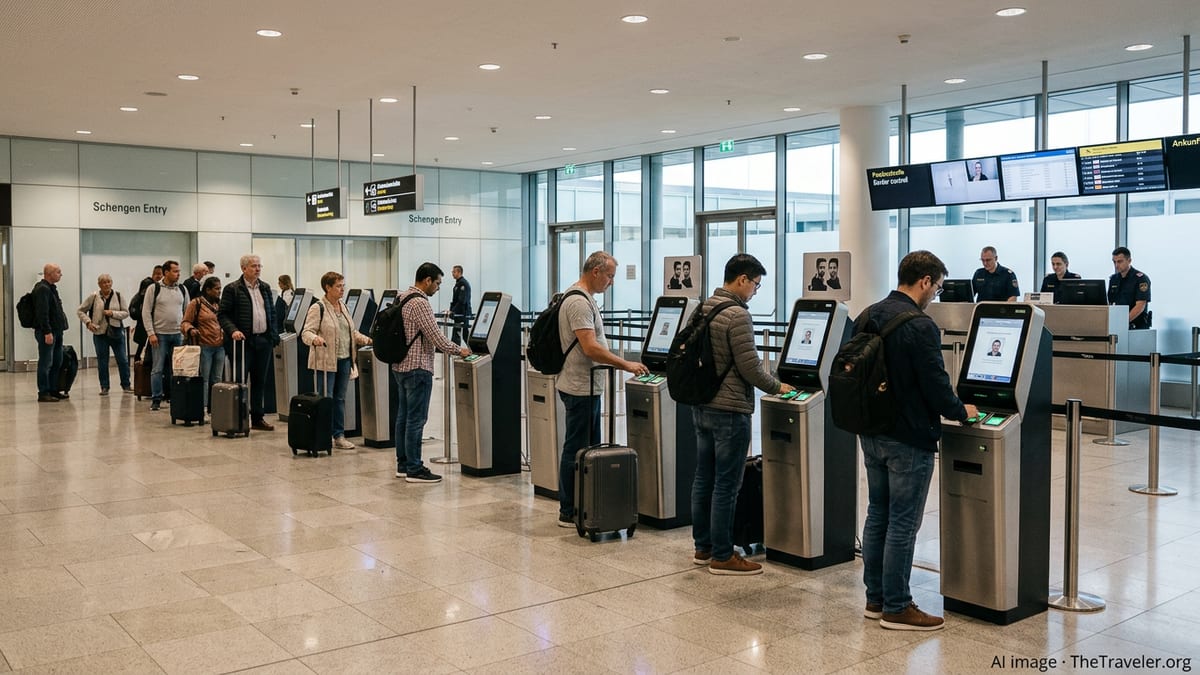
What is changing at the EU border in 2026?
The centrepiece of the new regime is the Entry/Exit System, a large-scale EU database that automatically records when non-EU nationals cross the external borders of the Schengen Area. The system replaces the long-standing practice of stamping passports by hand and instead creates an electronic file for each short-stay traveller that includes their identity details, travel document information and biometric data.
According to publicly available information from EU institutions, the system began a progressive roll-out on 12 October 2025 and became fully operational at all Schengen external border crossing points on 10 April 2026. It now applies at airports, seaports and land borders in 29 European countries that participate in Schengen, including popular holiday destinations such as Spain, France, Italy, Greece and Portugal.
The goal is twofold. First, authorities want a more accurate picture of who is entering and leaving, in order to spot overstays more reliably than ink stamps allow. Second, border management agencies argue that once the system is established, automated checks should allow compliant travellers to move faster through passport control using self-service kiosks and e-gates, especially on repeat visits within a three-year window.
For the summer of 2026, however, the system is still in its first major stress test. Aviation and tourism bodies describe a mixed picture, with some major hubs reporting largely smooth processing and others struggling with queues as staff and passengers adjust to the new requirements.
Who is affected and what happens at the checkpoint?
The new checks apply to most non-EU and non-Schengen nationals entering for a short stay of up to 90 days in any 180-day period. That includes travellers from the United States, the United Kingdom, Canada, Australia and many other countries whose citizens did not need short-stay visas in the past and still do not require a traditional visa for tourism or business visits.
On a first trip since the system went live, travellers must undergo an enrolment process. Public guidance explains that this involves presenting a passport, having a facial image captured and, in most cases, providing four fingerprints. The system then creates a digital record that logs the time and place of entry. When the traveller leaves the Schengen Area, the exit is recorded in the same file, automatically calculating how long they stayed.
On subsequent visits within three years, travellers should not need to repeat full biometric enrolment, provided their passport and personal details have not changed. At many airports this is designed to be handled by self-service kiosks where passengers pre-register or verify their details before seeing a border guard, potentially shortening the interaction at the booth.
EU information campaigns underline that the new system does not change who needs a visa, the length of stay allowed under the 90-days-in-180 rule, or the basic rights of travellers. It does, however, make that 90-day limit far more visible and enforceable. Overtstaying is now automatically flagged, and border systems can more easily see previous movements across the whole Schengen Area rather than relying on manual inspection of stamps.
Early impact: queues, missed flights and calls for flexibility
As the first peak holiday season under the new rules begins, reports from airports and ferry terminals suggest significant variation in how smoothly the system is working. Coverage in European travel media indicates that some airports where kiosks and staff training were in place early have kept waiting times close to pre-EES levels, while others have seen bottlenecks form at peak times.
One recurring theme is that first-time enrolment takes longer than a traditional passport stamp. Collecting fingerprints, capturing a compliant facial image and confirming data in a new IT system can add several minutes per passenger, especially if travellers are unfamiliar with the process or arrive without completed forms. Airlines such as low-cost carrier Wizz Air have advised customers heading to and from EU airports to allow extra time at the border, in some instances recommending arrival at the airport three hours before departure instead of two.
Aviation associations have warned of knock-on effects for flight schedules and airport operations if long queues become entrenched. An open letter from major airline and airport groups, widely reported in European outlets at the start of July, urged the European Commission to permit more flexible use of the system during peak periods, including temporary easing of some processes when waiting times become excessive.
For now, travellers’ experiences differ sharply by route and time of day. On busy weekend changeover days in school holidays, anecdotal accounts point to waits of several hours at some border checkpoints, particularly where infrastructure is constrained. At quieter times, many passengers still pass through in a matter of minutes, especially if they have already been enrolled and are using automated gates.
What about ETIAS and other upcoming changes?
The Entry/Exit System is only one element of a broader redesign of how Europe manages its external borders. Another pillar is ETIAS, the European Travel Information and Authorisation System, a pre-travel clearance that will require visa-exempt visitors to obtain an electronic authorisation before boarding transport to the Schengen Area.
According to publicly accessible EU planning documents, ETIAS is now expected to go live after EES, with current indications pointing to a start towards the end of 2026. When it begins, citizens of countries that are visa-exempt today, such as the United States and the United Kingdom, will need to apply online, provide basic personal and travel information and pay a fee before travelling. The authorisation will then be checked by carriers and border systems on arrival.
Because ETIAS is not yet in force for summer 2026, travellers this year will only encounter the new checks at the border itself rather than an additional online application beforehand. However, tourism bodies warn that the combination of ETIAS and EES could make future trips more complex to plan if visitors wait until the last minute to complete formalities.
For frequent travellers and those staying close to the 90-day limit, the new systems also mean that overstays and irregular patterns that once might have slipped through on inconsistent passport stamps are now recorded in a central database. Travel advisers are encouraging visitors to keep careful track of days spent in Schengen, as border officers will see an exact count rather than relying on manual calculations.
How to prepare if you are travelling this summer
For holidaymakers arriving from outside the EU, the most immediate effect of the new border checks this summer is likely to be time. Airlines, airports and travel organisations are broadly aligned in advising passengers to allow extra margin at the outbound airport and at connections where they will cross into or out of the Schengen Area, particularly during July and August.
Practical steps recommended in publicly available travel guidance include checking that passports are valid for at least three months beyond the intended departure from the Schengen Area, having documents ready in the queue and removing hats or glasses when instructed so facial images can be captured quickly. Families should be prepared for children to go through the same biometric process, although age thresholds for fingerprinting may vary.
Travellers who have previously entered Schengen since October 2025 may find the second visit faster, as their details are already recorded. Where airports provide self-service kiosks or a dedicated lane for those already in the system, using these options can cut down time at the staffed booth. However, summer congestion can still create delays even for repeat visitors if overall volumes are high or if technical issues arise.
Those planning complex itineraries with tight connections, especially at major European hubs, may want to reconsider very short transfer times on journeys that involve entering Schengen mid-route. While airlines are adjusting schedules and staffing in response to the new reality, border control remains outside their direct control, and long queues can still cause missed flights.
Will the situation improve after the summer?
EU officials and the agency responsible for managing the system present EES as an investment that should ultimately make travel smoother once the initial learning curve has passed. As border guards gain experience with the technology and more travellers complete their first enrolment, the proportion of passengers able to use faster repeat-visit channels should rise.
Infrastructure upgrades are also ongoing. Some airports and ferry ports are adding extra kiosks, redesigning queuing areas and adjusting staffing patterns to rebalance resources between Schengen and non-Schengen flows. Over time, this may reduce peak waiting times compared with the early months of the rollout.
For the summer of 2026, though, travellers are being urged to plan on the basis that border checks may take longer than they have in previous years, particularly for first-time visitors since the system went live. While reports indicate that teething problems are gradually being addressed, the combination of new technology, high passenger volumes and differing levels of national preparedness means that delays remain a realistic possibility.
For now, holidaymakers who build in extra time, travel with complete documentation and stay informed about the latest guidance from airlines and national border authorities are best placed to navigate Europe’s new border landscape with minimal disruption to their summer plans.