

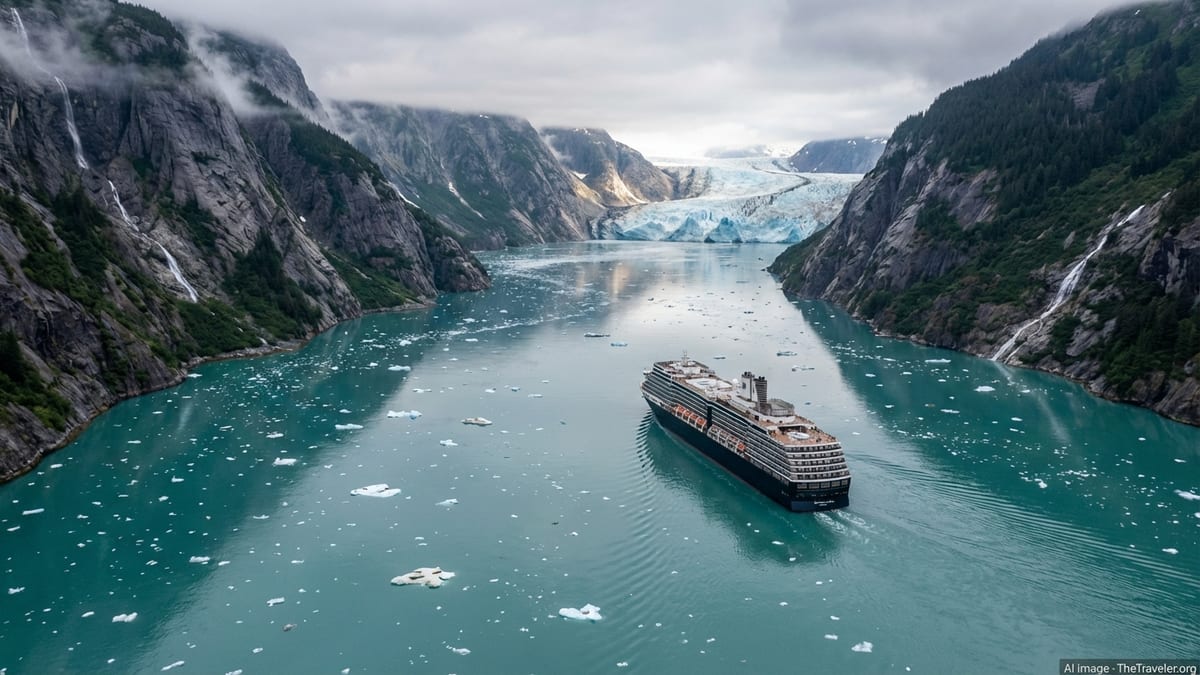
Slipping into Endicott Arm on an Alaska cruise feels like entering a hidden world of ice, waterfalls, and sheer granite walls. The passage is usually just one day on a longer Inside Passage itinerary, but with a little planning you can turn those few hours into the most memorable chapter of your voyage. This guide walks you through a realistic Endicott Arm day, from first light on deck to the final views of Dawes Glacier, with practical advice tailored to today’s Alaska cruise scene.
Understanding Endicott Arm on Today’s Alaska Itineraries
Endicott Arm is a narrow fjord in the Tracy Arm Fords Terror Wilderness, southeast of Juneau. Carved by ice over thousands of years, it runs for roughly 30 miles from Stephens Passage to Dawes Glacier, a tidewater glacier that calves directly into the sea. For many large-ship Alaska itineraries, this day is described as “scenic cruising” rather than a traditional port stop, meaning the ship never docks but spends several hours slowly navigating the fjord.
On most mainstream itineraries, the Endicott Arm segment lasts part of a single day, commonly paired with calls in Juneau or Skagway on adjacent days. Cruise lines continue to adjust routes season by season as demand grows and new ships enter the Alaska market, but Endicott Arm remains a featured highlight on a range of Inside Passage and one-way Gulf of Alaska sailings. It is often marketed specifically as “Endicott Arm and Dawes Glacier,” indicating that the ship plans to travel the length of the fjord to the glacier’s face if conditions allow.
Weather and ice can alter plans at short notice in this region. Heavy ice near the glacier, early-season conditions in May, or late-season storms in September can lead captains to modify the approach distance or, occasionally, substitute another scenic area. It is important to understand that while cruise lines publish sample schedules, the final call on how close your ship gets to Dawes Glacier rests with the captain and pilots on the day of sailing, prioritizing safety and environmental regulations.
Because Endicott Arm is protected wilderness with sensitive wildlife, ship traffic is managed with care. Captains coordinate with pilots, local authorities, and other vessels to reduce congestion, manage noise, and limit disturbance to harbor seals that rely on the ice floes near the glacier. The result for travelers is a slow, deliberate journey that emphasizes views and natural interpretation rather than rapid transit from one point to another.
Planning Your Day: Typical Timelines and What to Expect
Most large ships approach Endicott Arm in the early morning, entering the fjord around sunrise or shortly after. A typical schedule might see the ship changing course off Stephens Passage in the pre-dawn hours, then spending several hours steaming up the fjord toward Dawes Glacier. Arrival at or near the glacier often falls in the late morning or around midday, with the ship lingering in the area before turning and tracing its path back out by afternoon or early evening.
Your daily program or cruise app will list approximate times for “scenic cruising Endicott Arm” and “Dawes Glacier viewing.” Treat these as planning tools rather than precise appointments. The ship may slow in certain sections with dramatic waterfalls or particularly heavy ice, or adjust timing due to traffic from smaller excursion boats. Wake up at least an hour earlier than the first listed scenic time if you want to see the full transition from open water into the narrowing fjord.
Endicott Arm days tend to be cool and damp, even in mid-summer. Temperatures often feel lower on deck due to wind and proximity to ice. Pack layers the night before so you can step outside quickly when the captain makes an announcement about wildlife or a notable feature. Expect to rotate between outdoors and indoor observation points throughout the day to stay comfortable while still experiencing the raw atmosphere of the fjord.
Evening commitments on Endicott Arm day are usually light. Many passengers spend the afternoon reviewing photos, warming up in the spa, or attending a naturalist’s recap talk. If your sailing pairs Endicott Arm with a port stop the same day, such as a shorter call in Juneau, plan on a more compact schedule, with early morning scenic cruising followed by a midday or afternoon docking window.
Best Viewing Spots on Board for Fjord and Glacier Scenery
Endicott Arm is best experienced from multiple vantage points. The open bow or forward observation deck, when accessible, offers a panoramic view straight up the fjord and is ideal as the ship approaches Dawes Glacier. Many cruise lines open forward decks specifically during scenic cruising, so check announcements and signage early in the day. Be prepared for stronger wind and colder temperatures here compared with more sheltered decks.
Upper side decks along both port and starboard rails give a different sense of scale. From these positions you can look almost straight up at the cliffs, watch waterfalls cascade down near the ship, and scan the shoreline for mountain goats or nesting birds. Because the ship will usually rotate near the glacier to give both sides equal viewing time, you do not need to worry excessively about choosing the “right” side of the vessel. Moving periodically between port and starboard ensures you capture changing light and angles.
Indoor lounges with floor-to-ceiling windows provide a welcome refuge when the chill sets in. Many ships place observation lounges high and forward, with comfortable seating and refreshments available. These spaces can fill quickly during peak viewing, so arrive early if you want a front-row seat. Be considerate of fellow travelers by avoiding long periods with cameras or tablets pressed against the glass that might block others’ views.
Private balconies are a luxury on Endicott Arm day. While you may not see every feature from your own side of the ship, a balcony gives you quiet, uninterrupted time with the landscape. Use it for early morning segments or moments when the ship pauses mid-fjord, and then head to shared decks when you want 360-degree views near Dawes Glacier. Keep in mind that balconies can feel especially cold because they are partially shielded from sun and wind shifts, so bring hot drinks and extra layers if you plan to linger outside.
Wildlife Watching: Seals, Whales, and Birds
Endicott Arm is known for harbor seals that haul out on ice floes, especially in the upper fjord near Dawes Glacier during the pupping season. From the ship you may see dozens of seals resting on small bergs, occasionally sliding into the water or nursing pups. Because these animals are sensitive to disturbance, cruise ships are expected to follow distance and speed guidelines, minimizing wake and avoiding dense ice fields where seals gather. Passengers benefit from this caution with prolonged, respectful viewing opportunities rather than quick passes.
Whales are a possibility throughout the approach to Endicott Arm, particularly in Stephens Passage and the broader waters around Juneau. Humpback whales are the most commonly spotted, sometimes feeding or traveling along the fjord entrance. While sightings inside the narrower reaches of Endicott Arm are less predictable, keep your eyes on the water for blows, tail flukes, and the sleek backs of porpoises or smaller whales. Shipboard naturalists or local pilots will often make announcements when notable wildlife appears, but independent scanning with binoculars increases your chances of catching subtle movements.
Overhead, look for bald eagles perched in tall conifers or gliding above the cliffs. Their white heads and tails are usually easy to spot against the dark rock and forest. You may also see seabirds such as kittiwakes and murres near the glacier face, where nutrient-rich waters support feeding flocks. Because many birds nest on steep slopes and ledges, viewing from mid-level decks can sometimes reveal more detail than looking down from the very top of the ship.
Respect for wildlife is central to a responsible Endicott Arm experience. In U.S. waters, marine mammals are protected by federal regulations that prohibit harassment and encourage viewing from safe distances. While the cruise line and crew manage compliance on your behalf, passengers can support these efforts by keeping noise low on open decks, avoiding the use of drones, and following crew instructions about restricted areas or behaviors during sensitive wildlife encounters.
Excursions and Small-Boat Adventures off the Main Ship
Many cruise lines enhance the Endicott Arm experience with optional small-boat excursions, which may be marketed as fjord and glacier explorations or similar terms. These tours typically use high-speed catamarans or expedition-style vessels that meet the ship at one port and rejoin it at another, allowing participants to spend several extra hours deep in the fjord while the main ship takes a more direct route. On these smaller vessels, you can often get closer to waterfalls, ice floes, and wildlife than the larger ship can safely and responsibly approach.
A common pattern involves disembarking the main ship early in the day at a port like Juneau or near the fjord entrance, boarding a dedicated excursion vessel, and traveling up Endicott Arm ahead of or behind the cruise ship. Naturalists and local guides provide commentary about glaciology, geology, and wildlife, while the captain adjusts course frequently to take advantage of interesting sightings. Participants usually rejoin the main ship several hours later at another port or rendezvous point, having experienced the fjord from water level with fewer crowds.
Smaller-ship and expedition cruise lines may include extended Endicott Arm exploration as part of their core itinerary, sometimes with Zodiac rides or kayak excursions when conditions and regulations permit. These experiences can offer a very different feel from viewing the fjord from multiple decks high, giving you an immediate sense of the size of individual icebergs and the texture of the rock walls. However, such activities are highly weather dependent and subject to strict safety and environmental guidelines, so flexibility is essential.
If you are considering one of these add-on adventures, book as early as practical. Demand for immersive excursions in Alaska has been increasing, and the most intimate or wildlife-focused options can sell out well before sailing. Review fitness requirements carefully; even if the excursion is mostly boat-based, boarding from floating docks and standing on open decks for long periods in cold wind can be challenging for some travelers.
Photography Tips for Capturing Fjord and Glacier Landscapes
Endicott Arm invites constant photography, but conditions can be challenging. Light often shifts quickly as the ship moves between shadowed cliffs and brighter openings, and weather can range from drizzle to sudden sunbreaks in a single hour. For smartphones, clean your lens frequently to remove mist or drizzle, and tap to adjust exposure when photographing bright ice against darker rock. Consider using the ultra-wide setting sparingly; while it captures the scale of the fjord, it can make distant glaciers appear even smaller than they look to the naked eye.
If you plan to bring a dedicated camera, a zoom lens in the mid-range, such as a 24 to 105 millimeter equivalent, offers flexibility for both sweeping landscapes and closer shots of waterfalls or seals on ice. Faster apertures help in overcast conditions, but image stabilization and steady hand placement against railings are just as important. In wet weather, a simple rain cover, plastic bag, or weather-sealed body and lens can make the difference between continuing to shoot and retreating indoors.
Composition matters just as much as equipment. Include foreground elements such as the ship’s rail, a chunk of ice in the water, or a silhouette of another deck to provide scale. When photographing Dawes Glacier, try both tight frames that emphasize the crevasses and blue tones, and wider views that show the glacier front in relation to the surrounding mountains. Be patient and ready for calving events: you may hear the crack and roar of falling ice a moment before you see it, so keep your camera or phone at the ready when the ship is stationary.
Above all, remember to put the camera down occasionally. The sensory experience of Endicott Arm, from the sound of ice popping against the hull to the faint echo of waterfalls, is easy to miss when you are focused solely on screens. Capture key moments, but also give yourself time simply to watch the fjord without a viewfinder, especially during quiet stretches when the ship’s engines are idling or turned off near the glacier.
Environmental Stewardship and Safety in a Glacial Fjord
Traveling through Endicott Arm is a privilege, and the region’s fragile ecosystems require careful management. Harbor seals use the ice floes as pupping grounds in late spring and early summer, making them especially vulnerable to vessel disturbance. Voluntary guidelines in Alaska’s glacial fjords encourage vessels to slow down, minimize wake, avoid dense ice where seals are present, and maintain generous distances whenever possible. Captains and pilots often time their approaches to reduce overlapping traffic and noise in these sensitive areas.
Passengers play a role in this stewardship by supporting low-impact practices. Following crew instructions about which decks or vantage points are open, minimizing loud conversations during wildlife encounters, and avoiding litter of any kind are simple but meaningful steps. Many cruise lines also support local conservation organizations or participate in responsible whale watching initiatives, and you may hear references to these programs in onboard talks or daily announcements.
Safety on deck deserves as much attention as environmental care. Railings can become slick with spray or rain, and cold, stiff hands increase the risk of dropping cameras or losing balance. Wear non-slip shoes, keep one hand free for the rail whenever possible, and avoid leaning or climbing to gain a slightly better angle. In crowded moments, such as the first sight of Dawes Glacier, be mindful of trip hazards like camera bags and tripod legs at your feet.
Glacial environments are inherently dynamic. Ice can calve suddenly, and floating chunks may roll or break apart without warning. The ship’s bridge team monitors conditions continuously and maintains safe distances from the glacier face and larger bergs. If you hear announcements asking guests to clear certain areas or remain inside for a period, treat them as precautionary measures in a setting where conditions can change rapidly.
The Takeaway
An Endicott Arm day on an Alaska cruise is not just another scenic interlude, but a concentrated encounter with one of the Inside Passage’s most dramatic landscapes. With sheer cliffs, countless waterfalls, shifting ice, and the thunder of Dawes Glacier, it offers many travelers their defining memory of Alaska at sea. Approaching the day with a flexible plan, realistic expectations, and a readiness to wake up early greatly increases your chances of catching the fjord at its most atmospheric.
Choosing your viewing spots, layering clothing, and balancing photography with simple observation all shape the experience. Whether you remain on the main ship, join a small-boat excursion, or sail on an expedition vessel that lingers deep in the fjord, the essentials are the same: patience, attentiveness, and respect for both weather and wildlife. When you step back indoors at the end of the day, you carry not only photos but also the memory of cold air, echoing cliffs, and the quiet presence of seals on the ice.
In a cruise season where more ships are entering Alaska and demand for immersive experiences continues to rise, Endicott Arm remains a place where stillness and scale dominate. Treat this day as the centerpiece of your itinerary, give it the time and focus it deserves, and you will likely leave with the sense that you have spent a few hours in a world apart from everyday travel.
FAQ
Q1. How long does a typical Endicott Arm and Dawes Glacier visit last on a cruise day?
Most large ships spend several hours in Endicott Arm, often entering the fjord in the early morning and reaching Dawes Glacier by late morning or midday, then lingering before exiting in the afternoon. Exact times vary by itinerary, weather, and ice conditions.
Q2. Will my ship always get close to Dawes Glacier?
Cruise lines plan to reach the vicinity of Dawes Glacier, but final approach distances depend on ice, visibility, and safety considerations. In some cases the captain may decide to remain farther back or turn earlier in the fjord, even if the published itinerary lists Dawes Glacier as a highlight.
Q3. Which side of the ship is best for viewing Endicott Arm?
Both port and starboard sides offer excellent views, and ships usually turn near the glacier so each side sees the face. The best strategy is to move between open decks, using forward and aft viewpoints, rather than relying on a single balcony or rail position.
Q4. What should I wear for an Endicott Arm cruise day?
Plan on cool, damp conditions, even in mid-summer. Dress in layers including a base layer, warm mid-layer, and waterproof outer shell, along with a hat, gloves, and non-slip shoes. Having a small backpack for extra layers and a thermos for hot drinks is helpful on deck.
Q5. Are small-boat or glacier explorer excursions worth booking?
For travelers who value close-up perspectives and in-depth commentary, small-boat fjord or glacier excursions can significantly enhance the day. These tours often get closer to waterfalls, ice floes, and wildlife than the main ship, but they are subject to weather, capacity limits, and higher physical demands from prolonged exposure to cold and wind.
Q6. Can I see wildlife from the ship during Endicott Arm scenic cruising?
Yes. Harbor seals on ice floes, bald eagles in shoreline trees, and the possibility of whales in surrounding waters are all realistic expectations, though no specific sighting can be guaranteed. Bringing binoculars and spending time on open decks increases your chances of noticing wildlife that might be missed from inside.
Q7. How does weather affect the Endicott Arm experience?
Overcast skies, mist, and light rain are common and can create atmospheric views, but heavy fog or low cloud can reduce visibility and influence how close the ship can safely approach the glacier. Captains may adjust speed and timing based on conditions, so being flexible and ready to step outside when opportunities arise is important.
Q8. Is Endicott Arm suitable for travelers with limited mobility?
Many aspects of the day can be enjoyed from accessible indoor lounges or balcony cabins, which often have good views through large windows. However, open decks, small-boat excursions, and extended periods standing in cold conditions may be more challenging. It is wise to discuss specific mobility needs with your cruise line in advance and identify the most accessible viewing areas on board.
Q9. Do I need special camera equipment to photograph Dawes Glacier?
A modern smartphone is capable of capturing strong images of the glacier and fjord, especially if you keep the lens dry and steady. Dedicated cameras with moderate zoom lenses provide more flexibility, but composition, timing, and attention to changing light often matter more than owning advanced gear.
Q10. How can I be a responsible visitor while cruising Endicott Arm?
Follow crew instructions, keep noise low during wildlife encounters, avoid littering, and respect any deck or area closures. Supporting conservation-focused excursions, attending naturalist talks, and learning about local guidelines for marine mammal viewing all contribute to a more thoughtful and sustainable experience in this sensitive wilderness.