

Few places in the United States offer the same mix of mountain passes, high desert, and vibrant cities as Colorado. That variety makes it an unforgettable place to explore, but it also means you need a smart plan for getting around. From car rentals that let you chase alpine sunsets on your own schedule to statewide buses and long distance trains that link ski towns and city centers, Colorado’s transport network is more diverse than many visitors expect. Understanding how the options fit together will help you spend less time figuring out logistics and more time enjoying the scenery.
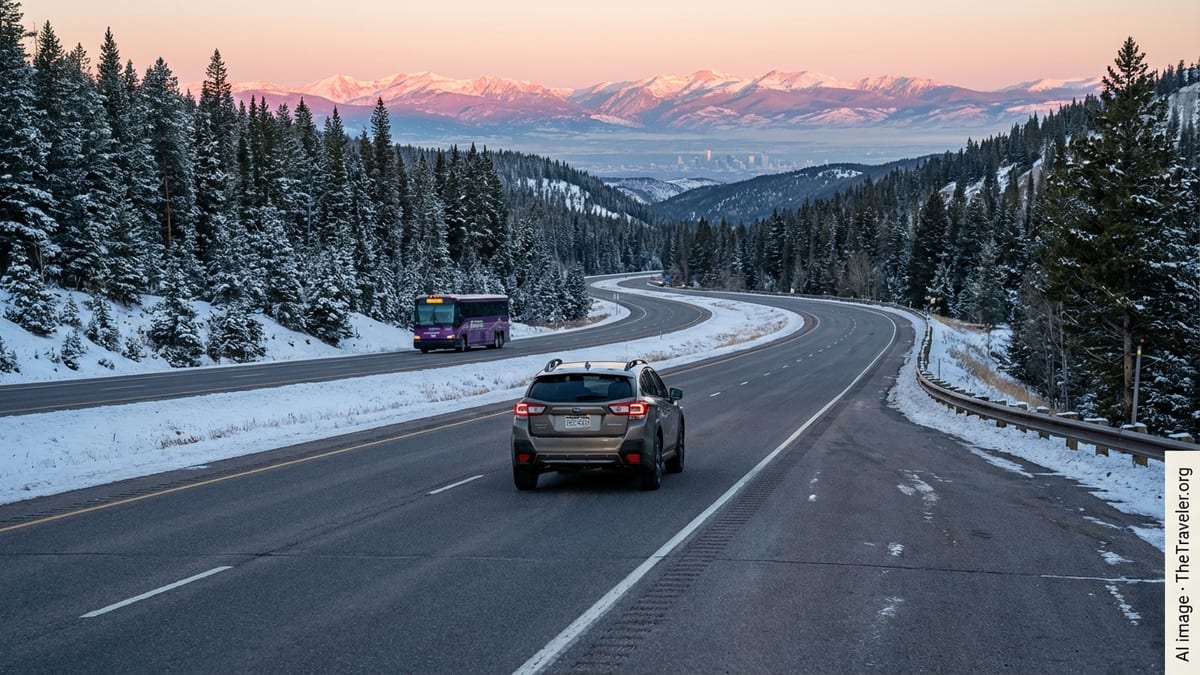
Understanding Colorado’s Distances and Terrain
Colorado looks compact on a map, but driving times can surprise first time visitors. The state stretches roughly 380 miles east to west, and mountain passes, winter weather, and winding canyons often matter more than sheer distance. A trip from Denver to Durango, for example, can easily take six hours or more by road, even in fair weather. Elevation also plays a role. Much of the state sits above 5,000 feet and several highways crest above 10,000 feet, which can slow traffic and challenge rental cars that are already working hard on long climbs.
The population is concentrated along the Front Range corridor that runs from Fort Collins through Denver to Colorado Springs and Pueblo. Here, traffic can be heavy but services and transport options are plentiful, including local transit, intercity buses, and trains. Once you head west into the Rockies or southeast onto the plains, communities spread out quickly. Public transport exists but is less frequent and usually built around a few key highways and regional hubs. Travelers who understand this pattern can better decide where a car is essential and where buses or trains work well.
Seasonality shapes mobility choices across Colorado. Summer and early fall bring clear roads and the widest range of options, with buses, scenic trains, and mountain shuttles timed to hiking, rafting, and festival seasons. In winter, especially from November through March, snow and ice can close mountain passes on short notice and make driving stressful for the unprepared. At the same time, rail services such as Amtrak’s seasonal Winter Park Express and expanded ski oriented bus routes become especially useful for accessing resorts without driving in storm conditions.
Altitude and weather can also affect your personal comfort while in transit. Even city based visitors flying into Denver at 5,280 feet may feel unusually tired on arrival, and long drives to high country destinations the same day can be taxing. Building in time for breaks, drinking plenty of water, and keeping daily driving time reasonable will make your transportation plan safer and more enjoyable.
Renting and Driving a Car in Colorado
For many trips, a rental car remains the most flexible way to explore Colorado. Major national brands operate at Denver International Airport and in cities such as Denver, Colorado Springs, Grand Junction, and Durango. In ski season, there are also rental outlets in or near major resorts, but availability can tighten during holiday peaks. Booking early is wise, and you should pay close attention to whether the vehicle comes with all wheel drive or four wheel drive, especially if your plans involve mountain passes or unpaved access roads in winter or mud season.
Driving itself is straightforward on the eastern plains and in most urban areas, where highways are wide and relatively flat. The challenge begins as you approach the Rockies. Interstate 70 west of Denver, one of the state’s main east west arteries, crosses high passes and can experience intense congestion on weekends and during ski season. Steep grades test both engines and brakes, and drivers unused to mountain conditions should leave extra following distance, shift into lower gears on long descents, and be patient with commercial trucks and slower vehicles. Many rental agreements strongly discourage or restrict travel on unmaintained roads, so those hoping to reach remote trailheads should confirm coverage and road conditions before setting out.
Winter driving in Colorado deserves special consideration. Sudden snow squalls, black ice, and chain or traction laws can appear with limited warning on high elevation routes. State officials periodically activate requirements that vehicles either use approved snow tires or carry chains on designated stretches of interstate. Rental counters in Denver and mountain towns are accustomed to these rules and can usually explain your options, but you should build in time to learn the basics of mountain winter driving. Travelers uncomfortable with those conditions may find it safer to pair a car rental for city or low elevation exploring with bus or shuttle services into the highest country.
Parking and urban driving can also influence whether you want a car for your entire stay. Central Denver, Boulder, and many resort towns have walkable cores where a vehicle can feel more like a burden than an asset, thanks to paid parking, tight streets, and seasonal congestion. Some visitors choose to pick up a car for only part of their itinerary, using local rail or bus lines for the rest. One convenient feature is that Denver’s airport train delivers you directly to Union Station downtown, where car rental branches and regional bus services are an easy walk, making it simple to postpone driving until you are rested and acclimated.
Using Denver’s RTD Trains and Buses
The Denver metro area is served by the Regional Transportation District, widely known as RTD, which operates a network of local and regional buses as well as light rail and commuter rail lines. For visitors, the most important rail link is the A Line between Denver Union Station and Denver International Airport. Often called the train to the plane, it runs frequently throughout the day and night and has developed a strong reputation for on time performance in recent years, making it a practical alternative to airport shuttles or rental cars for city based stays.
Beyond the airport link, RTD’s rail network connects downtown Denver to suburbs and employment centers in several directions. However, stations are spaced for commuters rather than tourists, so destinations such as Red Rocks Amphitheatre or some trailheads still require a transfer to bus, rideshare, or shuttle services. Bus coverage extends across much of the metro region, and key corridors feature relatively frequent service, although riders should expect lower frequencies during evenings and weekends in many neighborhoods. Ridership patterns have shifted since the pandemic, and the agency is still adjusting routes and investment priorities, so schedules and frequencies can change from year to year.
RTD also runs regional express buses that link Denver with nearby cities including Boulder, Longmont, and communities along major highways. For budget minded travelers, these routes can replace a rental car for day trips between Front Range cities, especially if you plan to stay primarily within walkable downtown areas. While service is less frequent than most urban buses, it is designed to coordinate with workday peaks and key transit hubs. Planning around departure times will be important if you intend to return the same evening.
Buying tickets and navigating the system is generally user friendly. Fares can be purchased at station machines, on buses with exact change, or through mobile apps, and airport fares are higher than local rides but still competitive with shared rides or taxis across such a long distance. For visitors who expect to make multiple trips in one day, passes often offer better value than individual fares. RTD publishes detailed system maps and trip planners that make it easier to combine rail and bus segments, and information screens at major stops provide live updates, which are especially helpful during storms or major events.
Statewide and Regional Buses: Bustang, Outrider and Local Networks
Colorado’s most important statewide bus network is Bustang, operated under the Colorado Department of Transportation. Its purple coaches connect the main population centers along Interstate 25 and Interstate 70, linking cities such as Denver, Colorado Springs, Fort Collins, and Grand Junction. The service was created in part to fill gaps left by private operators and has steadily grown in ridership and routes. Buses are modern, with amenities such as Wi Fi, restrooms, charging outlets, and bike racks, making them comfortable options for journeys that might otherwise require several hours of mountain driving.
Bustang routes are divided into core lines and an Outrider network that serves more rural areas. Along the I 25 corridor, buses shuttle riders between Denver Union Station and cities to the north and south, sometimes using high occupancy lanes to bypass traffic. Along I 70, routes provide access to major mountain communities like Glenwood Springs and resort areas, though service levels vary by day of week and season. Outrider routes extend connections to smaller towns such as Alamosa, Craig, Lamar, and Crested Butte, often with just one or two trips per day. These services are particularly valuable for residents who rely on buses to reach medical care, colleges, or intercity train connections, and visitors can benefit from them too if their itineraries match the schedules.
As the network evolves, some routes are expanded while others are trimmed or reconfigured in response to demand. For example, certain underused commuter oriented segments have recently been discontinued or folded into other lines, while popular mountain routes have gained additional daily trips. This means it is essential to check the latest timetables rather than assuming that a bus someone used a few years ago still runs in the same way. Tickets are typically available through mobile apps, online purchases, and cash fares on board, and discount policies for seniors, people with disabilities, and some student groups help keep travel affordable on key corridors.
Beyond Bustang, local and regional agencies operate their own bus networks in cities and resort regions. Fort Collins, for instance, runs the MAX bus rapid transit line along a dedicated corridor that links its downtown with Colorado State University and southern neighborhoods, offering a useful car free spine through the city. Resort communities such as Vail, Breckenridge, Aspen, and Steamboat Springs often provide free or low cost local shuttles that circulate between lodging areas, town centers, and lifts. In these places, it can be entirely realistic to arrive by long distance bus and then rely on local shuttle loops, saving the cost and stress of parking a car in crowded mountain villages.
Trains Across Colorado: From Commuter Rail to Scenic Amtrak Routes
While Colorado does not have an extensive intrastate passenger rail system, it benefits from several Amtrak routes and rail services that can play useful roles in travel planning. The most prominent long distance line is the California Zephyr, which traverses the state on its journey between Chicago and the San Francisco Bay Area. In Colorado, this train stops in Denver, Fraser Winter Park, Glenwood Springs, Grand Junction, and several smaller communities, following a route that many consider one of the most scenic stretches of rail in North America. For travelers without a car, it can be an atmospheric way to cross the Rockies, though schedule reliability is influenced by freight traffic and weather.
Another important long distance train is the Southwest Chief, which clips the southeastern corner of Colorado along its path between Chicago and Los Angeles. It serves towns such as La Junta and Lamar and can provide a backbone for trips that combine rail with local buses or rental cars. While these trains are not designed for quick commuting, they do allow you to reach or depart from the state by rail, then connect to regional services for deeper exploration. Because departures often occur at unconventional hours in smaller stations, careful timetable reading and an openness to overnight travel are essential.
Seasonal and special trains add more options, particularly for winter sports enthusiasts. The Winter Park Express, operated by Amtrak in coordination with Winter Park Resort, typically runs on select days during ski season between Denver Union Station and a platform near the base area. This allows passengers to step off the train within a short walk of the lifts, bypassing mountain highway traffic entirely. Seats on this service can sell quickly for popular weekends, so advance reservations are highly recommended. Some mountain communities also coordinate with Amtrak to highlight the Zephyr as a way to reach their towns for summer hiking and festivals, offering shuttle links from rail stations to resorts.
Within the Denver area, commuter and light rail lines complement bus services but should be viewed as part of an integrated network rather than a statewide solution. Trains share tracks with freight in some sections and are therefore subject to occasional delays, although performance data for the airport A Line in particular has improved steadily in recent years. Travelers who treat rail as one component of a broader mix of options, rather than as a stand alone answer, will find it most useful.
Choosing the Right Mode for Popular Colorado Itineraries
The best way to move around Colorado depends heavily on your specific itinerary. Visitors whose plans center on downtown Denver, Boulder, or Fort Collins, with perhaps one or two side trips to nearby attractions, can often skip a rental car entirely. The airport train, local buses, rideshare services, and regional buses between Front Range cities provide a workable web of options, especially if you choose lodging close to major transit stops. Many city based museums, breweries, and sports venues are clustered in walkable districts, making it easy to fill days without driving.
By contrast, road trip oriented vacations that string together several mountain towns, national parks, and remote trailheads almost always benefit from a rental car. Destinations such as Rocky Mountain National Park, the San Juan Skyway loop around Ouray and Durango, or lesser known high country passes are difficult to reach on fixed route buses. Having your own vehicle gives you freedom to adjust plans for weather, wildfire smoke, or trail closures, which are recurring features of life in the Rockies. When planning such trips, build in conservative driving days and consider reserving lodging in towns with services rather than isolated cabins that require long drives each time you need supplies.
Ski vacations sit somewhere between these two extremes. If you are visiting a major resort with a robust shuttle network, it can be realistic to pair the airport train with a dedicated ski bus or shared shuttle and enjoy a car free week once you arrive. This approach works particularly well for Winter Park, which has a direct ski train on select winter dates, as well as for resorts where intertown buses link lodging, lifts, and grocery stores. On the other hand, skiers who plan to visit multiple areas in a single trip, chase fresh snow, or stay in properties away from resort centers will likely prefer the flexibility of a car, while still considering park and ride options for the busiest weekend days.
Budget considerations also shape mode choice. Long distance buses and trains can be more affordable than renting a car for a full week, especially once you factor in parking, fuel, and insurance. However, if you are traveling with a family or group and splitting costs, a single rental vehicle may be competitive or even cheaper than multiple bus or rail tickets. Weighing these trade offs honestly, and taking into account your comfort level with mountain driving, will lead to better decisions than simply defaulting to the option you use at home.
Practical Tips for Seamless Travel Around Colorado
Whatever combination of car, bus, and train you choose, a few practical habits will make getting around Colorado smoother. First, build extra time into journeys that cross the Rockies or rely on a single daily bus or train departure. Mountain weather, highway construction, and special events can all introduce delays, and having a buffer reduces stress. Checking state road condition apps and agency service alerts on the morning of travel is particularly important in winter, when passes can experience temporary closures or chain restrictions.
Second, stay flexible and embrace multimodal connections. You might ride the airport train into Denver, rent a car for several days of mountain touring, return it in the city, and then rely on local transit until your flight home. In another scenario, you could use Bustang to reach a resort town for a long weekend and then rent bikes or rely on hotel shuttles once there. Each handoff requires a bit of planning, such as confirming where bus stops sit relative to rental counters or lodgings, but Colorado’s main hubs have gradually been designed with these transfers in mind, especially around Denver Union Station.
Third, think about how altitude and climate affect your time in transit. Surfaces can be slick from afternoon thunderstorms in summer or packed snow in winter, and temperatures can swing sharply between day and night. Carrying water, layers, and basic snacks on long bus or train rides is sensible, particularly on routes that cross remote stretches with few intermediate services. On drives, maintaining at least half a tank of fuel in mountain regions gives you a cushion against unexpected detours or closures.
Finally, respect local regulations and etiquette. This includes obeying traction laws in winter, yielding courteously on narrow mountain roads, and following operator instructions on buses and trains about luggage, bikes, and pets. Transit agencies are investing heavily to improve safety and reliability, and cooperative passengers help keep networks running smoothly. If you are unsure about a rule or best practice, staff at visitor centers, hotels, and transit hubs are generally happy to explain how residents navigate the system.
The Takeaway
Colorado’s mix of high mountains, sprawling plains, and lively cities means there is no single best way to get around. Instead, the state rewards travelers who blend modes thoughtfully. Rental cars provide unmatched freedom for scenic byways, national parks, and remote trailheads, especially in summer and early fall. In and around Denver and other Front Range cities, trains and buses offer practical, often cost effective alternatives, particularly for airport transfers and trips between walkable downtowns.
State supported bus networks and long distance trains add another layer, stitching together rural towns and resort communities along key corridors. When paired with local shuttles in mountain towns, they make genuinely car free vacations possible in more situations than many visitors expect. The key is to align your transport choices with your itinerary, your comfort level with mountain driving, and the season in which you travel.
By researching current schedules, allowing for Colorado’s dramatic weather, and staying open to multimodal connections, you can turn the journey into a highlight rather than a hurdle. Whether you are gliding into Denver on the train to the plane, watching canyons slide by from an Amtrak lounge car, or cresting a pass behind the wheel as the sun sinks over distant peaks, getting around Colorado can be as memorable as the destinations themselves.
FAQ
Q1. Do I need a car to visit Colorado for the first time?
It depends on your plans. If you stay mainly in Denver or other Front Range cities and focus on urban attractions, you can often rely on trains, buses, and rideshares. For national parks, remote trailheads, or multi town mountain itineraries, a rental car is usually the most practical choice.
Q2. Is it safe to drive in the Colorado mountains in winter?
Driving can be safe if you have appropriate tires, check road conditions regularly, and feel confident on snow and ice. However, storms and traction laws can complicate travel. Visitors uncomfortable with winter driving may prefer to combine city based car use with ski buses, shuttles, or trains to reach high elevation destinations.
Q3. How reliable is the train from Denver airport to downtown?
The Denver airport A Line has developed strong on time performance and frequent service, making it a reliable link between Denver International Airport and Union Station. It is widely used by both residents and visitors as an alternative to driving or taking a taxi.
Q4. Can I reach ski resorts in Colorado without renting a car?
In many cases yes. Major resorts are served by combinations of intercity buses, seasonal ski trains, and dedicated shuttles from Denver or nearby towns. Once at the resort, local shuttle systems often make it possible to reach lifts, lodging, and shops without a car, especially if you choose centrally located accommodation.
Q5. Are long distance buses in Colorado comfortable for multi hour trips?
State supported buses such as Bustang and many regional services use modern coaches with amenities like Wi Fi, restrooms, and charging outlets. Seats are designed for longer journeys, and routes usually include rest breaks, making them comfortable for multi hour travel along major corridors.
Q6. How early should I book train tickets for routes like the Winter Park Express?
Seats on popular seasonal trains can sell out well in advance for peak weekends and holidays. Booking as soon as your dates are firm is wise, especially if you are traveling with a group or have limited flexibility in your schedule.
Q7. What is the best way to get between Denver, Boulder, and Fort Collins?
For travelers focusing on these Front Range cities, regional buses and, in some cases, express commuter services offer an easy alternative to driving. They connect downtown hubs where you can walk, use local buses, or take short rideshare trips, avoiding the hassle of parking and highway congestion.
Q8. Are there public transit options to Colorado’s national parks?
Access varies. Some parks and nearby towns offer seasonal shuttles within their boundaries, but fixed route public transit to park entrances is limited. Most visitors still arrive in national parks by private car or organized tour, so you should research the specific park and season before assuming you can rely on buses alone.
Q9. How does altitude affect travel plans around Colorado?
Higher elevation can cause fatigue, shortness of breath, and mild headaches, especially during the first day or two. Planning shorter drives right after arrival, drinking plenty of water, and allowing time to acclimate before strenuous hikes or long road days will make your travel more comfortable and safer.
Q10. Is it easy to combine trains, buses, and car rentals in one trip?
Combining modes is increasingly feasible. Denver Union Station acts as a hub where you can transfer between the airport train, intercity buses, and Amtrak services, and nearby car rental branches make it simple to add a driving segment. With some advance planning, a multimodal itinerary can reduce stress and showcase more of Colorado than relying on one form of transport alone.