

The Netherlands is one of Europe’s most compact and connected countries, which makes getting around surprisingly simple once you understand how the transport system fits together. With fast trains, dense tram and bus networks, legendary cycling culture and an expanding web of ferries, you can cross the country or navigate its cities efficiently, often without ever needing a car. This guide explains how to use trains, trams, buses, bikes and ferries in the Netherlands, including the latest developments in contactless payment, what to expect in different regions, and practical tips to make your journeys smooth.
Understanding Tickets, OVpay and OV-chipkaart
Public transport in the Netherlands is integrated at a national level, so you can usually move between trains, trams, buses and metros using the same payment system. The country has been transitioning from the long-standing OV-chipkaart smartcard to OVpay, a nationwide contactless system that lets you tap in and out with a bank card, credit card or phone wallet. By early 2026, contactless tap-in and tap-out is available on virtually all mainstream public transport, although the familiar OV-chipkaart is still in use during a phase-out period. As a visitor, you can typically board most services simply by using a contactless card where you see the OV symbol, then tapping out when you leave.
For many trips, especially short urban rides or occasional travel, paying with a contactless card through OVpay is the most straightforward option. You pay the standard full fare calculated by distance, and the charges are settled automatically at the end of the day. Where contactless is active, you do not need to buy a separate ticket in advance, which makes spontaneous journeys much easier. However, if you plan to use public transport intensively over several days, day passes or regional passes sold by local operators can sometimes be better value, particularly in major cities such as Amsterdam, Rotterdam or The Hague.
The OV-chipkaart continues to exist for now and can be handy if you are staying longer, expect to travel a lot, or want specific discount products. There are anonymous cards that anyone can buy and load with credit, as well as personal cards for Dutch residents that can carry season tickets and rail discount subscriptions. The card system is gradually being phased out and is expected to disappear entirely by around 2027, but as of 2026 it remains widely accepted alongside OVpay. If you use an OV-chipkaart, remember that trains generally require a higher minimum balance to check in than trams or buses.
Whichever payment method you choose, one rule is universal: you must check in at the start of every journey and check out at the end. Each operator and mode has its own card readers or gates, and you tap your card on the logo or pad until you hear a tone and see confirmation. When changing between operators, for example from a local bus to a national train, you check out with the first company and check in again with the next. Failing to tap out can result in being charged a higher default fare, and inspectors carry portable readers to verify that you have a valid check-in for your trip.
Trains: Fast Links Between Dutch Cities
Trains are the backbone of long-distance travel in the Netherlands. The main operator, Dutch Railways (NS), runs dense intercity and sprinter services linking virtually every town with a station. Because the country is geographically compact and heavily populated, travel times between major cities are short: think in terms of 30 to 60 minutes between many key hubs rather than long hours. Intercity trains offer faster, limited-stop service, while sprinter trains call at more local stations. Timetables are frequent during the day, and many core routes run at least four trains per hour in each direction.
You can board most domestic trains without a reservation by simply tapping in at the station gates or platform card readers and walking onto any carriage in second class, which is the default. First class is available on many services for a higher fare and is marked clearly on the outside and inside of the train. If you pay with OVpay or an anonymous OV-chipkaart, you normally travel at the standard full fare in second class unless you explicitly select first class at a ticket machine or in a rail app beforehand. Rail discount products, such as off-peak reductions, are generally tied to personal cards rather than to contactless bank cards.
Some routes have supplements or special rules. High-speed segments like the Intercity Direct line between Amsterdam and Rotterdam via Schiphol and Breda usually require a small surcharge in addition to the base fare if you use the fast track. International trains such as Eurostar, ICE or night trains require advance reservations and separate tickets that are not covered by simple tap-in travel. Before boarding a train labeled as high-speed or international, check whether a supplement, reservation or different ticket is needed, particularly if you hold a rail pass or are using an international journey planner.
If you are traveling with luggage or a bike, trains are generally the easiest mode. Large suitcases can be stored in racks at the ends of carriages or above seats. Bicycles are allowed on most domestic trains outside peak commuter hours, though a separate bike ticket is usually required for a non-folding bicycle. Foldable bikes, once folded, can often travel for free and be treated as regular luggage. Station facilities at larger hubs include escalators, lifts and secure bike parking, but at smaller local stations you may encounter simple stairs and open bike racks, so travel light if you can.
Trams and Metros: Navigating Dutch Cities
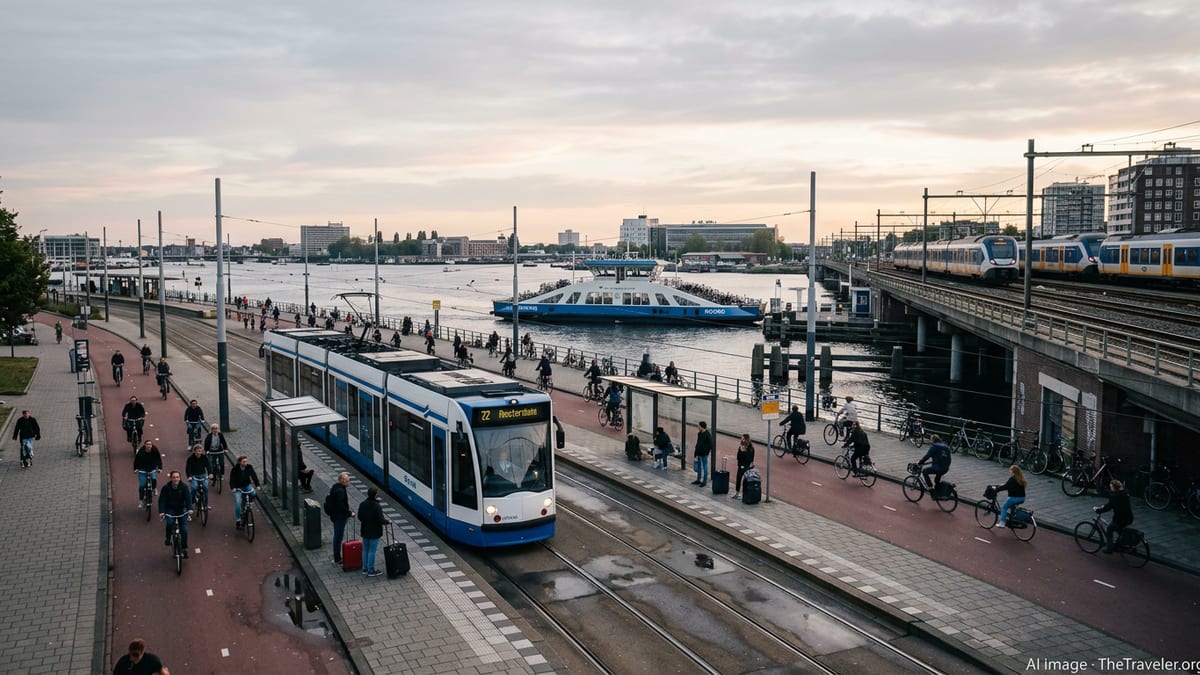
Trams and metro lines form the urban transport backbone in cities such as Amsterdam, Rotterdam, The Hague and Utrecht. In Amsterdam, blue and white GVB trams thread through the historic center and out into residential districts, complemented by a small but useful metro network and free ferries across the IJ. Rotterdam combines metro lines, light rail and trams that reach deep into surrounding suburbs, while The Hague and Utrecht run tram and light-rail networks that link city centers with satellite towns. Frequency is generally high during the day, and vehicles run into the late evening.
Using trams and metros is straightforward with contactless payment or an OV-chipkaart. You board using any door that has a card reader nearby, tap in at the platform gate or reader inside the vehicle, and tap out as you leave. In Amsterdam and The Hague, many stops are open platforms with freestanding validators, while in Rotterdam and on metro systems, access may be through ticket gates similar to those at train stations. On-board ticket sales are limited and, in many places, no longer available at all, so plan to use card-based payment or purchase a day ticket from a machine or service desk in advance.
City operators sell their own short-term tickets that can be invaluable if you plan to ride frequently in a concentrated area. For example, 1-hour or 24-hour passes allow unlimited travel on that company’s trams, buses and metros within a set time, and some tourist-focused products include added museum or attraction benefits. These passes are typically time-based, so they start counting down from first validation. They can be cost-effective in busy sightseeing days when you are hopping from neighborhood to neighborhood, but for a single journey it is often cheaper and simpler just to tap your bank card.
Keep an eye on local rules about bikes and accessibility when using trams and metros. Standard bicycles are usually not permitted on trams or metro lines during rush hour, with some exceptions on specific routes and with a paid bike ticket. Foldable bikes are more widely allowed, especially if kept compact. Most modern trams and metros are low-floor and accessible, with designated spaces for wheelchairs and strollers. Stops are announced on screens and over loudspeakers in Dutch and often in English, and real-time displays at platforms show the next departures and destinations.
Buses: Reaching Smaller Towns and Rural Areas
Buses extend the reach of the Dutch public transport network into places where tracks and tram lines do not go. Multiple regional companies operate these routes under contracts with local provinces, but from a traveler’s perspective they tend to work in a similar way. You can pay on board with contactless or an OV-chipkaart by tapping the onboard reader near the door, and fares are calculated by distance or regional tariff. Cash payment is increasingly rare and on many lines no longer accepted, so do not rely on buying a paper ticket from the driver.
Regional buses connect train stations with surrounding villages, business parks and attractions such as beaches, lakes and nature reserves. Schedules can be less frequent than urban services, especially in the evenings or on weekends, so checking departure times in advance is wise. There are also express bus routes branded as high-quality rapid services around the Randstad region, offering faster and more direct journeys, sometimes under the R-net label. These use modern low-floor vehicles, clear red and grey branding and real-time information at stops, making them relatively easy to recognize.
Within towns and cities, local buses complement tram and metro networks, filling gaps in coverage and providing late-night or early-morning options when rail services are limited. Night buses operate in several regions on weekends, linking nightlife districts with suburban neighborhoods. These may use special fares or surcharges, and some require specific night bus tickets instead of regular passes. In smaller communities, you may encounter neighborhood buses known as buurtbussen, operated with smaller vehicles and sometimes by volunteers, which give access to areas where standard buses would not be viable.
If you are carrying luggage or traveling with children, buses can be more flexible than trams because they usually have wider aisles and easier access at curb level. However, they are also more sensitive to traffic congestion, particularly at rush hours around major cities. When planning connections between a bus and a train, leave a margin of time in case of delays. Drivers generally wait a short moment for passengers running from a just-arrived train where timetables are designed to connect, but this is not guaranteed, especially on busy routes or later in the day.
Ferries and Water Transport
Water is woven into the geography of the Netherlands, and ferries play a surprisingly important role in everyday mobility, particularly in and around Amsterdam and in the country’s northern islands. In Amsterdam, a series of free blue and white ferries shuttle people, bikes and scooters across the IJ between Central Station and the rapidly developing neighborhoods on the northern shore. These short crossings run frequently from early morning until late at night, and you do not need a ticket or to tap in for the basic city ferries, although other specialized boat services may use regular ticketing.
Beyond Amsterdam, various regional ferry routes connect peninsulas, riverbanks and islands. Services across the major rivers and estuaries often carry both pedestrians and vehicles, while smaller local ferries cater mainly to cyclists and walkers. Payment methods differ by operator: some ferries are integrated into the OV system and accept contactless tap-in, while others use separate ticket machines or staffed kiosks. It is worth checking in advance if you are heading to a specific island or rural crossing, particularly in areas like Zeeland or Friesland where timetables and fares can be seasonal.
On many ferries, bicycles are welcome and sometimes even central to the service, with large open decks designed to hold rows of bikes. In Amsterdam, taking a bike on the free IJ ferries is common and at no extra cost, although the decks can be crowded at peak times as commuters and students stream across. Some larger metropolitan ferries and waterbuses elsewhere charge a small extra fee for bikes or limit numbers during busy periods. Motor vehicles may be restricted on certain routes, especially environmentally sensitive or residential areas, so do not assume you can drive on board unless the timetable explicitly indicates this.
Safety and etiquette on Dutch ferries are largely a matter of common sense. Follow signage when boarding, keep clear of ramps and chains, and avoid blocking pedestrian walkways with bikes or luggage. Lifejackets and safety equipment are carried on board, but the short distances and sheltered waters make crossings generally calm and routine. In bad weather or during storms, some smaller ferries may suspend service, which can affect cycling and hiking itineraries that rely on specific crossings, so keep an alternative route in mind when exploring remote waterways.
Bikes: The Essential Dutch Transport Mode
Cycling is arguably the most characteristic way to get around the Netherlands. The country has an extensive network of dedicated bike paths, clearly marked lanes and traffic-calmed streets that make it practical and relatively safe to travel by bike in both cities and countryside. Distances between towns are often modest, and gentle terrain means that even casual cyclists can comfortably cover 10 to 20 kilometers in an afternoon. For visitors, renting a bike is usually straightforward at train stations, rental shops and increasingly through app-based bike-share systems in larger cities.
Combining bikes with public transport is a key feature of Dutch mobility. Most train stations provide large, often multi-level bike parking facilities, from simple racks to secure guarded garages where residents leave their bikes before boarding trains to work or school. Many people use a simple, sturdy city bike for these short local trips and then rely on trains or trams for longer distances. If you want to bring a bike onto public transport, check the specific rules for your route: folded bikes are widely allowed, but full-size bikes are usually restricted to off-peak hours on trains and certain metro or tram lines, often with a separate bike ticket.
In cities, cyclists follow traffic signals and road markings just like other vehicles, and there are clear rules giving bikes dedicated space at many intersections and roundabouts. As a visitor, ride predictably, signal your intentions and avoid blocking bike lanes when you stop to take photos or consult a map. Shared paths for bikes and pedestrians are common in parks and along canals, and are marked accordingly; keep to the appropriate side and moderate your speed when paths are busy. Helmets are not compulsory for adults on regular bikes, and many local cyclists ride without them, though you may prefer to wear one if you are less experienced in mixed traffic.
Electric bikes have become increasingly popular, extending the practical range of daily commuting and leisure rides. You will see many e-bikes on rural cycle routes and intercity corridors, which can maintain higher average speeds. If you rent an e-bike, take a moment to practice handling and braking, especially when carrying luggage or a child seat. Always lock your bike securely when leaving it unattended; bike theft exists, particularly in busy cities, so use a sturdy lock and park in supervised facilities when available. When taking an overnight trip by train or ferry, consider renting a bike at your destination rather than transporting your own for convenience and peace of mind.
Planning, Timing and Practical Tips
Because the Dutch public transport network is dense and integrated, planning door-to-door journeys is usually easy using national journey planners and local apps. These platforms combine trains, trams, buses, metros, ferries and sometimes walking and cycling into a single itinerary, showing real-time delays and platform changes. At stations and stops, digital screens give up-to-date departure information and disruptions, and announcements are typically made in Dutch, with English added on major routes or during significant disruptions.
Peak travel times on weekdays are roughly between 7:00 and 9:00 in the morning and 16:00 and 18:30 in the evening. During these hours, trains and commuter services can be crowded, and rules about bringing bikes on board are stricter. If your schedule is flexible, traveling just before or after the peak can make journeys more comfortable and occasionally cheaper if you hold an off-peak discount product. Late evenings and weekends generally see less frequent services but still offer good coverage on most intercity and urban routes.
Accessibility is a priority across much of the Dutch network, although facilities vary by location and age of infrastructure. Many newer trains, trams and metro vehicles are low-floor and have level boarding with platforms, along with designated wheelchair spaces and visual and audio information. Older stations may have limited lift access or stepped platforms, which can be challenging with heavy luggage or mobility aids. If accessibility is critical for your trip, it is worth checking station information in advance or contacting operators for assistance options, such as boarding ramps or staff support at larger hubs.
Finally, be aware of ticket inspections and local etiquette. Traveling without a valid check-in, incorrect class or required supplement can lead to significant on-the-spot fines, and inspectors regularly patrol trains, trams and metros. Keep the card or ticket you used readily accessible in case you are asked to show it, and remember which card or device you tapped with to avoid confusion. On board, it is customary to keep aisles clear, give up priority seats to passengers with reduced mobility or those who are pregnant, and keep voices low in designated quiet zones on certain intercity trains.
The Takeaway
Getting around the Netherlands without a car is not only feasible, it is often the most efficient and enjoyable way to experience the country. Fast and frequent trains knit together major cities, while trams, metros and buses handle the finer detail of local journeys. Ferries add a distinctly Dutch touch where waterways intersect your route, and bikes remain the most flexible and iconic mode for short hops and leisurely exploration.
As a visitor, your main decisions revolve around how you want to pay, how intensively you will travel, and how comfortable you are combining modes. The growth of OVpay and contactless payment has made spontaneous travel easier than ever, removing much of the friction of ticket buying. With a little planning around peak times, bike rules and occasional supplements, you can move confidently from city center to village, dune coast to canal belt, using the same integrated system.
Whether you are commuting between meetings in Amsterdam and Rotterdam, heading to a beach town by train and bus, or weaving through polders on a rented bike before catching a ferry back to the city, the Dutch transport network is designed to support multi-modal journeys. Understanding the basic principles of tapping in and out, reading real-time information, and respecting local etiquette will help you travel smoothly and focus on what matters most: discovering the landscapes, neighborhoods and stories that make the Netherlands unique.
FAQ
Q1. Do I still need an OV-chipkaart, or can I just use my bank card?
In most situations you can simply use a contactless debit or credit card, or your phone wallet, to tap in and out on trains, trams, buses and metros. The OV-chipkaart is being phased out but remains useful if you are staying longer, want specific discount products or travel where OVpay coverage is still catching up.
Q2. How do I know where to tap in and tap out?
Look for card readers or gates marked with the public transport logo at station entrances, platforms and vehicle doors. Tap your card or phone until you hear a confirmation tone and see a message on the screen. When you finish your journey or change operators, tap again at the reader to check out.
Q3. Are paper tickets still available for trains and trams?
Single-use paper or disposable chip tickets exist but are less common and often cost more due to surcharges. Many ticket machines and service desks still sell them, but most operators encourage contactless payment or reusable cards. As a visitor, you will generally find tapping in with a bank card or using a day pass more convenient.
Q4. Can I bring my bike on trains and city trams?
Foldable bikes are usually allowed on trains and many trams when folded, often at no extra cost. Full-size bikes are widely permitted on most domestic trains outside of peak hours with a separate bike ticket, but usually not on regular trams or buses, with limited exceptions on specific lines and times. Always check local rules for your route.
Q5. How late do public transport services run at night?
Most intercity trains and major urban tram or metro lines run until around midnight, with reduced frequency in late evening. Some regions operate night buses on weekends, connecting nightlife areas with suburbs. Very late or early-morning journeys may require careful planning and sometimes a taxi or rideshare for the last stretch.
Q6. Are Dutch trains and buses usually on time?
Overall punctuality is relatively good by European standards, especially on main intercity routes. However, delays do occur due to congestion, weather or infrastructure works. Real-time apps and station screens provide up-to-date information, and it is sensible to allow extra time for tight connections, particularly for flights or international trains.
Q7. Is public transport in the Netherlands safe for solo travelers?
Public transport is generally considered safe, including at night on main lines. Stations and vehicles are usually well lit and monitored, and many have visible staff or security. Standard precautions still apply: keep valuables secure, be aware of your surroundings and sit near other passengers if you feel unsure.
Q8. Do I need to validate a day pass if I already bought it?
Yes. Most time-based day or multi-day tickets must be activated by tapping in at a card reader or gate on your first journey. The validity period starts from that first check-in, not from the moment of purchase, so remember to activate it when you begin traveling, and always tap out when you leave a vehicle or station.
Q9. Can I rely on English for announcements and ticket machines?
In major cities and on intercity trains, many ticket machines offer English menus and key announcements are repeated in English, especially for important stops or disruptions. In smaller towns, printed information and staff may mainly use Dutch, but most people working in transport can communicate in basic English if you need assistance.
Q10. What happens if I forget to check out at the end of my trip?
If you forget to check out, the system usually charges a default maximum fare for that journey, which can be higher than the actual cost. With some cards and accounts, it may be possible to correct this later via customer service or an online portal, but it is not guaranteed. To avoid unexpected charges, make a habit of tapping out as soon as you leave the platform or vehicle.