


Hong Kong International Airport is one of Asia’s busiest hubs, but a layover here does not have to mean killing time at the gate. With efficient transport, polished facilities and an expanding retail and entertainment complex right next door, you can turn a few spare hours into a surprisingly enjoyable mini-stopover. The key is knowing what is realistic for the length of your layover and where to go once you step off the plane.
Get the latest updates straight to your inbox!
First Steps: Timing Your Layover Wisely
Before you decide how to spend your layover, get clear on how much usable time you really have. As a rough guide, anything under three hours is best spent inside the terminal, three to six hours gives you time to shower, eat well and maybe explore SkyCity next door, and six hours or longer opens the door to a quick trip into downtown Hong Kong. Always factor in boarding time, which typically starts 30 to 45 minutes before departure for regional flights and up to an hour for long-haul services.
On arrival, check the time it took you to taxi to the gate and clear security on your inbound flight. If your connection is on separate tickets or involves a change of airline, assume you may need to clear immigration and recheck bags. In that case, even a five-hour layover can shrink quickly once you include immigration queues and security screening. Many travelers find that late evening and early morning transits through Hong Kong International Airport are particularly smooth, while mid-afternoon peaks can be noticeably busier.
Use the airport’s flight information displays to double-check your departing gate and terminal area as soon as you land. Hong Kong International Airport is large, and walking from one end of Terminal 1 to the other can easily take 15 to 20 minutes at a comfortable pace. If your layover is tight, head directly toward your departure concourse first and then decide how adventurous you can be with food, shopping or lounge visits nearby.
If you are considering leaving the airport, be conservative. A same-day round trip on the Airport Express train from the airport to Hong Kong Station in Central takes about 24 minutes each way, with trains running every roughly 10 minutes for most of the day. That means even a short foray into the city requires at least two hours of transport and buffer time, on top of whatever you plan to do once you get there.
Relaxing Inside the Terminal: Lounges, Showers and Sleep
For layovers of up to four or five hours, the most comfortable option is often to stay airside and make use of Hong Kong International Airport’s lounges and rest areas. If you are flying in premium cabins or have elite status with oneworld airlines such as Cathay Pacific or Qantas, you can access several of Asia’s better-regarded lounges in Terminal 1, including spaces with noodle bars, staffed cocktail bars, quiet zones and shower suites. Even with a short transit, a 20-minute shower and a hot bowl of wonton noodles can make a long-haul journey feel much more bearable.
Travelers without status can buy access to independent lounges. Plaza Premium Lounge, for example, operates multiple locations in Terminal 1, including one near Gate 1 with buffet dining, soft drinks, showers and comfortable seating. A walk-up three-hour pass typically costs in the ballpark of what you might spend on a decent airport meal and a couple of coffees, and advance-booked online rates are often a bit lower. For a family of four on a long connection, paying for lounge access can be comparable in cost to eating individually at mid-range airport restaurants but comes with quieter seating and access to showers.
If you only need a quick refresh, look out for the free public shower facilities in Terminal 1. Recent traveler reports point to locations airside near Gates 12 and 43 on Level 5, with basic but functional stalls. You will need to bring your own toiletries and towel or make do with a simple rinse, but this can be a useful option if you do not want to pay lounge fees just for a shower. These areas can get busy during overnight banks of long-haul arrivals, so have a backup plan or be prepared to wait.
Sleeping options run from simple to fully private. Some travelers stretch out on padded benches or seating clusters in quieter parts of Terminal 1, particularly in the late-night hours when flight activity slows. For something more structured, look for pay-per-use rest zones or consider booking a room at an airport hotel such as the attached hotel at AsiaWorld-Expo or properties in the SkyCity area. Booking a six to eight hour daytime block at an airport hotel can be worthwhile if you are crossing multiple time zones and want to reset with proper sleep, a shower and guaranteed quiet before a night flight.
Eat and Drink: From Fast Noodles to City-Level Dining
Hong Kong’s culinary reputation extends into its airport, and eating well is one of the easiest ways to make a layover feel satisfying. Inside Terminal 1 you will find a mix of familiar international chains and local names. For a quick, local-style meal, look for congee and noodle spots or cha chaan teng style cafes serving milk tea, barbecue pork with rice and Hong Kong-style French toast. Prices for a sit-down bowl of wonton noodles or a rice plate typically run to a few dozen Hong Kong dollars, noticeably cheaper than full-service Western restaurants but more substantial than fast food.
If you want coffee and a light bite while you work, there are several international coffee chains throughout the terminal, particularly in the central “food court” style areas. A latte will usually cost an amount comparable to big-city prices elsewhere in Asia, and many outlets offer power outlets and reasonably fast Wi-Fi. Travelers with long layovers often choose a table at a café overlooking the tarmac so they can linger for a couple of hours with a book or laptop without feeling rushed.
Those with more time can consider stepping into the adjoining SkyCity district, reached via walkways and people movers from the terminal. The 11 SKIES complex, which is progressively opening as a huge retail and entertainment hub next to the airport, is planned to host more than 800 shops and over 100 dining concepts, from casual eateries to destination restaurants. Even as sections continue to open, visitors can already find a broader range of dining choices here than in the terminal alone, including family-friendly sit-down options that feel more like a proper restaurant meal than an airport stop.
Remember to keep an eye on time if you leave the main departures area to eat. Walking from a restaurant in the farther reaches of the terminal back to a gate near the other end can take 15 minutes or more, especially if you are navigating with luggage or traveling with children. Aim to be back at your gate area at least 40 minutes before scheduled departure so you have a buffer if security checks or boarding start earlier than expected.
Stretch Your Legs: Shopping, Entertainment and SkyCity
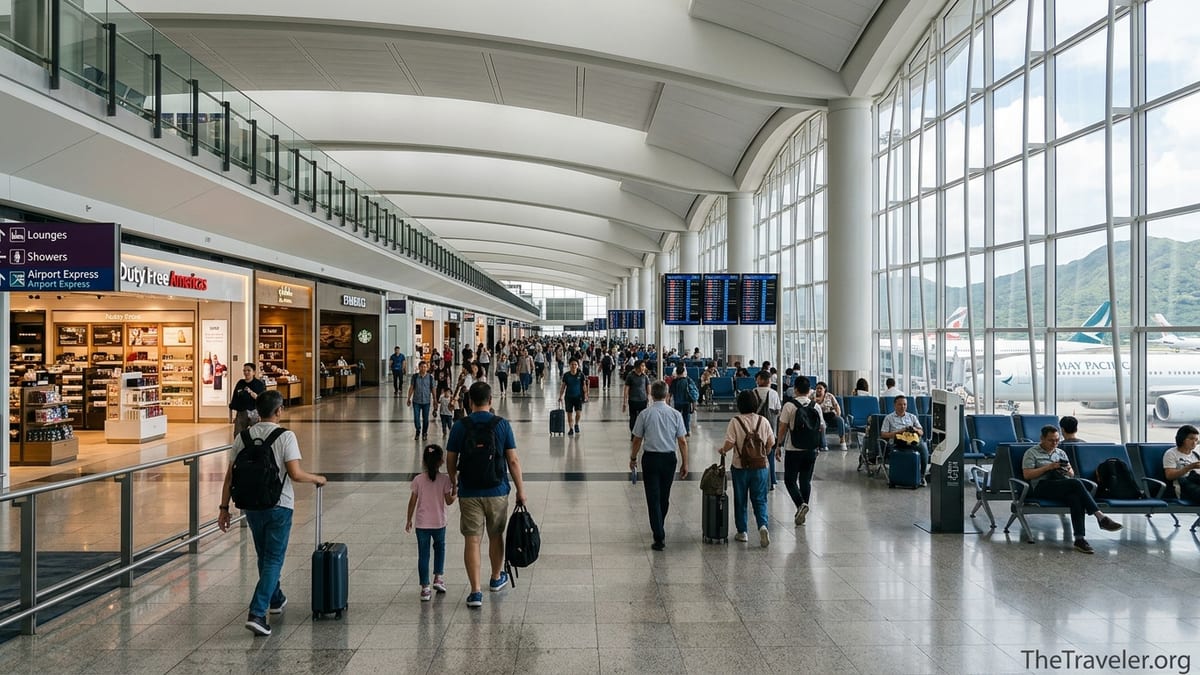
Once you have eaten, a good way to fight jet lag on a layover is to move around. Hong Kong International Airport’s main terminal is designed almost like a long indoor street, with designer boutiques, electronics shops and bookstores lining the concourses. Window-shopping through fashion labels and watch stores can easily take an hour, and several shops stock travel essentials such as universal adapters, portable chargers and noise-cancelling headphones at prices similar to downtown Hong Kong.
If you are traveling with children, consider budgeting part of your layover to explore the emerging attractions in SkyCity and 11 SKIES. Plans for the complex include themed experiences such as KidZania and other interactive family attractions, which are designed specifically for families and young adults. Even if you only have time for a brief visit, spending an hour in a child-focused activity zone can be a welcome change from keeping kids entertained at the gate. Check what is currently open before you travel, as new zones and experiences are being rolled out in phases.
For avgeeks and photographers, parts of the terminal offer excellent views of the runways and aircraft stands. Large floor-to-ceiling windows in many gate areas overlook the tarmac, and depending on visibility you can see aircraft taking off and landing against the backdrop of Lantau Island’s hills. Spend some time walking the length of the concourse and you will find quieter corners where you can sit and watch movements from major airlines around the world, from wide-body jets heading to Europe to regional narrow-bodies bound for Southeast Asia.
If you prefer a calmer environment, look out for designated seating pockets away from the main retail spine, often near the ends of the concourses. These clusters tend to be quieter and better suited to reading or listening to music. Some areas also include work benches with power outlets and USB ports, ideal for charging devices in between flights. Just remember that seats near popular outlets can fill quickly during busy waves of departures.
Quick City Breaks: When You Have 6+ Hours
With a layover of six hours or more and a single through-ticket that keeps your checked luggage handled, a quick trip into the city becomes realistic. The most efficient option is the Airport Express train, which connects the airport with Hong Kong Station in Central in about 24 minutes, with intermediate stops at Tsing Yi and Kowloon. Adult single fares between the airport and Hong Kong Station are broadly in the low hundreds of Hong Kong dollars, with modest discounts if you use an Octopus stored-value card or buy certain tickets online.
From Hong Kong Station you can walk directly into the IFC mall complex, which has air-conditioned shopping, a wide choice of restaurants and a rooftop public area with views across Victoria Harbour to Kowloon. If your layover lands in the late afternoon or early evening, you can ride the Airport Express into Central, have an early dinner or a drink overlooking the water, and then head back to the airport with time to spare. Budget roughly three hours from the moment you leave the airside area to your return, including the round-trip train ride, security and boarding.
Travelers on a tighter budget or those whose layovers fall outside Airport Express operating hours can consider bus services between the airport and the city. Routes to Central and Kowloon typically take longer than the train because of traffic and intermediate stops, but fares are usually noticeably lower. For example, a city-bound airport bus fare can be roughly a fraction of the Airport Express price, making it attractive for solo travelers with plenty of time. Just be conservative about return timings, especially during evening rush hours or in poor weather.
If you do leave the airport, keep your hand luggage light and carry only what you need. Check visa requirements before you travel, especially if you are on a passport that does not have visa-free access to Hong Kong. When you return, you will need to pass through security again, and queues can be longer during late-night departure banks. Many experienced travelers aim to be back inside the departures area at least two hours before international flights, even if check-in was already completed earlier in the transit.
Practical Essentials: Money, Connectivity and Navigation
Making the most of your layover is easier if you handle practicalities early. Hong Kong International Airport is well equipped with ATMs and currency exchange counters, though rates at airport exchangers are typically less favorable than in the city. If you only plan to stay airside, you may not need much local currency at all, as most outlets accept major credit cards and mobile payment options. Having a small amount of cash can still be useful for small purchases in older outlets or vending machines.
For connectivity, the airport provides free Wi-Fi, which is generally sufficient for messaging, email and light streaming. If you plan to head into the city or use a lot of data, consider picking up a local SIM card or eSIM data package. Several telecom providers have counters and vending machines in the arrivals and departures halls selling short-term tourist SIMs that include several days of data and local call allowances at prices that compare reasonably well with other major Asian hubs.
Navigation within the airport can seem daunting at first because of its size, but signage is clear and bilingual in Chinese and English. Large yellow-and-black signs guide you toward security, immigration, baggage claim and transfer points, while route maps near escalators and travellators show walking times to different gate zones. If you are unsure, look for the airport information counters or roving staff in uniforms who can point you in the right direction. Many frequent flyers recommend taking a photo of the gate area map on your phone, so you can quickly reorient yourself if you wander off to shop or eat.
Finally, pay attention to local time, especially if you are arriving from a very different time zone. It is easy to miscalculate your layover window if you are still thinking in your departure city’s time. Set your watch or phone to Hong Kong time as soon as you land, and if you are planning a nap, set multiple alarms so you do not oversleep and miss boarding announcements. The airport’s public address system is effective, but in busy or distant corners of the terminal it is still possible to miss a call for final boarding.
The Takeaway
A layover at Hong Kong International Airport can be far more than a simple wait between flights. With thoughtful planning, even a short connection becomes a chance to refresh with a hot shower, enjoy a proper meal and stretch your legs in bright, spacious terminals. Longer layovers open up possibilities to explore the adjacent SkyCity complex or even ride the Airport Express into Central for a quick taste of Hong Kong’s skyline and harbourfront.
The decisions you make in the first 20 minutes after landing will shape how the rest of your time unfolds. Check your gate and timings, assess whether it is realistic to leave the airport, and then choose between lounging, dining, shopping or a city dash. By anchoring your plans around your actual available hours, not just the scheduled layover on your ticket, you can turn Hong Kong from a blur outside the airplane window into a memorable part of your journey.
FAQ
Q1. What is the minimum layover time needed to leave Hong Kong Airport and visit the city?
For most travelers, a layover of at least six hours is advisable if you want to ride the Airport Express into Central, have a quick meal or stroll, and comfortably clear security on your return.
Q2. How long does the Airport Express take from the airport to downtown Hong Kong?
The Airport Express takes roughly 24 minutes from Hong Kong International Airport to Hong Kong Station in Central, with trains running about every 10 minutes for most of the day.
Q3. Is the Airport Express worth the price compared to buses or taxis?
If speed and reliability matter, especially during rush hour, many travelers prefer the Airport Express despite its higher fare. Buses are cheaper but slower, and taxis vary depending on traffic and your exact destination.
Q4. Can I shower at Hong Kong International Airport without lounge access?
Yes. There are free public shower facilities in Terminal 1, and several pay-per-use lounges such as Plaza Premium also offer shower access for a fee, even if you are flying economy.
Q5. Are there good food options for a short layover inside the terminal?
Yes. You will find local noodle shops, cha chaan teng style cafes, international fast food and coffee chains throughout Terminal 1, so it is easy to grab a quick but decent meal without leaving the secure area.
Q6. Is it safe to sleep in the airport during an overnight layover?
Hong Kong International Airport is generally considered safe, and many travelers nap in seating areas overnight. As always, keep valuables close, use luggage locks where possible and choose well-lit, busier areas.
Q7. Do I need Hong Kong dollars for a layover if I am staying airside?
Not necessarily. Most airport shops and restaurants accept major credit cards and common mobile payments, although carrying a small amount of local currency can be useful for minor purchases.
Q8. Can I access a lounge if I am flying economy and have no elite status?
Yes. Independent lounges such as Plaza Premium sell access passes, and some travelers use lounge membership programs or credit card benefits that include entry to specific lounges at Hong Kong International Airport.
Q9. Is there anything for children to do during a long layover?
Families can use play areas in the terminal and, with more time, explore the SkyCity and 11 SKIES complexes, which are adding interactive attractions and family-oriented entertainment options near the airport.
Q10. How early should I be back at the gate for my connecting flight?
Aim to be back in the gate area at least 40 minutes before departure for regional flights and about an hour before long-haul flights, allowing extra time if you are coming from outside the terminal or from SkyCity.