


More news on this day
As card-not-present fraud and chargebacks rise in air travel, front-line advisors are becoming de facto fraud screeners, asked to distinguish legitimate last-minute getaways from trips funded with stolen identities and compromised credit cards.
Get the latest news straight to your inbox!
The Growing Link Between Financial Fraud and Airline Tickets
Airline tickets have become a favored target for fraud, creating what many analysts describe as a scam-to-travel pipeline in which stolen card details are quickly converted into high-value, hard-to-trace trips. Studies of air travel fraud highlight that compromised cards, loyalty accounts, and business travel profiles are routinely abused to obtain tickets that can be used, resold, or traded before the legitimate account holder notices unusual activity.
Industry research on global air travel fraud in 2026 indicates that risk is not distributed evenly, with certain routes and departure markets experiencing consistently higher fraud pressure at the point of booking. This reinforces the idea that travel is a preferred cash-out channel for organized crime groups that already control stolen financial data. For advisors working at airline counters and accredited agencies, that means routine bookings can conceal sophisticated schemes designed to move people and money across borders.
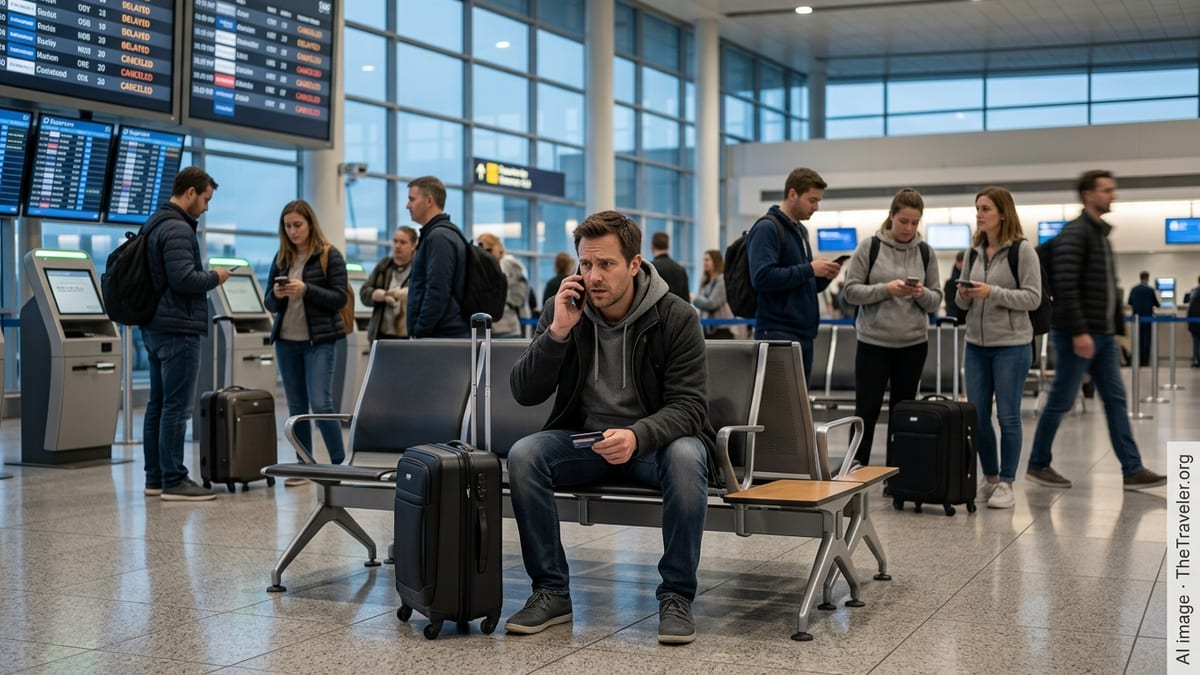
Interpol and other law-enforcement bodies publicly warn that customers who unknowingly purchase tickets obtained with stolen payment credentials can find their reservations canceled once the true cardholder disputes the transaction. That creates a dual victim scenario: the cardholder faces unauthorized charges, while the traveler is stranded at the airport with no valid ticket. Travel advisors operating at the point of sale are often the last checkpoint before such losses multiply across consumers, airlines, and agencies.
Red Flags Advisors See at the Counter
Guidance for agents from airline and industry bodies points to a recurring set of red flags that frequently surface during face-to-face sales. These include customers purchasing tickets from outside their country of residence, buyers insisting on one-way international tickets on short notice, or travelers attempting to split a transaction across multiple cards. Such patterns are documented in training materials that focus on ground operations and fraud prevention around airline ticket sales.
Advisors also pay close attention to inconsistencies between identification documents and payment methods, particularly when the person paying is not the one traveling or when contact details are incomplete or unverifiable. IATA-aligned fraud prevention resources encourage agents to verify phone numbers and email addresses, carefully review passenger name records, and watch for itineraries that mirror those associated with previously reported fraudulent activity. These counter-level checks complement automated risk tools running in the background.
In some markets, travel fraud reports describe a blend of legitimate-seeming behavior and subtle anomalies, such as repeat visits to the same counter for different travelers using similar card details, or an unusual interest in specific high-resale routes. Advisors trained to recognize these anomalies can escalate suspicious cases to internal fraud teams or request alternative forms of payment before issuing a ticket, interrupting the pipeline from stolen data to actual travel.
Chargebacks, Regulations and Why Advisors Are Cautious
The economics of fraud add pressure to travel advisors’ decisions. When a cardholder disputes a charge and the issuer processes a chargeback, merchants may be left absorbing the loss unless they can show proper authorization and disclosure. Consumer guidance from the U.S. Consumer Financial Protection Bureau outlines how cardholders can contest unauthorized or undelivered services, typically within strict time limits after the charge appears. That framework, while important for consumer protection, also means legitimate agencies must document consent meticulously to defend against misuse.
Recent rulemaking and guidance from the U.S. Department of Transportation emphasize that ticket agents remain central to the distribution of air travel and must also comply with evolving refund and disclosure obligations. Public documents associated with new refund and consumer protection rules stress that small agencies have raised concerns about the financial impact of refund and chargeback responsibilities, especially when fraud is involved. These concerns help explain why advisors increasingly insist on written credit card authorizations, clear terms and conditions, and travel insurance recommendations before processing payments.
Advisors working under host agencies or airline reporting frameworks can face contractual liability when a client’s payment is later reversed because of fraud or a disputed service. Industry discussions and training resources repeatedly highlight that using an advisor’s own card without explicit authorization from airlines or consolidators can expose both the agent and supplier to heightened risk. As a result, many agencies require that all major trip components be paid directly with the traveler’s card or through secure third-party links that maintain a clean audit trail.
Industry Tools and Data-Sharing Against Ticket Fraud
In response to mounting losses, airlines and travel organizations are investing in shared fraud intelligence and payment security standards designed to support advisors at the counter. IATA promotes PCI DSS compliance for accredited agents to safeguard cardholder data and reduce the risk of breaches that fuel downstream fraud. Non-compliance can translate into fines, operational costs, and reputational damage, underscoring why secure handling of payment information has become a baseline expectation for professional agencies.
Beyond basic security standards, industry platforms such as IATA’s collaborative fraud information services enable airlines and agents to share details about suspect transactions and emerging patterns. Documentation describes these tools not as simple blacklists, but as data-sharing ecosystems that allow participants to flag risky profiles or itineraries in near real time. For advisors, this can mean that a dubious booking attempt triggers alerts based on previous incidents reported elsewhere, making it easier to justify heightened scrutiny at the counter.
Parallel to human review, airlines and large travel intermediaries continue to invest in machine learning systems and real-time decisioning engines that score bookings for fraud risk as they are created. Academic and industry reports on travel fraud modeling describe graph-based and behavioral approaches that analyze connections among travelers, cards, routes, and devices. While these technologies often operate behind the scenes, they complement the situational awareness of advisors who can observe traveler behavior directly and apply local knowledge that algorithms may not capture.
What Travelers Can Do to Avoid Becoming Part of the Pipeline
As fraud controls tighten, legitimate travelers encounter more questions and documentation requests at booking and check-in, especially on high-risk routes. Consumer advisories from law-enforcement and travel organizations recommend working only with verifiable agencies and airline channels, checking company accreditation numbers where applicable, and being wary of unsolicited calls or websites that appear after searching for airline customer service. Published accounts of fake travel agencies demonstrate how convincing impersonation can be, with scammers presenting detailed itineraries that never translate into valid tickets.
Experts who track airline ticket fraud consistently note that travelers can protect themselves by monitoring card statements closely, setting up transaction alerts, and contacting their bank immediately if they see charges from unfamiliar travel merchants. Early reporting helps limit opportunities for criminals to complete travel before a ticket is canceled, and it also reduces the likelihood that a legitimate future booking will be disrupted by unresolved disputes tied to the same account.
For their part, advisors who clearly explain documentation requirements, payment procedures, and refund rules can turn fraud prevention practices into a trust-building exercise rather than an obstacle. Transparent communication about why certain bookings attract additional verification helps travelers distinguish between routine security steps and potential red flags, narrowing the space in which scam-to-travel schemes can operate.
https://www.interpol.int/en/Crimes/Financial-crime/Airline-ticket-fraud
https://www.accertify.com/q1-2026-global-air-travel-fraud-report/