


More news on this day
Flights at Nairobi’s Jomo Kenyatta International Airport (JKIA) were severely disrupted for a second day on Monday as a nationwide aviation workers’ strike left thousands of passengers stranded and turned Kenya’s main air hub into an overnight waiting room.
Get the latest news straight to your inbox!
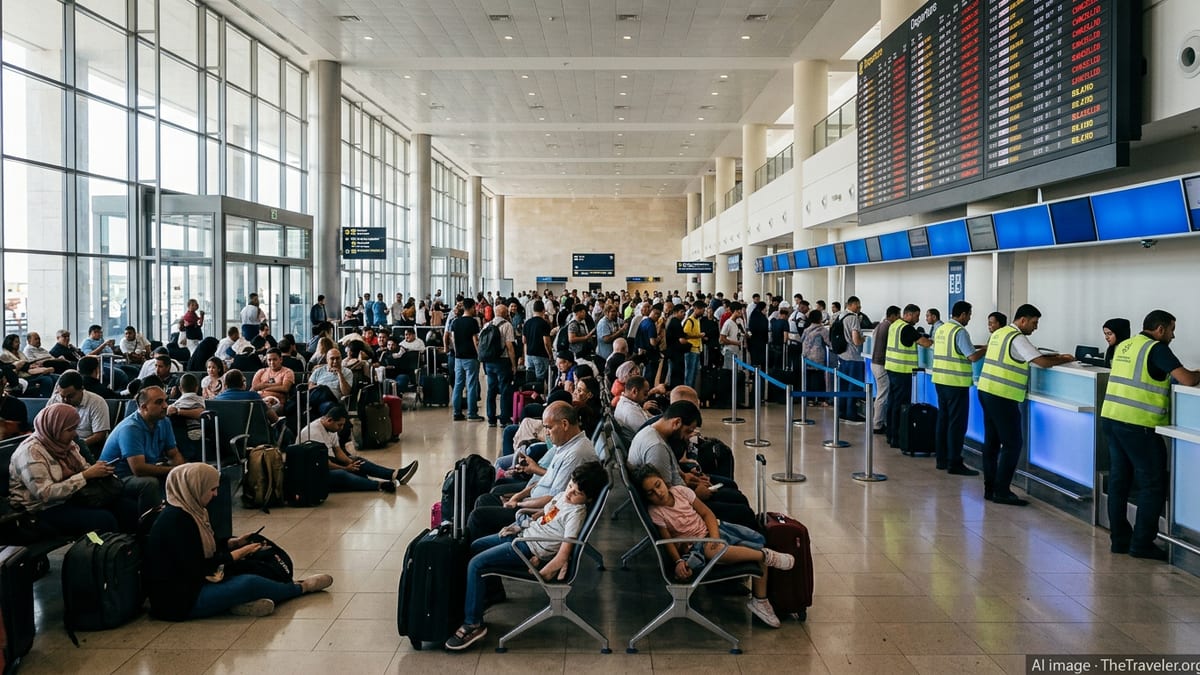
Strike enters second day with major disruptions at JKIA
The industrial action, led by members of the Kenya Aviation Workers Union (KAWU), began on Sunday, August 30, 2026, and continued into Monday, August 31, affecting operations at JKIA and other airports across the country. Reports indicate that workers from the Kenya Civil Aviation Authority (KCAA), Kenya Airports Authority (KAA) and several airlines engaged in a go-slow and downed tools, paralysing key services required to keep flights on schedule. ([kenyans.co.ke](https://www.kenyans.co.ke/news/126636-kawu-confirms-aviation-workers-strike-issues-ultimatums-govt?utm_source=openai))
Publicly available coverage shows that hundreds of passengers remained stuck in terminal halls overnight at JKIA, with many forced to sleep on seats and the floor as they waited for guidance on rescheduled flights. Similar scenes were reported at Moi International Airport in Mombasa and other regional facilities, as the go-slow cascaded through the country’s aviation network. ([amp.dw.com](https://amp.dw.com/en/kenya-passengers-stranded-amid-airport-staff-strike/a-78570644?utm_source=openai))
News outlets report that airlines struggled to maintain even a reduced schedule. Some carriers cancelled flights outright, while others operated with average delays ranging from two to six hours as they adjusted to limited staffing in critical roles such as air traffic control, ground handling and security screening. Kenya Airways, the national carrier, publicly acknowledged delays of more than six hours on some routes departing from JKIA. ([hurriyetdailynews.com](https://www.hurriyetdailynews.com/passengers-stranded-overnight-by-airport-strike-226264?utm_source=openai))
By Monday morning, some airlines had begun arranging hotel transfers for passengers who had already spent much of the night at the airport. However, local media reports described long queues at airline desks and information counters, with many travellers still unsure when they would be able to depart. ([pulse.co.ke](https://www.pulse.co.ke/story/kawu-strike-causes-flight-disruptions-at-jkia-moi-airport-2026083106541014603?utm_source=openai))
Passenger frustration mounts amid delays and cancellations
Across JKIA’s terminals, the strike translated into missed connections, abandoned itineraries and significant financial losses for travellers, according to local and international coverage. Many passengers reported delays of several hours, while others had their flights cancelled at short notice, forcing them to rearrange hotel bookings and onward journeys at their own expense. ([amp.dw.com](https://amp.dw.com/en/kenya-passengers-stranded-amid-airport-staff-strike/a-78570644?utm_source=openai))
Images and reports from the airport show travellers camping out in public seating areas with luggage stacked around them. Some families with children were described as having spent the entire night in the terminal, while others tried to secure scarce accommodation in nearby hotels amid heightened demand. Social media posts from stranded passengers highlighted confusion over flight statuses and uneven access to assistance, reinforcing the sense of disarray. ([nairobinews.co.ke](https://nairobinews.co.ke/hundreds-spend-nights-on-seats-over-ongoing-aviation-workers-strike/?utm_source=openai))
Regional media note that disruptions were not limited to international routes. Domestic flights linking Nairobi to tourism and business destinations such as Mombasa, Kisumu and Eldoret also faced delays or cancellations, affecting local travellers at the start of the work week and complicating travel for peak safari and beach tourism periods. ([citizen.digital](https://citizen.digital/article/passengers-stranded-at-kenyan-airports-after-aviation-workers-strike-n389302?utm_source=openai))
For many passengers, the timing of the strike amplified its impact. Coverage from Sunday and Monday describes travellers who had arrived early at the airport, expecting routine flights, only to discover that a slow-down in staffing had brought check-in, security and boarding processes to a crawl. Some accounts highlighted perceived inconsistencies in how rebooking and hotel accommodation were offered, further fuelling frustration among those left in the terminal. ([citizen.digital](https://citizen.digital/article/passengers-stranded-at-kenyan-airports-after-aviation-workers-strike-n389302?utm_source=openai))
Workers’ demands center on pay, welfare and agreements
According to union statements cited in Kenyan media, the latest action stems from longstanding disputes over pay, working conditions and the implementation of collective bargaining agreements across key aviation agencies. KAWU publicly stated that the strike followed the lifting of an earlier suspension of industrial action, after the union concluded that agreed frameworks had not been honoured. ([kenyans.co.ke](https://www.kenyans.co.ke/news/126636-kawu-confirms-aviation-workers-strike-issues-ultimatums-govt?utm_source=openai))
Reports indicate that workers are pressing for improved welfare benefits and better staffing levels, arguing that current arrangements have left critical airport operations understaffed and employees overstretched. The union has also pointed to delayed or incomplete implementation of previously negotiated benefits, saying that members at KCAA, KAA and certain airlines remain without the terms set out in earlier agreements. ([citizen.digital](https://citizen.digital/article/passengers-stranded-at-kenyan-airports-after-aviation-workers-strike-n389302?utm_source=openai))
Coverage of past disputes between KAWU and airport authorities shows that industrial action has periodically disrupted operations at JKIA in recent years. Analysts quoted in legal and industry documents describe a pattern in which contentious negotiations over salary adjustments and conditions occasionally spill into the courts, even as traffic through JKIA has grown and the airport has consolidated its role as a regional hub. ([new.kenyalaw.org](https://new.kenyalaw.org/akn/ke/judgment/keelrc/2025/2861/eng%402025-10-23/source?utm_source=openai))
In the current standoff, union leaders have been quoted in local reports as insisting that the strike will continue until concrete steps are taken to address their list of grievances. At the same time, management statements referenced in media coverage emphasize attempts to maintain limited services, including using contingency staff to keep some flights operating while talks continue. ([kenyans.co.ke](https://www.kenyans.co.ke/news/126636-kawu-confirms-aviation-workers-strike-issues-ultimatums-govt?utm_source=openai))
Impact on tourism, regional connectivity and airlines
JKIA serves as the primary international gateway to Kenya and a key connecting hub for East and Central Africa, handling more than 9 million passengers in 2024, according to publicly available statistics. The current strike is therefore reverberating beyond Nairobi, affecting travellers transiting between African cities as well as long-haul passengers from Europe, the Middle East and Asia. ([en.wikipedia.org](https://en.wikipedia.org/wiki/Jomo_Kenyatta_International_Airport?utm_source=openai))
Tourism industry observers warn that repeated disruptions at the country’s main airport risk undermining confidence among international visitors and tour operators. Recent years have seen multiple strikes and go-slows at JKIA and other Kenyan airports, often coinciding with peak travel seasons. Each episode not only inconveniences holidaymakers but also raises questions for airlines and tour companies planning schedules and package itineraries through Nairobi. ([hurriyetdailynews.com](https://www.hurriyetdailynews.com/passengers-stranded-overnight-by-airport-strike-226264?utm_source=openai))
For airlines, the strike brings immediate operational challenges and financial pressure. Carriers must absorb the cost of delays, diversions, crew rescheduling and, in some cases, accommodation for stranded passengers. National carrier Kenya Airways has already reported average delays of several hours out of JKIA, while other airlines have temporarily adjusted their schedules or capped departures until staffing stabilises. ([myjoyonline.com](https://www.myjoyonline.com/kenya-airport-staff-strike-delays-thousands-of-passengers/?utm_source=openai))
Regional connectivity is also affected, with reports noting that flights linking Nairobi to neighbouring capitals and key regional hubs have experienced knock-on delays. For landlocked countries that rely on Nairobi for onward international connections, the slowdown at JKIA adds another layer of uncertainty to already complex travel logistics. ([amp.dw.com](https://amp.dw.com/en/kenya-passengers-stranded-amid-airport-staff-strike/a-78570644?utm_source=openai))
Talks continue as travellers seek guidance
As of Monday afternoon, August 31, media outlets reported that negotiations between KAWU representatives and government and aviation agencies were ongoing, with no clear public timetable for a full resumption of normal operations. Commentators following the talks suggest that both sides face pressure to reach a settlement quickly, given JKIA’s central role in business travel, cargo flows and tourism in the region. ([amp.dw.com](https://amp.dw.com/en/kenya-passengers-stranded-amid-airport-staff-strike/a-78570644?utm_source=openai))
Public information from airport authorities and airlines has focused on advising passengers to check flight status updates and arrive early for departures, but the scale of the disruption has made planning difficult. Travel advisories circulating online encourage passengers to monitor airline channels closely, keep flexible itineraries where possible and be prepared for extended waiting times or rerouting through alternative airports. ([pulse.co.ke](https://www.pulse.co.ke/story/kawu-strike-causes-flight-disruptions-at-jkia-moi-airport-2026083106541014603?utm_source=openai))
Kenyan media note that the current strike follows a pattern of industrial disputes in the aviation sector earlier in 2026, when separate actions by air traffic control staff and other categories of workers triggered temporary shutdowns and later return to work agreements. Observers argue that resolving the present standoff in a more durable way could be critical to reducing the risk of further disruptions in the months ahead. ([jkiairport.com](https://jkiairport.com/wp-content/uploads/2026/02/KAWU-Strike-Notice-on-Feb-9-Announcing-Upcoming-JKIA-Workers-Strike-Copy.pdf?utm_source=openai))
For now, travellers with immediate plans to pass through JKIA face an uncertain wait. With terminals still crowded and schedules in flux, the airport’s role as a vital regional hub has rarely been more visible to those trying to leave, arrive or simply connect through Nairobi.
DW: Kenya passengers stranded amid airport staff strike
Citizen TV: Passengers spend night at JKIA as aviation workers strike persists
Nation: Flights disrupted at JKIA as aviation workers resume strike
MyJoyOnline: Kenya airport staff strike delays thousands of passengers