

More news on this day
Newly compiled 2025 and early 2026 data on economy class legroom show a widening comfort gap in the United States, as full service and ultra-low-cost airlines continue to pursue sharply different seating strategies.
Get the latest news straight to your inbox!
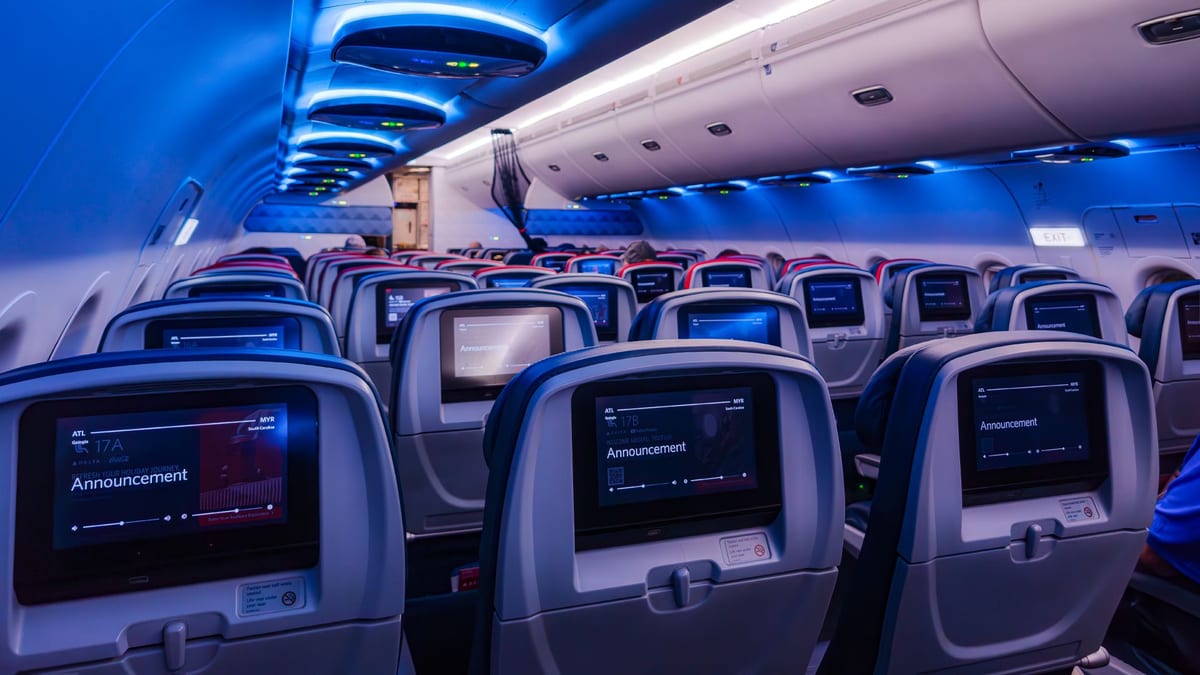
Image by Simple Flying
Seat Pitch Becomes a Key Differentiator Again
Economy seat pitch, the distance from any point on one seat to the same point on the seat in front, has emerged as one of the clearest ways to compare comfort across US airlines in 2026. While overall averages have largely stabilized after years of shrinkage, recent fleet retrofits and cabin densification programs are creating notable winners and losers for passenger legroom.
Published comparisons drawing on 2025 schedules and fleet data indicate that most major US carriers now cluster in a relatively narrow band between about 30 and 32 inches of pitch in standard economy. At the same time, ultra-low-cost carriers continue to operate at the lower end of the range, typically around 28 inches, in exchange for lower base fares.
Industry surveys and consumer reporting suggest that seat pitch has regained importance as travelers weigh trade-offs between price and comfort on increasingly full flights. For taller passengers in particular, even a one- or two-inch difference can mean the gap between being able to work or sleep and spending several hours in a cramped position.
JetBlue and Southwest Lead on Legroom
Among the large US brands, JetBlue continues to stand out for generous economy legroom. Multiple 2025 analyses of domestic fleets report JetBlue’s average standard economy seat pitch in the low 32-inch range, with some aircraft and rows reaching up to about 34 inches without requiring an extra-legroom upgrade. This keeps the New York based carrier at or near the top of US rankings for seat pitch across its mainline network.
Southwest Airlines also remains near the front of the pack, with average economy pitch figures reported around 31.5 to 32 inches on much of its all Boeing 737 fleet. While Southwest has been implementing new cabin layouts and gradually increasing seat density, publicly available comparisons show that its typical legroom still edges out the three largest legacy carriers on many routes.
Travel industry coverage notes that both carriers leverage legroom as part of a broader brand proposition focused on customer friendliness. JetBlue pairs its seat pitch advantage with seatback screens and free Wi-Fi, while Southwest emphasizes the absence of standard change fees and the ability to check two bags on most tickets. In both cases, more generous pitch helps justify slightly higher average fares than some competitors on comparable domestic routes.
Big Three Legacies Cluster Around 30 to 31 Inches
For American Airlines, Delta Air Lines, and United Airlines, the picture in 2026 is one of convergence rather than clear differentiation on basic legroom. Seat maps, fleet guides, and 2025 comparison tables show typical main cabin economy pitch for these three giants falling between about 30 and 31 inches on most narrowbody aircraft, with minor variations by aircraft type and cabin section.
Delta generally appears at the upper end of this range, with standard economy rows often listed in the 30 to 32 inch band depending on aircraft, while American and United show more rows around 30 to 31 inches. Each airline layers an additional extra-legroom product on top of this baseline, such as Delta Comfort Plus, United Economy Plus, or American’s Main Cabin Extra, which can add several inches of pitch at an additional fee.
Industry observers point out that ongoing cabin retrofit programs can temporarily blur these averages. As older layouts are replaced, some aircraft see a reduction of about one inch in standard pitch to accommodate more seats, while others receive newer slimline seats designed to preserve knee room within the same or slightly lower nominal pitch.
Ultra-Low-Cost Carriers Remain the Tightest
At the bottom of the legroom table sit the ultra-low-cost carriers, which trade space for price more aggressively than the rest of the market. Publicly available fleet data and consumer guides indicate that Spirit Airlines and Frontier Airlines typically offer standard economy seat pitch around 28 inches, among the tightest in the US. Some aircraft configurations inch slightly above that, but most of the cabin remains below the 30-inch mark common on legacy carriers.
Both airlines reserve substantially more generous pitch for their fee-based extra-legroom or “stretch” sections, particularly exit row and bulkhead seats. Passengers willing to pay an additional charge can access space closer to, or occasionally above, the 32-inch range, but those figures are not representative of the basic economy experience.
Analysts note that this gap in pitch has become a defining feature of the ultra-low-cost model. By fitting more rows into each aircraft, these carriers can offer headline fares that undercut most competitors, while relying on ancillary revenue from seat assignments, bags, and upgrades to maintain margins. For travelers prioritizing seat comfort over price, however, the roughly four-inch difference between these cabins and the leaders in legroom is increasingly hard to ignore.
What Passengers Can Expect in 2026
Looking across the data available in early 2026, the typical US economy passenger can expect a pitch somewhere between 30 and 32 inches on a full service or large hybrid carrier, and about 28 to 29 inches on an ultra-low-cost airline. Within that band, JetBlue and Southwest generally offer the most space in standard economy, followed by Alaska and Delta, then American and United, with Spirit and Frontier near the bottom.
Consumer advocacy groups and travel analysts advise passengers to look beyond airline brands and examine the specific aircraft type and row when possible. Variations within a single carrier’s fleet can be significant, and cabin reconfigurations are still underway on several major airlines. Seat maps and independent comparison tools can reveal which flights offer a precious extra inch or two.
There is little indication in current fleet plans that US airlines intend to reverse course and meaningfully increase standard economy pitch across the board. Instead, the trend points toward further segmentation, with basic economy maintaining today’s tight dimensions while extra-legroom sections and premium economy cabins attract travelers willing to pay more for space. For now, the comfort gap that has opened up in the US market appears likely to persist throughout 2026 and beyond.