


More news on this day
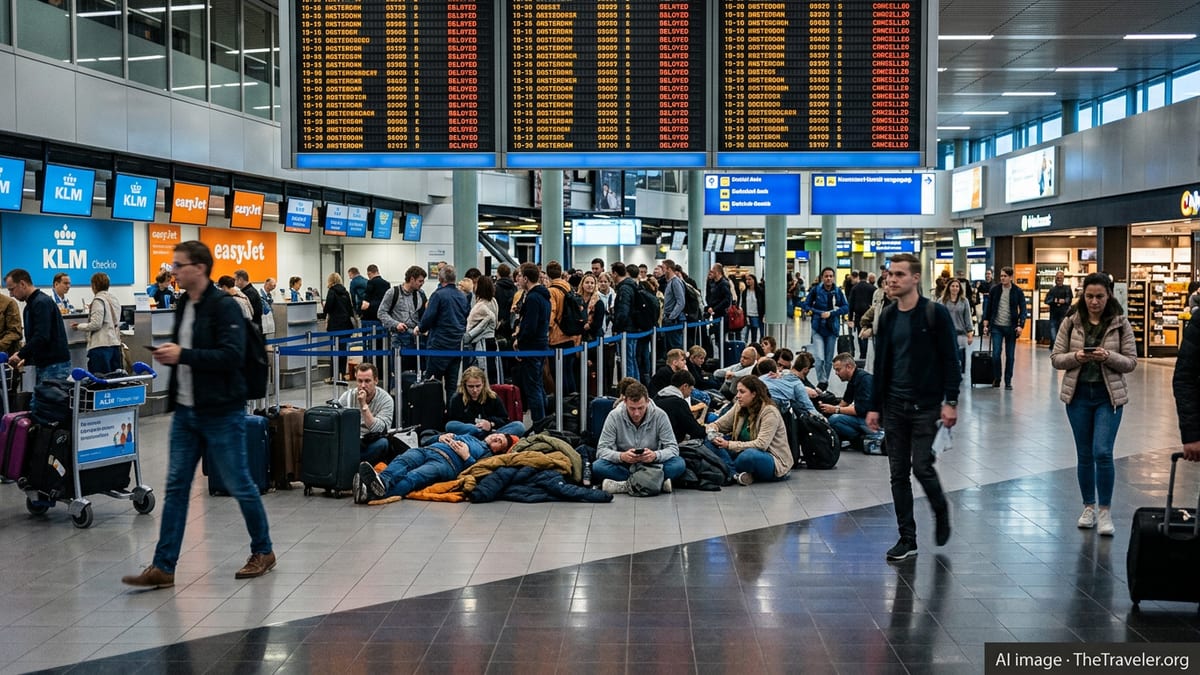
Hundreds of travelers were left stranded at Amsterdam Schiphol Airport as operational data showed 313 flights delayed and 27 canceled in a single day, disrupting key services for KLM, Delta Air Lines, British Airways, Lufthansa, easyJet and other carriers across both European and intercontinental routes.
Get the latest news straight to your inbox!
Severe Disruption at a Major European Hub
Publicly available flight tracking information for Amsterdam Schiphol indicates an intense spike in disruption, with more than 300 flights delayed and several dozen canceled across a single operational day. The combination of rolling delays and targeted cancellations quickly turned one of Europe’s busiest hubs into a difficult environment for passengers trying to reach onward connections.
The latest figures, centered on 313 delayed flights and 27 cancellations, suggest that while outright cancellations affected a smaller portion of the schedule, the far larger wave of delays compounded the impact. Aircraft and crews fell out of position, turnaround times lengthened, and congestion built up as departure slots were repeatedly revised.
Reports from recent disruption patterns at Schiphol show that such events rarely stay confined to a single time window. Even when the immediate cause eases, aircraft and crew rotations can remain imbalanced for hours, leaving travelers facing missed connections, extended layovers, and, in many cases, unexpected overnight stays in or around Amsterdam.
The scale of the interruption also reflects Schiphol’s role as a key transfer point linking regional European services with long haul routes. When operations slow at such a hub, the knock on effects can be felt across multiple continents, with delays at Amsterdam rippling out to departure boards in cities as far apart as London and New York.
Major Airlines and Key Routes Affected
Operational data and published coverage indicate that the disruption reached across a broad mix of airlines. KLM, the Netherlands based flag carrier, faced some of the heaviest operational strain, given its extensive hub and spoke network at Schiphol. Partner airlines such as Delta Air Lines, which relies on Amsterdam as a key European gateway, also encountered disruption to transatlantic schedules.
Other major European carriers, including British Airways and Lufthansa, were affected on short haul and medium haul links into and out of Schiphol. Low cost operators such as easyJet, which use Amsterdam as part of wider point to point networks, also appear within the lists of delayed and canceled services, adding pressure for leisure travelers heading to popular city break destinations.
The pattern of disruption covered both intra European and intercontinental routes. Flights to and from major hubs such as London, Paris and Frankfurt were among those hit by delays, while long haul services toward North America and other international destinations also recorded revised departure and arrival times. With so many airlines sharing codes and coordinating schedules, a delay at one point in the network often cascades into multiple missed or compressed connections elsewhere.
As airlines worked through revised schedules, some passengers were transferred onto alternative routings via other European hubs, while others faced longer waits for the next available departure from Amsterdam. Seat availability on later flights quickly tightened, which is typical when hundreds of disrupted travelers are competing for a limited number of open seats on the same day.
Passenger Experience Inside the Terminals
Accounts from previous disruption episodes at Schiphol provide a picture of what travelers likely encountered as delays and cancellations accumulated. Departure halls tend to become crowded as passengers remain in the terminal longer than planned, while queues form at airline service counters and transfer desks as people seek rebooking options or clarification on their itineraries.
Overnight, disruption of this magnitude can lead to significant numbers of travelers seeking accommodation at short notice. When nearby hotels fill up, some passengers resort to spending the night in the terminal, resting in seating areas while awaiting early morning departures. For those with checked baggage, locating and redirecting bags during a large scale schedule change can add further stress and uncertainty.
Published consumer guidance on recent European flight disruption highlights the importance of using airline apps, text alerts, and airport information screens to monitor evolving departure times. In complex situations, travelers sometimes find that digital tools, including self service rebooking functions in carrier apps, can move faster than in person queues, especially when staff are handling hundreds of simultaneous cases.
The knock on effect for connecting passengers can be especially severe. A relatively modest initial delay on a feeder flight into Amsterdam can cause travelers to miss long haul departures that only operate once per day, or even less frequently, resulting in unplanned 24 hour or longer stays in the Netherlands while waiting for the next available service.
Context of Repeated Disruptions at Schiphol
The latest wave of delays and cancellations fits into a broader pattern of operational challenges at Amsterdam Schiphol in recent months. Previous data sets show days with more than 250 delayed flights and clusters of cancellations driven by a mix of factors, including adverse weather, air traffic management constraints and airline specific scheduling issues.
On earlier occasions this year, Schiphol has stood out among European hubs for the intensity of single day disruptions, with publicly available statistics showing hundreds of affected flights and significant consequences for transfer traffic. Industry analysis suggests that when a large hub experiences even a temporary reduction in capacity, the resulting backlog can take many hours to clear, even after the direct cause has eased.
Regional comparisons with other major airports such as London Heathrow, Frankfurt, Paris Charles de Gaulle and Athens indicate that widespread disruption across several hubs on the same day can further narrow options for rerouting passengers. When alternate gateways are themselves experiencing delays, airlines have fewer reliable options for moving stranded travelers around bottlenecks in the system.
For Schiphol, repeated high impact days put additional focus on the resilience of ground operations, staffing levels, and coordination between airlines, airport management and air traffic control. While each event may have a distinct trigger, the visible outcome for passengers is consistent, with crowded terminals, rolling delay announcements and a complex rebooking process that can stretch across multiple days.
What Travelers Can Do When Flights Are Disrupted
Publicly accessible travel advisories emphasize several practical steps for passengers caught up in large scale disruption at hub airports such as Amsterdam. Monitoring flight status frequently on airline apps or the carrier’s digital channels before leaving for the airport can help travelers spot problems early and explore rebooking options before queues grow on site.
Once at the airport, experts recommend combining in person and digital approaches, such as joining a service desk line while simultaneously attempting rebooking through an app or call center. Given the limited number of available seats after widespread cancellations or long delays, travelers who move quickly often have a better chance of securing acceptable alternative routings.
Information available on European air passenger protection rules indicates that those departing from or arriving into Amsterdam may, in some circumstances, be eligible for care, rerouting or financial compensation, depending on the length of delay, the cause of disruption and whether the flight is operated by an EU or non EU carrier. Travelers are encouraged to retain boarding passes, booking confirmations and receipts for essential expenses such as meals or accommodation, as these documents can be important when submitting claims later.
Recent events at Schiphol and other European hubs underline that even when airlines and airports work to restore normal operations within a day, the practical consequences for passengers can extend well beyond the moment when departure boards begin to look more orderly. Missed events, disrupted holidays, and additional costs can linger, making reliable information and swift, proactive planning essential tools for anyone transiting a busy hub during a period of instability.