

More news on this day
Hundreds of air passengers have been stranded across Poland as a spike in flight disruptions hits major gateways in Krakow, Warsaw and Gdańsk, with publicly available operational data indicating at least 117 delays and 28 cancellations affecting services operated by Lufthansa, Lufthansa CityLine, Buzz, Ryanair and other carriers.
Get the latest news straight to your inbox!
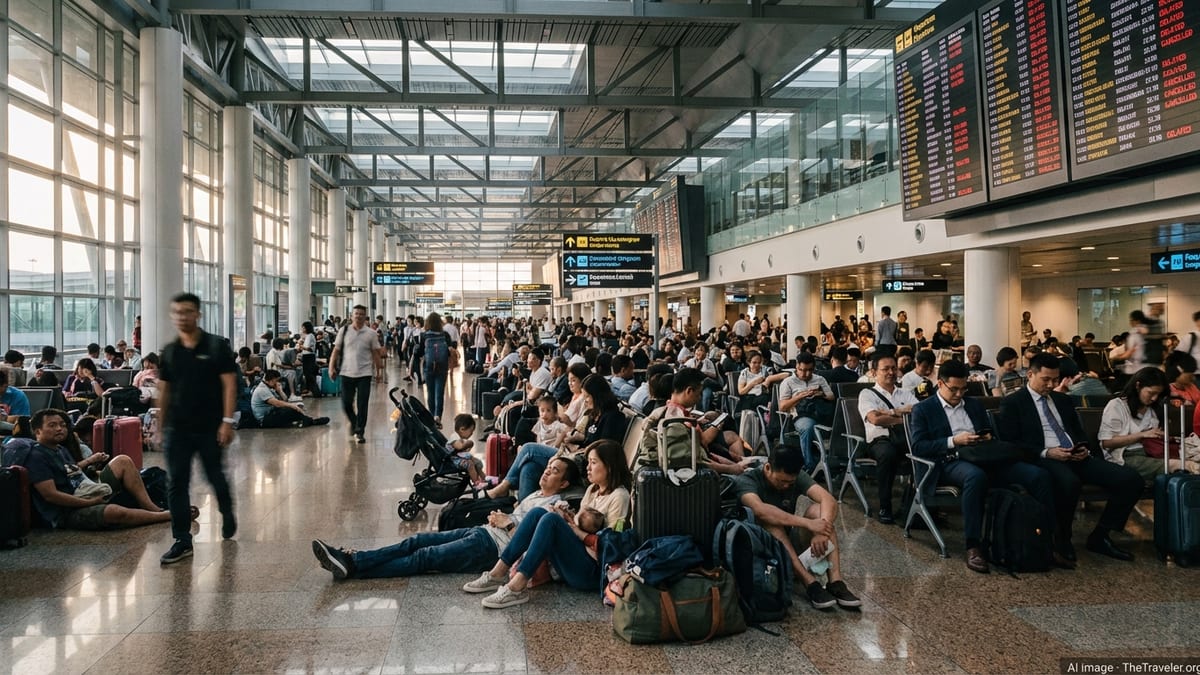
Operational Disruptions Ripple Through Krakow, Warsaw and Gdańsk
Air traffic across Poland entered a fresh period of turbulence in early April 2026 as a wave of delays and cancellations swept through key airports, compounding a broader pattern of European aviation disruption reported in recent days. Network data and published coverage on European flight performance point to hundreds of affected passengers at Krakow John Paul II International Airport, Warsaw’s Chopin and Modlin airports, and Gdańsk Lech Wałęsa Airport, where late-running and grounded aircraft have disrupted tightly wound schedules.
The current episode in Poland mirrors wider pressure on European skies, where analysis of early April operations shows elevated delay levels and significant numbers of cancelled rotations across the continent. Industry statistics for recent months have already highlighted rising en route and ground-handling delays, while individual national bulletins draw attention to localized incidents and congestion that can quickly cascade through airline networks.
In Poland, the impact is being felt most acutely on short and medium haul services within Europe, where high aircraft utilization and short turnaround times leave little margin to absorb disruption. When flights from or to major hubs are delayed or cancelled, aircraft and crews often miss their next scheduled sectors, creating rolling knock-on effects across the day.
With 117 delayed departures and arrivals and 28 outright cancellations linked to the latest disruption, passengers at Krakow, Warsaw and Gdańsk have faced extended waits, missed connections and last-minute rebookings. Published accounts from travelers describe long queues at service desks and crowded departure halls as airlines work through backlogs.
Lufthansa and Lufthansa CityLine Hit by Labor Unrest and Network Strain
Lufthansa and its regional affiliate Lufthansa CityLine sit at the center of some of the latest disruption affecting Polish airports. Publicly available information from European aviation outlets shows that a one-day strike by Lufthansa cabin crew in Germany on Friday, April 10, 2026, has triggered widespread cancellations and delays across the carrier’s network, including services that link Polish cities with the group’s Frankfurt and Munich hubs.
Regional operations flown by Lufthansa CityLine have also been affected, as aircraft and crews based in Germany struggle to maintain normal patterns in the face of labor action and congested hubs. When hub traffic is constrained, feeder routes to and from markets such as Krakow, Warsaw and Gdańsk are among the first to experience knock-on schedule changes, particularly where there are multiple daily frequencies.
The labor dispute comes on top of existing structural challenges. Sector analyses released in recent months have noted that staffing constraints, aircraft maintenance pressures and crowded European airspace have all contributed to rising delay statistics for major legacy carriers. A series of earlier strikes and technical disruptions has already left Lufthansa with a backlog of rebooked passengers and tighter aircraft rotations as it heads into the busy spring and summer travel period.
For Polish travelers relying on connections through Germany for long haul itineraries, the immediate consequences include missed onward flights and involuntary overnight stays in hubs. Passengers whose flights are cancelled or severely delayed may be eligible for support and, in some cases, compensation under European air passenger rights rules, subject to the specific cause and circumstances of each disruption.
Buzz, Ryanair and Low-Cost Networks Under Pressure
The disruption in Poland is not limited to network carriers. Low-cost operators Buzz and Ryanair, both significant players in the country’s short-haul market, have also seen schedules strain under the combined weight of regional congestion and operational bottlenecks. Traffic and punctuality data compiled for Polish airports in recent months show that these carriers operate dense schedules from Krakow and Gdańsk, connecting leisure destinations and secondary cities across Europe, which can amplify the impact of a single delay.
Buzz, a Ryanair subsidiary that runs many flights to and from Polish regional airports, typically relies on high aircraft utilization and quick turnarounds to maintain low costs. When ground handling is slowed or air traffic flow is restricted, rotations can quickly fall behind, resulting in late evening arrivals and, in some cases, cancellations where curfew or crew duty limits are reached. Recent pan-European reports highlighting more than a thousand delayed flights and over a hundred cancellations in a single day underscore how quickly disruption can spread across interconnected low-cost networks.
Ryanair’s operations from Krakow, Warsaw Modlin and Gdańsk have been affected in a similar way. With aircraft often scheduled for multiple sectors per day across different countries, a delay originating from weather, technical checks or traffic restrictions in one region can reverberate through later legs that touch Poland. Where inbound aircraft arrive significantly late, outbound departures may be rescheduled, consolidated onto other services or, in tighter cases, canceled.
While low-cost carriers traditionally recover quickly from isolated incidents, the current situation is complicated by broader European capacity constraints and a series of overlapping events in early April. Travelers on affected flights in Poland have reported extended boarding delays and last-minute gate changes as airlines try to keep as much of the timetable operating as possible.
Infrastructure Constraints and Wider European Context
The difficulties at Krakow, Warsaw and Gdańsk are unfolding against a backdrop of tighter airspace and infrastructure constraints in Central and Eastern Europe. Publicly available information on logistics and aviation in Poland points to recent operational challenges at Warsaw Chopin Airport, as well as temporary airspace restrictions over eastern parts of the country introduced for security and safety reasons, both of which can reduce routing flexibility and delay recovery.
Across Europe, network briefings in early 2026 have flagged a range of localized incidents that contribute to delay growth, from technical issues at air traffic control centers to staffing shortages and weather-related ground stoppages. Analysis of performance data over the past decade shows that en route delays in the region have more than doubled, even though overall traffic has grown at a more moderate pace, creating a structural headwind for on-time operations.
Polish airports are closely integrated into this wider system. Krakow and Gdańsk serve a mix of inbound tourism and outbound labor and leisure travel, while Warsaw functions as both a national hub and a connecting point for regional and long haul services. When disturbances occur at major hubs elsewhere in Europe, those effects often spill into Polish schedules through delayed inbound aircraft, missed slots and disrupted crew rotations.
The current cluster of 117 delays and 28 cancellations associated with Polish airports reflects this interconnected reality. While individual causes differ from flight to flight, the picture that emerges is one of stressed capacity on the ground and in the air, where even routine issues can tip operations into widespread disruption.
What Stranded Passengers in Poland Can Expect
For travelers caught up in the latest disruptions at Krakow, Warsaw and Gdańsk, the immediate priority is rebooking and, where necessary, arranging accommodation and subsistence while waiting for replacement services. Publicly available guidance on European Union air passenger rights notes that, under Regulation EC 261, airlines operating from EU airports must provide care in the form of meals, refreshments and hotel stays when delays exceed certain thresholds, and rerouting or refunds where flights are canceled.
Eligibility for financial compensation depends on the length of the delay and whether the disruption falls within the airline’s control. Events such as internal staffing issues or certain types of technical problems are typically treated differently from extraordinary circumstances like severe weather or air traffic control strikes. Travelers are often advised to keep boarding passes, booking confirmations and any written communication from airlines to support later claims.
In practical terms, passengers stranded in Poland during the current wave of disruption can expect longer queues at check-in and service counters, heavier call center traffic and, in some cases, limited availability on alternative flights during peak periods. Many airlines provide digital tools within apps or on websites that allow customers to rebook, track flight status and, where applicable, initiate claims without waiting in line at the airport.
As Europe moves toward the peak summer travel season, the situation in Poland serves as another indication of how sensitive the aviation system remains to shocks, whether from labor disputes, infrastructure constraints or broader network congestion. For now, travelers planning trips to or from Krakow, Warsaw and Gdańsk are likely to pay closer attention to real-time flight information and build in more flexibility as airlines work to stabilize their schedules.