


More news on this day
Hundreds of passengers found themselves stranded at Amsterdam Schiphol Airport as operational data showed 313 flights delayed and 27 canceled, disrupting a wide range of domestic and international services on carriers including KLM, Delta Air Lines, British Airways, Lufthansa and easyJet.
Get the latest news straight to your inbox!
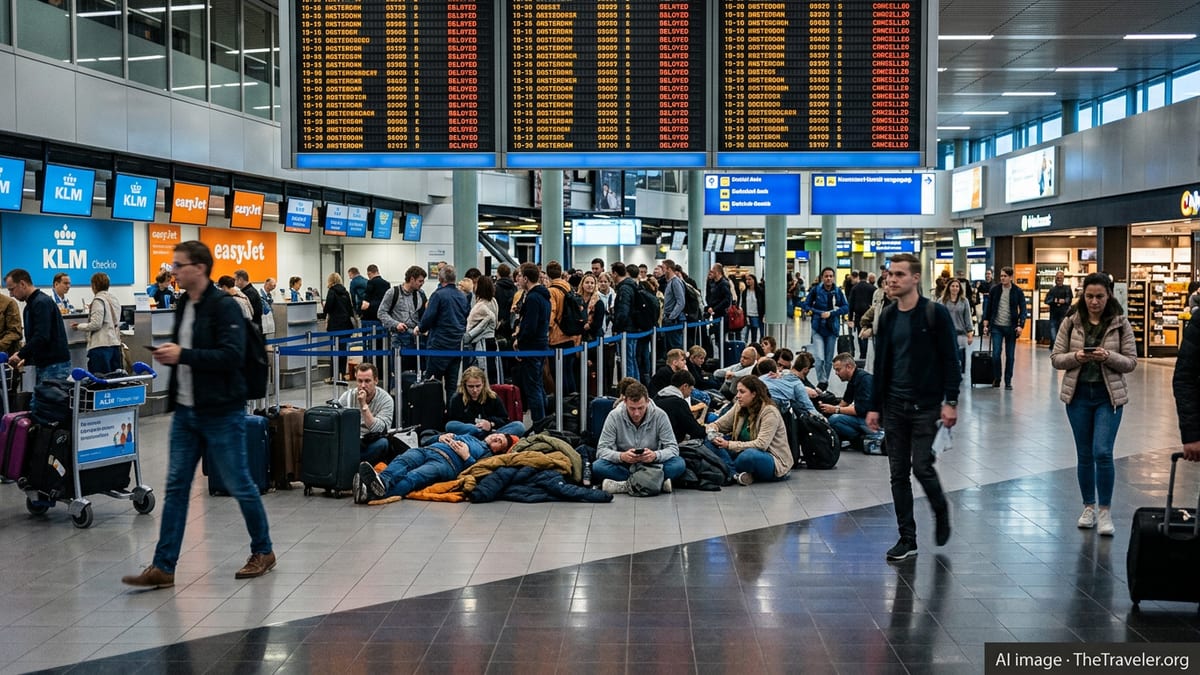
Wave of Delays and Cancellations Ripples Through Key Routes
Publicly available flight tracking snapshots and industry summaries indicate that Schiphol experienced one of its most difficult recent days as delays and cancellations built across the schedule. The disruption affected morning, afternoon and evening banks of flights, creating mounting knock-on effects for both point to point travelers and those connecting through the Dutch hub.
The 313 delayed and 27 canceled flights spanned short haul routes within the Netherlands and wider Europe as well as long haul links. Services to major cities such as London, Paris, Frankfurt and other large European gateways were among those impacted, with reports indicating missed onward connections and lengthy queues at customer service desks as passengers tried to salvage their itineraries.
Long haul operations were also affected as late arriving feeder flights from across Europe complicated aircraft rotations and crew assignments. Transatlantic and intercontinental services operated by KLM and its partners, as well as flights marketed by Delta Air Lines, British Airways, Lufthansa and other airlines that depend on Schiphol as a transfer point, experienced rolling delays as the day’s disruption unfolded.
Travel industry coverage notes that while the majority of flights eventually departed, even relatively modest delays on early services quickly cascaded into wider network challenges. As aircraft and crews ended up out of position, airlines were forced to trim some rotations entirely, contributing to the 27 recorded cancellations.
Impact on Airlines Using Schiphol as a Major Hub
Amsterdam Schiphol is the main international gateway for the Netherlands and a core hub for KLM and its alliance and codeshare partners. Airport traffic reports and airline data show that KLM, Delta Air Lines, British Airways, Lufthansa and easyJet are among the most significant operators at the airport in terms of daily movements and passenger volumes, which magnifies the effect of any disruption on their networks.
On the day of the latest disruption, publicly compiled statistics suggest that KLM bore a substantial share of the delays and cancellations, reflecting its dominant presence at Schiphol and its role in feeding long haul services through the hub. Delta Air Lines and other transatlantic partners were also exposed as missed European connections spilled over into widebody departures to North America and beyond.
European carriers including British Airways, Lufthansa and easyJet saw schedules on key city pairs disrupted as congestion at Schiphol affected both departures from Amsterdam and inbound flights relying on timely turnaround slots. For some airlines, relatively small numbers of canceled rotations still translated into hundreds of affected passengers because of the high load factors typical of the early summer travel period.
Analysts note that congestion at one major hub tends to create knock-on effects across a broad geography. Delays out of Amsterdam can cascade into later rotations at London, Frankfurt, Munich and other airports served by the same aircraft, extending the impact of Schiphol’s operational difficulties well beyond the Netherlands.
Passengers Face Long Queues, Missed Connections and Overnight Stays
Reports from recent disruption events at Schiphol, along with the latest operational data, show that passengers caught in such waves of delays often face extended waits in terminal areas, long lines for rebooking and customer service, and challenges securing hotel rooms once it becomes clear they will not depart the same day.
Travel accounts from previous episodes at Amsterdam describe families sleeping on terminal floors, travelers waiting hours to speak with airline representatives, and confusion about rebooking options as airline apps and websites struggle to keep pace with rapidly changing schedules. The latest figures on 313 delays and 27 cancellations suggest a similar pattern, with hundreds of people needing new itineraries at short notice.
Missed connections remain one of the most acute consequences for travelers using Schiphol as a transfer point. A delayed feeder flight from a regional city can cause passengers to miss a long haul departure to destinations such as New York or other intercontinental hubs, potentially adding days to a journey if alternative long haul seats are scarce during peak travel periods.
While many travelers eventually reach their destinations, the combination of uncertainty, added expenses and fatigue continues to fuel debate about resilience across European aviation networks, particularly during periods of high demand or adverse operating conditions.
What Is Known About the Causes of the Disruption
Recent reporting on similar disruption days at Schiphol points to a mix of contributing factors that can include adverse weather, air traffic control restrictions, congestion on the ground and resource constraints across airport and airline operations. In such circumstances, delays can mount even when no single dramatic incident occurs, as each small hold pushes aircraft and crews further off their planned rotations.
Analyses of comparable days in the current travel season across Europe show that summer peak traffic loads can stretch airport systems already operating close to capacity. When severe weather or airspace restrictions arise over parts of the continent, airlines may be forced to slow or reroute services, which can in turn lead to late arrivals, missed departure slots and last minute schedule changes.
At hub airports such as Schiphol, these forces are amplified because many flights are designed to connect in tightly scheduled banks. If one wave of arrivals runs late, the carefully constructed pattern of onward departures begins to unravel, leaving airlines with few spare aircraft or crew to recover quickly. This structural vulnerability has been highlighted repeatedly by passenger advocacy groups and aviation analysts during recent seasons.
Public information released after earlier disruption episodes in the Netherlands and neighboring countries indicates that aviation authorities, airports and airlines are attempting to adjust staffing and capacity planning ahead of peak days. However, continued reports of large numbers of delayed and canceled flights demonstrate that the system remains sensitive to shocks, whether related to weather, technical issues or broader operational constraints.
Passenger Rights and Practical Guidance for Affected Travelers
Consumer organizations and legal information platforms emphasize that many travelers affected by significant delays or cancellations at European airports may have protections under European air passenger regulations. These rules can, in certain circumstances, entitle passengers to care such as meals and refreshments, hotel accommodation for overnight disruptions, and in some cases financial compensation.
Eligibility typically depends on several factors, including the length of the delay at arrival, the distance of the flight and the reason for the disruption. If an airline can demonstrate that the disruption was caused by extraordinary circumstances outside its control, compensation may not be owed, although assistance at the airport may still be required. Passengers are generally advised to keep boarding passes, booking confirmations and receipts for any out of pocket expenses incurred during the disruption.
Travel guidance published by passenger rights advocates suggests that affected travelers should monitor airline apps and airport departure boards frequently, as schedules can change multiple times during a major disruption. Checking in with airline digital channels before leaving for the airport may help passengers avoid unnecessary trips if their flight is already heavily delayed or canceled.
Experts also recommend that travelers consider built in buffers for critical journeys during peak seasons, particularly when relying on tight connections through busy hubs like Amsterdam Schiphol. Longer connection times, flexible tickets and comprehensive travel insurance are frequently cited as ways to reduce exposure to the kind of large scale disruption reflected in the latest figures of 313 delays and 27 cancellations at one of Europe’s busiest airports.