

More news on this day
Hundreds of passengers were stranded or facing hours-long waits across Canada today as airlines including Air Canada, WestJet, Emirates and Porter canceled 29 flights and delayed a further 356 services at major hubs in Toronto, Vancouver, Montreal, Calgary and Ottawa.
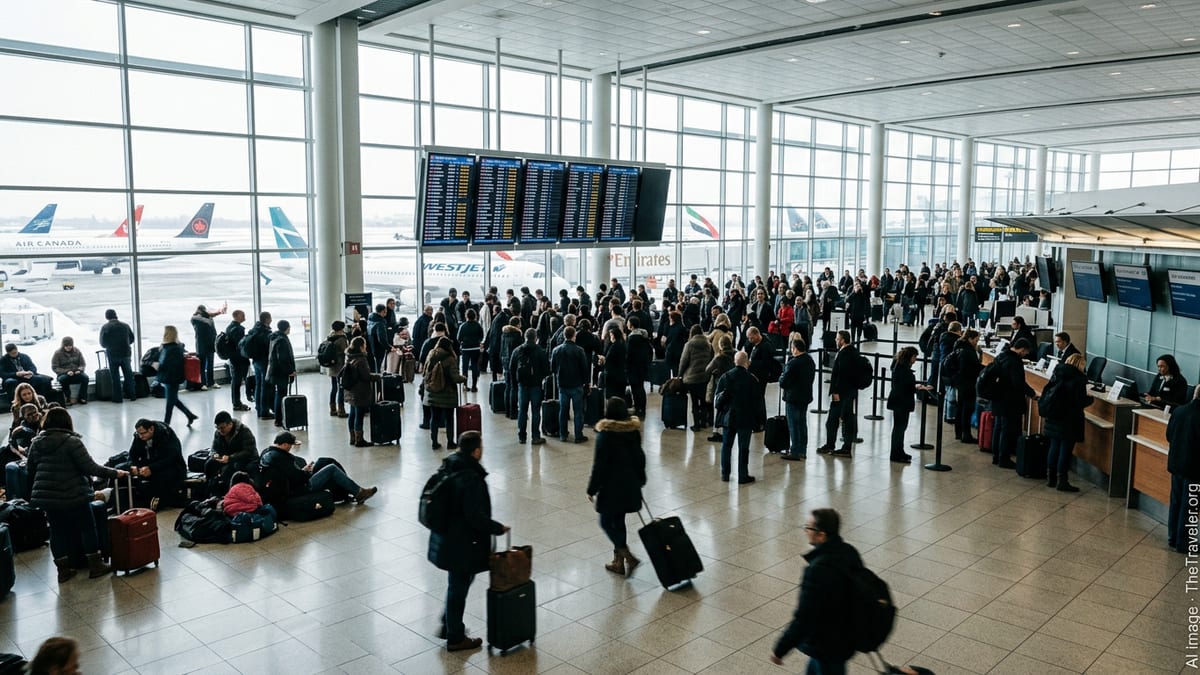
Major Hubs Grapple With Wave of Cancellations and Delays
By midafternoon, operations at Canada’s busiest airports had slowed markedly as ground crews, air traffic control and airline operations centers worked to manage the mounting backlog. The bulk of the 29 cancellations and more than 350 delays were concentrated at Toronto Pearson, Vancouver International, Montreal Trudeau, Calgary International and Ottawa International, affecting both domestic and international routes.
National carriers Air Canada and WestJet accounted for a significant share of the disruption, while international operators such as Emirates and a number of regional and low cost airlines, including Porter Airlines, were also forced to scrub or significantly delay flights. Passengers reported long lines at check in counters and service desks, along with congested departure halls as travelers waited for rebooking options and updated departure times.
The knock on effects were felt well beyond the affected hubs, as aircraft and crew scheduled to operate onward services from Toronto, Vancouver, Montreal, Calgary and Ottawa were delayed or taken out of rotation. This created a cascading pattern of late departures and missed connections that extended to smaller Canadian cities and several U.S. destinations.
While airlines did not immediately publish a unified explanation, operations teams cited a combination of weather related constraints, tight aircraft and crew rotations and residual scheduling pressures from a busy late winter travel period as key drivers behind today’s disruption.
Passengers Face Long Queues, Missed Connections and Overnight Stays
For travelers already in transit, the operational challenges quickly translated into real world setbacks. Families returning from school break holidays, business travelers shuttling between major cities, and international visitors connecting through Canada’s hubs all reported missed connections and uncertain rebooking timelines.
At Toronto Pearson and Vancouver International, passengers described lines stretching through terminal check in zones as travelers sought assistance with rebooking and accommodation. Many were handed meal vouchers or hotel information sheets while they waited for confirmation of new itineraries. Others reported being advised that the earliest available alternative flights would not depart until later in the week due to limited spare capacity on key routes.
In Montreal and Calgary, where both domestic and transborder operations were heavily affected, travelers trying to connect to regional destinations in Atlantic Canada, the Prairies and the United States faced particular difficulty. Limited frequency on some of these routes meant that a single canceled or heavily delayed flight could add one or more unplanned days to a journey.
Social media feeds filled with images of crowded departure lounges and departure boards dominated by delayed indicators. Some passengers opted to abandon their flights and arrange last minute train, rental car or intercity bus travel instead, particularly on corridors such as Toronto–Ottawa and Montreal–Ottawa where ground alternatives are more accessible.
Operational Pressures Behind the Disruption
Industry analysts note that Canada’s airlines and airports are still operating with relatively little slack in their systems during peak periods, a reality that leaves them vulnerable when several operational stressors coincide. Today’s problems followed a series of weather systems that recently swept across parts of Ontario, Quebec and the western provinces, contributing to earlier delays, de icing backlogs and aircraft being out of position.
That residual disruption, combined with tight crew scheduling and high seat demand during the late winter travel window, meant that airlines had limited flexibility to recover quickly when new issues arose. Once crews reach regulated duty time limits or aircraft miss narrowly timed rotation windows, carriers are often forced to cancel or combine flights to keep the broader schedule operating.
International services were not immune. Widebody aircraft arriving late from overseas could not always be turned around in time to operate their next departures from Canadian hubs, affecting long haul itineraries to Europe, the Middle East and Asia. Emirates and other foreign carriers operating into Toronto and other major gateways were among those reporting off schedule operations, adding further complexity to already strained airport resource planning.
Airports themselves must also juggle runway configurations, snow or rain removal when needed, and the allocation of gates and ground handling teams. Even modest weather fluctuations or short term staffing shortages can magnify the impact of late arriving aircraft when terminals are running close to capacity.
Guidance for Affected Travelers
As the day wore on, airlines urged passengers to check their flight status online or via mobile apps before heading to the airport, and to opt into text or email notifications where available. Travelers with flexible plans were encouraged to rebook onto later dates or off peak departures, which can open space for those with more urgent needs such as onward international connections or time sensitive commitments.
Consumer advocates reminded passengers that under Canada’s Air Passenger Protection Regulations, travelers on flights that are canceled or heavily delayed for reasons within an airline’s control may be entitled to assistance such as meals, accommodation and, in some cases, financial compensation. Determining eligibility depends on factors including the length of the delay, the size of the carrier and whether the disruption is classified as within or outside the airline’s control.
Experts advised stranded travelers to keep all documentation related to their journey, including boarding passes, delay or cancellation notifications and receipts for unexpected expenses such as meals, ground transport or overnight stays. These records can be vital when submitting claims to airlines or, if needed, escalating disputes through complaint resolution bodies.
Given the scale of today’s disruption, recovery is expected to continue into the coming days as airlines reposition aircraft and crew and work through rebooked passenger backlogs. Travelers scheduled to fly through Toronto, Vancouver, Montreal, Calgary or Ottawa in the near term are being told to build in additional buffer time for connections and to monitor their itineraries closely in case further schedule adjustments are required.