

More news on this day
Dallas–Fort Worth International Airport experienced widespread disruption today as 228 flights were reported delayed and at least four cancelled, leaving passengers stranded across terminals and rippling disruption through American Airlines, Southwest, Spirit and other carriers on domestic and international routes.
Get the latest news straight to your inbox!
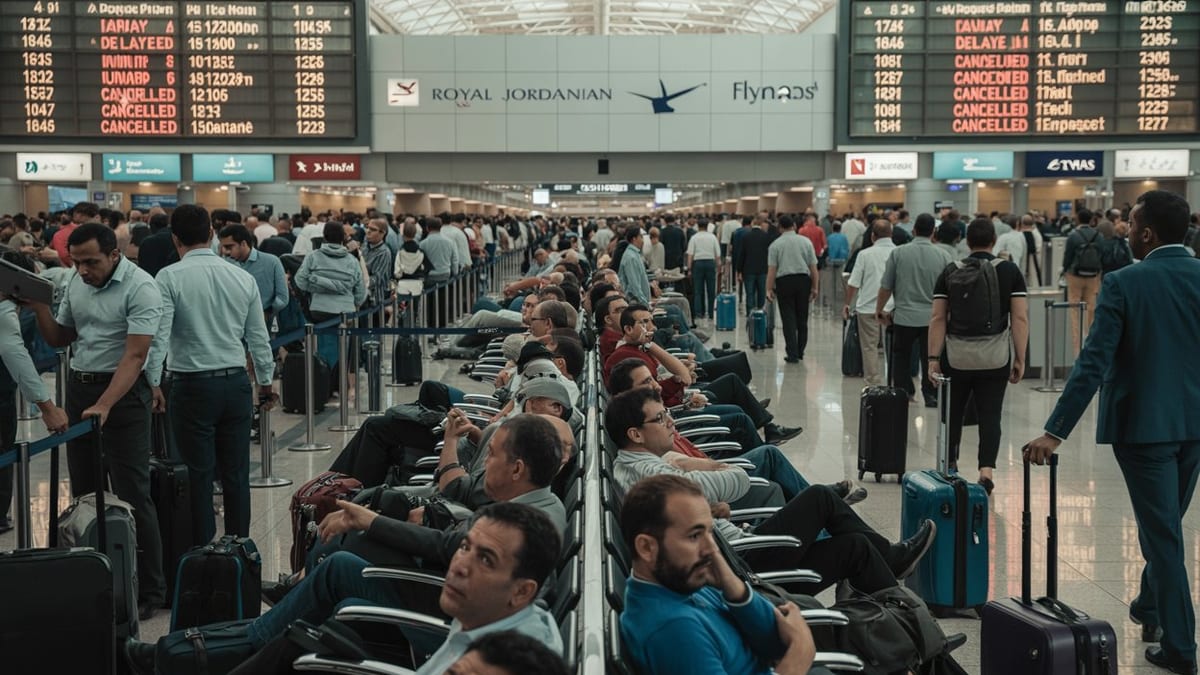
Image by Travel And Tour World
Operational Turbulence at One of the World’s Busiest Hubs
Publicly available flight-tracking data for Dallas–Fort Worth International Airport shows a sharp spike in delays today, with 228 flights pushed back from their scheduled departure or arrival times. At least four flights were listed as cancelled, a relatively small number in absolute terms but enough to amplify the disruption for connecting passengers across the network.
American Airlines, which uses DFW as its largest hub, appeared to bear the brunt of the schedule upheaval, with delays spreading across its banked departures to major cities such as New York, Los Angeles, Chicago and Miami. Southwest Airlines, Spirit Airlines and several other domestic and international carriers also showed delayed departures and arrivals, underscoring how quickly a single congested hub can become a pressure point for the wider U.S. system.
Reports indicate that some aircraft remained at gates well past scheduled departure times while others circled in holding patterns or diverted as arrival slots tightened. Even when delays were measured in minutes rather than hours, the cumulative impact was visible in crowded concourses, long customer-service lines and revised connection windows that left travelers anxious about making their next flights.
While the number of outright cancellations remained limited compared with major storm events in recent years, the mix of rolling delays and scattered cancellations created an unpredictable travel day. Passengers faced a patchwork of status updates, from “on time” to “delayed” and “gate change,” often within the span of an hour.
Weather, Congestion and Knock-On Effects
Conditions at major hub airports across the central United States have been volatile in recent weeks, with winter systems producing a combination of storms, strong winds and low visibility. Historical data from recent seasons shows that even when Dallas–Fort Worth itself avoids the worst of a storm, weather affecting inbound aircraft elsewhere can cascade into the DFW schedule, tightening turnaround times and reducing available crews.
Operational analyses published in aviation and transportation reports highlight how afternoon and evening banks of flights are especially vulnerable to this “knock-on” effect. A relatively minor delay on an early segment can follow an aircraft throughout the day, contributing to late arrivals into DFW and compressing connection times. When multiple inbound flights arrive late, gate availability, ramp operations and baggage handling all come under strain, creating further slowdowns.
Today’s disruption at DFW appears consistent with this pattern. Flight-tracking boards showed clusters of delays during peak connection periods, suggesting a combination of weather-related impacts elsewhere in the country, air traffic management constraints and routine operational challenges such as aircraft repositioning and crew scheduling. Once departure slots begin to stack up at a hub airport of DFW’s scale, recovery can take hours even after the initial cause has eased.
Industry data from prior years underscores the sensitivity of DFW to weather and congestion, reflecting its role as a central crossroads for coast-to-coast and north–south traffic. This structural role means that delays rarely remain local; they tend to propagate quickly across the domestic network and onto international services.
Passenger Experience: Missed Connections and Overnight Stays
For travelers passing through DFW today, the statistics translated into missed connections, improvised overnight stays and mounting frustration. Social media posts and online travel forums featured images of crowded concourses, long queues at customer-service counters and families camping in seating areas as they waited for updated departure times.
Some passengers reported multiple rolling delays on a single itinerary, with departure times pushed back in 30 to 60 minute increments before flights eventually left the gate. Others described being rebooked onto later services that themselves became delayed, creating multi-leg journeys that stretched into full-day ordeals. In several cases, travelers attempting to reach smaller regional destinations from DFW found that a delayed inbound flight meant their final connecting segment was among the small number of cancellations.
Travel commentary in recent months has noted that hubs like DFW can become particularly challenging for connecting passengers when disruption strikes. Travelers arriving on delayed international flights, for example, may face tight or missed domestic connections after clearing immigration and security. Those who miss final departures of the evening are frequently forced to seek hotel rooms at short notice or spend the night in the terminal.
Today’s events followed this familiar pattern, with travelers documenting searches for last-minute accommodation and alternative routings through other hubs such as Houston, Denver or Phoenix. Some turned to low-cost carriers including Southwest and Spirit for replacement flights, often at elevated last-minute fares, while others opted to delay or abandon their trips altogether.
Network-Wide Repercussions Across the United States and Beyond
Because DFW is a central node in the American Airlines network and a significant destination for other carriers, disruptions there have a magnified effect across the United States and on select international routes. Publicly available flight-status boards showed delays radiating out from Dallas to major coastal gateways as well as to mid-sized regional airports that depend heavily on connections through the North Texas hub.
Passengers bound for airports in the Midwest, Southeast and Mountain West reported longer than usual itineraries as they were rerouted or forced to wait for later departures. At the same time, several long-haul international services operated through DFW experienced schedule adjustments, with later departures from Dallas potentially leading to missed onward connections in Europe and Latin America.
Analysts who track airline performance note that such disruptions can linger in the system for at least a full operating day. Aircraft and crew rotations are carefully choreographed, and a backlog of delayed departures from one hub can affect aircraft availability at another, sometimes thousands of miles away. Even routes not directly touching DFW may feel secondary impacts when aircraft that were scheduled to operate them arrive late from previously affected segments.
In the short term, today’s pattern suggested that airlines operating from Dallas–Fort Worth were prioritizing the stabilization of long-haul and high-demand trunk routes while attempting to gradually re-accommodate passengers from cancelled or heavily delayed flights. Travelers on smaller regional routes, particularly late in the day, appeared more likely to face extended waits or overnight disruption.
What Travelers Can Do on Heavy Disruption Days
Today’s events at DFW add to a growing list of recent disruption episodes that have prompted consumer advocates and travel specialists to refine their advice for passengers. Guidance commonly emphasizes monitoring both the origin and destination legs via airline apps, signing up for push alerts and checking the status of the inbound aircraft that will operate a given flight. These steps can provide early warning of looming delays before information appears on terminal departure boards.
Seasoned travelers also recommend building in additional connection time when transiting through large hubs prone to congestion, particularly during winter and early spring when weather volatility is common. For DFW, this can mean choosing slightly longer layovers rather than the shortest available options, reducing the risk of misconnecting when schedules begin to slip.
When disruptions escalate, published consumer guidance encourages passengers to explore multiple options simultaneously, including rebooking through alternative hubs, considering other carriers and evaluating whether an overnight stay might provide a more predictable onward journey. On days like today, with more than 200 delays recorded at a single hub, flexibility and rapid decision-making can significantly improve outcomes.
As airlines and airports continue to refine their operations and invest in technology intended to improve resilience, episodes such as today’s at Dallas–Fort Worth International Airport highlight the ongoing vulnerability of the air travel system to weather, congestion and complex network interdependencies. For travelers, the events serve as another reminder that even routine itineraries can be disrupted when a key hub experiences sustained operational strain.