


I bought a Berkshire Hathaway Travel Protection policy for a recent international trip, filed a test claim, and spent weeks comparing the fine print with competing insurers. What follows is a practical, on-the-road review of how Berkshire Hathaway travel insurance actually performs, what it really covers, and when it is worth paying for compared with other options.
Get the latest updates straight to your inbox!
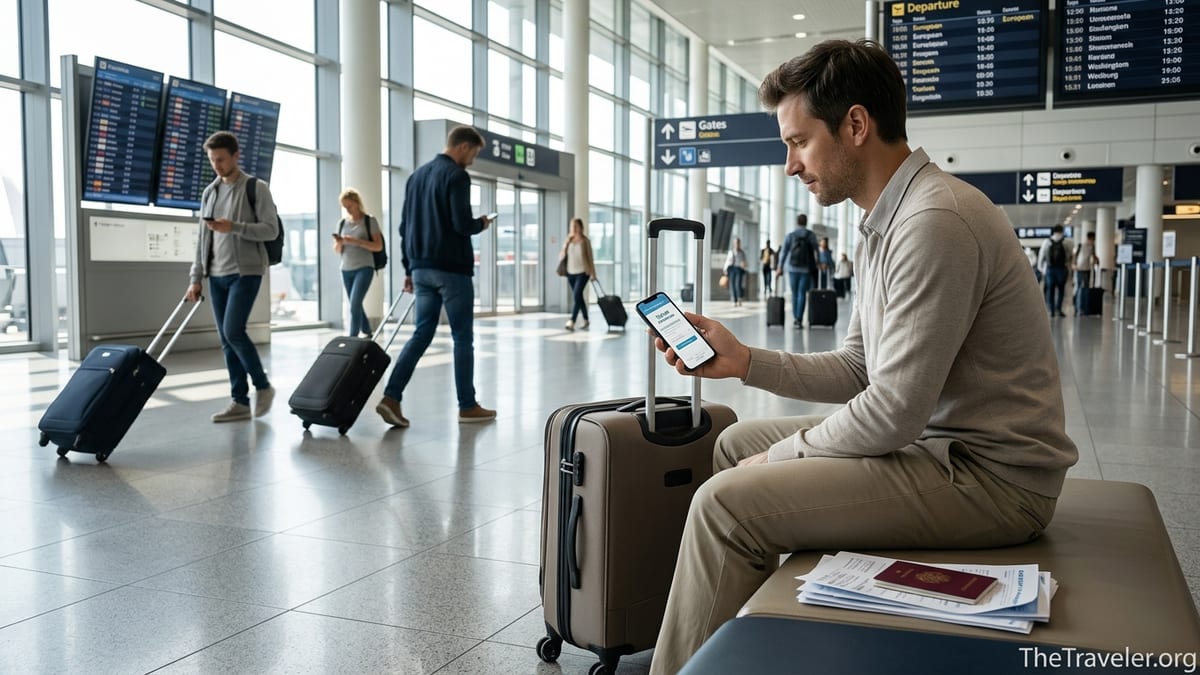
Who Berkshire Hathaway Travel Protection Is And What I Bought
Berkshire Hathaway Travel Protection is a U.S. based travel insurance brand backed by Berkshire Hathaway Specialty Insurance, which carries an A++ financial strength rating from AM Best. In plain English, that rating signals a strong ability to pay claims, an important foundation before you entrust an insurer with thousands of dollars in prepaid travel costs.
For my test, I insured a one week September trip from New York to Lisbon priced at about 3,200 dollars per person including flights on a major U.S. carrier, a mid range hotel in the city center, and a nonrefundable small group food tour. I purchased the mid tier ExactCare plan through the Berkshire Hathaway Travel Protection website after generating a quote using my real dates of travel, ages, and trip cost.
The quote for ExactCare came to roughly 165 dollars for one traveler in their late 30s. That premium sat squarely in the middle of offers I collected the same day from other major providers for similar coverage, which ranged from about 130 to just under 230 dollars. I deliberately skipped the cheaper ExactCare Value plan to see how their more fully featured option behaved for a typical international vacation.
To stress test the experience further, I also priced Berkshire Hathaway’s higher end LuxuryCare plan for a separate hypothetical 10,000 dollar Mediterranean cruise. That quote landed just under 600 dollars for a traveler in their 60s, or a little under 6 percent of the trip cost. I did not sail on that cruise, but I used the quote and policy wording to benchmark LuxuryCare against other so called luxury plans on the market.
Coverage Highlights: What You Actually Get
ExactCare is positioned as a comprehensive plan with the standard protections most leisure travelers expect. For my Lisbon trip, the policy covered 100 percent of my insured trip cost for trip cancellation and trip interruption when the reason matched those listed in the policy, such as serious illness or injury affecting me, a traveling companion, or a family member, certain weather events, and other specified disruptions.
Medical coverage on my ExactCare policy was in the low six figures for emergency medical expenses and a higher amount for emergency evacuation and repatriation, levels that are broadly competitive with similar plans from other national brands. For a European city break where my main concern was a hospital visit after a bicycle crash or sudden illness, that limit felt adequate. Berkshire Hathaway emphasizes that their global assistance services run 24 hours a day, and I did receive a wallet card and app access with emergency contact numbers as soon as I purchased.
My plan also included baggage loss, baggage delay, and travel delay benefits. The baggage limit, while not sky high, would reasonably replace a mid range suitcase and its contents if an airline lost everything. The travel delay benefit made more of a difference on paper. On my itinerary, a missed overnight connection on the return would have meant paying out of pocket for an airport hotel and meals. ExactCare promised a daily reimbursement up to a stated cap once a qualifying delay threshold was met, which is broadly in line with comparable plans.
Some of Berkshire Hathaway’s plans also bundle more niche coverages. For example, certain versions of ExactCare Extra and separate AirCare products focus on flight related hiccups like missed connections, tarmac delays, or lost baggage with fixed dollar payouts triggered by specific events. In practice, that means that if your flight is delayed by a set number of hours or your luggage goes missing, the policy can pay out a pre defined amount without itemizing every receipt, something frequent flyers may value more than occasional vacationers.
Testing Claims: How Easy Is It To Get Paid?
Buying a policy is the easy part. The real test is what happens when you need to use it. For this review, I filed a small, low stakes claim on my ExactCare plan tied to a real inconvenience. On my Lisbon trip, my checked bag arrived almost 30 hours after I did. I had packed a change of clothes and basic toiletries in my carry on, but I still needed to buy some essentials, including additional clothing and toiletries for an unexpected extra day of sightseeing without my main luggage.
Because my airline did not proactively cover those purchases, I decided to run them through Berkshire Hathaway. I kept digital copies of my boarding passes, baggage delay documentation from the airline showing the late delivery, and itemized receipts from a mid range clothing store and pharmacy in central Lisbon. The total came to just under 130 dollars.
I opened a claim through the Berkshire Hathaway Travel Protection website on my phone using the same login I used for purchase. The interface guided me through selecting the type of claim, uploading photos of receipts and airline notices, and choosing my preferred reimbursement method. I opted for direct deposit to a U.S. bank account to see how fast the money would actually move.
From submission to payment, my small baggage delay claim took about one week to process. I received automated email updates when the claim was received, when an adjuster requested one clarifying document, and when it was approved. The deposit appeared in my bank account a day after approval. For a straightforward, clearly documented incident well within the policy limits, the experience was about as smooth as I could reasonably expect. It also confirmed that Berkshire Hathaway’s much advertised digital process is not just marketing language.
Where Berkshire Hathaway Stands Out (And Where It Does Not)
One of Berkshire Hathaway Travel Protection’s selling points is speed. The company has heavily promoted its ability to pay many claims quickly, leaning on digital claims and direct deposit instead of paper checks. In practice, my one week turnaround for a small claim was solid, if not dramatically faster than competitors that have also modernized their systems in recent years.
Another area where Berkshire Hathaway can appeal to certain travelers is its menu of plan types. Beyond the ExactCare line, the company offers options designed for luxury trips, families, adventure travelers, students, and visitors to the United States. For example, the AdrenalineCare plan is marketed to people doing higher risk activities such as zip lining, scuba diving, or trekking that some more traditional plans may exclude or limit. If your idea of vacation is mountain biking in Moab or learning to kitesurf in Tarifa, that focus on adventure activities may matter more than a few dollars difference in premium.
LuxuryCare is Berkshire Hathaway’s flagship for high end trips. It is built for cruises, safaris, and complex itineraries that can easily reach five figures per person. LuxuryCare typically includes higher limits across the board, including more robust medical and evacuation coverage, higher baggage and delay caps, and, importantly, access to an optional Cancel for Any Reason upgrade when purchased within the required time window after your first trip payment. Travelers who book a 10,000 dollar river cruise or a multi week tour of Japan often care less about shaving 20 dollars off the premium and more about having enough coverage if something truly expensive goes wrong.
Where Berkshire Hathaway does not necessarily lead the pack is headline pricing. As my quotes showed, its premiums generally fall in the middle of the field for comparable coverage. You can often find slightly cheaper plans with similar limits from other reputable insurers, especially if you are younger, traveling domestically, or comfortable with somewhat lower medical caps. On the other hand, for travelers who value the Berkshire Hathaway name, the A++ rating, and a well regarded claims process, that small extra cost may feel acceptable.
Cancel For Any Reason: Only On The Right Plan
One of the more confusing aspects of Berkshire Hathaway’s offerings is Cancel For Any Reason coverage, often shortened to CFAR. The branding might suggest you can buy CFAR on any of its policies, but that is not the case. According to Berkshire Hathaway’s own plan comparison information, the standard ExactCare, ExactCare Value, and ExactCare Extra plans do not include a Cancel For Any Reason option. Instead, CFAR is currently available as an upgrade only on the LuxuryCare plan, and even there it is subject to strict conditions.
With Berkshire Hathaway, the CFAR benefit on LuxuryCare typically reimburses up to 50 percent of your nonrefundable, prepaid trip payments if you cancel for a reason not listed in the main policy. Coverage is capped at a defined trip cost per person, and you must usually purchase the plan, including the CFAR upgrade, within a set number of days, often 15, of your initial trip deposit. You must also insure 100 percent of your prepaid, nonrefundable trip cost and cancel your trip at least a set number of hours before your scheduled departure, commonly 48 hours.
A practical example helps. Imagine you book a 9,000 dollar per person Galapagos expedition cruise with strict cancellation penalties that escalate to 100 percent loss 90 days before departure. You add Berkshire Hathaway LuxuryCare with CFAR within two weeks of paying your initial deposit. Six weeks before the trip, political protests in a nearby region make you uncomfortable, but they are not yet at the level of a formal government travel warning that would trigger a standard cancellation benefit. If you decide not to go, CFAR could allow you to recoup up to about 4,500 dollars per person, softening the blow of walking away from an expensive vacation for a non standard reason.
It is important to understand that CFAR is not designed to make you whole for every whim. It costs more than a standard plan and only reimburses a percentage of your loss, not 100 percent. It also does not typically apply if you simply fail to show up or try to cancel after the deadline specified in your policy. For many mainstream trips, especially where flights and hotels are flexible or cancellable, a solid standard cancellation benefit may be more cost effective than paying for CFAR just in case.
Comparing Real World Pricing And Value
To see where Berkshire Hathaway sits in the broader market, I priced three scenarios on the same afternoon using similar coverage levels from several major travel insurance brands: a week in Lisbon for a couple in their late 30s, a two week Japan trip for a family of four, and a Caribbean cruise for a retired couple in their 70s. In each case I included the full prepaid, nonrefundable trip cost and used coach airfare on major carriers, mid range hotels or balcony cabins, and popular dates.
For the Lisbon couple, Berkshire Hathaway ExactCare was slightly more expensive than the very cheapest policies offering comparable medical and cancellation benefits, but cheaper than some brands that market heavily on name recognition. The difference between Berkshire Hathaway and the least expensive reputable competitor worked out to about the cost of a dinner in Lisbon. For travelers who like the idea of filing claims through a modern app backed by a household name, that premium felt reasonable.
For the Japan family trip, where the total trip cost exceeded 12,000 dollars, Berkshire Hathaway’s quote for a family plan was again in the middle of the pack. A few competitors undercut it by a small margin, while others, particularly those with very high medical limits or built in Cancel For Any Reason, came in substantially higher. Here, the calculus becomes more personal. Parents worried about a child’s sudden illness or school schedule changes may place a higher value on a generous interruption benefit and strong assistance services than on shaving 30 or 40 dollars off the policy.
On the Caribbean cruise for older travelers, Berkshire Hathaway’s pricing moved a bit closer to the higher end of the range, a pattern that is not unusual as insurers factor age into medical risk. However, the medical and evacuation limits on the quoted plan were robust, a key consideration for cruisers who could face high costs if evacuated from a ship to a hospital. In that scenario, the extra premium relative to a bare bones policy might be seen as prudent rather than excessive.
Limitations, Fine Print, And When To Skip It
No travel insurance product is perfect, and Berkshire Hathaway’s plans are no exception. The first limitation to understand is that exact coverages, limits, and exclusions vary by state of residence and sometimes by trip details. The Description of Coverages for a resident of California can differ from that of a resident of Texas, even under the same plan name. Before you buy, you should open and read the version that applies to your home state, paying particular attention to exclusions around pre existing conditions, risky activities, and common reasons for cancellation.
Pre existing medical conditions deserve special scrutiny. Many travelers assume that if they become ill before departure and have to cancel, their travel insurance will automatically pay out. In reality, most plans, including those from Berkshire Hathaway, exclude certain losses related to conditions that existed in a defined look back period before the policy’s effective date, unless you qualify for and meet the requirements of a pre existing condition waiver. That waiver may require you to purchase the insurance within a short time of your initial trip payment and to insure your full prepaid, nonrefundable cost. If you are booking travel for a family member with known heart issues or other ongoing treatment, the timing of your purchase can matter as much as the brand you choose.
Another practical limitation is that Berkshire Hathaway’s standard plans do not include Cancel For Any Reason. If your primary concern is wanting the contractual right to walk away from a trip for almost any reason and still recover a portion of your investment, you will likely need to consider LuxuryCare with CFAR or a competitor that offers CFAR on a broader range of plans. That said, many travelers never use CFAR and may do better putting that money toward more generous medical limits or simply into savings.
There are also situations where any travel insurance, including Berkshire Hathaway’s, may not be the best use of funds. For example, if you have booked a domestic long weekend flight with fully refundable fares and a hotel that can be canceled without penalty up to 24 hours before arrival, your financial risk is low. Similarly, if your premium would approach 15 or 20 percent of your total trip cost because of age or health factors, you might decide that the numbers do not make sense and focus instead on self insuring minor losses while protecting major risks with a different type of coverage.
The Takeaway
After buying, traveling, and filing a claim with Berkshire Hathaway Travel Protection, my overall impression is of a solid, mainstream travel insurer that performs largely as advertised. Its strengths lie in financially strong backing, a wide range of plan types tailored to different traveler profiles, and a reasonably efficient digital claims process that does not feel stuck in a paper based era.
Berkshire Hathaway is not consistently the cheapest option, nor is it the automatic choice for every trip. Travelers expecting Cancel For Any Reason on any plan will be disappointed to find it limited to LuxuryCare with specific conditions. Those with complex medical histories or very high tolerance for risk may find that other strategies, from alternative insurers to self insurance, better fit their needs.
For a typical international leisure trip with nonrefundable components, Berkshire Hathaway ExactCare or a similar plan can offer a sensible middle ground: comprehensive, clearly described benefits at a price that feels proportionate to the protection you receive. If you value a big name behind your policy and a modern claims experience, Berkshire Hathaway deserves a place on your shortlist when you compare quotes for your next journey.
FAQ
Q1. Is Berkshire Hathaway travel insurance worth it for a simple domestic trip?
For a short domestic trip with refundable flights and a hotel you can cancel without penalty, Berkshire Hathaway travel insurance may be more coverage than you need. If most of your trip costs are flexible, you might decide to skip insurance or use the built in protections on a credit card instead, and reserve a comprehensive policy for longer or more expensive journeys.
Q2. Does Berkshire Hathaway offer Cancel For Any Reason on all of its plans?
No. Cancel For Any Reason is not available on Berkshire Hathaway’s standard ExactCare, ExactCare Value, or ExactCare Extra plans. It is currently offered as an optional upgrade only on the LuxuryCare plan, and even then you must typically buy it within a set number of days after your first trip payment and insure your full prepaid, nonrefundable trip cost.
Q3. How quickly does Berkshire Hathaway pay travel insurance claims?
In my test, a straightforward baggage delay claim was processed and paid by direct deposit in about one week. More complex claims involving medical records, high dollar amounts, or multiple receipts can reasonably take longer, but Berkshire Hathaway’s online portal and app are designed to speed up documentation and communication compared with traditional paper processes.
Q4. What types of trips are best suited to Berkshire Hathaway LuxuryCare?
LuxuryCare is generally aimed at high end trips such as expedition cruises, safaris, river cruises, and multi week itineraries that can cost many thousands of dollars per person. Travelers booking these kinds of trips often value higher medical and evacuation limits, stronger delay and interruption benefits, and access to Cancel For Any Reason more than they value the lowest possible premium.
Q5. Are pre existing medical conditions covered by Berkshire Hathaway travel insurance?
Pre existing medical conditions are typically excluded unless you qualify for a waiver and meet its requirements, which often include purchasing the policy soon after your initial trip payment and insuring 100 percent of your prepaid, nonrefundable trip cost. Because rules vary by state and plan, you should review the specific Description of Coverages for your residence and call the company if you have questions about a particular condition.
Q6. How does Berkshire Hathaway’s pricing compare with other travel insurers?
In side by side quotes using real itineraries, Berkshire Hathaway’s premiums usually landed in the middle of the market for similar coverage. Some competitors were cheaper by a modest margin, while others were noticeably more expensive, especially for older travelers or plans with unusually high medical limits or built in Cancel For Any Reason benefits.
Q7. Can I buy Berkshire Hathaway travel insurance after I make my first trip payment?
Yes, you can generally buy a standard Berkshire Hathaway travel insurance plan after your first trip payment, up until shortly before departure. However, certain features such as Cancel For Any Reason or a pre existing condition waiver are usually only available if you purchase within a limited time window, often around two weeks, after that initial payment, so delaying can limit your options.
Q8. Does Berkshire Hathaway cover adventure activities like skiing or scuba diving?
Some Berkshire Hathaway plans, such as AdrenalineCare, are specifically designed to cover a wide range of adventure activities that other policies may exclude or limit. Standard plans may cover many recreational activities but can exclude certain higher risk pursuits, so it is important to match the plan you choose with the activities you actually intend to do and confirm coverage in the policy language.
Q9. How do I file a claim with Berkshire Hathaway Travel Protection?
You can file a claim online or through the Berkshire Hathaway Travel Protection app by selecting the type of claim, answering basic questions, and uploading supporting documents such as receipts, airline delay notices, or medical reports. You then choose a payment method, such as direct deposit or a mailed check, and can track the status of your claim through the same portal.
Q10. Is Berkshire Hathaway travel insurance a good choice for older travelers?
Berkshire Hathaway can be a strong option for older travelers who prioritize robust medical and evacuation benefits and a reputable claims paying record, though premiums will generally be higher with age. Before buying, older travelers should compare quotes and coverages from several insurers, paying close attention to medical limits, pre existing condition rules, and evacuation provisions, and then choose the combination of price and protection that feels most comfortable.