


I booked my first Hilton stay of the year expecting a solid but forgettable experience. For many travelers, Hilton means business conventions, beige ballrooms and copy‑paste rooms you could drop into any city. After a dozen nights across Hilton brands in the past year, from an airport Spark to a Brazilian Motto and a design‑forward Curio, I learned that reputation is out of date. Hilton can still be reliably familiar when you want it to be, but on the ground it is increasingly local, playful and surprisingly personal.
Get the latest updates straight to your inbox!
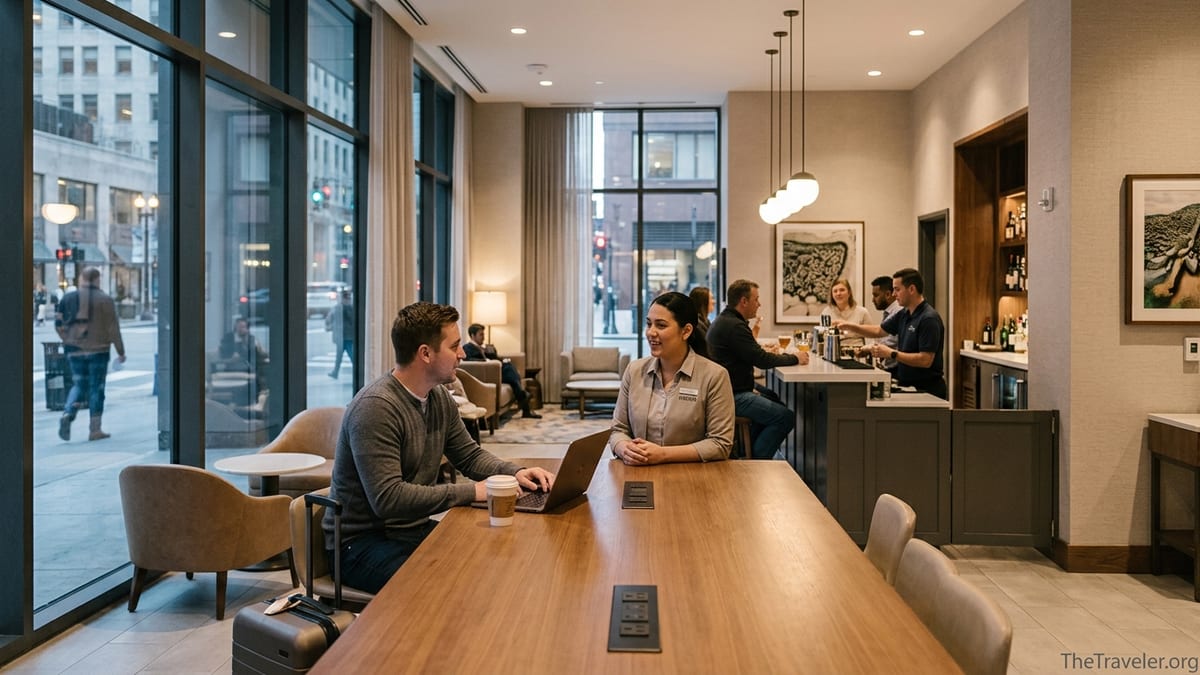
From Beige to Boutique: How Hilton Quietly Evolved
The idea of Hilton as a generic, one‑size‑fits‑all chain comes from its flagship brand, Hilton Hotels & Resorts, which grew into one of the largest full‑service hotel brands in the world. For years, many properties followed a familiar formula: large lobbies, standard rooms, and a predictable layout that made conferences easy but seldom thrilled leisure travelers. That blueprint still exists in convention hubs such as Orlando or Chicago, where you might check into a 1,000‑room Hilton and feel you have seen it all before.
What is less obvious from the outside is how aggressively Hilton has diversified. The company now runs a wide portfolio of brands, from simple “elevated essentials” like Hampton and the newer Spark by Hilton near Charlotte Douglas International Airport, to lifestyle and luxury names such as Canopy by Hilton and Curio Collection by Hilton. Spark’s positioning focuses on clean design and good coffee at a budget‑friendly price, while Curio Collection functions as a “soft brand,” allowing properties like The Monarch San Antonio to keep their independent character while tapping into Hilton systems and loyalty benefits.
Hilton’s own reports highlight how these collections are expanding globally, with openings such as Motto by Hilton Recife Antigo in Brazil and new LXR Hotels & Resorts properties in Japan. Instead of one homogeneous Hilton product, the group now acts more like an umbrella for very different experiences, from micro‑hotels in walkable districts to resort‑style getaways and design‑forward conversions of historic buildings. That strategic shift is what first started to challenge my assumptions about Hilton as “generic.”
Walking into a recent Curio property in Texas, I found a lobby that looked nothing like the beige corporate image in my mind. The Monarch San Antonio has local art, a bar program that leans into regional spirits, and public spaces that feel more like an independent boutique hotel than a chain. Yet I still checked in with my Hilton Honors number, earned points and used the app to choose a room.
The Stay That Changed My Mind: A Night at Motto
If there was one brand that forced me to recalibrate my feelings about Hilton, it was Motto by Hilton. Marketed as a lifestyle micro‑hotel with an urban vibe, Motto is designed for travelers who care more about location and community than sprawling room footprints. In practice, that means compact but clever rooms, social lobbies and food and beverage concepts that reflect the neighborhood rather than a global template.
My first Motto stay was in New York City, in the Chelsea neighborhood. From the street, Motto felt more like a small design hotel than a big‑box chain: a slim glass facade, warm lighting, and a lobby that buzzed with locals grabbing drinks after work alongside guests planning their evening. Room sizes were notably smaller than at a traditional Hilton, but bed platforms had storage underneath, wall hooks replaced bulky wardrobes, and there were USB‑C outlets in exactly the right places. It felt intentionally designed rather than downsized for cost.
What surprised me most was how plugged into the city the property was. Staff recommendations skewed toward nearby independent spots rather than just the tourist‑friendly icons. In Philadelphia and Washington DC, where other Motto properties have opened, the same pattern holds: communal spaces double as neighborhood hangouts, and menus are built around local coffee roasters, brewers or bakers rather than a one‑size‑fits‑all bar menu. Recent expansion into destinations such as Recife in Brazil shows Hilton using Motto to reach travelers who might usually default to hip local brands or hostels, but who still want the reliability of a global chain when it comes to cleanliness and safety.
For a traveler who had always associated Hilton with conference corridors and generic lobby bars, discovering a micro‑hotel line where you might share a long table with digital nomads and city residents felt like a genuine pivot. It is still Hilton, but not as I knew it.
Unexpected Comfort at the Budget End: Tru and Spark
Hilton’s reinvention is not limited to lifestyle brands in city centers. At the budget and midscale end, Tru by Hilton and Spark by Hilton aim to make quick, functional stays feel fresher and less anonymous. Tru is a modern midscale concept that leans into bright colors, simplified room layouts and open lobbies where breakfast, co‑working and casual socializing share the same space. The idea is to strip out frills most guests do not use and focus on things like strong Wi‑Fi, plenty of outlets and decent coffee.
My own skepticism had been shaped by countless nights in interchangeable roadside hotels. Checking into a Tru outside a secondary airport, I braced for another forgettable stay. Instead, the lobby felt more like a casual community hub: long tables with power strips, a small game area where a couple of guests played foosball, and a self‑serve pantry with snacks that went beyond the standard chips and soda. The room itself was compact but thoughtfully lit, with hardwood‑style floors, a large TV set high on the wall and space‑saving open storage.
Spark by Hilton, a newer conversion brand within Hilton’s “elevated essentials” category, pushes the same philosophy further. A former Hampton near Charlotte Douglas International Airport, for example, was entirely gutted and relaunched as Spark by Hilton Charlotte Airport North in 2026. The project cost was in the mid‑single‑digit millions of dollars, and the result is a 121‑room property that presents as almost new: simple but modern rooms, communal tables in the lobby where guests can work or eat, and a stripped‑back service model that aims to keep rates competitive while still offering a sense of polish.
None of these elements are revolutionary on their own. What feels different is Hilton’s willingness to use design and layout to create distinct identities at lower price points instead of relying solely on the logo. A quick overnight on a road trip at a Tru or Spark now feels less like a compromise and more like a conscious choice when you want dependable basics without total blandness.
Curio, Canopy and the Rise of Local Character
The biggest surprise in my recent Hilton stays was how un‑generic some of its upscale properties have become. Curio Collection by Hilton gathers independently run hotels that maintain their own branding and personality while connecting to Hilton’s systems and loyalty program. There are now more than a hundred Curio properties worldwide, many of them conversions of historic buildings or distinctive new builds in city centers.
In practice, a Curio might be a converted warehouse with exposed brick and local artwork in a Midwestern city, or a sleek glass tower in Asia with a rooftop bar that has become a favorite with residents. The Monarch San Antonio, which opened recently as part of the collection, makes a point of reflecting its Texas setting through design details and food and beverage offerings rather than relying on a standardized template. Guests can use Hilton Honors points and enjoy familiar digital tools, but the stay feels more like a one‑off boutique experience than a cookie‑cutter chain.
Canopy by Hilton plays in a similar lifestyle space, often focusing on walkable neighborhoods and offering amenities such as complimentary bike rentals, evening tastings of local drinks or snacks, and interiors that echo the surrounding streets. A Canopy in a revitalized district might feature industrial‑chic finishes and local photography, while another in a coastal city leans into lighter woods and breezy fabrics. The brand’s first property opened in Iceland a decade ago, and its expansion into U.S. cities brought that design‑led, locality‑driven approach into Hilton’s core markets.
For travelers used to thinking of Hilton as “anywhere and everywhere,” walking into a Curio or Canopy where the art, materials and menu genuinely feel of the place can be disorienting in the best possible way. You still earn points and recognize the app interface, but the building, staff and atmosphere feel rooted in their neighborhood rather than a global standard.
Hilton Honors: Loyalty That Feels Less Corporate Than Expected
Another area where Hilton surprised me was its loyalty program, Hilton Honors. On paper, loyalty schemes can read like corporate spreadsheets: tier charts, qualification thresholds, bonus multipliers. In reality, the way a program touches your stay is often more emotional than mathematical. Over multiple trips, Hilton Honors proved more flexible and generous than I had anticipated, especially as the program evolved going into 2026.
Hilton Honors has several tiers, from basic Member status up through Silver, Gold, Diamond and the recently introduced Diamond Reserve. As of 2026, status can be earned through combinations of nights, stays or qualifying spend, with thresholds starting around 10 nights for Silver and climbing to 80 nights plus a significant spend requirement for Diamond Reserve. The details matter less to the casual traveler than the on‑property impact, which includes benefits such as free Wi‑Fi, room selection in the app, late checkout where available, and daily food and beverage credits or breakfast for Gold and above at many full‑service brands.
On a practical level, the perks add texture to stays that might otherwise feel transactional. At a Hilton in a major U.S. city, my mid‑tier status translated into a modest but meaningful upgrade from a standard room to one with a better view and extra space to work. In Europe, a Gold member might receive complimentary breakfast for two that would otherwise add a noticeable amount to the bill. Over a week‑long trip, that can represent real value, especially in cities where a simple coffee and pastry can quickly add up.
Recent program changes have also introduced new ways to climb tiers faster or enjoy shortcuts like limited‑time fast‑track offers, which sometimes appear through targeted promotions. While some frequent travelers debate whether the top tiers have become harder to reach or more exclusive, the overall impact for most guests is that Hilton Honors makes a string of otherwise ordinary stays feel cumulatively more rewarding.
Design, Technology and the End of the Identikit Room
One of the most significant shifts in Hilton’s portfolio is less visible on billboards but clear the moment you open a guestroom door. Standardized rooms were once a key selling point: you knew exactly what to expect, from the brown desk to the armchair in the corner. Today, Hilton is quietly phasing in more variety in layout, materials and in‑room technology, especially in its newer brands and renovations.
At a Tempo by Hilton opening in Washington DC, rooms are being pre‑sold with an emphasis on zones for work and relaxation, subtle lighting and wellness touches such as curated playlists. Spark and Tru rely on compact but efficient footprints: open wardrobes instead of bulky wardrobes, built‑in counters that double as desks and vanities, and floors that are easy to clean and less prone to allergens. In lifestyle properties such as Motto and Canopy, technology leans into convenience rather than gimmicks, with many stays now managed almost entirely through the Hilton app, from digital keys to chat‑based requests for extra towels.
What I noticed across stays was less about flashy tech and more about little design decisions that signaled thoughtfulness. Reading lights that do not wake your partner, enough outlets to charge multiple devices without hunting behind furniture, and showers that prioritize good water pressure over ornate fixtures: these are small things, but they add up. The fact that you can find them consistently in a budget‑friendly Spark by an airport and in a curated Curio in a city center speaks to a company that has been listening closely to guest feedback.
For travelers who once considered Hilton pleasant but personality‑free, this quiet design evolution is perhaps the most convincing argument that the chain is no longer content to live off its name alone. The rooms feel less like cloned boxes and more like spaces meant for the way people actually travel now, whether that is a one‑night business stopover or a week of blending remote work with sightseeing.
The Takeaway
Hilton’s scale and history make it easy to assume you know exactly what a stay will be like: safe, serviceable, maybe a little bland. My own opinion was shaped by years of conference hotels and airport overnights that blurred together. Yet a recent run of stays across the portfolio, from micro‑hotel Mottos and design‑driven Curios to fresh‑feeling Tru and Spark conversions, revealed a company that is far less generic than its reputation suggests.
Instead of one monolithic Hilton, travelers now have a toolkit of distinct brands under the same loyalty umbrella. You can choose a highly local, boutique‑style experience in a Curio, a wallet‑friendly but modern stay at a Spark near a major U.S. airport, or a compact, social, urban base at a Motto in New York or Brazil, all while earning and redeeming Hilton Honors points. The familiar strengths remain: global coverage, predictable cleanliness standards and a loyalty app that takes friction out of check‑in and room selection. What is new is the degree of character, design and neighborhood connection on offer when you look beyond the classic blue‑and‑white Hilton sign.
For travelers who wrote Hilton off as generic years ago, it may be time to take another look. The surprise is not that Hilton can still deliver a conventional, full‑service hotel when you need one, but that it can now just as easily feel like a stylish micro‑hotel, a cozy neighborhood outpost, or an independent‑seeming boutique with a strong sense of place. The name on the door has not changed, but what waits behind it has.
FAQ
Q1. Is Hilton still a good option if I prefer boutique hotels over big chains?
Yes. Collections like Curio and lifestyle brands such as Canopy and Motto are designed to feel closer to independent boutique hotels while keeping Hilton Honors benefits.
Q2. Which Hilton brands feel the least generic for city breaks?
Motto, Canopy and Curio properties tend to have the strongest neighborhood personality, with local design, social lobbies and food and drink that reflect the city.
Q3. Are budget Hilton brands like Tru and Spark really different from older roadside hotels?
They focus on cleaner design, smart room layouts and better communal spaces than many older motels, while keeping prices in the competitive midscale range.
Q4. Does Hilton Honors status actually make a difference on short stays?
Even on one‑night stays, mid‑tier status can unlock perks such as late checkout where available, bonus points and modest upgrades that make quick trips more comfortable.
Q5. Can I earn and use Hilton points at more unique or historic properties?
Yes. Curio Collection and other soft‑brand properties often occupy distinctive buildings, and you can usually earn and redeem Hilton Honors points there.
Q6. How do Hilton’s micro‑hotels like Motto compare with hostels or capsule hotels?
Motto offers compact rooms and social spaces similar to upscale hostels, but with private rooms, consistent cleanliness standards and the ability to earn loyalty points.
Q7. Are newer Hilton brands mostly in big cities, or can I find them in smaller markets too?
Lifestyle brands tend to cluster in major cities, but concepts like Tru and Spark are increasingly appearing in secondary cities, suburbs and near regional airports.
Q8. If I value strong Wi‑Fi and a place to work, which Hilton brands should I look for?
Tru, Spark, Hilton Garden Inn, Motto and Canopy all emphasize good connectivity and communal workspaces, often with plenty of outlets and flexible seating.
Q9. Is Hilton a safe bet for families who want something more interesting than a standard room?
Family‑friendly options include Home2 Suites and Embassy Suites for space, while Curio and Canopy can offer more character and walkable locations if you prefer urban exploring.
Q10. If I have not stayed with Hilton in years, where should I start to see the changes?
Try a stay at a Curio, Canopy, Motto, Tru or Spark property in a city you know well. Experiencing a familiar destination through a refreshed hotel concept makes the evolution clear.