

More news on this day
More than 80 Icelandair and regional partner services have been cancelled over recent days, disrupting links between Reykjavik and major hubs including London, New York, Amsterdam, Berlin and Paris, according to airline updates and passenger reports.
Get the latest news straight to your inbox!
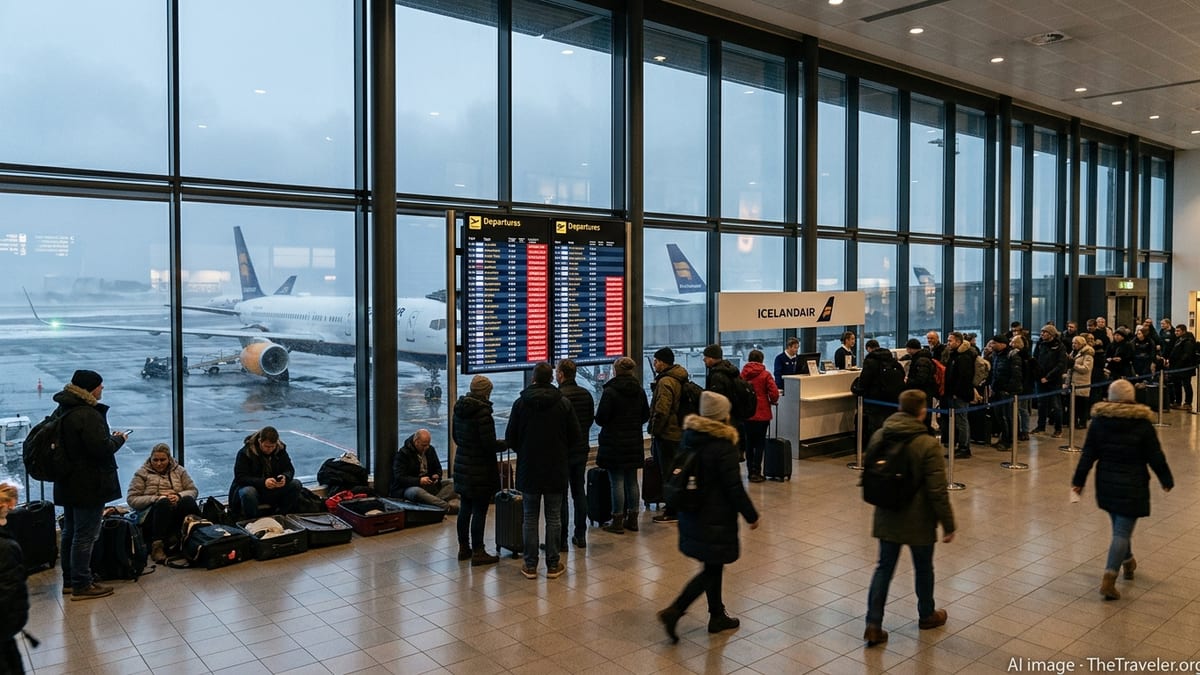
Widespread Disruption Across Iceland’s Main Air Corridors
Publicly available flight information and traveller accounts indicate that Icelandair and flights operated under the former Air Iceland Connect umbrella have cancelled a significant number of services on core routes connecting Reykjavik with Europe and North America. Cancellations have affected departures and arrivals to London, New York, Amsterdam, Berlin and Paris, along with a series of domestic and regional links that rely on Keflavik and Reykjavik as transfer points.
The interruption comes during a period of unstable North Atlantic weather and ongoing capacity adjustments within the Icelandair network, which continues to integrate the operations formerly branded as Air Iceland Connect. While Air Iceland Connect as a separate brand was merged into Icelandair in 2021, its aircraft and crews still handle domestic and short-haul regional flights, meaning disruption quickly ripples through the wider schedule when problems arise.
Flight tracking data for late March 2026 shows waves of cancellations and delays on transatlantic services between Keflavik and New York, as well as on European routes linking Iceland with London, Amsterdam and Paris. Passengers transiting through Iceland to or from cities such as Berlin have reported missed onward connections and forced overnight stays when their Reykjavik legs were removed from the timetable.
Although the airline has not publicly framed the disruption around a single cause, the pattern of cancellations suggests a combination of weather-related operational challenges, tight aircraft utilisation and broader industry cost pressures, particularly around fuel and staffing, all intersecting at the same time.
Storm Systems and Operational Strain Over the North Atlantic
A succession of strong low-pressure systems tracking across the North Atlantic in March has brought periods of severe winds and poor visibility to Iceland, conditions that are known to affect arrivals and departures at Keflavik International Airport. Warnings of blizzard conditions and high winds have circulated in Icelandic travel advisories, and travellers have reported that entire blocks of flights to and from the island were cancelled for safety reasons on the most affected days.
These episodes have led to multiple consecutive cancellations on routes such as Denver to Reykjavik, New York to Keflavik and various European city pairs, shrinking the number of available rotations Icelandair can operate. When a long-haul flight is grounded, the aircraft and crew that would normally continue on to another route often do not reach their next assignment, creating knock-on disruption across the network.
Weather interruptions alone do not fully explain the scale of the recent schedule changes, but they appear to have magnified existing operational strain. Reports from recent months describe longer turnaround times on the ground and difficulties repositioning aircraft when strong winds or crosswinds exceed limits for safe landings, particularly for older narrowbody aircraft still in service alongside newer Airbus models.
As airlines across Europe and North America continue to rebuild capacity, any sudden constraint on aircraft or crew availability can quickly translate into clusters of cancellations. For a hub-and-spoke operation like Icelandair’s, centred on Reykjavik, a disrupted wave of inbound flights makes it challenging to operate the planned outbound wave to cities such as London, Amsterdam, Berlin and Paris without substantial retiming or cancellation.
Network Integration and Capacity Pressures on Regional Flights
The consolidation of domestic and regional services under the Icelandair brand, following the integration of Air Iceland Connect, has made the network more interconnected but also more exposed when irregular operations occur. Aircraft that once served primarily domestic routes now play a role in feeding international banks of flights, and any cancellation on a short sector can impact passengers booked through to long-haul destinations.
Recent schedule adjustments show gaps on certain domestic and Greenland services that traditionally supported connections from transatlantic arrivals. Travellers have reported cancellations on routes linking Reykjavik with smaller regional airports, followed by automatic rebooking onto services one or more days later or, in some cases, notifications that no alternative flight was available and refunds would be processed instead.
These changes are taking place against a backdrop of fleet renewal and retirement decisions. Icelandair is gradually phasing out older Boeing 757 and 767 aircraft in favour of more efficient narrowbodies, while turboprops linked to the former Air Iceland Connect operation continue to serve shorter routes. During this transition, the airline appears to have less spare capacity to absorb disruptions, which may contribute to the higher number of cancellations when weather or technical issues arise.
Industry observers note that similar pressures are visible at other mid-size hub carriers, where the margin for error in aircraft and crew planning is slim. Once a series of flights is cancelled within a compressed timeframe, as has occurred on the Reykjavik to London and New York corridors, restoring the schedule can take several days.
Passenger Impact From London and New York to Continental Europe
Passengers affected by the recent Icelandair cancellations have described a range of outcomes, from short delays and straightforward rebookings to significant itinerary changes cutting days from planned visits to Iceland or onward stays in Europe and North America. Some travellers routed from London and New York via Reykjavik to continental destinations such as Amsterdam, Berlin and Paris have reported being rebooked on different dates, rerouted through alternative hubs, or simply refunded when no acceptable option could be found.
Accounts shared by travellers highlight the particular challenge for those relying on tight connections through Keflavik. When an initial leg from a U.S. or European origin is cancelled, the entire onward journey often collapses, especially in peak periods when remaining seats on alternative flights are limited. Travellers bound for Iceland itself have also faced shortened itineraries when their outbound flights were pushed back by a day or more.
Customer experiences with Icelandair’s communication have varied. Public comments describe delayed notifications of schedule changes, with some passengers discovering cancellations only when checking online booking tools. Others report receiving multiple emails promising updated itineraries, followed by long waits for confirmation of new flights.
For travellers departing Iceland, cancellations on outbound legs to hubs such as London and New York have created difficulties securing new connections onward to final destinations. Some passengers have turned to third-party carriers and separate tickets to complete their journeys, balancing the cost of last-minute fares against the prospect of substantially delayed arrivals.
What Travellers Should Know About Rights and Next Steps
The recent wave of cancellations involving Icelandair and its regional operations has renewed interest in the protections available to passengers under European and UK air passenger regulations. Under these frameworks, travellers whose flights are cancelled are typically entitled to a choice between a refund of the unused ticket or re-routing at the earliest opportunity, with specific compensation rules that depend on the reason for cancellation and length of delay.
In practice, the level of support can depend on whether disruption is judged to be caused by extraordinary circumstances such as severe weather or by operational and commercial decisions within the airline’s control. Travellers impacted by the Iceland disruptions have been encouraged by consumer advocates to retain all documentation, including cancellation notices, revised itineraries and receipts for hotels, meals and alternative transport, for use in potential claims.
Travel commentary also emphasises the importance of monitoring bookings closely whenever adverse weather is forecast for Iceland or the North Atlantic. Because many cancellations appear in booking systems before direct notifications are sent, regularly checking reservations can give passengers more time to contact customer service, secure alternative flights or adjust hotel and tour plans.
For future trips involving Icelandair’s hub in Reykjavik, travel planners suggest allowing additional buffer time between connecting flights, particularly in winter and early spring when storms are more frequent. While the current disruption affecting more than 80 flights is notable in scale, it also underlines the broader reality that North Atlantic travel, especially through a single central hub, remains sensitive to both weather volatility and network constraints.