

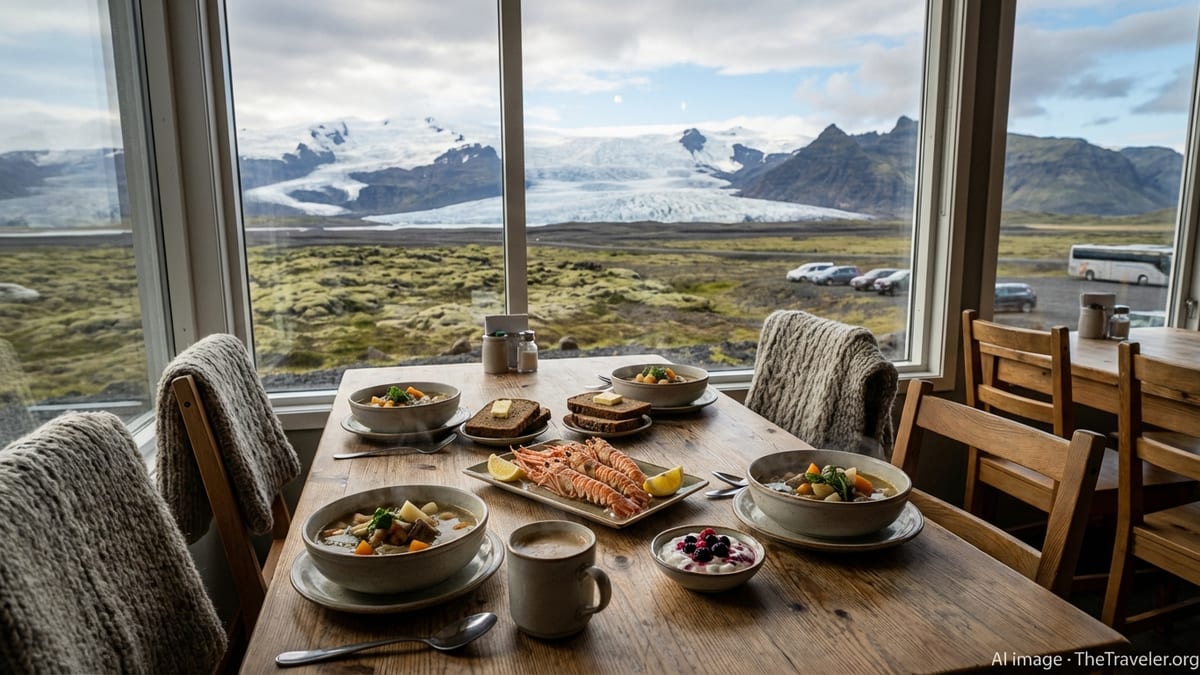
Travelers come to Vatnajökull for its towering ice cap, blue ice caves, and iceberg lagoons, but the glacier’s wild surroundings also offer a surprisingly memorable taste of Iceland. From steaming bowls of lamb soup in remote cafés to langoustine feasts in the harbor town of Höfn, this corner of the South Coast serves food that is both deeply local and perfectly suited to cold-weather adventures. Knowing what to look for, and where to find it, will help you make the most of every meal between hikes, boat tours, and glacier walks.
Understanding the Food Landscape Around Vatnajökull
The Vatnajökull region is one of the most sparsely populated parts of Iceland. Long stretches of black sand plains and lava fields separate small farming communities, a handful of roadside cafés, and the harbor town of Höfn. That remoteness is part of the appeal, but it also means visitors should adjust their expectations: there are fewer restaurants than around Reykjavík or the Golden Circle, and opening hours can change with the seasons and weather.
Rather than fine dining on every corner, you will find a mix of simple but hearty options. Visitor center bistros serve soups, sandwiches, and pastries to hikers coming off the trails. Glacier lagoon cafés focus on hot drinks and warming seafood dishes with spectacular views. In Höfn, informal harbor-side restaurants turn local langoustine into generous plates of pasta, grilled tails, and bisque. Gas stations and small supermarkets fill in the gaps, selling skyr, sandwiches, pastries, and other easy road-trip food.
Because choices can be limited between larger settlements, it is wise to think about meals as part of your daily planning. Booking dinners at hotels, checking café hours before you set out, and picking up snacks whenever you pass through a town will ensure you can focus on the scenery rather than worrying about where your next meal will come from.
What you will almost always find, however, is food that reflects Iceland’s landscape and traditions. Lamb from free‑roaming sheep, fish and shellfish from the cold Atlantic, and dairy products like skyr are all staples. Around Vatnajökull these familiar Icelandic flavors are served in settings that range from a simple counter inside a visitor center to a converted warehouse by the harbor.
Warm, Hearty Comfort Food After Glacier Adventures
The climate around Vatnajökull is cool and changeable even in summer, and many of the area’s most popular activities involve hours outdoors: hiking at Skaftafell, walking on glaciers, or taking boat tours among the icebergs. It is no surprise that hot, filling dishes are among the most satisfying foods to seek out after a day in the elements.
One of the most traditional options is kjötsúpa, Icelandic lamb soup. Typically made with bone‑in lamb, potatoes, carrots, rutabaga, and herbs, it is a simple dish that tastes far richer than its short ingredient list suggests. Many cafés and hotels along the South Coast feature a version of this soup, sometimes as part of a daily lunch special. It is exactly the kind of food you want when you come back from a windy glacier lookout or a chilly lagoon boat ride.
Soups in general are a reliable choice in the Vatnajökull area. At the Skaftafell Visitor Center, the Eyðimörk self‑service bistro has become a convenient stop for hikers, serving homemade tomato soup with bread and butter alongside sandwiches and pastries. Closer to Jökulsárlón, the café by the Glacier Lagoon is known for seafood soup that you can enjoy while watching icebergs drift past outside the windows. These soups may vary by season, but they are usually generous, freshly prepared, and perfect for warming up.
Even when menus lean toward international café fare, dishes have a comforting, home‑style feel. Expect plenty of bread, hearty grains, and root vegetables, along with thick slices of cheese and butter. Portions tend to be large by European standards, in part because many guests have just come in from hours outside in cold weather. If you are planning a full day of sightseeing around Vatnajökull, a midday bowl of soup and bread can easily carry you through to a later dinner.
Cafés and Roadside Stops Between Sands and Glaciers
Driving the South Coast between Vík and Höfn, you will cross long stretches of sandur, or glacial outwash plains, where there are few buildings of any kind. That makes the small cafés and roadside stops that do exist feel especially welcoming. They often double as informal visitor hubs, where you can warm up, ask for local tips, and enjoy coffee or a light meal.
Between the great sand plains below Vatnajökull, a local favorite is Café Vatnajökull at Fagurhólsmýri. This small coffee shop sits almost in the shadow of the glacier, offering hot and cold drinks, light food, and pastries in a cozy setting. It is the sort of place where travelers mingle with guides and locals, swapping stories about weather, road conditions, and recent aurora sightings while the espresso machine hums in the background.
Further east at Skaftafell, Eyðimörk Bistro inside the visitor center caters to hikers and campers. Here you can choose from focaccia sandwiches filled with ingredients like Parma ham, mozzarella, bacon, or vegan options, along with cinnamon rolls, cakes, and the aforementioned tomato soup. Service is self‑guided, designed so that people coming off the trails can eat quickly and head back out again if they wish. Vegan, gluten‑free, or lactose‑free choices are often available, though it is wise to ask staff what is on offer that day.
Many travelers also make use of gas station cafés along the Ring Road. These are not fine dining spots, but they serve a vital purpose. You will typically find hot dogs, burgers, simple sandwiches, pastries, and cups of coffee. For an authentic Icelandic experience, try an Icelandic hot dog, usually a mix of lamb, pork, and beef, ordered with “everything” so it comes topped with raw and crispy fried onions, ketchup, mustard, and a remoulade‑style sauce. It may not be unique to Vatnajökull, but it is a classic part of road‑tripping in Iceland.
Seafood and Langoustine Feasts in Höfn
Höfn is the main town east of Vatnajökull and is often described as Iceland’s langoustine capital. This working harbor has made a name for itself by turning local shellfish and fish into memorable meals. For many travelers, it is the culinary highlight of a journey along the glacier’s southern edge.
Harbor‑side restaurants in Höfn tend to focus on fresh, local ingredients. Places such as Pakkhúsið, in a 1930s building by the waterfront, showcase langoustine, lamb, and duck sourced from nearby boats and farms. Menus may change from season to season, but it is common to find grilled langoustine tails, langoustine soup, or pasta with langoustine in a creamy sauce. The style is relaxed and welcoming, more about quality ingredients and solid cooking than about white‑tablecloth formality.
Another popular stop is Íshúsið, a pizzeria and restaurant located by the harbor. While it is known for thin stone‑baked pizzas, it also leans on local ingredients in other dishes, including seafood. Travelers who have spent days relying on soups and sandwiches around Vatnajökull often appreciate the chance to slow down over a longer dinner in Höfn, with views of fishing boats and distant mountain slopes.
Seafood culture is not limited to restaurants. In summer, food trucks and simple counters along the coast sometimes serve fish and chips, langoustine rolls, or fried fish sandwiches. Near Jökulsárlón, the long‑running langoustine food truck Heimahumar has become a favorite for its lobster rolls and langoustine soup, served right at the edge of the lagoon’s parking area. Eating a hot, buttery roll packed with shellfish while gazing at icebergs feels quintessentially South Coast.
Glacier Lagoon and Fjallsárlón Dining
The stretch of coastline where Jökulsárlón Glacier Lagoon and the smaller Fjallsárlón lagoon meet the Atlantic is one of Iceland’s most photographed areas. It is also one of the most remote, with only a handful of places to eat within a short drive. Planning ahead will help you enjoy the area’s food as much as its scenery.
At Jökulsárlón, the Glacier Lagoon Café occupies a prime spot near the water. Inside you can find sandwiches, hot drinks, soft drinks, and hot chocolate, as well as a seafood soup that feels made for the location. Large windows frame views of the icebergs and Vatnajökull’s outlet glaciers, so you can linger over lunch while watching the weather sweep in from the sea. The café is generally open year‑round, though hours vary by season, so it is worth checking them if you are traveling in shoulder months.
Right in the lagoon’s parking area, food trucks often appear, particularly in the busier months. Over recent years, Heimahumar has stood out for its focus on langoustine, selling lobster rolls and soup alongside simpler options like Icelandic hot dogs. This is one of the most convenient spots to sample shellfish without detouring to Höfn, and the combination of hot food and cold icebergs is hard to beat. Expect queues at peak times but generally quick service.
A short drive away at Fjallsárlón, Frost Restaurant sits near the smaller iceberg lagoon, offering a buffet‑style selection of hot and cold dishes, soups, snacks, and drinks, including beer and wine. The emphasis is on fresh, accessible food that can appeal to a wide range of travelers, from tour groups to self‑drivers. With panoramic views of the glacier and surrounding mountains, it is a pleasant place to pause between stops along the South Coast, especially in the main summer season when it is open daily.
Classic Icelandic Flavors to Look For
While menus near Vatnajökull often reflect the practical needs of hungry travelers, they still draw on classic Icelandic ingredients and dishes. Knowing a few key names will help you identify local specialties even on short, translated menus or buffet boards.
Skyr is one of the most ubiquitous. This thick, yogurt‑like dairy product has been part of Icelandic cuisine for centuries and is high in protein with a tangy, mild flavor. You will find skyr cups in nearly every gas station and supermarket, often flavored with berries or vanilla. Many hotels and cafés in the Vatnajökull area serve it at breakfast, sometimes plain with fruit and granola, sometimes baked into a skyr cake dessert that resembles a light cheesecake.
Lamb is another cornerstone of Icelandic cooking. Free‑roaming sheep graze on wild grasses and herbs in summer, resulting in tender, flavorful meat. Around Vatnajökull you are most likely to encounter lamb in the form of kjötsúpa, grilled lamb dishes at hotel restaurants, or smoked lamb slices on bread. In more traditional contexts, you might hear about hangikjöt, a smoked lamb that is often served during holidays, though it can also appear on buffets or sandwich menus at other times of year.
Seafood naturally plays a major role, particularly along the South Coast. Look for the word “humar” on menus, which refers to langoustine, the region’s celebrated shellfish. It may appear in soups, pasta, grilled platters, or on pizza. Simple fish dishes featuring cod, haddock, or other North Atlantic species are also common. In casual settings, you might see plokkfiskur, a comforting fish stew made with white fish, potatoes, onions, and a creamy sauce, often served with dark rye bread.
Local Treats, Pastries, and Everyday Snacks
Not every food experience near Vatnajökull has to be a full sit‑down meal. Some of the most enjoyable tastes you will encounter are small treats picked up spontaneously from cafés, gas stations, and hotel breakfast spreads. These everyday snacks are part of how Icelanders eat on the road and can easily fit into a busy sightseeing schedule.
Pastries are a highlight in many roadside cafés and bistros. Cinnamon rolls are particularly popular, sometimes finished with chocolate or a simple glaze. At Eyðimörk in Skaftafell, for example, freshly baked cinnamon rolls share space in the display case with cakes and flaky pastries. In other spots you may encounter kleinur, twisted doughnuts that are deep‑fried until golden and lightly sweet, perfect with a strong cup of coffee after a windy walk.
Skyr appears again here, not just as a breakfast item but as a grab‑and‑go snack. Individual tubs are sold chilled in cafés and gas stations, often with a spoon included. For something more indulgent, keep an eye out for skyr cake at hotel dessert buffets or restaurant menus. Made with a graham‑style crust and skyr filling, it offers the richness of cheesecake with a lighter, tangier profile.
Dark rye bread, or rúgbrauð, is another traditional element that you may find accompanying fish dishes or appearing on breakfast tables. Traditionally baked using geothermal heat in some parts of Iceland, it is dense, slightly sweet, and excellent with salted butter or smoked salmon. Even when you are far from hot springs, versions of this bread often make their way onto plates around Vatnajökull, a reminder of Iceland’s creative use of its natural resources.
Practical Tips for Eating Well Around Vatnajökull
The combination of sparse services and strong seasonal changes means that eating well near Vatnajökull requires a bit more planning than in Iceland’s urban areas. With a few simple strategies, you can enjoy the region’s food without stress, even on a tight schedule or in winter.
First, be realistic about distances and driving times. Höfn, Skaftafell, Jökulsárlón, and smaller settlements are spread out along the Ring Road. If you are staying at a remote hotel, such as those between Skaftafell and Jökulsárlón, remember that dining options outside the property may be limited or involve night driving on dark, sometimes icy roads. In such cases, booking dinner at your accommodation is often the most convenient and safest choice.
Second, treat gas stations and supermarkets as allies. Stocking up on snacks in Vík, Kirkjubæjarklaustur, or Höfn can make a big difference during long days around Vatnajökull. Pack skyr, fruit, nuts, chocolate, and sandwiches so you have a backup plan if weather delays your schedule or cafés are unexpectedly busy. Some hotels offer the option to prepare a packed lunch from the breakfast buffet for a supplement, which can be very useful for glacier tours with fixed departure times.
Finally, stay flexible and ask locals for current recommendations. In recent years, new cafés and seasonal food trucks have opened near popular attractions, but they may shift location or hours from one year to the next. Guides, hotel staff, and park rangers are usually happy to share up‑to‑date tips on where to find a good bowl of soup, a fresh pastry, or the best langoustine in Höfn at that moment. In a region where nature sets the rhythm, local knowledge is often the key ingredient to a satisfying meal.
The Takeaway
Eating near Vatnajökull is less about ticking off famous restaurants and more about embracing simple, well‑made food in extraordinary settings. On any given day you might sip seafood soup beside blue icebergs, share a langoustine feast in a working harbor, or unwrap a cinnamon roll while staring up at streaks of glacier spilling down from the ice cap.
By understanding the region’s limited but characterful food landscape, seeking out local specialties like lamb soup, skyr, and langoustine, and planning ahead for long stretches with few services, you can turn each meal into a rewarding part of your journey. Around Vatnajökull, the flavors of Iceland are inseparable from its scenery: warm, resilient, and shaped by the same powerful forces that carved the glaciers themselves.
FAQ
Q1. Are there many restaurants near Vatnajökull or should I plan ahead?
There are only a handful of cafés, hotel restaurants, and roadside stops between Vík and Höfn, so you should plan meals ahead, especially in winter and shoulder seasons.
Q2. Where can I try Icelandic langoustine near Vatnajökull?
Höfn is known as a langoustine hub, with harbor‑side restaurants serving grilled tails, soups, and pasta dishes. In season, the Heimahumar food truck at Jökulsárlón also offers langoustine rolls and soup.
Q3. Is vegetarian or vegan food available around Vatnajökull?
Options are more limited than in Reykjavík, but visitor center cafés and some hotel restaurants offer vegetarian soups, salads, and sandwiches. Vegan choices exist in a few places, yet it is best to ask ahead and mention dietary needs when booking.
Q4. What traditional Icelandic dishes should I look for in this region?
Common local flavors include kjötsúpa (lamb soup), humar (langoustine), skyr, smoked or grilled lamb, fish stew such as plokkfiskur, and dark rye bread served with butter or smoked fish.
Q5. Can I find food at Jökulsárlón Glacier Lagoon itself?
Yes. The Glacier Lagoon Café serves hot drinks, sandwiches, and seafood soup, and seasonal food trucks in the parking area often sell langoustine rolls, soup, and hot dogs.
Q6. Are cafés and restaurants open year‑round near Vatnajökull?
Some, including the Glacier Lagoon Café and certain hotel restaurants, operate all year, but many others reduce hours or close outside the main summer season. Always check current opening times.
Q7. How expensive is food in the Vatnajökull area?
Prices are similar to or slightly higher than in Reykjavík, reflecting Iceland’s generally high food costs and the region’s remoteness. Soups and café meals are usually more affordable than full restaurant dinners.
Q8. Is it easy to buy snacks and picnic supplies along the way?
Larger supermarkets are located in towns like Vík, Kirkjubæjarklaustur, and Höfn. Between them, selection is limited, so stock up whenever you pass through a town and keep extra snacks in the car.
Q9. Do I need to reserve dinners in advance?
In busy months or when staying at remote hotels, reservations are strongly recommended. Dining rooms can fill with tour groups and self‑drive guests, and nearby alternatives might be far away.
Q10. Can I drink tap water and use it to prepare food on the road?
Yes. Tap water in Iceland is generally of excellent quality and safe to drink, so you can refill bottles, brew coffee, or cook with it without concern.