

More news on this day
India and the European Union have moved to tighten aviation ties through a new industrial production arrangement that links safety oversight with locally built aircraft and opens the door for Airbus helicopter assembly in Karnataka, reinforcing the country’s ambition to become a global aerospace manufacturing hub.
Get the latest news straight to your inbox!
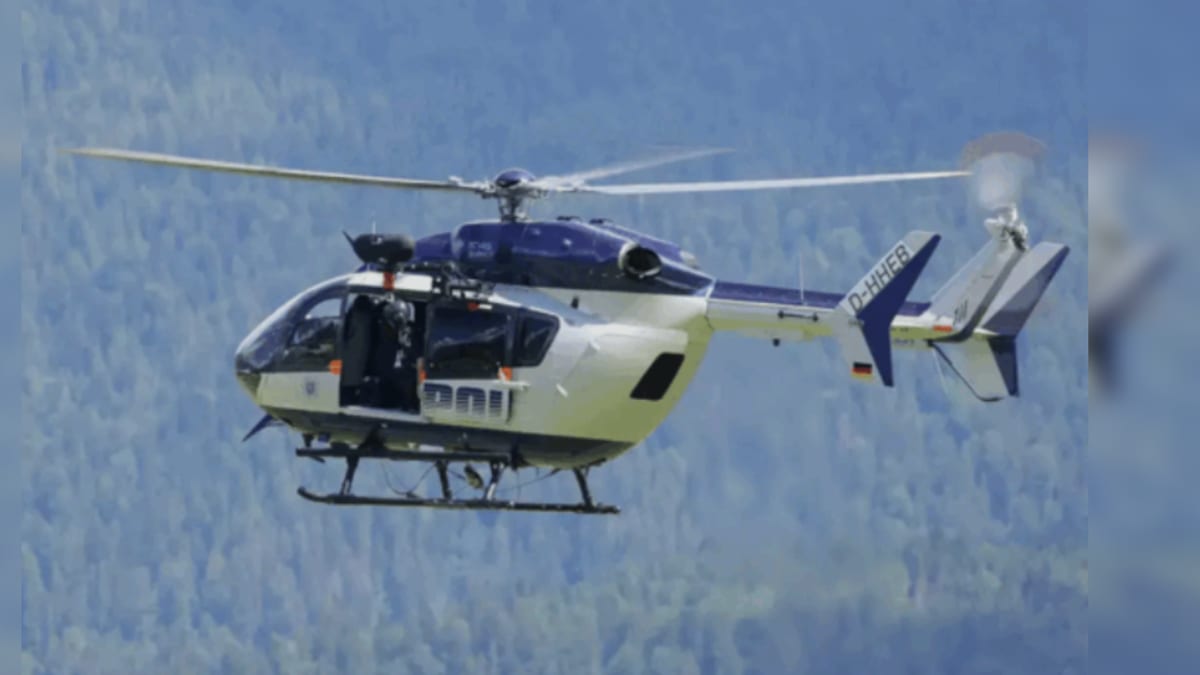
Image by ET Infra
Working Arrangement Ties Indian Production to EU Safety Regime
Publicly available information from European and Indian channels indicates that New Delhi and Brussels have concluded a working arrangement between the European Union Aviation Safety Agency and India’s Directorate General of Civil Aviation covering industrial aviation production. The accord is framed as a mechanism to align Indian-built aircraft, helicopters and components with European safety and airworthiness requirements.
The arrangement is expected to streamline validation of design and production approvals when Indian factories supply parts or complete aircraft for European original equipment manufacturers. By setting out common procedures and mutual confidence measures, the pact aims to reduce duplication in inspections and documentation, while maintaining stringent safety oversight.
Analysts point out that such technical working arrangements often form the backbone of cross-border aerospace manufacturing, since they govern how regulators treat each other’s conformity assessments. For Indian producers, convergence with European standards is seen as critical to securing long-term work packages and accessing higher-value segments of the global supply chain.
The agreement comes against the backdrop of a broader upgrade in India–EU security and technology cooperation, where aerospace is emerging as a prominent area of joint interest. The focus on industrial production suggests both sides are seeking tangible outcomes that translate diplomatic ties into jobs, investments and new capabilities on the factory floor.
Airbus Helicopter Assembly Planned in Karnataka
Alongside the regulatory pact, industrial plans involving Airbus point to Karnataka as a focal point for new rotary-wing production in India. Airbus and Tata Advanced Systems have already laid out a roadmap for an H125 helicopter final assembly line that will be located in Vemagal in the southern state, according to corporate releases and government statements.
The site is expected to assemble the single-engine H125, a versatile light helicopter widely used for passenger transport, utility missions and aerial work. The first made-in-India airframes are targeted for delivery around 2027, with capacity to serve both domestic operators and export customers across South Asia.
Karnataka has been working to position itself as an aerospace manufacturing corridor, anchored by Bengaluru’s established cluster of defence and civil aviation companies. The addition of a private-sector helicopter assembly line, tied to a European original equipment manufacturer and supported by the new EU–India production arrangement, is viewed as a significant step in that strategy.
Industry observers say the combination of policy support, local engineering talent and a growing network of suppliers has made the region a natural choice for Airbus and its Indian partners. The expectation is that helicopter assembly in Vemagal will catalyse further investments in components, maintenance and training ecosystems in the state.
‘Make in India’ Aviation Push Gains European Dimension
The working arrangement on industrial aviation production feeds directly into India’s broader “Make in India” and self-reliance objectives in aerospace. By locking in cooperation with European regulators, New Delhi is seeking to ensure that aircraft and parts built in India can be seamlessly integrated into platforms designed and certified in the EU.
Reports on recent industrial deals show that European primes, including Airbus, have already ramped up procurement from Indian suppliers across aerostructures, engine components and systems. Formalising regulatory cooperation is expected to support more complex work transfers, including fuselage sections and other safety-critical assemblies.
For European manufacturers, tapping India’s manufacturing base offers cost advantages and access to a fast-growing aviation market. For India, the opportunity lies in moving up the value chain from build-to-print work towards design, integration and, eventually, indigenous platforms that meet the same certification benchmarks as those in mature markets.
Observers note that the Karnataka helicopter assembly project, coupled with the EU production pact, showcases how these goals intersect. A European-certified helicopter assembled in India under a harmonised regulatory framework would symbolise India’s arrival as a trusted node in global aviation manufacturing rather than just an offset destination.
Implications for Safety, Exports and Travellers
The aviation production pact is primarily technical in nature, but it carries practical implications for safety and connectivity that extend to airlines and travellers. Harmonised oversight between Indian and European authorities can make it easier for carriers to introduce aircraft sourced from Indian assembly lines into mixed fleets, confident that they conform to familiar standards.
For export customers, particularly in Asia and Africa, the combination of EU-aligned production oversight and competitive Indian manufacturing could make helicopters and aircraft assembled in Karnataka more attractive. The H125 line, in particular, is expected to target regional tourism, medical evacuation and law enforcement markets that are currently served by imported platforms.
Closer regulatory cooperation may also encourage investment in local maintenance, repair and overhaul facilities that support both Indian and foreign-registered fleets. That, in turn, could reduce aircraft downtime and operating costs, with knock-on benefits for route expansion and ticket pricing in certain segments of the market.
While the details of implementation will unfold over several years, industry watchers consider the EU–India aviation production arrangement, combined with Airbus’s Karnataka plans, a notable milestone. It aligns safety governance with industrial policy, and it reinforces a shift in which India is increasingly positioned not only as a large aviation market, but also as a production base for aircraft that meet international standards.