


More news on this day
India’s largest airlines, IndiGo and Air India, are challenging proposed tariff structures at new airports such as Noida and Navi Mumbai, warning that sharply higher user fees and aeronautical charges could feed into ticket prices and cool the country’s once‑surging passenger growth.
Get the latest news straight to your inbox!
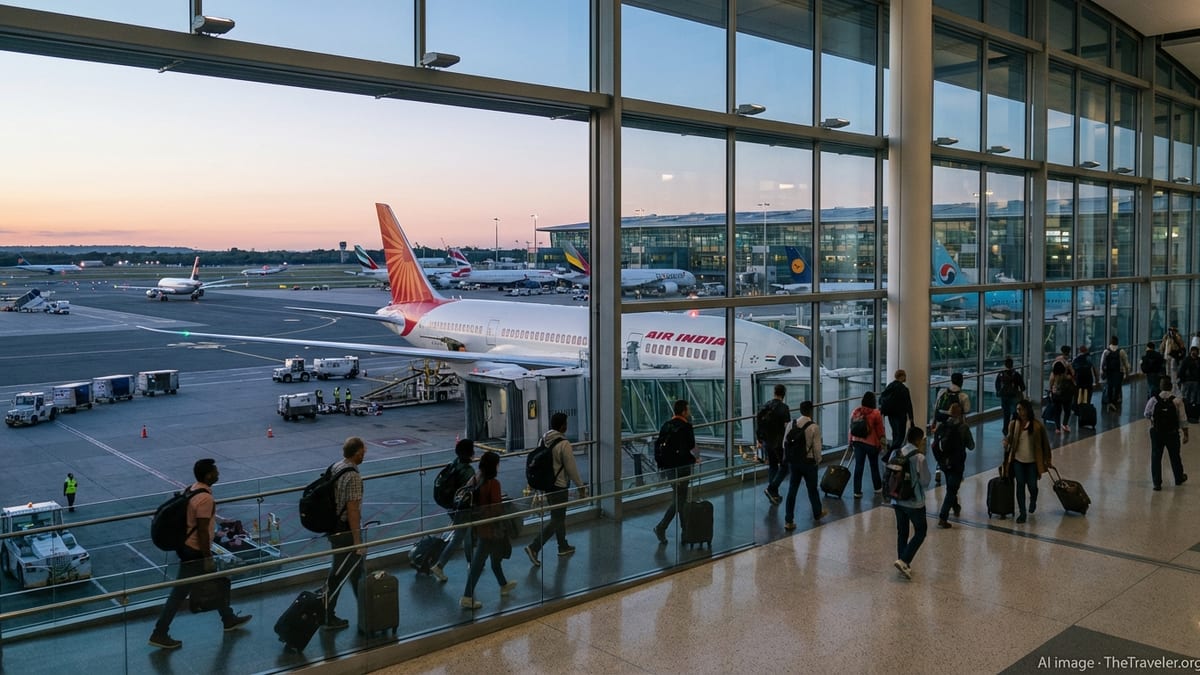
New airports, new tariffs, and why airlines are concerned
Recent consultation papers from India’s airport tariff regulator for Noida International Airport and the upcoming Navi Mumbai hub outline significantly higher user development fees and aeronautical charges compared with long‑established airports such as Delhi. Publicly available information indicates that the embarking user fee proposed at Noida for domestic passengers is several times higher than the current charge at Delhi, and materially higher for international routes as well.
IndiGo and Air India have both raised objections in formal submissions cited in recent business press coverage. IndiGo has argued that if all‑inclusive fares from Noida are not at least on par with, or lower than, comparable flights from Delhi, it will be commercially difficult to build sustainable schedules from the new airport. Air India has similarly flagged the overall level of aeronautical charges at new facilities as a deterrent to shifting or expanding capacity.
Global airline body IATA has also pointed to the risk of new secondary airports adopting high charges at launch, noting that this can be counterproductive when they are trying to attract traffic away from already established hubs. India’s aviation market has been one of the fastest‑growing in the world, but that growth has relied heavily on cost‑sensitive leisure and first‑time flyers, who are particularly sensitive to even modest fare increases.
The debate over tariffs is unfolding just as India is preparing to open new capacity around its busiest metro regions. Noida International Airport is targeting a mid‑June 2026 commercial launch, while Navi Mumbai is ramping up operations as a key relief airport for the Mumbai region. How these facilities are priced in their first regulatory cycle is likely to shape airline and passenger behavior for years.
Higher fees in an era of rising fuel and volatile costs
The pushback from IndiGo and Air India comes on top of a difficult cost backdrop. Airline fuel surcharges have already been revised multiple times in 2026 as aviation turbine fuel prices spiked following geopolitical tensions in West Asia. IndiGo has added a distance‑linked fuel charge on domestic and international tickets, while the Air India group has shifted to a new distance‑based grid for surcharges, moves that analysts say are aimed at partially offsetting a rapid rise in fuel costs.
Credit‑rating and industry research firms have turned more cautious on Indian aviation, citing a combination of elevated fuel prices, a weaker rupee and the removal of temporary domestic fare caps that were in place during IndiGo’s 2025 scheduling crisis. One widely followed ratings agency recently revised its sector outlook to “negative,” and forecast only low single‑digit domestic passenger growth in the financial year to March 2027, warning that higher ticket prices could dampen demand.
At the same time, India’s airport operators are counting on strong traffic and improved yields to support large capital investments. Earlier projections from industry analysts suggested healthy double‑digit revenue growth for airports in the mid‑2020s, driven in part by tariff increases and expanding non‑aeronautical income. Airlines now argue that if the pendulum swings too far toward higher airport charges just as fuel and other costs climb, the resulting fare pressure could slow the very traffic growth that airports are banking on.
The tension highlights a structural challenge in India’s aviation model. Many of the country’s new private airports are capital‑intensive projects with long concession periods, where investors seek predictable returns through regulated charges. Airlines, by contrast, operate in a highly competitive, low‑margin environment where even small cost increases can tip routes from viable to loss‑making.
What this could mean for airfares and route choices
Because user development fees and many aeronautical charges are embedded in the ticket price, travelers typically do not see a separate line item for them when they book. Instead, airlines factor the higher costs into their fare structures. Industry reporting suggests that if the currently proposed charges at Noida and Navi Mumbai are adopted without major changes, average fares on some routes from these airports could trend higher than equivalent services from established hubs.
IndiGo has indicated in its submissions that it may need to keep Noida fares closely aligned with Delhi to attract passengers, hinting that it would limit the number of flights or use smaller aircraft if cost pressures are too high. Air India has signaled, according to recent business news coverage, that carriers are likely to prioritize routes and airports where yields are stronger and cost structures are more favorable, rather than aggressively expanding into higher‑charge environments.
For passengers, this could translate into fewer nonstop options from certain new airports in the short term, especially on thinner domestic routes where demand is more price‑sensitive. Airlines may instead consolidate capacity at existing hubs, or run a smaller schedule at new airports focused on premium or time‑sensitive segments willing to pay more.
Analysts also note that after the lifting of temporary fare caps on domestic flights in March 2026, airlines have greater pricing flexibility across the network. This gives carriers more room to respond to higher airport costs by fine‑tuning fares by route, time of day and booking window. In practice, that means the impact on travelers will not be uniform: some routes and times may see sharper increases than others, depending on competition and demand.
Regulatory debate and possible adjustments ahead
The Airports Economic Regulatory Authority is in the process of reviewing stakeholder submissions before finalizing tariffs for the upcoming regulatory period at the new airports. Consultation papers are designed to invite comments from airlines, airport operators and other interested parties, and the final determination can differ from the initial proposals.
Recent coverage of India’s aviation policy environment suggests regulators are aware of the balancing act between investor returns, airline viability and consumer interests. In April 2026, the tariff regulator ordered some large airports to reduce certain charges, a move described in financial press reports as an effort to ease cost pressures on carriers at a time of fuel price volatility.
Industry observers expect intense discussion around using tariff models that spread risk more evenly, such as adjusting the mix of aeronautical and non‑aeronautical revenue or phasing in higher fees over time as traffic builds. Airlines have long argued in favor of approaches that keep early‑stage charges relatively modest, on the theory that lower fares at new airports can help stimulate traffic and ultimately generate more revenue for all parties.
For now, IndiGo and Air India are using the consultation process to make the case that steep early charges at Noida, Navi Mumbai and other greenfield airports risk slowing the momentum of India’s aviation boom. Whether regulators agree, and how much they modify the proposed tariffs, will be key variables shaping the country’s air travel landscape over the next five years.
What passengers should watch when booking flights
Travelers planning trips through India’s metro regions over the coming months may notice new airport options appearing in search results alongside long‑familiar hubs. The most immediate sign of the tariff debate will be fare levels. Comparing prices for similar dates and times between, for example, Delhi and Noida or Mumbai and Navi Mumbai can provide a sense of how airlines are passing on different cost structures.
Passengers should also pay attention to total journey time and connection options. If airlines initially operate smaller schedules from the new airports, there may be fewer same‑day connections or late‑night departures, even if headline fares look attractive. For many travelers, especially those with onward international flights, the breadth of the network and schedule at an airport can matter as much as the ticket price.
Another factor is the evolution of fuel surcharges and ancillary fees. As IndiGo, Air India and other carriers recalibrate surcharges in response to fuel markets, the breakdown of base fare versus taxes and fees on tickets may shift. While individual line items can be difficult to parse, monitoring changes over time for frequently flown routes can help regular travelers understand whether prices are being pushed up more by fuel, by airport charges or by demand.
Finally, passengers may want to follow regulatory announcements and airline schedule updates through mainstream business news and airline communication channels. Tariff decisions for Noida, Navi Mumbai and other upcoming airports are expected to be finalized over the next year, and any major changes could influence where airlines add capacity, which airports become preferred hubs and how affordable it is to fly across India’s rapidly expanding network.