

More news on this day
IndiGo is cautiously restoring flights to Dubai and other Gulf gateways while extending no-fee cancellations and rescheduling for passengers caught up in the latest Middle East conflict, as airspace closures and sporadic disruptions continue to roil travel across the region.
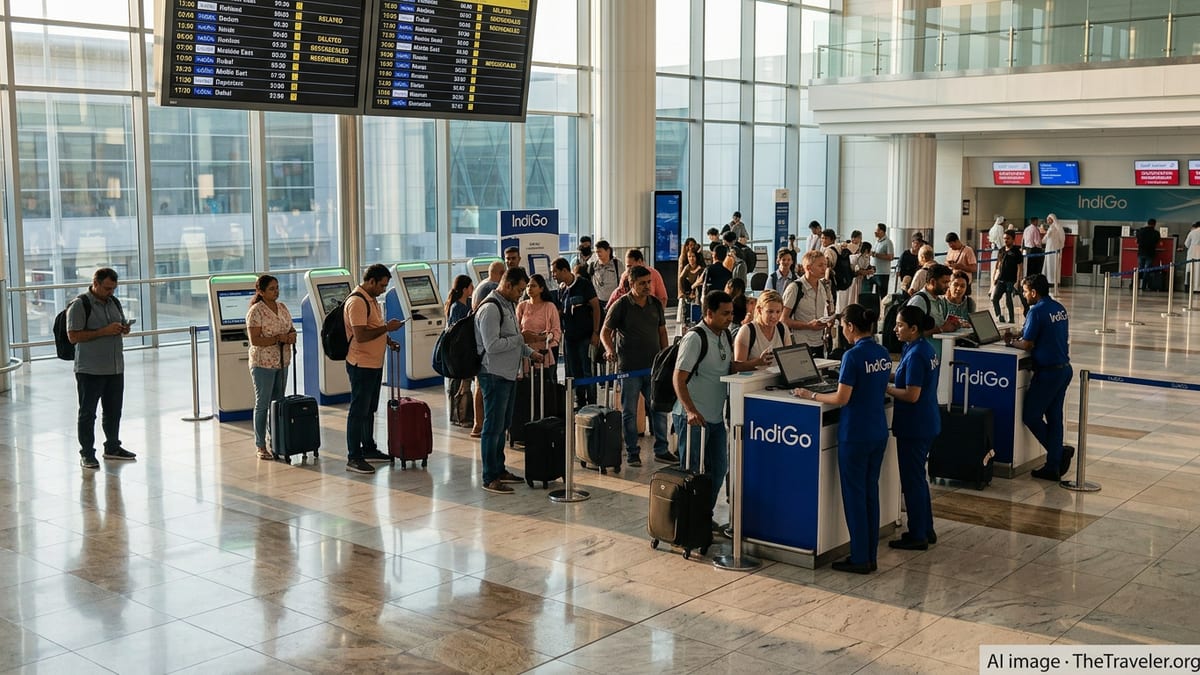
Dubai Added Back as IndiGo Rebuilds Gulf Network
After several days of sweeping cancellations triggered by airspace closures over parts of the Middle East, IndiGo has begun reinstating a limited schedule to major Gulf hubs. Dubai has now joined Abu Dhabi, Sharjah, Akrotiri and Fujairah among destinations where the airline is working to maintain operations, subject to safety assessments and regulatory clearances.
The gradual restoration follows partial reopening of air corridors and restricted resumption of services at key airports in the United Arab Emirates. Capacity remains well below normal levels, with airlines prioritising relief and essential travel while avoiding sensitive airspace. IndiGo’s schedule is being updated frequently as it coordinates with aviation authorities and air traffic control to secure viable routings.
The addition of Dubai back into IndiGo’s operating plan is particularly significant, given the emirate’s role as a primary gateway for Indian travellers to the wider Middle East, Africa and Europe. Even limited connectivity helps relieve mounting pressure on alternative routes and eases congestion at secondary airports handling unscheduled and diversion flights.
However, the airline has cautioned that operations remain highly dynamic, with last-minute changes still possible. Passengers are being urged to recheck their flight status before heading to the airport and to allow extra time for security and check-in formalities amid elevated alert levels.
Free Cancellations and Rescheduling Extended for Affected Passengers
To cushion the impact of ongoing disruption, IndiGo has extended its waiver policy for passengers booked to and from the Middle East and Istanbul. Customers holding tickets on affected routes are being offered free cancellations and one-time rescheduling without change fees, provided they meet the eligibility criteria and travel within the specified window.
The extension of the waiver through the end of March underscores the airline’s expectation that instability in the region and associated airspace restrictions could continue to affect schedules for several weeks. By keeping fees off the table, IndiGo aims to give travellers more flexibility to postpone or reroute trips as the situation evolves.
In practice, the policy allows many passengers to either claim a full refund or shift their travel dates and, where possible, choose alternate gateways such as Abu Dhabi, Sharjah or Fujairah instead of temporarily constrained airports. Fare differences may still apply if customers move to higher-demand flights or cabins, but the administrative penalties that typically accompany such changes have been waived.
Travel agents report that the expanded flexibility has been crucial for families and workers stranded in transit hubs or hesitant to travel through conflict-adjacent airspace. The measures have also helped reduce crowding at airline counters, as more issues can be resolved remotely through call centres and digital channels.
UAE Hubs Play Pivotal Role in Repatriation and Essential Travel
Abu Dhabi, Sharjah, Akrotiri and Fujairah have emerged as important nodes in IndiGo’s adjusted Middle East network, providing additional options for Indian nationals seeking to return home or complete urgent journeys. Some of these airports, particularly Fujairah and Akrotiri, are handling a mix of scheduled and special operations designed to bypass heavily impacted corridors.
With Dubai, Doha and other major hubs experiencing rolling shutdowns and capacity caps, the broader UAE airport system has functioned as a kind of pressure valve. Limited services operated by a mix of Indian and Gulf carriers have been used to funnel stranded passengers toward cities where onward connectivity to India remains feasible, even if indirect and subject to rerouting.
IndiGo has been deploying dedicated relief flights on select sectors, often timed to coincide with short windows of airspace availability. These operations are closely coordinated with local authorities and may originate or terminate at secondary airports rather than passengers’ original points of departure, necessitating ground transfers but ultimately shortening the wait to get home.
Airports themselves have adjusted to the crisis footing, with enhanced security screening, controlled terminal access and expanded assistance for travellers facing missed connections. Information desks and airline help points have been reinforced to channel passengers toward rebooking and refund options granted under IndiGo’s waiver scheme.
Conflict’s Ongoing Impact on Schedules and Safety Protocols
The current conflict has led to intermittent closures of airspace across parts of West Asia, forcing airlines to cancel or divert hundreds of flights in recent days. IndiGo, like its regional peers, has repeatedly stressed that safety remains the overriding priority, with operational decisions guided by real-time intelligence, risk assessments and regulatory directives.
Many flights that do operate are now taking longer, more circuitous routes to avoid sensitive areas, adding to fuel burn and crew duty times. This, in turn, limits how quickly airlines can restore normal schedules, since aircraft and staffing must be rotated carefully to remain within safety and labour regulations.
For IndiGo, the result is a patchwork of services that can change at short notice, particularly for destinations closest to conflict zones or reliant on tightly controlled air corridors. The carrier has urged passengers to maintain updated contact information in their bookings so that last-minute changes, cancellations or re-accommodations can be communicated promptly.
Industry analysts note that while the phased reopening of Dubai and other hubs is a positive sign, volatility is likely to persist as long as tensions remain elevated. Airlines are therefore leaning heavily on flexible policies like IndiGo’s waiver programme as a primary tool for managing customer expectations and preserving trust.
What Travellers Should Do Before Heading to the Airport
With conditions still fluid, experts advise passengers booked on IndiGo’s Middle East and Istanbul routes to treat their travel plans as provisional until they have checked for the latest updates on the day of departure. Even flights that are scheduled to operate can be rescheduled or rerouted if new restrictions are imposed or security assessments change.
Travellers eligible under IndiGo’s waiver policy are encouraged to make use of free rescheduling or cancellation options rather than waiting until the last minute, especially if their journey is discretionary. Those with urgent travel needs should build in additional buffer time, including for possible diversions to alternative airports such as Abu Dhabi, Sharjah, Akrotiri or Fujairah.
Airports across the UAE and wider region continue to operate under heightened security with tighter access controls, meaning that only ticketed passengers with confirmed bookings are generally being allowed into terminals. Carrying printed or digital proof of updated itineraries, along with monitoring airline and airport advisories, can help smooth the process.
For now, IndiGo’s strategy appears to balance a cautious restoration of critical connectivity with an unusually broad degree of flexibility for customers. As Dubai’s inclusion signals a tentative step toward normalisation, both the airline and its passengers remain at the mercy of geopolitical developments that continue to shape the skies over the Middle East.