

Malaysia is one of Southeast Asia’s easiest countries to stay connected in, with strong 4G coverage in cities, expanding 5G networks and a growing range of affordable prepaid SIM and eSIM options. For travelers, though, the choice of operator, plan type and connectivity strategy can make a big difference to cost and reliability. This guide walks you through how mobile internet works in Malaysia today, what to expect from coverage, and the smartest ways to get online with a SIM or eSIM in 2026.
The Mobile Internet Landscape in Malaysia in 2026
Malaysia’s mobile market is competitive and relatively mature, with several major operators and a number of smaller brands offering prepaid and postpaid services. For visitors, the key names to know are CelcomDigi, Maxis (including its Hotlink brand), U Mobile, Unifi Mobile and Yes. Celcom and Digi completed their merger into CelcomDigi earlier in the decade, creating the country’s largest operator by subscriber base, while other providers have focused on improving network quality and rolling out 5G in more locations.
4G coverage is extensive across most populated areas of Peninsular Malaysia, including Kuala Lumpur, Penang, Johor Bahru, Ipoh and the main coastal and island destinations. Population coverage figures from industry and regulator reports commonly exceed well over 90 percent for 4G in populated areas. That means most tourists will see at least 4G service for the majority of their trip when sticking to cities, towns and popular islands. In more remote inland regions and parts of East Malaysia, speeds are more variable and can fall back to 3G or weak 4G in bad weather or behind hills.
5G is now firmly part of the landscape but still uneven. Malaysia has been working toward high levels of 5G coverage of populated areas, and CelcomDigi and Yes in particular have marketed wide 5G availability in and around major urban centers. At the same time, a second 5G network is being rolled out involving U Mobile and other partners, which should further improve capacity and performance in coming years. In practice, you may see fast 5G in Kuala Lumpur and other big cities but fall back to 4G once you travel into smaller towns or rural areas.
For the average traveler, all of this translates into generally reliable mobile internet in cities and tourist areas, but with speeds that can fluctuate more than in some higher priced markets. Local complaints about congested 4G or underwhelming 5G speeds are common on Malaysian forums, yet visitors typically find the connection more than adequate for maps, messaging, social media, ride hailing and most work tasks.
Major Operators and How They Differ for Travelers
CelcomDigi, formed by the merger of Celcom and Digi, now operates one of the widest 4G networks in the country and has been heavily involved in the national 5G rollout. For tourists, this usually means good overall coverage, especially when combining city visits with road trips into smaller towns. CelcomDigi branded tourist and standard prepaid plans often include generous data quotas and local voice minutes at competitive prices. This operator is a solid default choice if you want a balance of coverage and value and do not have very specific needs.
Maxis, along with its popular prepaid brand Hotlink, has long been a premium player in Malaysia. Historically it has focused on high quality urban coverage, especially in Kuala Lumpur, Penang and Johor Bahru, and remains a common choice for residents who value reliability. In recent years Maxis has expanded its 5G offerings and eSIM support. For travelers, Hotlink prepaid plans are easy to find, reasonably priced and often come with attractive app-based bonuses or add ons, though they may not always be the absolute cheapest on the market.
U Mobile has built a reputation as a value focused provider that offers large data allowances at low prices. Industry reporting has also highlighted U Mobile’s role in the second 5G network and recognition for fast 5G performance in some tests. At the same time, coverage can be more variable than the largest incumbents, especially indoors and in rural areas. U Mobile can be a strong option if your trip is concentrated in major cities and you are particularly price conscious, but it is less suited for long overland journeys into more remote areas.
Unifi Mobile and Yes are smaller but noteworthy for travelers. Yes has been one of the early and aggressive adopters of 5G, with some users reporting very high speeds where coverage exists, particularly in urban corridors. However, its footprint can be patchier outside those zones. Unifi Mobile leverages national infrastructure and is often integrated with home broadband offers, which is less relevant for short term visitors. Several mobile virtual network operators also resell capacity on the main networks, but their tourist specific visibility and English language support can be more limited.
Prepaid SIM Cards for Tourists: Where and How to Buy
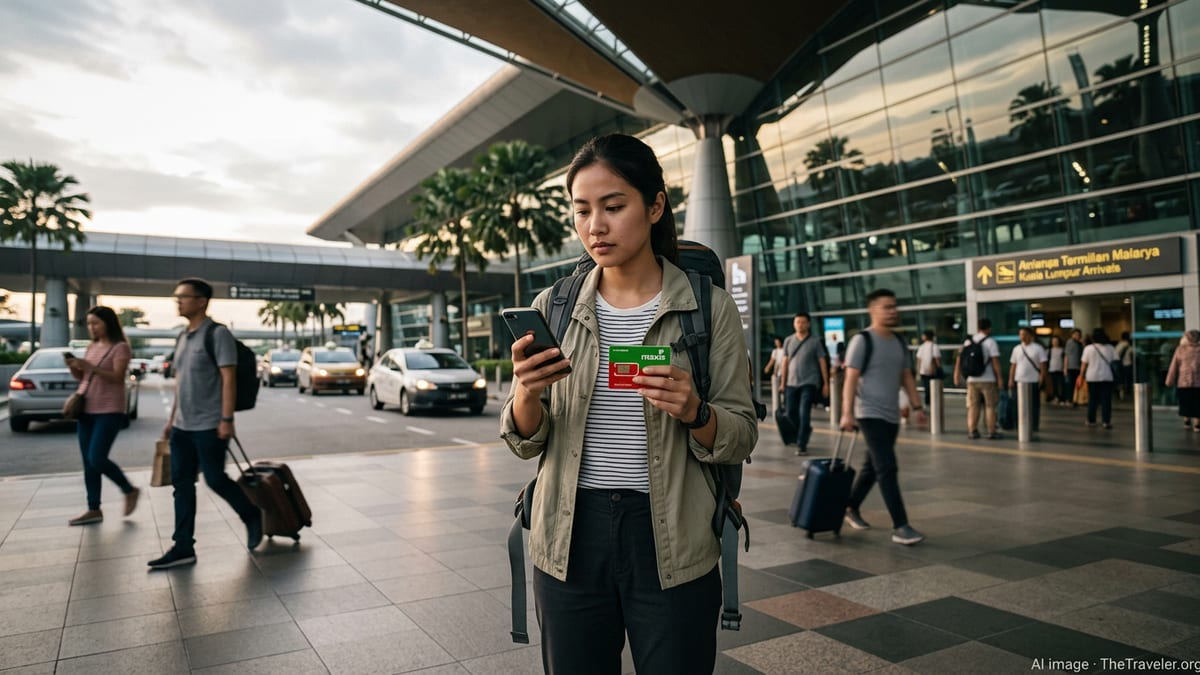
For most short visits, a local prepaid SIM remains one of the simplest and most cost effective ways to access the internet in Malaysia. If your phone is unlocked and supports the local frequency bands, you can purchase a SIM on arrival at major airports or in any city. Kuala Lumpur International Airport, including the main terminal and KLIA2, typically has 24 hour counters for at least CelcomDigi and Maxis Hotlink, and often one or two other brands. Staff are accustomed to handling tourists, and you can usually complete the registration and activation process in a few minutes.
Registration is mandatory and requires your passport. Malaysian authorities have tightened rules on prepaid SIM registration in recent years to combat fraud and scams, including restrictions on how many prepaid lines one person can hold with a single operator. There has also been heightened enforcement of identification checks and data verification, which means you should expect staff to scan your passport and possibly take a photo. These measures can change, but in general tourists are still able to purchase prepaid SIMs without undue difficulty as long as they provide valid identification.
In terms of pricing, tourist focused SIM bundles typically include a set number of days of validity, a substantial data allowance, and some combination of local calls, messaging and possibly social media bonuses. Common bundles include roughly one to two weeks of validity and data packages that are more than enough for ordinary browsing and maps use. Exact prices and quotas change frequently, so it is safest to think in approximate terms and check the current offers displayed at the counter. In many cases, you will spend less than what a week of international roaming would cost through a major European or North American operator.
If you do not buy a SIM at the airport, you can easily find mobile shops and authorized resellers in shopping malls, convenience stores and neighborhood phone outlets. In these locations, staff may speak less English than at the airport, but basic transactions are still usually straightforward. It is a good idea to carry some local currency in cash, as smaller outlets and some airport kiosks may have issues with foreign credit cards, particularly late at night.
eSIM Options for Malaysia: Local and Global Providers
eSIM has become a practical alternative or complement to a physical SIM in Malaysia, particularly for travelers who prefer to set up connectivity before departure. Several Malaysian operators, including Maxis and CelcomDigi, offer eSIM support on certain plans, and many global travel eSIM brands sell Malaysia specific or regional Asia packages. These can be purchased online, with a QR code delivered by email or app, then activated once you arrive in the country.
Compared to physical SIM cards, local eSIMs from Malaysian operators may still have more limited availability and can require app based registration that assumes a local payment card or existing customer relationship. That makes them less convenient for someone arriving for the first time. On the other hand, international travel eSIM providers that partner with Malaysian networks typically give you a straightforward web purchase in your home currency, along with clear instructions for installation and activation in English. They often support tethering and allow you to keep your home SIM active for calls and texts while using data from the eSIM.
When comparing eSIM options, pay attention to whether the plan is data only or includes a local number, which networks it uses in Malaysia, and what the fair use or speed policies are. Many global eSIMs for Malaysia provide high speed data up to a certain threshold, then throttle speeds if you exceed the allowance. Some packages also combine Malaysia with neighboring Singapore or other Asian destinations, which can be useful if you are on a multi country itinerary. Prices vary, but competition has driven per gigabyte costs down, and for short trips the convenience of instant activation can outweigh a small price premium compared with a bargain local SIM.
One practical limitation of eSIM is device compatibility. While most recent mid range and flagship smartphones support eSIM, many budget models and older devices still do not. If you intend to rely on an eSIM in Malaysia, confirm compatibility and test eSIM functionality with your home provider before departure. Even when your device does support eSIM, having a small physical SIM slot free for a local prepaid card gives you more flexibility if you encounter coverage or support issues with your eSIM provider.
Coverage Realities: Cities, Islands and Rural Malaysia
On coverage maps, Malaysia appears well served by mobile networks, and for many travelers this matches reality in urban and tourist zones. In Kuala Lumpur and the wider Klang Valley, most major operators provide robust 4G and targeted 5G services, though users can still experience slower speeds or signal drops inside certain malls, underground car parks or older high rise buildings. Penang Island, Johor Bahru, Malacca and other popular city destinations also see strong coverage from at least two or three major operators, which is reassuring if you choose an eSIM that roams across multiple networks.
Beach and island destinations are generally well connected but can vary from one bay to another. Langkawi, Penang’s beaches and much of the east coast resort strip have reasonable 4G coverage, especially around main towns and ferry terminals. Smaller islands and more secluded resorts may rely on a handful of towers facing the coast, which means speeds can drop at busy times or inside concrete buildings. In these settings, coverage differences between operators can matter more, so if you plan to work remotely from a quiet island it is wise to check recent traveler reports or ask your accommodation which networks perform best there.
East Malaysia, particularly Sabah and Sarawak on the island of Borneo, can present more of a challenge. While cities like Kota Kinabalu, Kuching and Miri are covered by the major operators, coverage along rural roads, in interior villages and in mountainous or rainforest regions is less consistent. Locals frequently report network outages or sharply reduced speeds during storms or when moving between small communities. For travelers venturing into these areas for trekking or long road trips, it is safest to assume that coverage may be spotty or absent for stretches of time, regardless of which operator you use.
Overall, if you stick primarily to Malaysia’s main tourist routes and larger towns, you can expect reliable mobile internet from any of the big providers. If your itinerary focuses heavily on remote national parks, inland highlands or off grid retreats, you should treat internet access as a bonus rather than a guarantee, and consider downloading offline maps and key information in advance.
Costs and How They Compare to Roaming
Local mobile data in Malaysia is inexpensive by global standards. Prepaid tourist SIM bundles commonly include multiple gigabytes of data and a week or more of validity at a cost that is modest compared with typical roaming charges levied by European, North American or East Asian operators. Even regular prepaid plans aimed at residents often include generous data allowances, and top ups can be purchased in small increments from convenience stores or online.
By contrast, roaming with your home SIM in Malaysia can be significantly more expensive. Many major international providers still charge daily fees for roaming passes or per megabyte rates that add up quickly. Industry comparisons and independent guides frequently warn that pay as you go roaming costs in Malaysia can run to many dollars per megabyte with some carriers, while daily roaming passes can rival or exceed the price of a full local tourist package for a single day of use. For a week long trip, staying on roaming can easily cost several times more than using a Malaysian SIM or travel eSIM.
Travel eSIM services that specialize in roaming like connectivity provide something of a middle ground. They are usually cheaper than traditional operator roaming, particularly if you choose data only plans and rely on internet based calling. At the same time, they are often somewhat more expensive than a bargain local SIM bought from a kiosk in Kuala Lumpur. This makes them attractive for short stays or travelers who prioritize simplicity, but less compelling for a month of slow travel where the cost differences accumulate.
Whichever option you choose, keeping an eye on your data usage is helpful. Streaming high definition video or using your phone as a continuous hotspot will burn through data more quickly than maps, messaging and light browsing. Many Malaysian operators offer app based dashboards where you can check remaining data and validity and buy inexpensive add ons if you hit a cap sooner than expected.
Practical Tips for a Smooth Connectivity Experience
Before you travel, make sure your phone is unlocked and supports the LTE and 5G bands used in Malaysia. Most modern devices from major manufacturers will work without any issues, but carrier locked phones from some markets might refuse to accept a foreign SIM. It is also worth updating your device software so that carrier settings download correctly when you insert a Malaysian SIM or activate an eSIM.
On arrival, if you intend to buy a physical SIM, head for the official operator counters rather than unbranded kiosks. Staff at official outlets are more likely to be familiar with the latest tourist packages and can usually help set up your phone, install the correct access point names and confirm that data is working before you leave. Keep your passport handy for registration and take a photo of the SIM packaging in case you need the number or serial for top ups later.
If you rely on an eSIM, install the profile on your phone before departure if the provider allows, but wait to activate it until you land in Malaysia to avoid starting the validity period too early. In your device’s mobile data settings, choose which SIM or eSIM will handle data and, if you plan to receive calls or texts on your home number, disable data roaming on that line to avoid unwanted charges. It can also be useful to toggle between 5G and 4G only modes if you encounter unstable coverage, since in some locations forcing 4G results in a more consistent experience than a marginal 5G signal that constantly drops.
For travelers working remotely or relying heavily on connectivity, consider redundancy. This might mean carrying a second SIM in a spare phone, using a travel eSIM as a backup to a local SIM, or traveling with a portable Wi Fi hotspot that can connect to multiple networks depending on region. While not essential for typical tourism, a backup can be a trip saver if your primary operator has an outage during an important call or deadline.
The Takeaway
Staying online in Malaysia in 2026 is generally straightforward and affordable. The country’s mobile operators provide extensive 4G coverage in cities and tourist hubs, 5G is available in an increasing number of locations and a mix of physical SIM and eSIM options gives travelers real choice. The biggest decision for most visitors is less about whether they can get online and more about which combination of price, convenience and coverage best fits their itinerary.
For a short city focused trip, a prepaid tourist SIM from CelcomDigi, Maxis Hotlink or another major operator bought at the airport is usually the simplest and most economical solution. For those who value convenience above all, a pre purchased travel eSIM linked to one or more Malaysian networks offers near instant connectivity on landing, at the cost of a small price premium. Long term visitors and digital nomads may want to experiment with different operators in their specific neighborhoods to find the best mix of indoor coverage and speed.
Whatever route you choose, treating 5G as a helpful bonus rather than a guarantee, carrying offline maps for remote regions and understanding the basics of SIM registration will go a long way toward a stress free experience. With a bit of planning, you can enjoy Malaysia’s food, culture and landscapes without worrying about where your next connection will come from.
FAQ
Q1. Do I need to buy a local SIM card in Malaysia if I already have roaming?
Roaming will usually work in Malaysia, but it is often significantly more expensive than a local SIM or travel eSIM. If you plan to use data regularly for maps, ride hailing and social media, a local option is usually more cost effective.
Q2. Which mobile operator is best for tourists in Malaysia?
There is no single best operator for everyone, but CelcomDigi and Maxis Hotlink are strong all round choices for coverage and reliability in popular tourist areas. Budget minded travelers may also consider U Mobile or certain travel eSIMs that roam on multiple Malaysian networks.
Q3. Can I get 5G mobile internet as a visitor in Malaysia?
Yes, many areas of Kuala Lumpur and other major cities have 5G coverage, and some tourist SIMs and travel eSIMs include 5G access. However, availability is still uneven, so you should treat 5G as a bonus and expect to rely on 4G in some locations.
Q4. Are eSIMs widely supported in Malaysia?
eSIM support is growing. Several Malaysian operators offer eSIM on selected plans, and numerous global travel eSIM providers sell Malaysia specific packages. The easiest route for many visitors is to buy a travel eSIM online that activates on arrival.
Q5. Is mobile coverage good on Malaysian islands and beaches?
Major islands and beach destinations such as Langkawi, Penang and many east coast resorts generally have decent 4G coverage near towns and tourist hubs. Smaller or more remote islands can have patchy service, especially indoors or during peak times.
Q6. What documents do I need to buy a prepaid SIM in Malaysia?
You will need your passport to register a prepaid SIM card. Staff will typically scan the photo page and enter your details into their system as part of anti fraud regulations.
Q7. Can I keep my home number active while using a Malaysian SIM or eSIM?
Yes, if your phone has dual SIM or eSIM support, you can keep your home number active for calls and texts while using data on the Malaysian SIM or eSIM. Just ensure data roaming is disabled on your home line to avoid unwanted charges.
Q8. How much mobile data should I budget for a one week trip?
Most travelers using maps, messaging, social media and occasional video streaming are comfortable with around 5 to 10 gigabytes for a week. Heavy streamers or remote workers may need more, but local top ups are inexpensive if you run short.
Q9. Will my foreign credit card work at Malaysian SIM kiosks?
Many airport counters and larger shops accept major credit cards, but technical issues can occur and some smaller outlets are cash only. It is sensible to carry some local currency for SIM purchases and top ups, especially late at night.
Q10. Is public Wi Fi a good alternative to mobile data in Malaysia?
Public Wi Fi is available in many hotels, cafes and malls, but quality and security vary. For reliability and privacy, especially for banking, ride hailing and navigation, a local SIM or eSIM is generally a safer and more consistent option.