

More news on this day
Fresh Iranian-linked strikes on the United States Embassy compound in Baghdad and an energy facility in the United Arab Emirates are reverberating across the Gulf, raising new alarms over regional stability, aviation safety and the fragile recovery of tourism in Iraq, the UAE, Oman, Bahrain, Saudi Arabia, Qatar and beyond.
Get the latest news straight to your inbox!
New Flashpoint in an Already Volatile Corridor
According to published coverage, a missile struck a helipad inside the United States Embassy compound in Baghdad on March 14, sending smoke over the Iraqi capital’s fortified Green Zone. The incident follows repeated attacks in recent years on the complex and comes against the backdrop of an escalating conflict involving the United States, Iran and allied groups across the region.
On the same day, publicly available information from regional outlets indicates that debris from an intercepted Iranian drone landed on an energy facility at the Emirati port of Fujairah, igniting a fire in the strategic oil and shipping hub. The incident did not result in mass casualties but underscored the vulnerability of energy and logistics infrastructure that underpins global travel and trade.
These latest strikes form part of a wider pattern of attacks and counterstrikes that has drawn Iraq, the UAE, Bahrain, Qatar, Saudi Arabia and Oman into the front line of a conflict that increasingly spills across borders. For travelers and the global tourism industry, the symbolism is stark: diplomatic compounds and energy terminals, two pillars of international presence and connectivity, are once again active targets.
The incidents arrive during an already tense period marked by earlier airspace closures and missile and drone activity over Bahrain and the UAE, as well as protests and clashes in Baghdad. Together, they are reshaping how airlines, tour operators and independent travelers judge risk across a region that had been investing heavily to brand itself as open, accessible and safe.
Rising Travel Alerts and Airspace Disruptions
Travelers considering journeys to Iraq and parts of the Gulf now face a more complex advisory landscape. Publicly available advisories from Western governments had already assigned Iraq the highest warning level prior to the latest strike, citing frequent attacks on diplomatic facilities and locations linked to international interests. The renewed security alert for Iraq, referencing the potential for further attacks on United States facilities and personnel, is likely to reinforce those warnings.
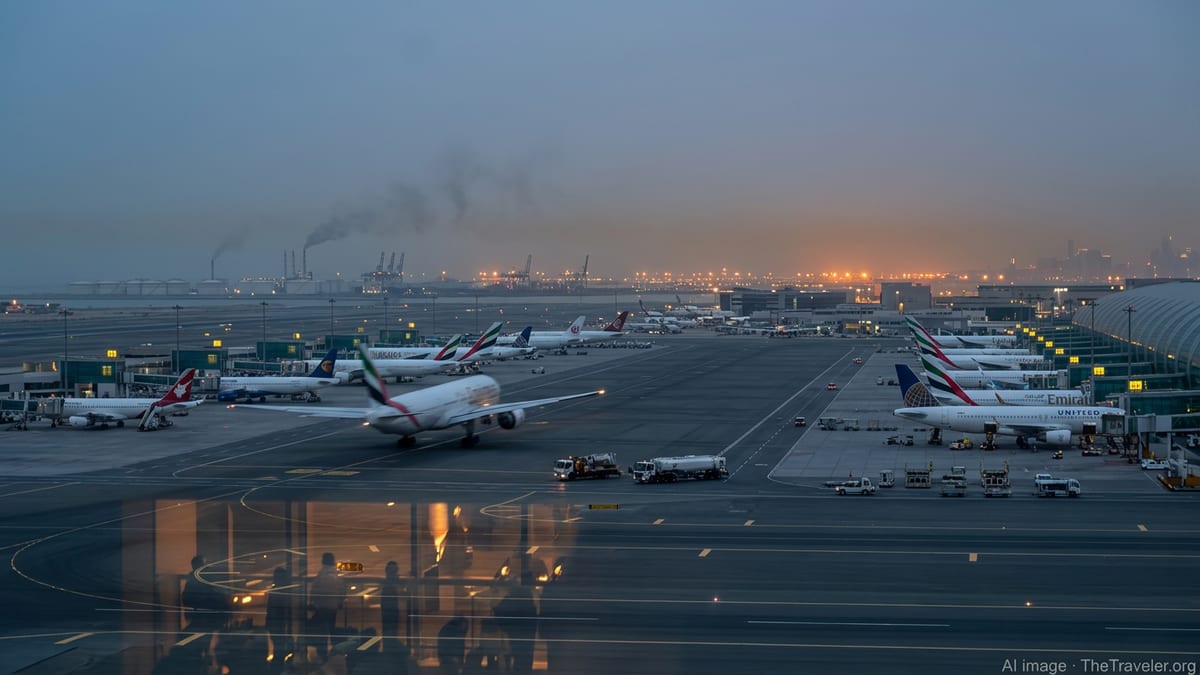
In the wider region, airspace closures and restrictions have become an increasingly common response when tensions spike. Open-source assessments of the 2026 conflict between Iran, the United States and Israel show that Bahrain, Iraq, Israel, Kuwait, Qatar, Syria and the UAE have all closed or curtailed their airspace at different points, forcing commercial aircraft onto longer routes and disrupting typical flight corridors through one of the world’s busiest aviation intersections.
For hub carriers based in the UAE, Qatar and Saudi Arabia, even temporary no-fly zones can mean sudden schedule changes, missed connections and rerouted long-haul services that normally rely on smooth overflight across Iraq and the Gulf. Travelers in transit may find themselves facing last‑minute aircraft swaps, extended layovers or unscheduled diversions to secondary airports as airlines seek to steer clear of potential conflict zones.
Insurance and liability considerations also weigh heavily on airlines and charter operators. Underwriters typically reassess war-risk premiums following attacks on diplomatic or energy targets, and higher costs can translate into capacity reductions on marginal routes, especially those into Iraq’s emerging tourism markets in Baghdad, Basra, Najaf and the Kurdistan Region.
Tourism Ambitions in Iraq and the Gulf Under Strain
The timing is particularly challenging for Iraq, which has been working to reposition itself from purely a conflict narrative toward one of cultural and religious tourism. In recent years, the government and private sector have promoted heritage sites in Babylon and Mosul, as well as pilgrim routes to Najaf and Karbala, while foreign tour operators slowly reintroduced small-group itineraries focused on archaeology and history.
Each high-profile incident near core diplomatic or government sites, however, reinforces long-held perceptions of insecurity. Industry analysts note that even when attacks are narrowly targeted and casualties limited, the psychological impact on potential visitors can be severe, especially among first-time travelers unfamiliar with Iraq’s internal geography or the protective measures often in place around tourist-frequented areas.
Across the wider Gulf, tourism strategies in the UAE, Saudi Arabia, Qatar, Bahrain and Oman hinge on projecting reliability and ease of access. The UAE in particular has marketed itself as a safe, highly connected gateway between East and West, with Dubai and Abu Dhabi airports serving tens of millions of passengers annually. Any suggestion that critical infrastructure such as ports, pipelines or consular facilities might be drawn into a military confrontation risks undermining that carefully managed image.
Saudi Arabia and Qatar, meanwhile, are investing heavily in new coastal resorts, cultural districts and sports mega-events intended to diversify economies away from hydrocarbons. While these projects are often located far from potential targets, travelers frequently judge entire countries or subregions as single risk units. A drone incident at a Gulf energy terminal, even without fatalities, can provoke cancellations for trips hundreds of kilometers away.
Global Tourism Sentiment and Oil Market Jitters
The conflict’s impact reaches far beyond the immediate vicinity of Baghdad and Fujairah. Economic analyses of the 2026 Iran war suggest that missile and drone exchanges, combined with threats to shipping in the Strait of Hormuz and attacks on regional energy assets, have contributed to spikes in global oil and gas prices. For the travel sector, higher fuel costs typically mean more expensive airfares just as risk perceptions are worsening.
International tourism bodies and market research groups have already been tracking a softening in demand for itineraries that cross the northern Gulf or rely on stopovers in conflict-adjacent states. Package operators report that clients increasingly request routings through alternative hubs when possible, even if the travel time is longer, in order to avoid what they see as a volatile corridor.
The cumulative effect of embassy strikes, energy-facility incidents and airspace closures plays into a broader narrative of unpredictability that can deter not only leisure travelers but also corporate travel planners, conference organizers and investors. Destinations that had hoped to leverage new museums, coastal developments and heritage restorations now face the added task of countering headlines that link their region to missile launches and diplomatic compounds under fire.
At the same time, some analysts note that Gulf tourism has demonstrated resilience in past crises, rebounding after earlier episodes of regional tension and even capitalizing on disruptions elsewhere. The question now is whether repeated attacks on high‑profile symbols of international presence and energy security will test that resilience more severely than before.
What Travelers Should Watch in the Coming Weeks
As the situation evolves, travelers with plans involving Iraq, the UAE, Bahrain, Qatar, Saudi Arabia or Oman are being advised by public information sources to monitor official travel advisories from their home governments, airline operational updates and airport notices. Given the fluid nature of airspace restrictions, flight status can change with limited warning.
Specialists in risk and security who track conflict zones also recommend that travelers pay close attention to the geographic specificity of incidents. Attacks on energy terminals or diplomatic compounds, while serious, do not necessarily mean that hotel districts, beach resorts or remote heritage sites face the same level of direct threat. However, they can influence access, including the availability of flights and cross-border connections.
For Iraq in particular, any further escalation involving the United States Embassy compound or other Western-linked sites could lead to stricter curfews, movement controls or temporary consular closures that would complicate entry and exit for foreign visitors. In a worst-case scenario, widespread airspace shutdowns above Iraq and neighboring states could temporarily reroute much of the traffic that normally flows through the Gulf, affecting itineraries on multiple continents.
In the near term, the travel industry is likely to walk a narrow line between maintaining connectivity and responding prudently to heightened risk. Airlines, cruise lines, tour operators and online booking platforms will be closely scrutinizing how the latest strikes in Baghdad and Fujairah shape traveler behavior, pricing and capacity decisions, even as regional governments reaffirm their long-term ambitions to remain vital nodes in global tourism and aviation.