


Scrolling through glossy photos of beach houses and ski condos, it is easy to assume all vacation rental platforms are more or less the same. Vrbo, one of the biggest names in home rentals, now sits alongside Airbnb, Booking and others in most travelers’ searches. But when you factor in service fees, cleaning costs, cancellation policies and mixed stories about customer support, a fair question arises: is Vrbo actually worth using for your next holiday rental?
Get the latest updates straight to your inbox!
How Vrbo Works and Who It Is Best For
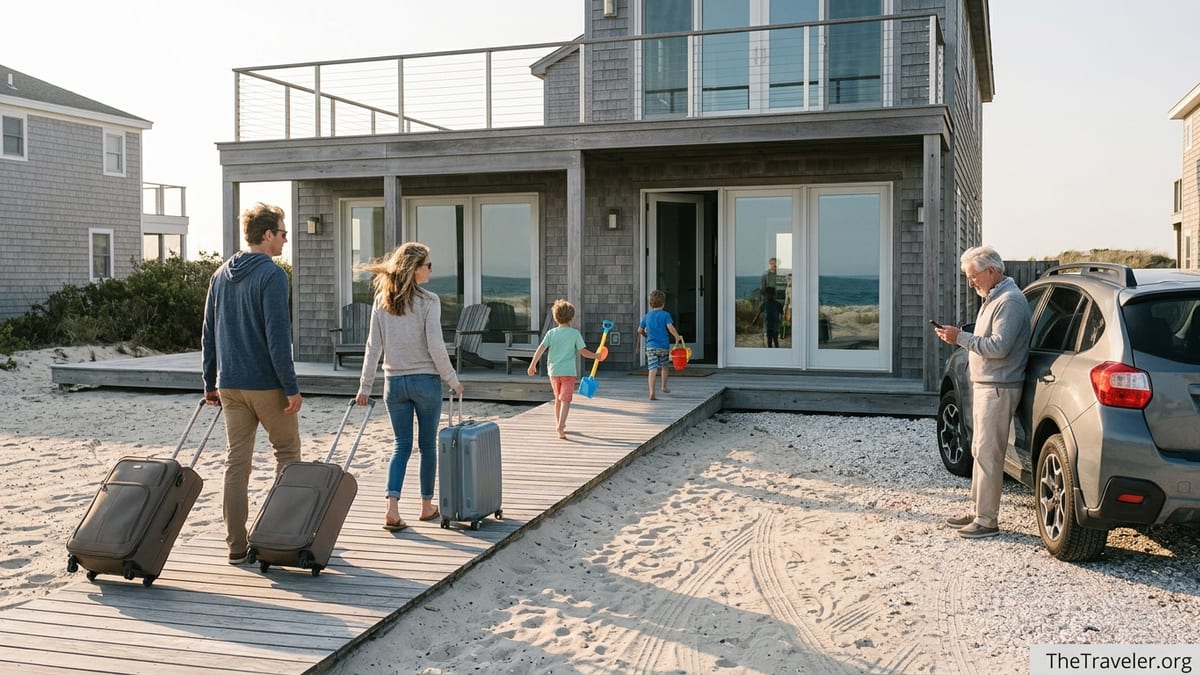
Vrbo is a vacation rental platform focused on entire homes and apartments rather than shared spaces. You will not typically see listings for spare bedrooms or sofa beds. Instead you will find options like three bedroom lake houses in Michigan, family condos in Orlando near Walt Disney World, or chalets in Breckenridge geared toward groups and families. That focus shapes the experience: Vrbo tends to be most attractive if you are traveling with children, extended family or friends and need multiple bedrooms and a kitchen.
In practical terms, booking on Vrbo looks similar to other platforms. You choose your dates and destination, browse photos, read house rules and reviews, then pay through Vrbo’s secure checkout. The company handles the payment, while the actual rental contract is between you and the property owner or manager. Vrbo does not own the homes and does not provide on site services like housekeeping or maintenance staff. Those are up to the host.
Because Vrbo has been around since the mid 1990s and is now under the Expedia Group umbrella, inventory is deep in classic vacation markets. Think of Outer Banks beach houses, Gulf Coast condos, Lake Tahoe cabins and European countryside villas that have been on Vrbo or its sister brands for years. If you are looking for a family base in one of these destinations, you may find more large, traditional holiday homes on Vrbo than on some newer competitors.
Where Vrbo is less useful is for solo travelers, backpackers or people wanting quirky stays like tiny homes in the middle of a city or private rooms in a shared apartment. Those kinds of listings still exist, but the platform is not built around them. If you primarily travel alone or on short city breaks and only need a studio or room, hotel style options or other platforms may serve you better.
What You Will Actually Pay: Fees, Cleaning and Real Price Examples
On Vrbo the nightly rate is only the starting point. Guests usually pay three main cost components: the nightly price set by the host, a cleaning fee also set by the host, and a Vrbo service fee added at checkout. Hosts in 2026 commonly pay Vrbo about 8 percent in combined commission and payment processing, while guests see a separate service fee that often runs in the mid single to low double digits as a percentage of the rental total according to multiple recent industry breakdowns. These figures vary by region and property type but give a useful baseline.
Consider a typical family trip to Orlando. A two bedroom condo with pool access near the theme parks might show at around 180 dollars per night for a week in October. Over seven nights, that is 1,260 dollars in nightly charges. Add a 160 dollar cleaning fee and you are at 1,420 dollars before Vrbo’s service fee and taxes. If the platform service fee lands around 10 percent of the rental and cleaning subtotal, you are adding roughly 140 dollars, taking the pre tax total to about 1,560 dollars. Local taxes can easily push the final bill closer to 1,700 dollars. That is the kind of number you should expect when you look beyond the headline nightly price.
In a coastal example, imagine a four bedroom beach house on North Carolina’s Outer Banks listed at 420 dollars per night for a long summer weekend. Three nights come to 1,260 dollars, with a 250 dollar cleaning fee on top. Before taxes, a similar percentage service fee could add around 150 dollars, making the pre tax total around 1,660 dollars. For two or three families sharing that house, the per bedroom per night cost can still undercut booking several mid range hotel rooms, but the saving is less dramatic once all fees are counted.
Cleaning fees are an especially important variable. Recent analyses of tens of thousands of North American listings show median cleaning fees in the mid one hundred dollar range, with higher amounts common for large or luxury properties. For example, a six bedroom ski home in Park City might charge 350 to 450 dollars just for cleaning. On a weeklong stay that may be reasonable, but if you only stay two nights the cleaning charge can feel disproportionate. When comparing Vrbo to hotels or to other platforms, always divide the total cost including fees by the number of nights and travelers to get a more realistic view.
Protections, Guarantees and What Happens When Things Go Wrong
Vrbo promotes its VrboCare guarantee, formerly known as Book with Confidence, as a way to reassure travelers worried about scams or last minute host cancellations. The guarantee focuses on a few specific scenarios, such as a host canceling close to arrival, a property being significantly different from its listing in terms of major amenities, or issues with secure payments. In these cases Vrbo says it can help you find a similar property or assist with getting money back, and it highlights 24/7 support via chat and phone.
In practice, travelers report mixed outcomes. When a lake house in upstate New York flooded shortly before a July booking, for example, a family who had prepaid through Vrbo was able to contact support, receive confirmation that the host’s cancellation was covered and get rebooked into a similar three bedroom property about 20 minutes away for the same dates. In that case, the experience was reasonably smooth, though they still spent a few stressful hours on the phone during a busy holiday weekend.
However, other guests describe more frustrating cases. One common pattern involves arriving to find a property that is technically usable but meaningfully below expectations, such as a condo in Miami Beach where the air conditioning was broken and key advertised amenities like Wi Fi and a second bathroom were unavailable. The guest contacted Vrbo expecting an immediate move, but the response centered on working things out with the host first. Only after several calls and documented photos did the platform agree to partial compensation, and the traveler had already booked a hotel for the first night out of pocket.
The lesson is that Vrbo’s protections can be valuable but are not a blank check. The guarantee terms are quite specific and the company reserves discretion. You are generally better off treating Vrbo’s support as a safety net rather than as a replacement for your own due diligence. Before booking, read recent reviews for mentions of cleanliness, maintenance and accurate photos, and be prepared to document any serious issues immediately on arrival with time stamped photos and messages through the Vrbo system in case you need to escalate.
Guest Experience: Search, Communication and Check In
Vrbo’s website and app are relatively straightforward, and one concrete advantage is the way prices are shown. For several years Vrbo has displayed a total price filter that includes mandatory fees except taxes, making it easier to compare options without doing manual math. This contrasts with some platforms that only recently added an all in price toggle. If you are trying to keep a family trip under a clear budget cap, being able to filter for listings under, say, 300 dollars per night total can save time and surprises.
Communication with hosts generally happens through the in app messaging system, though many professional managers share phone numbers after booking. Travelers often highlight fast, professional replies from dedicated property management companies in resort markets. For instance, a guest booking a townhouse in Kissimmee run by a local management firm might receive a detailed welcome email with gate codes, Wi Fi instructions, pool heating options and a contact for on the ground maintenance. When things go smoothly, you may hardly notice Vrbo itself after you pay.
Where the experience can fray is when hosts are unresponsive or inexperienced. A traveler in Lisbon who booked a small apartment through Vrbo reported sending multiple messages about an airport transfer and early check in with no reply. Only after contacting Vrbo customer support did the host respond, explaining they had missed the notifications. In another case, a group arriving late at night to a mountain cabin in Colorado found the smart lock code did not work, and the host did not pick up the phone for almost an hour. Vrbo support could do little in the moment beyond trying the same contact numbers.
Check in and check out processes vary widely because they are controlled by the individual hosts. Some homes use smart locks or lockboxes with clear instructions, others rely on manual key handovers. This is where past guest reviews are particularly useful. When you see multiple comments praising smooth self check in, accurate information and responsive communication, it is usually a good sign. If instead recent reviews mention confusion about parking, wrong entry codes or last minute rule changes, you should think carefully before committing, no matter how attractive the photos look.
Comparing Vrbo to Airbnb and Hotels in Real Travel Scenarios
To decide whether Vrbo is worth using, it helps to compare it directly with Airbnb and with traditional hotels for specific trip types. Take a three night city break for two people in Chicago in spring. On Vrbo you might find a one bedroom apartment downtown at 210 dollars per night plus a 120 dollar cleaning fee and service fee, bringing the total close to 900 dollars with taxes. Meanwhile a centrally located mid range hotel could offer a king room for around 250 dollars per night including daily housekeeping and no additional fees beyond taxes, for a similar or slightly lower total. In that scenario the hotel may be simpler and not much more expensive.
Now imagine a weeklong summer holiday for six people on Florida’s Emerald Coast. On Vrbo a three bedroom condo with gulf views in Destin might run about 350 dollars per night, plus perhaps a 225 dollar cleaning fee and service fee. The final bill could easily reach 3,000 dollars. Splitting that across three couples works out to roughly 500 dollars per couple for the week. By contrast, booking three separate hotel rooms at 230 to 260 dollars a night each, even at a mid range beachfront property, could total 4,800 dollars or more before resort fees. In this family trip case, a Vrbo rental can deliver substantial savings and give you communal space like a kitchen and living room.
Internationally, the picture varies by city. In some European destinations, such as parts of Spain, Portugal and Italy, local regulations have tightened around short term rentals, reducing supply on all platforms and raising prices. Here you may find fewer bargains and more professional vacation apartments on Vrbo that are priced similarly to boutique hotels. In ski resorts and classic countryside regions, Vrbo can shine, with large chalets or farmhouses that readily accommodate big groups at per person rates hotels cannot touch.
In terms of quality control, hotels still tend to be more predictable. If you book a well known chain in New York or Paris, you are buying into standard cleanliness, service and safety protocols. With Vrbo, the spread is wider: some homes are impeccably managed, others feel more like a casual spare property. That variability is why careful review reading, map checking and expectation setting are crucial when you choose a Vrbo home over a hotel.
When Vrbo Is Worth It and When to Think Twice
Vrbo tends to be worth using in a few clear situations. If you are traveling as a family or group and need multiple bedrooms, an equipped kitchen and private shared spaces, the platform often delivers better value than booking several hotel rooms. This is especially true in resort destinations such as Maui, the Gulf Coast, the Outer Banks, Lake Tahoe and many European seaside towns, where whole home holiday rentals are the norm and hotel options may be limited or pricey. For longer stays, usually five nights or more, the fixed cleaning and service fees spread out over more nights, improving the value equation.
Vrbo also suits travelers who prioritize privacy and a home like environment. If you want to put kids to bed in a separate room, cook breakfasts, or have a laundry machine for a two week road trip base, a Vrbo rental can make the trip feel less like a series of hotel nights and more like temporarily living in a destination. Many guests appreciate touches like board games, beach toys or local guidebooks that owners leave in their homes, which you rarely get in a standard hotel room.
On the other hand, Vrbo may be less compelling for very short stays, especially one or two nights, once you factor in cleaning and service fees. In dense cities with strong hotel competition, such as New York, London or Tokyo, hotels can be price competitive or even cheaper than full apartments on Vrbo, and you gain daily housekeeping, on site staff and loyalty points. Travelers who value 24/7 professional service, instant room changes and clear recourse if something goes wrong often feel more comfortable in hotels than dealing with individual hosts and platform support.
Another moment to pause is when a Vrbo listing looks dramatically cheaper than comparable options. Extremely low prices, sparse or overly polished reviews, or vague descriptions can be red flags. In such cases, cross check the property on other platforms if possible, use street view tools to verify the address appears legitimate, and read cancellation and payment terms carefully. Paying slightly more for a well reviewed, professionally managed property is often the wiser choice than chasing the absolute lowest nightly rate.
How to Get the Most Out of Vrbo if You Decide to Use It
If you conclude that Vrbo fits your trip, there are practical steps to tilt the odds in your favor. Start with filters: use the total price view, set realistic budget and amenity filters, and then sort by reviews rather than by price alone. Focus on listings with a solid number of recent four and five star reviews that mention cleanliness, accurate photos, responsive hosts and comfortable beds. A beachfront condo with 60 recent positive reviews is usually a safer bet than a newer, cheaper one with only a handful of ratings.
Before you book, read the house rules and cancellation policy in full. Many Vrbo properties now use moderate or firm cancellation terms. For a weeklong villa in Tuscany, for instance, you might see a policy where only 50 percent is refundable if you cancel more than 60 days before check in, and nothing is refunded within 30 days. If your plans are uncertain, consider travel insurance that covers accommodations, or choose listings with more flexible terms, even if the nightly rate is slightly higher.
It is also wise to message the host with a specific question before booking, such as asking about parking details, baby equipment or late check in. Their speed and tone of reply can be revealing. A professional manager who responds within an hour with clear answers is reassuring. A host who takes days to respond or gives vague answers might be harder to deal with if you run into issues during your stay. Keeping all important communication within the Vrbo platform also makes it easier to reference later if you need to involve customer support.
Finally, on arrival, do a quick walkthrough of the property. Check that heating or air conditioning works, verify hot water, test Wi Fi, and look for obvious cleanliness or safety issues. If something is wrong, document it with photos and contact the host immediately through the app. If you cannot reach the host or the issue is serious, escalate to Vrbo support right away. Acting quickly usually leads to better outcomes than waiting until check out to raise concerns.
The Takeaway
Vrbo can absolutely be worth using for your next holiday rental, especially if you are traveling with family or friends and want the space, kitchen and privacy of a full home. In classic vacation markets where whole home rentals dominate, Vrbo’s inventory and group friendly options often beat comparable hotels on per person value, even once you add service and cleaning fees. The platform’s clear total price display and focus on entire properties are meaningful advantages for many travelers.
At the same time, Vrbo is not automatically the right answer for every trip. For short city stays, for travelers who prioritize predictable service, or in destinations where hotel competition is fierce, a hotel or another platform may work out cheaper, simpler or both. Vrbo’s protections provide some peace of mind but come with limits, and guest experiences with customer support are varied. That reality makes your own preparation, careful listing selection and documentation especially important.
In the end, the question is less whether Vrbo is good or bad and more whether it matches your specific trip. If you value space, a home like environment and are willing to invest a little time into research and communication, Vrbo can be a strong choice and a source of memorable stays. If you prefer turn key service and minimal hassle, you might lean toward hotels or different platforms. Knowing these trade offs before you book will help you choose confidently and avoid surprises when you arrive at the front door of your holiday home.
FAQ
Q1. Is Vrbo cheaper than Airbnb or hotels?
Vrbo can be cheaper for families or groups needing whole homes, especially for longer stays, but once service and cleaning fees are included, prices are often similar to Airbnb and sometimes higher than hotels in big cities.
Q2. How high are Vrbo service and cleaning fees for guests?
Vrbo adds a percentage based service fee at checkout that often lands in the mid single to low double digits, and cleaning fees commonly run into the low or mid hundreds of dollars per stay depending on property size and location.
Q3. Does Vrbo protect me if a host cancels last minute?
Vrbo’s guarantee says it will help find a similar property or assist with refunds when a host cancels close to arrival, but outcomes vary and you may still need to spend time on the phone during busy travel periods.
Q4. What happens if the Vrbo property is dirty or not as described?
If a property is significantly different from its listing, you should document issues with photos, contact the host immediately through the app and escalate to Vrbo support. In some cases guests receive partial refunds or are rebooked, but decisions are case by case.
Q5. Is Vrbo safe to use for international travel?
Vrbo is widely used in Europe and other regions, and secure payment through the platform is generally safe. The bigger risks come from choosing poorly reviewed properties, so due diligence on reviews and local rules is crucial when booking abroad.
Q6. Are hotels a better option than Vrbo for short stays?
For one or two night visits, hotels are often simpler and can be cheaper, since Vrbo’s fixed cleaning and service fees make very short stays relatively expensive on a per night basis compared with a standard hotel room.
Q7. How can I spot a good Vrbo listing?
Look for many recent positive reviews, detailed photos of every room, clear house rules, transparent fees and hosts or managers who respond quickly and politely to pre booking questions via the platform.
Q8. Should I get travel insurance for a Vrbo stay?
Travel insurance that covers accommodations can be sensible for costly or nonrefundable Vrbo bookings, especially for long stays or international trips where cancellation terms are strict and last minute changes could be expensive.
Q9. Can I negotiate prices with Vrbo hosts?
Some hosts may offer small discounts for longer stays or off season dates, particularly if you ask politely through the messaging system, but many professionally managed rentals have fixed, dynamic pricing that is less flexible.
Q10. Is Vrbo better suited to families than solo travelers?
Yes, Vrbo’s emphasis on entire homes with multiple bedrooms, kitchens and outdoor space tends to suit families and groups more than solo travelers, who may prefer smaller, cheaper hotel rooms or private rooms on other platforms.