

More news on this day
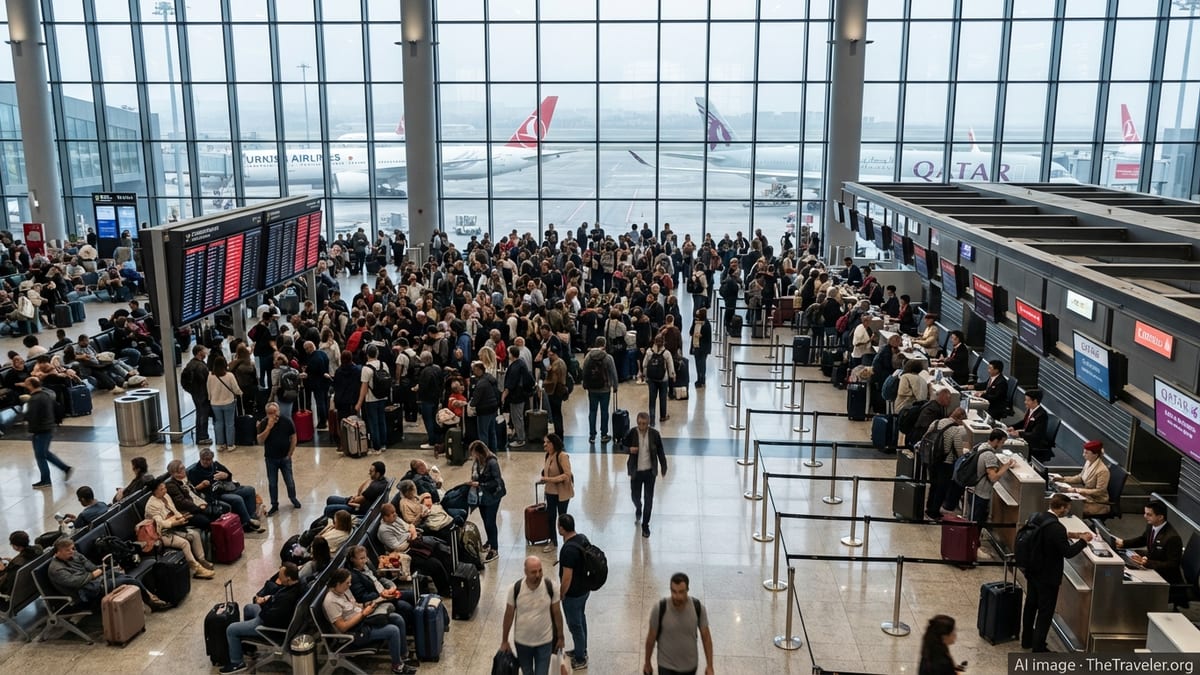
Hundreds of travelers were stranded at Istanbul’s two main airports on March 2 as escalating regional tensions forced major Middle Eastern carriers to cancel 56 flights and delay 148 more, hitting connections across Europe, Asia and the Gulf.
Regional Conflict Ripples Into Istanbul Hubs
The disruption in Istanbul comes as airspace closures and missile strikes linked to the rapidly escalating conflict between the United States, Israel and Iran have brought large parts of Middle East aviation to a standstill. Turkey’s position as a crossroads between Europe, Asia and the Gulf has made its busiest hubs particularly vulnerable to knock-on effects from airport shutdowns in the United Arab Emirates, Qatar and other Gulf states.
Data from aviation tracking and industry sources on March 2 show Istanbul Airport and Istanbul Sabiha Gökçen International Airport among the hardest-hit facilities outside the immediate Gulf region, with cancellations and rolling delays mounting through the day. While Turkey’s own airspace remains open, carriers reliant on now-closed hubs in Dubai, Abu Dhabi and Doha have been forced to halt services, divert traffic or keep aircraft on the ground in Istanbul.
The latest figures indicate that Istanbul’s airports together saw 56 outright cancellations and 148 delays on Monday, affecting both departing and arriving services. Industry analysts warn those numbers may climb if airspace restrictions in the Gulf and over parts of Iran, Iraq and the Levant are extended or tightened in the coming days.
Turkish aviation officials and airport operators are working with airlines to re-time flights where possible and to rebook stranded passengers, but they caution that the scale of regional disruption leaves limited room for quick solutions.
Major Middle East Carriers Grounded or Severely Curtailed
Among the most affected at Istanbul are Middle Eastern network carriers that depend on now-closed Gulf hubs to route passengers between Europe, Asia and Africa. Emirates, FlyDubai, Qatar Airways, Gulf Air and Royal Jordanian all reported cancellations or major schedule reductions to and from Turkey on March 2 as they reacted to airspace closures and continued uncertainty over missile activity.
UAE-based airlines have been hit particularly hard. Emirates and FlyDubai have suspended or sharply curtailed operations through Dubai, after authorities in the Emirates temporarily halted flights in response to the strikes and subsequent Iranian retaliation. With Dubai International Airport and the city’s second hub effectively shut for a third consecutive day for regular passenger movements, multiple rotations to and from Istanbul were cut from Monday’s schedule.
Qatar Airways faces similar constraints as Doha’s Hamad International Airport deals with extensive restrictions and closures across neighboring airspace. The carrier has canceled or delayed several Istanbul services while it reassesses routings and awaits clearer guidance from regional aviation regulators. Bahrain’s Gulf Air, which relies on northbound corridors through airspace now either restricted or closed, has also pulled flights and imposed rolling delays on connections linking Istanbul with Manama and onward destinations.
Royal Jordanian, operating out of Amman, has canceled and delayed services into Turkey as Jordan navigates its own airspace and security considerations. With multiple countries from Iran and Iraq to Israel, Syria and Kuwait imposing at least partial closures, the traditional web of east–west corridors has been redrawn virtually overnight.
Turkish Airlines and Local Carriers Under Mounting Pressure
Turkey’s flag carrier Turkish Airlines and low cost operators serving Istanbul, including Pegasus Airlines and AJet, are also under growing operational pressure. While many of their domestic and intra-European flights are still running, their extensive networks into the Gulf, Iran, Iraq, Jordan and other affected markets have been sharply curtailed after widespread airspace closures over the weekend.
Turkish Airlines has suspended a raft of services to Middle Eastern destinations, including routes to Iran, Iraq, Lebanon, Jordan and several Gulf states, citing safety and regulatory constraints. This has triggered secondary disruption for passengers connecting via Istanbul to long haul destinations in Asia and Africa, with missed onward flights and aircraft rotations out of position for subsequent services.
Pegasus Airlines, which uses Sabiha Gökçen as its primary base, has seen dozens of cancellations and delays across its network. Industry data on March 2 shows the airline among the most affected operators in Turkey, with Istanbul delays compounding congestion at check in, security and immigration. Ground handlers report aircraft waiting on stands for new slots while operations teams juggle crew duty limits and last minute schedule changes.
Other carriers operating into Istanbul, including SunExpress and regional airlines from the Gulf and CIS markets, have adjusted operations in response to the instability. Even airlines not directly serving high risk airspace are experiencing delays as traffic is rerouted, flight levels are adjusted and congestion worsens along the remaining open corridors.
Thousands of Travelers Face Long Lines, Hotel Scrambles and Uncertainty
For passengers on the ground in Istanbul, the regional crisis has translated into long queues at airline service desks, crowded departure halls and a scramble for hotel rooms as delays stretch overnight. Many travelers who had used Istanbul as a convenient one stop connection between Europe and destinations in Southeast Asia, India or the Gulf now find themselves stuck mid journey.
Airport staff at both Istanbul Airport and Sabiha Gökçen reported cases of passengers sleeping in terminals after missed connections, especially those arriving late from European cities to find onward flights to the Gulf canceled at short notice. Airlines have been providing meal vouchers and limited accommodation, but the volume of affected customers has strained contingency resources.
Travelers report particular frustration around communication, with some airlines posting rolling updates on social media while airport flight information screens struggle to keep pace with rapid schedule changes. Others spoke of receiving cancellation notifications only after passing through security or even while boarding, adding to confusion and crowding at departure gates as new information filtered through.
Airport authorities have urged passengers to arrive early, stay in close contact with their airlines and be prepared for extended waiting times. They have also increased staffing at information points and coordination centers to manage the surge in customer queries.
Uncertain Outlook as Airlines Monitor Evolving Airspace Rules
Looking ahead, both airlines and aviation regulators describe the situation as highly fluid. Much depends on how long Gulf states and neighboring countries keep key airspace corridors restricted or closed, and whether further military escalation prompts additional safety measures across the region. Carriers are reviewing schedules on a rolling basis, with some already extending suspensions into early this week and beyond.
Industry analysts note that while carriers such as Turkish Airlines, Emirates and Qatar Airways have built substantial resilience into their networks, the simultaneous closure of multiple hubs and overflight routes presents an unprecedented operational challenge. Re-routing long haul flights around restricted zones can add hours of flying time and increase fuel costs, limiting the number of rotations an aircraft can perform in a given day.
For Istanbul, any prolonged disruption at Gulf hubs will continue to reverberate through its role as a major transit gateway. Even if Turkey’s own airspace remains open, airlines dependent on flows to and from the Gulf, Iran and the Levant will face difficult choices over which routes to prioritize, which to suspend and how to support stranded passengers.
Travel experts advise passengers with upcoming itineraries involving Istanbul and the wider Middle East to monitor airline advisories closely, consider flexible rebooking options and be ready for last minute changes. With 56 cancellations and 148 delays already recorded at Istanbul’s airports on March 2 alone, the prospect of a quick return to normal schedules appears distant.