

More news on this day
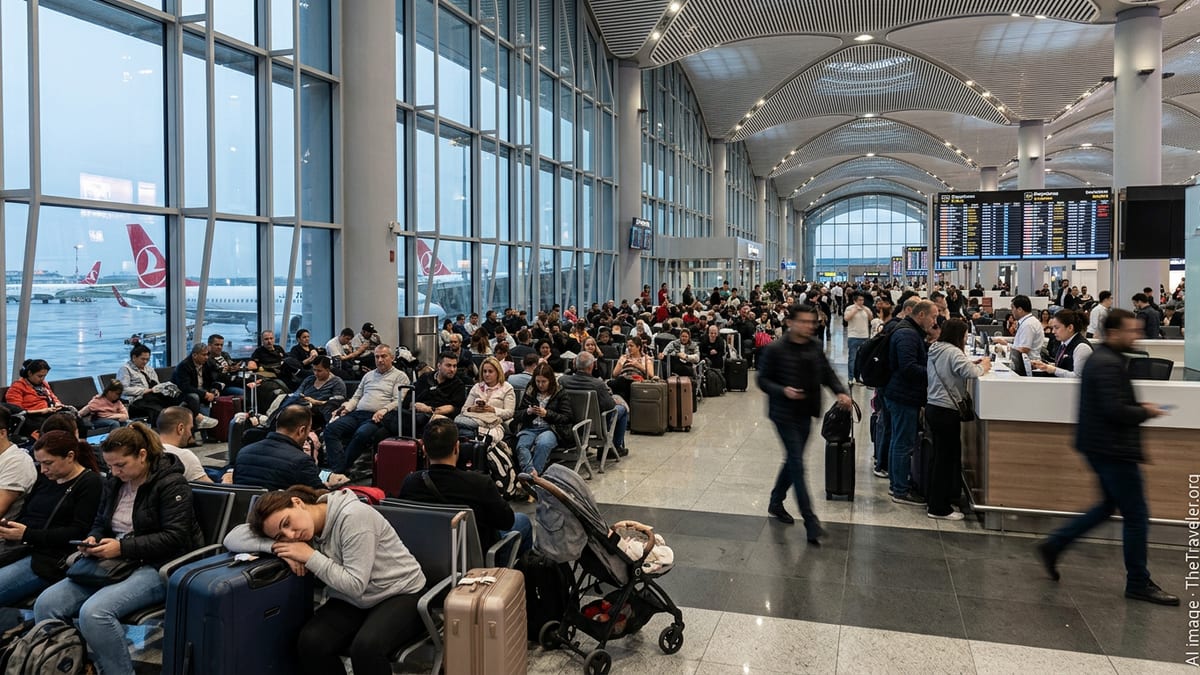
Hundreds of passengers were left sleeping on terminal floors at Istanbul Airport on March 4 as at least 101 flights were delayed and 13 canceled, a fresh wave of disruption linked to Middle East airspace closures that is now snarling connections across Istanbul, Doha and Dubai.
Ripple Effects From Middle East Airspace Closures Hit Istanbul
The disruption in Istanbul comes as large parts of Middle East airspace remain restricted following the regional conflict that escalated on February 28, forcing airlines to reroute or ground thousands of services. Flight paths that normally funnel between Europe, the Gulf and Asia are now being squeezed into narrower corridors over Turkey, the eastern Mediterranean and the Caucasus, putting intense pressure on Istanbul as a key alternative hub.
Turkish Airlines, which operates one of the world’s largest connecting networks through Istanbul, has been forced to retime and consolidate services as aircraft and crews struggle to keep to schedule. The latest tally at the mega-hub shows 101 delays and 13 cancellations affecting both short haul and long haul routes, with knock-on effects for passengers trying to reach or transit through Doha and Dubai.
While Istanbul Airport itself remains fully operational, aviation analysts say the current pattern of disruption is less about local infrastructure and more about a sudden global reshaping of air traffic. With many Gulf routes curtailed or suspended, itineraries that once flowed smoothly via Doha or Dubai are now being pushed north through Istanbul, stretching airline and ground-handling resources to the limit.
The squeeze is especially acute for travelers whose journeys involve multiple connections across Europe, the Middle East and Asia. Even a short delay on an inbound sector can cause passengers to miss onward departures, forcing airlines to rebook customers on later flights that may already be heavily oversold by disrupted travelers from other routes.
Turkish Airlines, Emirates and Qatar Airways Struggle to Rebuild Networks
Flag carrier Turkish Airlines has become a critical bridge between Europe and Asia as Gulf carriers scale back operations, but that central role has come with mounting operational stress. Passengers at Istanbul Airport reported long queues at transfer desks and customer service counters as staff attempted to find new routings for those who had missed connections or whose flights had been scrubbed entirely.
In the Gulf, Emirates in Dubai and Qatar Airways in Doha continue to deal with their own severe schedule cuts and reroutings, which are feeding directly into the bottlenecks seen in Turkey. With many of their flights to and from key markets either suspended or operating on extended, detoured routings, the banks of connecting services that underpin their hub-and-spoke models have been fractured.
This fragmentation means passengers who would normally make a simple one-stop journey via Doha or Dubai are instead being stitched into complex multi-stop itineraries that rely heavily on alternative hubs such as Istanbul. Each missed slot, crew timing issue or delayed arrival in this fragile system can trigger further cancellations as airlines work to keep aircraft within legal operating limits.
Industry observers note that, although airlines are racing to add capacity where possible, they face fixed constraints on aircraft availability, rested crews and permitted flight times along remaining open corridors. That reality suggests that irregular operations at Istanbul, Doha and Dubai may continue for several days, with further waves of delays and cancellations possible as carriers reposition fleets.
Scenes of Fatigue and Frustration Inside Istanbul’s Terminals
Inside Istanbul Airport’s vast terminals, the human cost of the disruption has been on sharp display. Families with young children, business travelers and tourists alike were seen clustered around power outlets and check-in islands, trying to reach airline call centers or rebook via mobile apps as departure boards filled with amber and red status updates.
Some passengers reported spending the night on benches or on the floor after missing late-night connections to the Gulf and South Asia. With nearby hotels quickly filled, many travelers said they struggled to secure meal vouchers or clear information on when replacement flights might operate, particularly for routes that depend on currently restricted airspace.
Staff at information desks faced a constant stream of questions about onward connections to Doha and Dubai, where reduced schedules and temporary suspensions have sharply limited onward options. Even when seats were available, rebooked passengers often had to accept longer itineraries with extra stops, extended layovers or indirect routings that bypass their original hubs entirely.
For some travelers, the sense of uncertainty has been as troubling as the delays themselves. With airlines frequently updating timetables in response to shifting airspace permissions and operational assessments, departure times that looked firm in the morning have, in many cases, slipped back or disappeared from schedules by afternoon.
Regional Hubs in Doha and Dubai Remain Under Pressure
Doha’s Hamad International Airport and Dubai International Airport, long positioned as reliable super-connectors between continents, have found themselves at the epicenter of the current disruption. Qatar Airways has curtailed a large share of its network as Qatari airspace remains tightly controlled, while Emirates is operating a patchwork of services out of a hub accustomed to a clockwork flow of widebody departures.
The result is a complex, shifting matrix of cancellations, diversions and rerouted flights that extends far beyond the Gulf. Passengers originating in Europe, Africa and Asia who were never scheduled to set foot in the Middle East are now finding their trips affected because aircraft and crews are in the wrong place or because their original flight plans relied on routes that are suddenly off limits.
Dubai’s role as a primary departure point for travelers heading to and from South Asia, Australia and Africa has amplified the impact of every grounded aircraft. When services from Dubai and Doha are pulled from the schedule, many of those displaced passengers are rebooked onto remaining flights via Istanbul or other European and Asian hubs, compounding congestion in Turkey.
Aviation experts say that even incremental reopenings of certain airspace segments may not bring immediate relief. Airlines will need time to recall aircraft from diversions, rotate crews back into position and rebuild the tightly timed waves of departures and arrivals that make modern hub operations possible.
What Stranded Passengers Can Expect in the Days Ahead
For passengers currently stranded at Istanbul, Doha or Dubai, travel specialists warn that the coming days are likely to remain unpredictable. With more than a hundred flights at Istanbul alone affected on March 4 and Gulf hubs still struggling to restore regular operations, backlogs could take several days to clear.
Travel agents and passenger-rights advocates advise affected travelers to stay as flexible as possible about routings, dates and even destinations. In many cases, the fastest way home may involve accepting an indirect path via a third hub or even flying into a nearby city and completing the journey by rail or road, particularly within Europe.
Experts also urge passengers to keep close records of boarding passes, delay notifications and receipts for food and lodging, in case they become eligible for reimbursement or partial compensation under carrier policies or applicable passenger-protection rules. While extraordinary geopolitical events may limit formal compensation obligations, many airlines are still offering goodwill measures such as fee-free rebooking.
For now, Istanbul Airport remains one of the few large hubs fully accessible on the edge of a region in flux. As long as large portions of Middle East airspace stay constrained, however, it is likely to continue bearing a disproportionate share of the world’s disrupted journeys, with travelers across three continents feeling the impact every time a departure board in Istanbul, Doha or Dubai flickers from on time to delayed or canceled.