


More news on this day
Rail traffic across Germany came to an abrupt standstill late on June 23 after a nationwide failure in the railway communications system forced operators to halt trains for more than two hours, stranding passengers and triggering widespread disruption into the morning of June 24.
Get the latest news straight to your inbox!
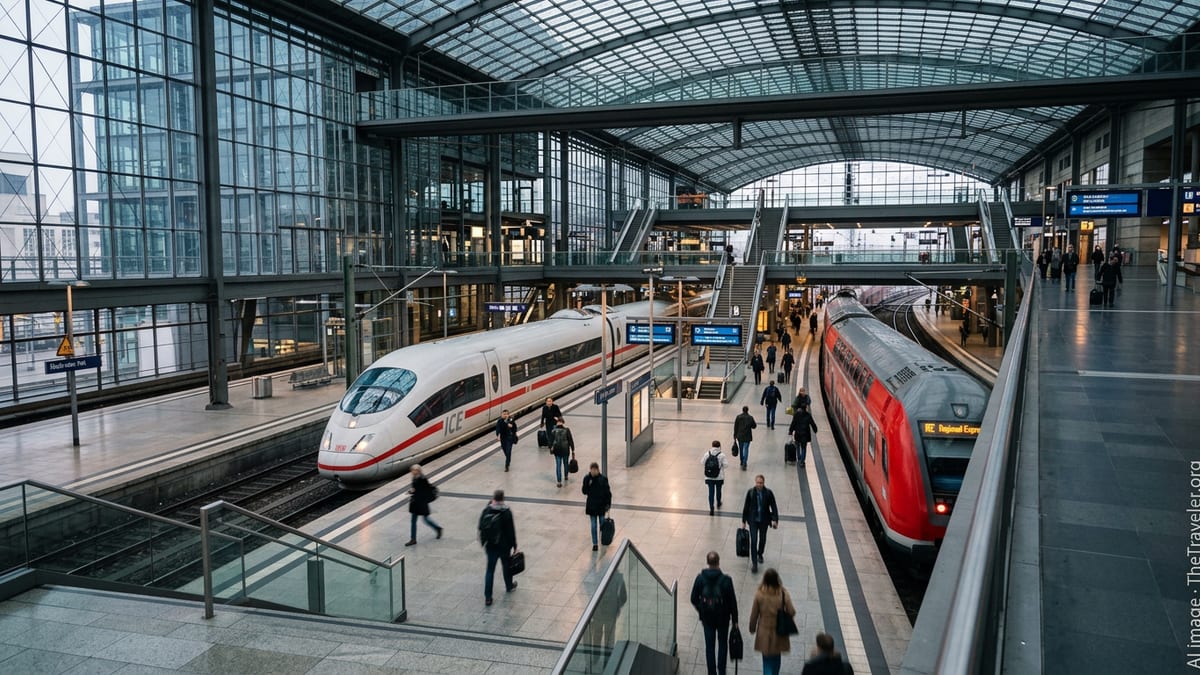
Nationwide shutdown hits passenger and freight services
According to published coverage from German broadcasters and international news agencies, Germany’s national rail operator halted virtually all long distance, regional and suburban services late on Tuesday after a critical issue in its digital radio network was detected. Trains already in motion were brought to a stop at the next suitable station, while departures were suspended across the country.
The disruption affected not only flagship high speed and intercity routes but also regional lines and S Bahn suburban systems in major cities. Reports from regional outlets in North Rhine Westphalia indicated that services there were “completely suspended” for a period, with station departure boards showing widespread cancellations and passengers forming long queues at information counters.
Freight operations were also hit. Industry focused reports noted that the outage occurred during a busy overnight window for cargo movements, forcing freight trains to stand idle on sidings and at marshalling yards. The simultaneous halt of passenger and freight traffic across one of Europe’s busiest rail networks was described in local analysis as an unusually far reaching interruption caused by a single technical fault.
Initial estimates indicate that the full standstill lasted around two hours before limited services began moving again, with operators cautioning that knock on delays and cancellations would continue into the early morning travel period on June 24.
GSM R communications failure identified as root problem
Publicly available information from railway and industry sources points to a failure in the GSM R digital radio system as the trigger for the shutdown. GSM R, short for Global System for Mobile Communications Railway, is a dedicated mobile network that connects train drivers and onboard systems with dispatchers and signal boxes, forming a core safety component of modern European rail operations.
When the GSM R network is not functioning reliably, trains can no longer receive route information and movement authorities in the prescribed way. In such a scenario, conservative safety protocols require that trains be held at stations until communication is restored or an approved fallback procedure is in place. Commentaries from rail sector observers noted that this safety first approach, while highly disruptive for passengers, is designed to prevent the risk of misrouted trains or conflicting movements on busy lines.
German media reports on Wednesday morning stated that technicians had located and corrected the fault during the night, allowing the network to restart its systems and progressively release trains. Some coverage described the episode as a major IT disruption, though detailed technical explanations of the failure, whether related to hardware, software or configuration, were not immediately made available in public statements.
Online discussions among rail professionals and passengers highlighted growing dependency on complex digital control and communications infrastructure. Several commentators contrasted the rarity of such a nationwide shutdown with more familiar localised signalling issues, underlining how a single point of failure in a central system can paralyse a country wide network.
Travelers face missed connections and overnight delays
For travellers, the sudden halt during late evening hours created a cascade of practical problems. Passengers on long distance services found themselves stopped at intermediate stations with limited late night onward connections, while those planning tight transfers to last regional trains or cross border services frequently missed their links altogether.
Local media reported crowded concourses in major hubs such as Berlin, Hamburg and Cologne, where stranded passengers sought information on replacement options. As no trains were moving during the peak of the outage, there was little immediate relief beyond hotel vouchers or the promise of rebooking on the following day’s services. Travelers documenting their experiences on social media described journeys extended by several hours and unexpected overnight stays far from their intended destinations.
The timing of the failure also affected early morning travel on June 24. Even after the communications system was stabilised and trains were allowed to move again, operators advised passengers to expect significant residual delays and short notice cancellations, particularly on commuter heavy regional routes. Some regional operating units published notices warning of “high follow on delays” at the start of the morning peak.
For international visitors using rail to connect with flights or onward European itineraries, the disruption served as a reminder of the importance of schedule buffers. Travel industry outlets pointed out that travellers planning same day rail and air connections, especially in late evening windows, remain vulnerable when large infrastructure failures occur.
Infrastructure resilience and cyber risk questions resurface
The scale of the incident quickly prompted debate about the resilience of Germany’s rail infrastructure and the vulnerability of digital control systems. Commentaries in national newspapers and online forums raised questions about how a single failure could bring down communications nationwide, and whether sufficient redundancy is in place to isolate faults and keep at least part of the network operating.
Some public speculation also focused on the possibility of a cyber incident, reflecting broader concerns about critical infrastructure security in Europe. However, early reporting in mainstream German outlets has so far framed the event primarily as a technical malfunction in the GSM R network, with no confirmed public evidence linking the outage to an attack.
Transport analysts quoted across various publications suggested that operators in Germany and elsewhere in Europe are likely to review contingency planning in the wake of the disruption. Potential measures discussed include further segmentation of communications networks, additional backup channels for train dispatching and clearer passenger communication protocols when large scale failures occur late at night.
Industry commentary also linked the outage to ongoing debates over investment in rail infrastructure, arguing that ageing components and complex legacy systems can heighten the risk of cascading failures. For a country that promotes rail as a climate friendly alternative to road and air travel, ensuring reliability of core digital systems is increasingly seen as essential to maintaining public confidence.
Implications for summer travel across Germany and Europe
The incident comes as Europe enters its busy summer travel season, with Germany serving as a key hub for both domestic tourism and cross border rail journeys. Travel news outlets noted that while the outage was relatively brief in duration, the image of a complete nationwide standstill could influence how some travellers plan itineraries in the coming weeks.
Rail advocates emphasise that such large scale, system wide failures remain rare when compared with the overall volume of train movements in Germany each day. They also point out that safety systems performed as designed by stopping trains rather than allowing operations to continue with compromised communications. Nonetheless, travel agents and tour operators are expected to advise clients to allow more generous transfer times and to monitor service information closely on the days following the disruption.
For independent travellers, the episode underscores the value of flexible ticket options, travel insurance that covers missed connections, and backup plans for late night arrivals. As the network returns to normal operations, Germany’s rail system will be closely watched by both domestic passengers and international visitors looking for signs that the IT issues have been fully resolved and that lessons are being applied to prevent a repeat of the nationwide halt.